
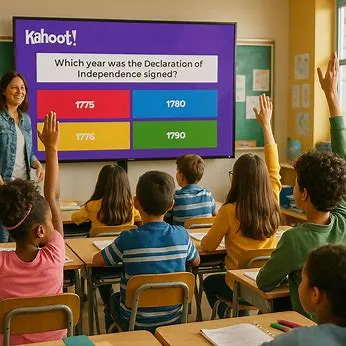
Welcome to the ultimate collection of Kahoot Trivia Questions and Answers for 2026! If you love fun quizzes, friendly competition, and challenging your knowledge, this collection is perfect for you.
Whether you are playing Kahoot with classmates, friends, family, or coworkers, these questions are designed to make every quiz more exciting and engaging.
From general knowledge and science to history, sports, entertainment, geography, and surprising facts, these Kahoot Trivia Questions and Answers cover a wide variety of topics. Get ready to test your knowledge, challenge your opponents, and see how many questions you can answer correctly!
Kahoot Trivia Questions and Answers
1. What is Kahoot! primarily used for?
Answer: Interactive quizzes and learning games.
Explanation: Kahoot! allows users to create or play quizzes where participants answer questions using connected devices.
Key Information: It is widely used in classrooms, training sessions, and social settings.
2. Where was Kahoot! founded?
Answer: Norway.
Explanation: Kahoot! originated in Norway as an interactive learning platform.
Key Information: The company was founded in 2012.
3. What color is commonly associated with the Kahoot! brand?
Answer: Purple.
Explanation: Purple is a prominent color in Kahoot!’s branding and interface.
Key Information: Kahoot! uses bright, playful visual elements to make quizzes engaging.
4. What do players typically need to join a Kahoot! game?
Answer: A game PIN and a device.
Explanation: Players usually enter a game PIN provided by the host and then choose a nickname.
Key Information: A smartphone, tablet, or computer can commonly be used.
5. What is a Kahoot! game PIN?
Answer: A temporary code used to join a specific game session.
Explanation: The host displays the PIN so participants can enter the correct quiz.
Key Information: The PIN generally changes for different game sessions.
6. What does the host do in a Kahoot! game?
Answer: Runs and controls the game session.
Explanation: The host selects the quiz, starts questions, and controls the pace of the game.
Key Information: The host can usually see participants’ responses and scores.
7. What happens after players answer a Kahoot! question?
Answer: The results are displayed.
Explanation: Kahoot! can show how many participants selected each answer and update the leaderboard.
Key Information: The results help make the game interactive and competitive.
8. What is a Kahoot! leaderboard?
Answer: A ranking of players based on their scores.
Explanation: The leaderboard shows which participants are performing best during the game.
Key Information: Points can depend on correct answers and response speed.
9. How are points commonly awarded in Kahoot!?
Answer: For correct answers, often with faster responses receiving more points.
Explanation: The scoring system can reward both accuracy and speed.
Key Information: Specific scoring may vary depending on the game settings.
10. Can users create their own Kahoot! quizzes?
Answer: Yes.
Explanation: Kahoot! provides tools for creating quizzes and other interactive activities.
Key Information: Creators can add questions, answers, images, and different activity formats.
11. What is a Kahoot! question?
Answer: An interactive prompt that players answer during a game.
Explanation: Questions can test knowledge, opinions, or understanding of a topic.
Key Information: Kahoot! supports different question and activity types.
12. What is a nickname in Kahoot!?
Answer: The name a player uses to identify themselves during a game.
Explanation: Players normally enter a nickname when joining a session.
Key Information: Hosts may have controls or rules regarding appropriate nicknames.
13. Can Kahoot! be used in classrooms?
Answer: Yes.
Explanation: Teachers use Kahoot! to review lessons, assess understanding, and make learning more interactive.
Key Information: It can be used for both individual and group activities.
14. Can Kahoot! be used for business training?
Answer: Yes.
Explanation: Organizations can use interactive quizzes for employee training, meetings, and knowledge checks.
Key Information: Game-based activities can encourage participation during training sessions.
15. What type of device can be used to play Kahoot!?
Answer: A smartphone, tablet, or computer.
Explanation: Participants can generally join using an internet-connected device with a compatible browser or app.
Key Information: The exact experience depends on the game and platform being used.
16. What is the main purpose of Kahoot!’s game-based approach?
Answer: To make learning and participation more engaging.
Explanation: Quizzes, competition, music, colors, and immediate feedback can make activities more interactive.
Key Information: Kahoot! is designed around active participation rather than passive viewing.
17. Can Kahoot! quizzes contain images?
Answer: Yes.
Explanation: Quiz creators can use visual content to make questions clearer and more engaging.
Key Information: Images can also be useful for geography, science, art, and identification questions.
18. What is a Kahoot! challenge?
Answer: A Kahoot! activity that participants can complete at their own pace.
Explanation: Challenges can allow players to answer questions without everyone participating simultaneously.
Key Information: This format can be useful for homework, practice, or individual review.
19. Is Kahoot! only used for education?
Answer: No.
Explanation: Kahoot! is also used for corporate training, team activities, events, and informal games.
Key Information: Its interactive format makes it adaptable to many group settings.
20. What makes Kahoot! different from a traditional quiz?
Answer: Its interactive, game-based format.
Explanation: Kahoot! combines questions with real-time participation, scoring, rankings, and visual feedback.
Key Information: These features can make quizzes more engaging and competitive.
Read Also: 119+ AAPI Trivia Questions And Answer
Kahoot Trivia Questions and Answers for Students
1. What is the maximum number of answers commonly available for a standard Kahoot! quiz question?
Answer: Four.
Explanation: Standard multiple-choice Kahoot! questions commonly provide four answer options.
Key Information: Kahoot! also offers other question formats with different interaction styles.
2. What symbol is associated with Kahoot!?
Answer: A colorful speech-bubble-like character called the Kahoot! logo/avatar.
Explanation: Kahoot! uses playful visual characters and symbols throughout its platform.
Key Information: Its branding is designed to create a fun game-show atmosphere.
3. What is a Kahoot! quiz creator called?
Answer: A creator or host.
Explanation: The person who creates a quiz can later host it for other participants.
Key Information: The creator controls the questions and game settings.
4. What happens when a player selects an incorrect answer?
Answer: They do not receive points for that question.
Explanation: Kahoot!’s standard scoring rewards correct responses.
Key Information: Depending on the game mode, players may continue answering subsequent questions.
5. What is a question timer in Kahoot!?
Answer: A countdown that limits the time available to answer.
Explanation: The timer adds urgency and contributes to the game’s competitive atmosphere.
Key Information: The available time can vary depending on the question and settings.
6. Can Kahoot! questions include videos?
Answer: Yes.
Explanation: Multimedia can be incorporated into Kahoot! activities to make questions more interactive.
Key Information: Videos can be useful for subjects such as science, music, and language learning.
7. What is Kahoot! commonly used for in schools?
Answer: Reviewing and assessing knowledge.
Explanation: Teachers can use quizzes to reinforce lessons and quickly check students’ understanding.
Key Information: It can be used before, during, or after instruction.
8. What does the Kahoot! podium show?
Answer: Top-performing players.
Explanation: The podium highlights participants who achieved the highest scores.
Key Information: It usually appears near the end of a live game.
9. What can a Kahoot! host see during a game?
Answer: Game progress and participant results.
Explanation: The host can monitor responses and control the flow of the activity.
Key Information: The exact information available depends on the game mode and account features.
10. Can Kahoot! be played remotely?
Answer: Yes.
Explanation: Participants can join online games from different locations when the host shares the necessary game access information.
Key Information: This makes Kahoot! useful for remote classes and virtual events.
11. What is a Kahoot! game mode?
Answer: A particular way in which a Kahoot! activity is played.
Explanation: Different modes can change how players participate, compete, or collaborate.
Key Information: Game modes may support individual or team-based experiences.
12. Can Kahoot! players compete in teams?
Answer: Yes.
Explanation: Some Kahoot! modes allow participants to work together as teams.
Key Information: Team play can encourage collaboration as well as competition.
13. What is Kahoot!’s main educational advantage?
Answer: It encourages active participation.
Explanation: Students answer questions directly and receive immediate feedback.
Key Information: Interactive participation can make review activities more engaging.
14. What type of questions can be created in Kahoot!?
Answer: Various interactive question types.
Explanation: Depending on available features, creators can use multiple-choice questions, polls, word clouds, puzzles, and other formats.
Key Information: Different formats allow creators to match activities to their learning goals.
15. What does a Kahoot! host usually display to participants?
Answer: The quiz questions and game information.
Explanation: In a live game, the host screen typically provides the main presentation while players respond from their own devices.
Key Information: The exact layout depends on the selected game mode.
16. Why is speed important in many Kahoot! games?
Answer: Faster correct answers can earn more points.
Explanation: The scoring system can reward players who answer correctly and quickly.
Key Information: Accuracy remains essential because an incorrect answer does not earn the normal points.
17. Can Kahoot! be used for trivia outside school?
Answer: Yes.
Explanation: People use Kahoot! for parties, family games, workplace events, and general trivia.
Key Information: Users can create quizzes on almost any suitable topic.
18. What is a Kahoot! report?
Answer: A summary of game or participant performance.
Explanation: Reports can help hosts review answers and identify areas where participants performed well or struggled.
Key Information: Available reporting features can depend on the Kahoot! plan and activity type.
19. Why do Kahoot! questions often use colorful answer buttons?
Answer: To make answers easy to recognize and select quickly.
Explanation: The visual design helps players distinguish answer choices during fast-paced games.
Key Information: Color and shape can make the interface easier to navigate.
20. What is the main goal of a Kahoot! trivia game?
Answer: To answer questions correctly while participating in an engaging game.
Explanation: Kahoot! combines trivia or learning questions with interactive gameplay and scoring.
Key Information: The format can make knowledge review more entertaining and competitive.
Read Also: 154+ Fascinating LDS Trivia Questions and Answers
Kahoot Trivia Questions and Answers for Adults
1. When was Kahoot! launched?
Answer: 2013.
Explanation: Kahoot! was publicly launched in 2013 as a game-based learning platform.
Key Information: Its roots came from a research project developed in Norway.
2. What is the name of Kahoot!’s game-based learning platform?
Answer: Kahoot!
Explanation: Kahoot! is the platform where users create, host, and participate in interactive learning games.
Key Information: It is used by schools, businesses, families, and other organizations.
3. Which country is associated with the creation of Kahoot!?
Answer: Norway.
Explanation: Kahoot! was developed by a team connected with Norwegian academic and technology communities.
Key Information: The company maintains strong roots in Norway.
4. What does a player enter to join a live Kahoot! game?
Answer: A game PIN.
Explanation: The host provides a temporary PIN that players enter on the Kahoot! joining page or app.
Key Information: The PIN is specific to the particular game session.
5. What is the purpose of a Kahoot! nickname?
Answer: To identify a player during the game.
Explanation: Players choose a nickname when joining a session.
Key Information: Nicknames appear on the host’s game screen and leaderboard.
6. What happens when the Kahoot! timer reaches zero?
Answer: The question closes.
Explanation: Players can no longer submit answers after the question’s allotted time ends.
Key Information: The game then displays the results before moving forward.
7. What does a Kahoot! leaderboard rank?
Answer: Players according to their scores.
Explanation: The leaderboard shows which participants have accumulated the most points.
Key Information: Rankings can change after every question.
8. What is a Kahoot! podium?
Answer: A display recognizing the top players.
Explanation: At the end of many live games, Kahoot! presents leading participants on a podium.
Key Information: It provides a final summary of the competition.
9. Can teachers use Kahoot! to review lessons?
Answer: Yes.
Explanation: Teachers can create quizzes based on classroom material and use them to reinforce important concepts.
Key Information: Immediate feedback can help identify topics students need to review.
10. Can Kahoot! be used for employee training?
Answer: Yes.
Explanation: Businesses can use interactive quizzes for training, onboarding, meetings, and knowledge checks.
Key Information: Game-based activities can encourage participation during professional sessions.
11. What is a live Kahoot!?
Answer: A Kahoot! game played by participants together in real time.
Explanation: The host controls the game while participants answer questions simultaneously from their devices.
Key Information: Live games are commonly used in classrooms and group events.
12. What is an individual-paced Kahoot! activity?
Answer: A game that participants complete at their own pace.
Explanation: Unlike a live session, players do not necessarily have to answer each question simultaneously.
Key Information: This format can be useful for homework and independent practice.
13. Can Kahoot! quizzes contain true-or-false questions?
Answer: Yes.
Explanation: True-or-false activities can be used when there are two possible responses.
Key Information: They are useful for quick knowledge checks.
14. Can Kahoot! be used for surveys or opinions?
Answer: Yes.
Explanation: Kahoot! includes interactive formats that can collect participant opinions and responses.
Key Information: Opinion-based activities do not always have a single correct answer.
15. Why does Kahoot! use music and sound effects?
Answer: To create an engaging game atmosphere.
Explanation: Audio effects can increase excitement and make quizzes feel more like games.
Key Information: Hosts may have options to control aspects of the game experience.
16. What happens when a player answers correctly?
Answer: They receive points according to the game’s scoring rules.
Explanation: Correct answers contribute to a player’s score and ranking.
Key Information: In many modes, response speed can also affect the number of points earned.
17. What is a Kahoot! question bank?
Answer: A collection of questions that can be used to build quizzes.
Explanation: Question collections can help creators find or reuse content when preparing activities.
Key Information: Available question resources can vary by account and platform features.
18. Can Kahoot! quizzes be shared with other people?
Answer: Yes.
Explanation: Creators can share Kahoot! activities so others can play or use them, depending on the sharing settings.
Key Information: Sharing makes it possible for teachers and teams to reuse educational content.
19. What makes Kahoot! popular for group trivia?
Answer: Real-time interaction and competitive scoring.
Explanation: Players answer questions simultaneously and can see their progress through rankings.
Key Information: The combination of competition and immediate feedback makes trivia sessions lively.
20. What kind of content can a Kahoot! quiz cover?
Answer: Almost any suitable topic.
Explanation: Users can create quizzes about history, science, sports, entertainment, geography, business, and many other subjects.
Key Information: The flexibility allows Kahoot! to be used for both education and general trivia.
Kahoot Trivia Questions and Answers for Friends
1. What does Kahoot! allow students to receive after answering questions?
Answer: Immediate feedback.
Explanation: Players can quickly see whether their answers were correct and how they performed.
Key Information: Immediate feedback can help reinforce learning.
2. What is a Kahoot! quiz usually called by players?
Answer: A Kahoot!
Explanation: Players commonly refer to an individual quiz or game session simply as a Kahoot.
Key Information: The platform can contain many different Kahoot! activities.
3. Who controls the pace of a live Kahoot!?
Answer: The host.
Explanation: The host starts questions and moves the game forward after participants respond.
Key Information: This allows the host to discuss answers between questions.
4. What is one benefit of using Kahoot! for revision?
Answer: It makes reviewing information interactive.
Explanation: Students actively answer questions instead of only reading notes.
Key Information: Teachers can use the results to identify areas that need additional review.
5. Can Kahoot! questions include pictures?
Answer: Yes.
Explanation: Images can be added to questions to provide visual clues or context.
Key Information: Picture-based questions are useful for subjects such as geography, art, and science.
6. What is a Kahoot! quiz template?
Answer: A pre-designed structure that can help users create a quiz.
Explanation: Templates can provide a starting point for organizing questions and activities.
Key Information: They can save creators time when preparing a new game.
7. What happens when two players have similar scores?
Answer: Their rankings can be very close.
Explanation: Kahoot! scoring can distinguish players using factors such as correct answers and response speed.
Key Information: Small differences in performance can affect leaderboard positions.
8. Why are Kahoot! quizzes often timed?
Answer: To add excitement and challenge.
Explanation: A countdown encourages players to make decisions quickly.
Key Information: The time limit can be adjusted for different types of questions.
9. Can Kahoot! be used for icebreaker activities?
Answer: Yes.
Explanation: Groups can create fun questions about preferences, interests, or general knowledge to help participants interact.
Key Information: This is useful for classrooms, meetings, and social events.
10. What is game-based learning?
Answer: Learning through activities that use elements of games.
Explanation: Game-based learning can include challenges, points, competition, rewards, and feedback.
Key Information: Kahoot! is a well-known example of a platform used for game-based learning.
11. Can Kahoot! be played on a computer?
Answer: Yes.
Explanation: Participants can commonly join Kahoot! activities using a web browser on a computer.
Key Information: Mobile devices such as phones and tablets can also be used.
12. What is the purpose of a Kahoot! question timer?
Answer: To set the amount of time available for answering.
Explanation: The timer keeps the game moving and creates a sense of urgency.
Key Information: Different questions may use different time limits.
13. What is a Kahoot! quiz report useful for?
Answer: Reviewing participant performance.
Explanation: Reports can provide information about answers, scores, and areas of difficulty.
Key Information: Teachers can use this information to plan future instruction.
14. Can Kahoot! be used for team-building activities?
Answer: Yes.
Explanation: Teams can work together to answer trivia and knowledge-based questions.
Key Information: Collaborative games can encourage communication and teamwork.
15. What is one reason teachers use Kahoot! before an exam?
Answer: To review important material.
Explanation: A quiz can quickly test students’ knowledge of key topics before an assessment.
Key Information: Incorrect answers can reveal subjects that need more study.
16. What is a Kahoot! challenge designed to encourage?
Answer: Independent participation.
Explanation: Participants can complete certain Kahoot! activities without needing to answer simultaneously with a live group.
Key Information: This can make the platform useful for homework and self-paced practice.
17. Can Kahoot! be used for language learning?
Answer: Yes.
Explanation: Teachers can create vocabulary, grammar, spelling, and reading questions.
Key Information: Images and audio can also support language-learning activities.
18. Can Kahoot! questions test general knowledge?
Answer: Yes.
Explanation: Creators can make trivia questions about history, geography, science, entertainment, sports, and many other subjects.
Key Information: This makes Kahoot! suitable for both educational and recreational quizzes.
19. What is the purpose of the results screen in Kahoot!?
Answer: To show how participants performed.
Explanation: The results screen can display correct answers, response distributions, and scores.
Key Information: It provides immediate feedback after a question.
20. Why is Kahoot! considered an interactive quiz platform?
Answer: Because participants actively respond in real time.
Explanation: Players use their own devices to answer questions while the game displays results and rankings.
Key Information: This combination of participation, feedback, and competition is central to Kahoot!’s format.
Easy Kahoot Trivia Questions and Answers
1. What does the word Kahoot! represent?
Answer: A game-based learning platform.
Explanation: Kahoot! is designed to turn questions and learning activities into interactive games.
Key Information: It can be used for education, training, presentations, and entertainment.
2. What is needed to host a Kahoot! game?
Answer: A Kahoot! account and a quiz or activity.
Explanation: The host selects or creates an activity and starts the game for participants.
Key Information: Participants then join using the information provided by the host.
3. What is the purpose of the game PIN?
Answer: To connect players to the correct game session.
Explanation: The temporary PIN identifies the live session that participants want to join.
Key Information: Players normally enter the PIN before choosing their nickname.
4. What type of learning does Kahoot! encourage?
Answer: Active learning.
Explanation: Participants actively think about questions and submit answers instead of simply watching a presentation.
Key Information: Immediate results can help reinforce concepts.
5. Can Kahoot! questions have more than one correct answer?
Answer: Yes, depending on the question format.
Explanation: Some Kahoot! question types can allow creators to design activities with multiple correct responses.
Key Information: The available options depend on the specific Kahoot! features being used.
6. What is a Kahoot! podium used for?
Answer: Celebrating the top performers.
Explanation: At the end of a game, the podium can highlight players who achieved the highest scores.
Key Information: It gives the game a game-show-style ending.
7. What is the purpose of a Kahoot! leaderboard?
Answer: To rank participants by score.
Explanation: Players can see their position compared with other participants during the game.
Key Information: Rankings can change after every question.
8. Why are colorful answer choices used in Kahoot!?
Answer: To make choices easy to identify.
Explanation: Visual symbols and colors help players quickly recognize the different answer buttons.
Key Information: This is especially helpful during timed questions.
9. What is a Kahoot! poll?
Answer: An activity used to collect opinions or responses.
Explanation: Unlike a traditional quiz question, a poll does not necessarily require one correct answer.
Key Information: Polls can be useful for discussions and audience interaction.
10. Can Kahoot! be used during presentations?
Answer: Yes.
Explanation: Presenters can use questions and interactive activities to keep audiences involved.
Key Information: It can turn a passive presentation into a more participatory experience.
11. What does response speed affect in many Kahoot! games?
Answer: The number of points earned.
Explanation: Players who answer correctly and quickly may receive more points than those who answer correctly later.
Key Information: Exact scoring depends on the game mode and settings.
12. What happens after all players answer a question?
Answer: The game shows the results.
Explanation: Participants can see the correct answer and often how the group responded.
Key Information: The game then proceeds to the next question.
13. Can Kahoot! be used for geography quizzes?
Answer: Yes.
Explanation: Creators can make questions about countries, capitals, landmarks, maps, and physical geography.
Key Information: Images can make geography questions especially interactive.
14. Can Kahoot! be used for science quizzes?
Answer: Yes.
Explanation: Teachers can create questions covering biology, chemistry, physics, astronomy, and other sciences.
Key Information: Multimedia can be used to illustrate scientific concepts.
15. What makes Kahoot! suitable for large groups?
Answer: Many participants can join the same interactive session.
Explanation: A host can run a live game while participants answer from their own devices.
Key Information: This makes it useful for classrooms, conferences, and events.
16. What is one advantage of Kahoot! for teachers?
Answer: Quick assessment of student understanding.
Explanation: Teachers can see how participants respond to questions and identify difficult topics.
Key Information: This information can guide future teaching and review.
17. Can Kahoot! activities be used for homework?
Answer: Yes.
Explanation: Self-paced activities can allow students to complete quizzes outside a live classroom session.
Key Information: This provides another way to practice course material.
18. What role does competition play in Kahoot!?
Answer: It can motivate participants to participate and improve their scores.
Explanation: Points and leaderboards add a competitive element to many game modes.
Key Information: Kahoot! can also be used collaboratively rather than competitively.
19. Can adults use Kahoot!?
Answer: Yes.
Explanation: Kahoot! is not limited to children or schools and can be used by adults for training, meetings, and trivia.
Key Information: Businesses and organizations use interactive quizzes for professional activities.
20. What is the main feature that makes Kahoot! engaging?
Answer: Real-time interactive gameplay.
Explanation: Participants answer questions, receive immediate feedback, earn points, and can see rankings.
Key Information: These features combine learning with the excitement of a quiz game.
Kahoot General Knowledge 50 Questions
1. What is the main purpose of Kahoot! in a classroom?
Answer: To make learning interactive.
Explanation: Kahoot! lets students participate in quizzes and activities instead of only listening or reading.
Key Information: Teachers can use it for review, practice, and assessment.
2. What do players use to submit answers in Kahoot!?
Answer: Their own devices.
Explanation: Players can typically use smartphones, tablets, or computers to select answers.
Key Information: The host usually displays the main game screen separately.
3. What is the Kahoot! game PIN also sometimes called?
Answer: A join code.
Explanation: The temporary code allows participants to enter a particular live game.
Key Information: A new session generally has its own code.
4. What does a host need to do before players can participate?
Answer: Start a Kahoot! game session.
Explanation: The host selects an activity and launches it so participants can join.
Key Information: Players then use the provided joining information.
5. What does a correct answer usually do to a player’s score?
Answer: Increases it.
Explanation: Kahoot! awards points for correct responses according to the selected scoring system.
Key Information: Speed may also influence scoring in many game modes.
6. What happens to the leaderboard after each question?
Answer: It can change.
Explanation: Scores are updated based on the participants’ answers and the game’s scoring rules.
Key Information: A player who was behind can move up after a strong answer.
7. Why does Kahoot! use a countdown timer?
Answer: To limit answering time and add excitement.
Explanation: The countdown encourages players to make decisions quickly.
Key Information: Hosts can choose different time limits depending on the activity.
8. What is a self-paced Kahoot! useful for?
Answer: Independent practice.
Explanation: Participants can complete certain activities without everyone needing to answer simultaneously.
Key Information: This format can work well for homework and revision.
9. Can Kahoot! be used for employee onboarding?
Answer: Yes.
Explanation: Organizations can use quizzes to help new employees learn policies, procedures, and company information.
Key Information: Interactive questions can make onboarding more engaging.
10. What is a Kahoot! challenge designed to provide?
Answer: An interactive activity that can be completed independently.
Explanation: Participants can work through questions without the same live timing as a traditional hosted game.
Key Information: It can be useful when participants are in different locations.
11. Can Kahoot! questions include audio?
Answer: Yes.
Explanation: Audio can be useful for music, pronunciation, listening, and identification activities.
Key Information: Multimedia features can make questions more varied.
12. What is the purpose of adding images to Kahoot! questions?
Answer: To provide visual information or clues.
Explanation: An image can help participants understand or solve a question.
Key Information: Picture questions work particularly well for identification and visual subjects.
13. Can Kahoot! be used for history trivia?
Answer: Yes.
Explanation: Creators can make questions about historical events, people, dates, and civilizations.
Key Information: Historical images can also be included to support questions.
14. Can Kahoot! be used for sports trivia?
Answer: Yes.
Explanation: Sports fans can create quizzes about athletes, teams, records, tournaments, and rules.
Key Information: It can be used for both educational and recreational sports quizzes.
15. What is immediate feedback in Kahoot!?
Answer: Information shown shortly after participants answer.
Explanation: Players can learn whether their responses were correct and see updated results.
Key Information: Immediate feedback can help reinforce knowledge.
16. What does a Kahoot! report help a teacher understand?
Answer: How students performed.
Explanation: Reports can provide information about answers, scores, and areas where participants struggled.
Key Information: Teachers can use these insights to plan additional instruction.
17. What is one advantage of team mode in Kahoot!?
Answer: Collaboration.
Explanation: Players can work together to discuss questions and select answers.
Key Information: Team activities can reduce the focus on individual competition.
18. Why can Kahoot! be useful for revision before a test?
Answer: It quickly checks knowledge.
Explanation: A teacher can use short questions to identify which topics students remember and which need more practice.
Key Information: Results can guide last-minute review.
19. What kind of environment does Kahoot! try to create?
Answer: A fun and interactive game environment.
Explanation: Timers, sounds, points, rankings, and visual effects give quizzes a game-show feel.
Key Information: The competitive features can be adjusted depending on the activity.
20. What is one major difference between Kahoot! and a paper quiz?
Answer: Kahoot! provides digital, interactive participation and immediate results.
Explanation: Players answer electronically while the system can automatically calculate scores and display feedback.
Key Information: This can save time and make group quizzes more engaging.
Best Kahoot Trivia Questions and Answers
1. What does a Kahoot! host typically share with players before a game begins?
Answer: A game PIN or joining code.
Explanation: Players use the code to connect to the host’s live Kahoot! session.
Key Information: The code is generally temporary and specific to that game.
2. What is the purpose of a Kahoot! question timer?
Answer: To control how long players have to answer.
Explanation: The countdown keeps the game moving and adds a sense of urgency.
Key Information: Different questions can have different time limits.
3. What can happen if a player answers a question incorrectly?
Answer: They receive no points for that question.
Explanation: Standard scoring rewards correct answers, while an incorrect response does not earn the normal points.
Key Information: Players can usually continue participating in later questions.
4. What does the Kahoot! leaderboard show?
Answer: Players’ current rankings.
Explanation: It compares participants based on their accumulated scores.
Key Information: Rankings can change throughout the game.
5. Why is Kahoot! often described as game-based learning?
Answer: It combines learning activities with game elements.
Explanation: Questions, points, timers, rankings, and feedback turn learning tasks into interactive games.
Key Information: This approach can increase participation and engagement.
6. Can a Kahoot! game have thousands of participants?
Answer: Yes, depending on the plan and game setup.
Explanation: Kahoot! supports large-group activities, although participant limits can vary by account and subscription.
Key Information: Large events can use Kahoot! for audience interaction.
7. What is the purpose of a Kahoot! quiz report?
Answer: To review performance and responses.
Explanation: Reports can help hosts understand how participants answered questions.
Key Information: Teachers can use reports to identify topics that require additional instruction.
8. What is one way Kahoot! can be used during a meeting?
Answer: For interactive questions or knowledge checks.
Explanation: A presenter can ask participants questions to maintain attention and encourage participation.
Key Information: It can also be used for icebreakers and team activities.
9. Can Kahoot! quizzes be created about entertainment?
Answer: Yes.
Explanation: Users can make trivia about movies, music, television, celebrities, and other entertainment topics.
Key Information: This makes Kahoot! suitable for recreational trivia as well as education.
10. What is the purpose of a Kahoot! nickname?
Answer: To identify a participant in the game.
Explanation: Players choose a name that appears during the activity and on rankings.
Key Information: Hosts can establish rules for appropriate nicknames.
11. What can teachers learn from the percentage of correct answers?
Answer: How well students understand a topic.
Explanation: A high or low percentage of correct responses can indicate the level of class understanding.
Key Information: Teachers can use this information to decide whether further explanation is needed.
12. Why are answer choices often displayed with different colors and symbols?
Answer: To make them easy to recognize.
Explanation: Players can quickly distinguish answer buttons while responding under time pressure.
Key Information: The visual system contributes to Kahoot!’s fast-paced interface.
13. Can Kahoot! be used without a live classroom?
Answer: Yes.
Explanation: Certain activities allow participants to complete quizzes independently rather than joining a simultaneous live session.
Key Information: This makes Kahoot! useful for remote learning and homework.
14. What is a multiple-choice question in Kahoot!?
Answer: A question with several answer options.
Explanation: Players select the option they believe is correct.
Key Information: Multiple-choice questions are one of the most common quiz formats.
15. Why might a teacher use Kahoot! at the beginning of a lesson?
Answer: To assess prior knowledge.
Explanation: A short quiz can reveal what students already know before new material is introduced.
Key Information: This can help teachers adjust their lesson plans.
16. Why might a teacher use Kahoot! at the end of a lesson?
Answer: To review and check understanding.
Explanation: Students can answer questions about the material they have just studied.
Key Information: The results can provide quick evidence of learning.
17. What is a Kahoot! game code used for?
Answer: Joining a particular game session.
Explanation: Participants enter the code provided by the host to access the correct activity.
Key Information: Game codes are normally different for separate sessions.
18. Can Kahoot! be used for language vocabulary practice?
Answer: Yes.
Explanation: Teachers can create questions matching words with definitions, translations, pictures, or examples.
Key Information: Audio and visual content can also support language activities.
19. What makes a Kahoot! question engaging?
Answer: Clear content combined with interactive or visual elements.
Explanation: Interesting questions, images, appropriate timing, and competition can encourage participation.
Key Information: Good questions should remain understandable even when the game is fast-paced.
20. What is the overall goal of Kahoot!’s interactive format?
Answer: To make participation and learning more engaging.
Explanation: The platform combines quizzes with immediate feedback, scoring, and game mechanics.
Key Information: It can be adapted for classrooms, workplaces, events, and casual trivia.
FAQS
1. What is Kahoot?
Answer: Kahoot is an interactive learning platform that lets people create and play quizzes and trivia games. Players typically answer questions on their own devices while competing for points and a high score.
2. How do players join a Kahoot game?
Answer: Players usually join a game by visiting the Kahoot website or app and entering a game PIN provided by the host. They can then enter a nickname and participate in the live quiz.
3. What makes Kahoot trivia games popular?
Answer: Kahoot makes trivia more engaging by combining questions, colorful visuals, timers, points, and leaderboards. It can be used for classrooms, parties, team activities, and casual quizzes.
4. Can Kahoot be used for educational purposes?
Answer: Yes, Kahoot is widely used for education because teachers can create quizzes to review lessons and test students’ knowledge. Its game-like format can make learning more interactive and enjoyable.
Final Thoughts
We hope you enjoyed this collection of Kahoot Trivia Questions and Answers and had fun testing your knowledge. With questions covering a variety of interesting topics, these quizzes are a great way to learn something new while enjoying a little friendly competition.
Whether you are using these questions for a classroom Kahoot, a family game night, a party, or a quiz with friends, there is always another challenge waiting.
Share the fun, compare your scores, and see who can become the ultimate Kahoot trivia champion!
Read also:
164+ Poker Trivia Questions and Answers