How much do you know about Oktoberfest? Put your festival knowledge to the test with these Oktoberfest trivia questions and answers covering its history, traditions, food, music, celebrations, costumes, famous events, and fascinating facts.
Whether you’ve experienced Oktoberfest firsthand or simply enjoy learning about this world-famous festival, this collection features easy, medium, and challenging questions.
Test your knowledge, discover interesting facts, and see how many questions you can answer correctly!
Oktoberfest Trivia Questions and Answers
1. What is Oktoberfest?
Answer: A famous German folk festival
Explanation: Oktoberfest is a large annual festival featuring traditional food, music, costumes, amusement rides, and beer.
Key Information: The world’s most famous Oktoberfest takes place in Munich, Germany.
2. In which German city is the original Oktoberfest held?
Answer: Munich
Explanation: Munich hosts the historic Oktoberfest on the Theresienwiese festival grounds.
Key Information: The festival attracts millions of visitors from around the world.
3. In which country did Oktoberfest originate?
Answer: Germany
Explanation: Oktoberfest began in Munich in the Kingdom of Bavaria.
Key Information: Bavaria is one of Germany’s 16 federal states.
4. Why was the first Oktoberfest held in 1810?
Answer: To celebrate the marriage of Crown Prince Ludwig and Princess Therese
Explanation: The royal wedding celebrations included horse races and public festivities.
Key Information: The event was so popular that Munich decided to repeat it the following year.
5. What was the name of the bride whose wedding inspired Oktoberfest?
Answer: Princess Therese of Saxe-Hildburghausen
Explanation: The festival grounds were named Theresienwiese in her honor.
Key Information: The name is still used for the Munich Oktoberfest grounds today.
6. What does “Wiesn” refer to in Munich’s Oktoberfest tradition?
Answer: Theresienwiese
Explanation: “Wiesn” is the Bavarian name commonly used for the Oktoberfest grounds.
Key Information: Locals often call Oktoberfest simply “die Wiesn.”
7. What month does Oktoberfest usually begin?
Answer: September
Explanation: Although the festival is called Oktoberfest, it traditionally begins in September.
Key Information: Starting earlier provides better weather and allows the festival to run for more than two weeks.
8. When does the Munich Oktoberfest usually end?
Answer: The first Sunday in October
Explanation: The festival traditionally ends on the first Sunday in October, unless the calendar extends it slightly.
Key Information: The festival typically lasts around 16 to 18 days.
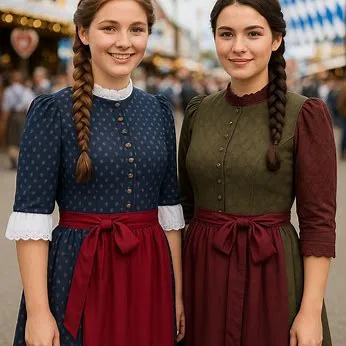
9. What traditional Bavarian clothing is commonly worn at Oktoberfest?
Answer: Lederhosen and dirndls
Explanation: Men commonly wear lederhosen, while women often wear dirndls.
Key Information: These outfits are traditional Bavarian clothing rather than costumes created specifically for Oktoberfest.
10. What are lederhosen?
Answer: Traditional leather shorts or trousers
Explanation: Lederhosen are traditionally made from leather and are associated with Bavarian and Alpine culture.
Key Information: The word literally means “leather trousers.”
11. What is a dirndl?
Answer: A traditional Alpine-style dress
Explanation: A dirndl generally consists of a bodice, blouse, skirt, and apron.
Key Information: Dirndls are especially associated with Bavaria and Austria.
12. What type of food is commonly served at Oktoberfest?
Answer: Traditional Bavarian food
Explanation: Popular dishes include sausages, pretzels, roast chicken, pork dishes, and potato-based foods.
Key Information: Pretzels known as Brezn are especially popular at the festival.
13. What is a large Bavarian-style pretzel called?
Answer: Brezn
Explanation: Brezn is the Bavarian word for pretzel, and large soft pretzels are a classic Oktoberfest food.
Key Information: They are often served with mustard or other savory foods.
14. What type of sausage is commonly associated with Bavarian cuisine?
Answer: Weisswurst
Explanation: Weisswurst is a traditional white sausage made primarily from minced veal and pork.
Key Information: It is especially associated with Bavaria and Munich.
15. What is the traditional toast commonly heard at Oktoberfest?
Answer: “Prost!”
Explanation: “Prost” is a German toast meaning “Cheers!”
Key Information: Festival-goers often raise their mugs and say “Prost!” before drinking.
16. What are the large beer tents at Oktoberfest known for?
Answer: Beer halls or Festzelte
Explanation: These huge temporary structures serve food and beer while hosting live music and celebrations.
Key Information: Each major tent has its own atmosphere, decorations, and traditions.
17. How many major beer tents are traditionally associated with Munich Oktoberfest?
Answer: About 14 large tents
Explanation: The festival features around 14 large main beer tents, along with numerous smaller tents.
Key Information: The exact number can vary slightly from year to year.
18. What is a traditional Oktoberfest beer mug called?
Answer: Maß
Explanation: A Maß is a one-liter serving of beer commonly associated with the Munich festival.
Key Information: The word refers to the measurement rather than simply the glass itself.
19. What is the official opening ceremony of Oktoberfest called?
Answer: Tapping of the first beer barrel
Explanation: Munich’s mayor traditionally taps the first barrel and declares the festival officially open.
Key Information: The famous phrase is “O’zapft is!” meaning “It is tapped!”
20. What does “O’zapft is!” mean?
Answer: “It is tapped!”
Explanation: The phrase announces that the first Oktoberfest beer barrel has been successfully tapped.
Key Information: It is traditionally shouted by Munich’s mayor during the opening ceremony.
Read More: 147+ Last Call Trivia Questions
Funny Oktoberfest Trivia Questions and Answers
1. What is the name of the main Oktoberfest festival grounds in Munich?
Answer: Theresienwiese
Explanation: Theresienwiese is the large open area where Munich’s Oktoberfest takes place each year.
Key Information: The site was named after Princess Therese, whose wedding inspired the original festival.
2. What does the German word “Oktoberfest” literally mean?
Answer: October festival
Explanation: The name combines “Oktober,” meaning October, with “Fest,” meaning festival or celebration.
Key Information: Despite its name, most of the festival takes place in September.
3. What Bavarian city is home to the world’s largest Oktoberfest celebration?
Answer: Munich
Explanation: Munich’s Oktoberfest is the original and most famous celebration of its kind.
Key Information: Other cities around the world hold Oktoberfest-inspired events.
4. What royal couple’s wedding started the Oktoberfest tradition?
Answer: Crown Prince Ludwig and Princess Therese
Explanation: Their wedding celebrations in 1810 included public festivities and horse races.
Key Information: Ludwig later became King Ludwig I of Bavaria.
5. What event was part of the first Oktoberfest celebration?
Answer: Horse races
Explanation: The original 1810 celebration centered around horse races held in honor of the royal wedding.
Key Information: The horse races were repeated the following year, helping establish the annual tradition.
6. What is the traditional Bavarian greeting often heard at Oktoberfest?
Answer: Grüß Gott
Explanation: “Grüß Gott” is a traditional greeting commonly used in Bavaria and parts of Austria.
Key Information: “Prost!” is used specifically as a drinking toast.
7. What German phrase means “Cheers!” at Oktoberfest?
Answer: Prost!
Explanation: Festival-goers commonly say “Prost!” when raising their beer mugs.
Key Information: It is one of the most recognizable German drinking toasts.
8. What traditional dance is associated with Bavarian culture?
Answer: Schuhplattler
Explanation: Schuhplattler is a folk dance involving rhythmic slapping of the thighs, knees, and hands.
Key Information: The dance originated in the Alpine regions of Bavaria and Austria.
9. What traditional Bavarian music is commonly performed at Oktoberfest?
Answer: Oompah music
Explanation: Oompah music features brass instruments, percussion, and lively folk melodies.
Key Information: Bands in Oktoberfest tents commonly perform traditional songs alongside modern hits.
10. Which instrument is strongly associated with Bavarian oompah bands?
Answer: Tuba
Explanation: The tuba provides the deep bass sound that is characteristic of many brass bands.
Key Information: Trumpets, trombones, and other brass instruments are also common.
11. What is a “Hendl” at Oktoberfest?
Answer: Roast chicken
Explanation: Hendl is a popular Bavarian dish often served roasted and seasoned.
Key Information: It is one of the classic foods found in Munich’s beer tents.
12. What is “Schweinshaxe”?
Answer: Roasted pork knuckle
Explanation: Schweinshaxe is a traditional Bavarian dish featuring a crispy roasted pork knuckle.
Key Information: It is commonly served with potatoes, dumplings, or sauerkraut.
13. What is sauerkraut?
Answer: Fermented cabbage
Explanation: Sauerkraut is made by fermenting finely shredded cabbage, producing its distinctive sour flavor.
Key Information: It is a traditional accompaniment to many German and Bavarian dishes.
14. What are “Käsespätzle”?
Answer: German-style egg noodles with cheese
Explanation: Käsespätzle consists of soft egg noodles layered with melted cheese and often topped with fried onions.
Key Information: It is a popular comfort food in southern Germany and Alpine regions.
15. What is a traditional Bavarian dumpling called?
Answer: Knödel
Explanation: Knödel are dumplings that can be made from bread, potatoes, or other ingredients.
Key Information: They are commonly served with hearty meat dishes and sauces.
16. What is the traditional Oktoberfest souvenir mug often decorated with?
Answer: Festival designs and Oktoberfest artwork
Explanation: Collectible mugs may feature the official Oktoberfest logo, dates, or artwork.
Key Information: Some special editions are highly sought after by collectors.
17. What animal is traditionally associated with some Oktoberfest decorations and souvenirs?
Answer: A lion
Explanation: Lions are strongly connected with Bavarian heraldry and appear in many Munich and Bavaria-related designs.
Key Information: The Bavarian coat of arms includes heraldic lions.
18. What is a “Maß” at Oktoberfest?
Answer: A one-liter serving of beer
Explanation: A Maß refers to the standard large beer serving traditionally served in a large glass mug.
Key Information: The word originally refers to a unit of volume.
19. What is the name of the giant Ferris wheel commonly found at Oktoberfest?
Answer: Riesenrad
Explanation: Riesenrad is German for “giant wheel,” and the large Ferris wheel is one of the festival’s recognizable attractions.
Key Information: The Ferris wheel provides panoramic views of the festival grounds.
20. Besides beer tents, what major attractions are found at Oktoberfest?
Answer: Amusement rides
Explanation: Oktoberfest includes roller coasters, Ferris wheels, carousels, haunted attractions, and other rides.
Key Information: The festival is a folk fair as well as a celebration of Bavarian food, music, and beer.
Read More:156+ Wisconsin Trivia Questions and Answers
Easy Oktoberfest Trivia Questions and Answers
1. What is the traditional Bavarian greeting often heard at Oktoberfest?
Answer: Grüß Gott
Explanation: This traditional greeting is widely used in Bavaria and other parts of southern Germany.
Key Information: It literally refers to greeting God, but is commonly used simply as a polite greeting.
2. What does the Bavarian word “Wiesn” mean?
Answer: Meadow
Explanation: “Wiesn” is the Bavarian term for a meadow and is the local nickname for the Theresienwiese festival grounds.
Key Information: Munich residents often call Oktoberfest simply “die Wiesn.”
3. What is the official opening ceremony of Munich Oktoberfest?
Answer: The tapping of the first beer barrel
Explanation: Munich’s mayor taps the first barrel of Oktoberfest beer to officially begin the festival.
Key Information: The mayor traditionally shouts “O’zapft is!” after successfully tapping it.
4. Who traditionally taps the first Oktoberfest beer barrel?
Answer: The mayor of Munich
Explanation: The mayor performs the ceremonial tapping in the Schottenhamel tent.
Key Information: The fewer hammer strikes needed, the more successful the tapping is considered.
5. In which beer tent does the official Oktoberfest opening take place?
Answer: Schottenhamel
Explanation: The official opening ceremony takes place in this historic festival tent.
Key Information: The first barrel is tapped shortly after the traditional opening parade.
6. What parade traditionally opens Oktoberfest?
Answer: The Costume and Riflemen’s Parade
Explanation: The parade features horse-drawn beer wagons, musicians, traditional costumes, and groups from Bavaria and other regions.
Key Information: It usually takes place on the Sunday before the main festival activities begin.
7. What parade brings the breweries’ decorated beer wagons into Oktoberfest?
Answer: The Landlords’ and Brewers’ Parade
Explanation: Beer tent owners and breweries travel through Munich in decorated carriages before the festival officially opens.
Key Information: The parade is one of the most colorful opening traditions.
8. What animals traditionally pull the decorated beer wagons?
Answer: Horses
Explanation: Large draft horses pull ornate wagons carrying beer barrels and festival decorations.
Key Information: The horses and wagons are major symbols of traditional Oktoberfest imagery.
9. What is the name of the famous Oktoberfest parade held on opening weekend?
Answer: Costume and Riflemen’s Parade
Explanation: Participants wear traditional regional clothing and represent communities from Bavaria and beyond.
Key Information: The parade has been part of Oktoberfest since the 19th century.
10. What is a “Festzelt”?
Answer: A festival tent
Explanation: Festzelt is the German word for the large temporary tents where food, beer, music, and dancing take place.
Key Information: Munich Oktoberfest has around 14 major large tents.
11. Which Oktoberfest tent is famous for its roasted chicken and lively atmosphere?
Answer: Hendl and poultry-focused tents such as Armbrustschützenzelt
Explanation: Several tents specialize in traditional Bavarian dishes, including roast chicken.
Key Information: Food menus vary among the major tents.
12. What is the Armbrustschützenzelt known for?
Answer: Crossbow-shooting tradition and Bavarian food
Explanation: The tent’s name refers to crossbow shooters and reflects an old Bavarian tradition.
Key Information: It is one of the major tents at Munich Oktoberfest.
13. What is the Hofbräu Festzelt especially known for?
Answer: Its connection to Hofbräu beer and international popularity
Explanation: The tent is associated with Munich’s Hofbräu brewery and is particularly popular with international visitors.
Key Information: It is one of the largest tents at Oktoberfest.
14. What is the Augustiner Festhalle famous for?
Answer: Serving Augustiner beer
Explanation: The tent is associated with Augustiner-Bräu, Munich’s oldest independent brewery.
Key Information: Augustiner beer is traditionally served from wooden barrels at Oktoberfest.
15. Which Munich brewery is considered the oldest of the city’s six major Oktoberfest breweries?
Answer: Augustiner-Bräu
Explanation: Augustiner traces its brewing history back to 1328.
Key Information: It is one of the six breweries permitted to serve beer at the official Munich Oktoberfest.
16. How many breweries are officially allowed to serve beer at Munich Oktoberfest?
Answer: Six
Explanation: Only six Munich breweries meet the requirements for serving beer at the official festival.
Key Information: They are Augustiner, Hacker-Pschorr, Löwenbräu, Paulaner, Spaten, and Hofbräu.
17. What is the “Reinheitsgebot”?
Answer: The German Beer Purity Law
Explanation: The historical regulation established rules concerning ingredients used in brewing beer.
Key Information: The 1516 Bavarian regulation is an important part of German brewing history.
18. What traditional Oktoberfest beverage is served to children and non-drinkers?
Answer: Non-alcoholic beverages such as lemonade or apple spritzer
Explanation: Oktoberfest offers many drinks besides beer, including soft drinks and fruit-based beverages.
Key Information: Families can enjoy the festival’s food, rides, music, and attractions without drinking alcohol.
19. What is an “Apfelschorle”?
Answer: Apple juice mixed with sparkling water
Explanation: Apfelschorle is a popular German soft drink with a refreshing, lightly carbonated taste.
Key Information: It is commonly available at German restaurants and festivals.
20. What traditional Oktoberfest activity involves spinning or riding amusement attractions?
Answer: Carnival rides
Explanation: Oktoberfest combines a beer festival with a large traditional funfair featuring numerous rides and attractions.
Key Information: The amusement area is an important part of the festival experience for visitors of all ages.
See Also: 147+ Frightfully Fun October Trivia Questions and Answers
Hard Oktoberfest Trivia Questions and Answers
1. What is the name of the Oktoberfest opening parade featuring brewery wagons?
Answer: Landlords’ and Brewers’ Parade
Explanation: The parade features decorated horse-drawn wagons carrying beer from Munich’s official Oktoberfest breweries.
Key Information: It takes place before the official tapping ceremony.
2. What is traditionally carried on the brewery wagons during the Oktoberfest parade?
Answer: Beer barrels
Explanation: The decorated wagons transport barrels and represent the breweries serving at the festival.
Key Information: The wagons are pulled by large draft horses.
3. Which brewery is known for using traditional wooden barrels at Oktoberfest?
Answer: Augustiner-Bräu
Explanation: Augustiner is famous for continuing the traditional use of wooden barrels at the festival.
Key Information: Augustiner is one of Munich’s six official Oktoberfest breweries.
4. What color is traditionally associated with the Hofbräu Oktoberfest tent?
Answer: Blue and white
Explanation: The tent’s decorations reflect Bavarian colors and Hofbräu’s recognizable branding.
Key Information: Blue and white are also the colors strongly associated with Bavaria.
5. What are the official Oktoberfest colors of Bavaria?
Answer: Blue and white
Explanation: The colors come from the Bavarian flag and are widely used in Oktoberfest decorations.
Key Information: You can see blue-and-white patterns throughout Munich during the festival.
6. What is the traditional Bavarian hat often worn at Oktoberfest called?
Answer: Trachtenhut
Explanation: This traditional hat is part of Bavarian folk clothing and is often decorated with feathers or other ornaments.
Key Information: It is commonly worn with lederhosen and other traditional attire.
7. What is a common decoration worn on a traditional Bavarian hat?
Answer: A feather
Explanation: Feathers are often placed in the hatband as part of traditional Alpine clothing.
Key Information: Hat decorations can vary according to region and personal style.
8. What is the apron worn with a dirndl called?
Answer: Schürze
Explanation: The Schürze is the apron that forms part of the traditional dirndl outfit.
Key Information: The position of the dirndl bow has a popular traditional interpretation.
9. What does a dirndl bow tied on the wearer’s left traditionally indicate?
Answer: The wearer is traditionally considered single
Explanation: According to the popular custom, a bow on the left signals that the person is unmarried or available.
Key Information: This is a modern social tradition rather than a strict historical rule.
10. What does a dirndl bow tied on the wearer’s right traditionally indicate?
Answer: The wearer is traditionally considered married or unavailable
Explanation: The bow position is popularly interpreted as a relationship-status signal.
Key Information: Practices can vary, and the custom is not universally followed.
11. What is the traditional Bavarian leather footwear worn with lederhosen?
Answer: Haferlschuhe
Explanation: Haferlschuhe are sturdy traditional shoes associated with Bavarian clothing.
Key Information: They are commonly paired with lederhosen and traditional socks.
12. What are the traditional socks worn with lederhosen called?
Answer: Loferl
Explanation: Loferl are traditional Bavarian leg coverings often worn with lederhosen.
Key Information: They typically leave part of the lower leg exposed.
13. What is “Lebkuchenherz”?
Answer: A heart-shaped gingerbread cookie
Explanation: These decorated gingerbread hearts are popular souvenirs at Oktoberfest.
Key Information: They often contain colorful icing and personalized German messages.
14. What is commonly written on Oktoberfest gingerbread hearts?
Answer: German sayings or affectionate messages
Explanation: Hearts may feature phrases such as greetings, compliments, or humorous expressions.
Key Information: Visitors often buy them as souvenirs or gifts.
15. What is “Gebrannte Mandeln”?
Answer: Candied roasted almonds
Explanation: Almonds are coated with caramelized sugar and roasted, creating a sweet festival snack.
Key Information: Their smell is a familiar part of German fairs and Christmas markets as well as Oktoberfest.
16. What is “Steckerlfisch”?
Answer: Grilled fish on a stick
Explanation: Fish is seasoned and grilled over an open flame, often served at Bavarian festivals.
Key Information: Mackerel is a common choice for Steckerlfisch.
17. What is “Obatzda”?
Answer: A Bavarian cheese spread
Explanation: Obatzda is traditionally made from soft cheese, butter, paprika, and seasonings.
Key Information: It is often served with pretzels and is a popular beer-hall snack.
18. What is “Brotzeit”?
Answer: A traditional Bavarian snack or light meal
Explanation: Brotzeit often includes bread, cheese, sausage, cold meats, and other savory foods.
Key Information: The word literally relates to “bread time.”
19. What traditional Bavarian bread is often served with Obatzda?
Answer: Pretzel
Explanation: Large soft pretzels pair especially well with the creamy cheese spread.
Key Information: Pretzels are among the most recognizable foods associated with Oktoberfest.
20. What is one reason Oktoberfest is considered more than just a beer festival?
Answer: It combines food, music, traditional culture, parades, and amusement rides
Explanation: The event is a large Bavarian folk festival with many activities beyond drinking beer.
Key Information: Millions of visitors attend for the overall cultural and entertainment experience.
Oktoberfest Trivia Questions and Answers for Adults
1. What is the largest tent at Munich Oktoberfest?
Answer: Hofbräu Festzelt
Explanation: Hofbräu Festzelt is one of the biggest and most internationally famous tents at the festival.
Key Information: It can accommodate thousands of guests and is especially popular with international visitors.
2. Which Oktoberfest tent is associated with the Löwenbräu brewery?
Answer: Löwenbräu Festzelt
Explanation: The tent serves Löwenbräu beer and is recognizable by its large lion decoration.
Key Information: The lion is a traditional symbol associated with the brewery.
3. What does the lion above the Löwenbräu tent famously do?
Answer: Roar
Explanation: The large lion figure periodically produces a roaring sound above the tent entrance.
Key Information: The lion has become one of the most recognizable Oktoberfest tent decorations.
4. Which Oktoberfest tent is associated with Spaten beer?
Answer: Schottenhamel and Armbrustschützenzelt serve official Oktoberfest beers, including Spaten in certain venues
Explanation: Spaten is one of the six Munich breweries authorized to serve at Oktoberfest.
Key Information: The exact beer offerings vary by tent.
5. Which six breweries are officially permitted to serve beer at Munich Oktoberfest?
Answer: Augustiner, Hacker-Pschorr, Löwenbräu, Paulaner, Spaten, and Hofbräu
Explanation: These six Munich breweries meet the traditional requirements for Oktoberfest beer.
Key Information: The breweries must brew their Oktoberfest beer within Munich and follow German brewing regulations.
6. What makes Oktoberfest beer different from ordinary German beer?
Answer: It is brewed specifically for Oktoberfest and is traditionally stronger and fuller-bodied
Explanation: Munich Oktoberfest beer is typically a Märzen-style or Festbier-style lager, depending on the brewery and era.
Key Information: Modern Munich Oktoberfest beer is generally lighter in color and body than historical Märzen.
7. What is a Festbier?
Answer: A pale, strong German lager traditionally served at festivals
Explanation: Festbier is crisp, smooth, and stronger than a typical everyday lager.
Key Information: It is the modern style commonly served at Munich Oktoberfest.
8. What was traditionally associated with Märzen beer?
Answer: A stronger amber lager brewed in March
Explanation: Märzen was historically brewed in March because brewing during warmer months was restricted before modern refrigeration.
Key Information: It was traditionally stored and served later in the year.
9. Why was March historically an important month for brewing beer in Bavaria?
Answer: Brewing restrictions made cooler months important for beer production
Explanation: Before refrigeration, brewing during warm weather could increase spoilage and fire risks.
Key Information: The German brewing calendar helped give rise to the Märzen style.
10. What is the approximate alcohol content of modern Oktoberfest Festbier?
Answer: Around 6% alcohol by volume
Explanation: Festbier is generally stronger than many everyday lagers but remains highly drinkable.
Key Information: Exact alcohol content varies by brewery.
11. What is the traditional large beer glass at Oktoberfest called?
Answer: Maßkrug
Explanation: A Maßkrug is a large handled beer mug designed to hold a Maß of beer.
Key Information: A full Maß is one liter.
12. What does “Ein Prosit” mean?
Answer: “A toast” or “Cheers”
Explanation: “Ein Prosit der Gemütlichkeit” is a traditional drinking song frequently played at Oktoberfest.
Key Information: Festival crowds often sing along and raise their mugs together.
13. What does “Gemütlichkeit” roughly mean?
Answer: A feeling of warmth, friendliness, and good cheer
Explanation: The word describes a pleasant atmosphere of comfort and togetherness.
Key Information: It is an important cultural idea associated with Bavarian social gatherings.
14. What is the famous Oktoberfest drinking song “Ein Prosit” used for?
Answer: Encouraging group toasts
Explanation: Bands play the short song repeatedly, prompting everyone to raise their glasses and drink together.
Key Information: It is one of the most recognizable sounds of Oktoberfest.
15. What type of music is commonly played between traditional Bavarian songs at Oktoberfest?
Answer: Popular German and international music
Explanation: Oktoberfest bands often mix folk music with well-known modern songs to entertain large crowds.
Key Information: Many tents feature live bands throughout the day.
16. What is “Gemütlichkeit” most closely associated with at Oktoberfest?
Answer: Friendly social atmosphere
Explanation: The concept emphasizes enjoying food, music, conversation, and company in a relaxed setting.
Key Information: It is often celebrated through communal singing and toasting.
17. What traditional Oktoberfest game involves trying to lift a heavy stone or object?
Answer: Bavarian strength competitions
Explanation: Traditional folk festivals sometimes include strength contests such as stone lifting.
Key Information: These activities reflect the athletic traditions of Bavarian folk culture.
18. What is “Fingerhakeln”?
Answer: A traditional Bavarian finger-pulling contest
Explanation: Two competitors hook fingers and attempt to pull each other across a table.
Key Information: It is an old Bavarian strength competition.
19. What is “Masskrugstemmen”?
Answer: A beer-mug-holding strength competition
Explanation: Participants hold a full beer mug at arm’s length for as long as possible.
Key Information: The contest tests endurance rather than drinking speed.
20. Why are traditional competitions included in Oktoberfest culture?
Answer: To preserve Bavarian folk traditions and entertainment
Explanation: Oktoberfest combines modern amusement with customs rooted in Bavarian community celebrations.
Key Information: Traditional clothing, music, food, dancing, and games all contribute to the festival’s cultural identity.
Best Oktoberfest Trivia Questions and Answers
1. What is the traditional Bavarian dance involving rhythmic footwork and hand slapping?
Answer: Schuhplattler
Explanation: Dancers slap their thighs, knees, and shoes while performing energetic steps.
Key Information: The dance originated in the Alpine regions of Bavaria and Austria.
2. What does the word “Schuhplattler” roughly refer to?
Answer: Slapping the shoes
Explanation: The name comes from the German words associated with shoes and striking or slapping.
Key Information: The dance is traditionally performed by men in lederhosen.
3. What traditional Bavarian instrument is commonly used in folk music?
Answer: Alphorn
Explanation: The long wooden horn produces a deep sound and is strongly associated with Alpine culture.
Key Information: Alphorns are more commonly associated with the Alps than specifically with Oktoberfest.
4. What is an accordion called in German?
Answer: Akkordeon
Explanation: Accordions are frequently used in Bavarian folk music and festival performances.
Key Information: The instrument can provide both melody and accompaniment.
5. What type of band commonly performs at Oktoberfest?
Answer: Bavarian brass band
Explanation: Brass bands provide the lively music heard throughout the festival tents.
Key Information: They commonly feature trumpets, trombones, tubas, and percussion.
6. What traditional instrument provides the deep bass sound in an Oktoberfest brass band?
Answer: Tuba
Explanation: The tuba supplies the low musical foundation for the band’s melodies and rhythms.
Key Information: It is a key part of the classic oompah sound.
7. What is the name of the traditional Bavarian folk costume for men?
Answer: Tracht
Explanation: Tracht is a broader term for traditional regional clothing, including lederhosen.
Key Information: Specific styles vary by region.
8. What is the name of the traditional Bavarian folk clothing for women?
Answer: Tracht
Explanation: Traditional women’s clothing can include the dirndl as part of Bavarian Tracht.
Key Information: The exact design varies across Alpine regions.
9. What material are traditional lederhosen usually made from?
Answer: Leather
Explanation: The name literally means “leather trousers,” and durable leather was traditionally practical for outdoor work.
Key Information: Modern lederhosen can feature decorative embroidery.
10. What is often embroidered on traditional lederhosen?
Answer: Floral and regional designs
Explanation: Decorative stitching can include flowers, leaves, animals, or regional symbols.
Key Information: Embroidery patterns can reflect local traditions.
11. What type of shoes traditionally accompany Bavarian Tracht?
Answer: Haferlschuhe
Explanation: These sturdy traditional shoes are commonly worn with lederhosen.
Key Information: They are typically made from leather.
12. What is the traditional Bavarian apron worn with a dirndl called?
Answer: Schürze
Explanation: The Schürze is worn over the skirt portion of the dirndl.
Key Information: It can be decorated with patterns, embroidery, ribbons, or lace.
13. What is a “Charivari” traditionally associated with lederhosen?
Answer: A decorative chain or ornament
Explanation: Charivari can be worn around the waist or attached to traditional clothing and may include small pendants.
Key Information: Traditional examples can feature hunting or regional motifs.
14. What is often worn around the neck with traditional Bavarian clothing?
Answer: A neckerchief
Explanation: A decorative scarf or neckerchief can complement lederhosen or other Tracht.
Key Information: Styles and colors vary depending on the outfit.
15. What traditional Oktoberfest accessory is sometimes decorated with flowers?
Answer: Dirndl apron or hair accessories
Explanation: Floral decorations are common in Bavarian-inspired festival fashion.
Key Information: Modern Oktoberfest outfits often combine traditional and contemporary styles.
16. What is the traditional German word for a beer garden?
Answer: Biergarten
Explanation: Biergarten literally means “beer garden” and refers to an outdoor area where people socialize and enjoy food and drinks.
Key Information: Beer gardens are an important part of Bavarian social culture.
17. What type of seating is traditionally common in Bavarian beer gardens?
Answer: Long communal benches
Explanation: Long tables and benches encourage groups of people to sit together and socialize.
Key Information: This communal style reflects the social atmosphere associated with Bavarian gatherings.
18. What traditional Bavarian snack is made from radishes and salt?
Answer: Radi
Explanation: Large white radishes are thinly sliced or spiraled and traditionally served with salt.
Key Information: Radi is a classic accompaniment to Bavarian beer-garden food.
19. What is “Wurstsalat”?
Answer: A German sausage salad
Explanation: It is commonly made with sliced sausage, onions, vinegar, and oil.
Key Information: It is a traditional cold dish found in southern Germany.
20. What is one reason Bavarian food is popular at Oktoberfest?
Answer: It pairs well with traditional festival beverages and reflects local culture
Explanation: Hearty dishes such as sausages, pretzels, roast chicken, and pork are central to the festival experience.
Key Information: Food is an important part of Oktoberfest alongside music, rides, and traditional celebrations.
Tricky Oktoberfest Trivia Questions and Answers
1. What is the traditional Bavarian dish made from veal and pork sausage?
Answer: Weisswurst
Explanation: Weisswurst is a pale sausage traditionally seasoned with parsley, lemon, and spices.
Key Information: It is especially associated with Munich and Bavaria.
2. What is traditionally served with Weisswurst?
Answer: Sweet mustard and pretzels
Explanation: The combination of Weisswurst, sweet mustard, and a soft pretzel is a classic Bavarian meal.
Key Information: Traditional custom says Weisswurst should be eaten before noon, though modern practice is more flexible.
3. What is “Süßer Senf”?
Answer: Sweet mustard
Explanation: Süßer Senf is a mildly sweet mustard commonly served with Bavarian sausages.
Key Information: It is especially associated with Weisswurst.
4. What is the German word for sausage?
Answer: Wurst
Explanation: Wurst is the general German word used for sausage and appears in the names of many German dishes.
Key Information: Germany has hundreds of regional sausage varieties.
5. What is Bratwurst?
Answer: A type of German grilled or fried sausage
Explanation: Bratwurst can be made from pork, beef, or veal depending on the regional recipe.
Key Information: Different regions of Germany have their own versions.
6. What is Currywurst?
Answer: Sausage served with curry-seasoned tomato sauce
Explanation: Currywurst is a popular German street-food dish made by serving sausage with a spiced sauce.
Key Information: It is especially associated with Berlin and is not a traditional Bavarian Oktoberfest dish.
7. What is a traditional Oktoberfest roast chicken called in Bavarian German?
Answer: Hendl
Explanation: Hendl refers to roast chicken and is one of the most popular dishes served in Oktoberfest tents.
Key Information: The chicken is typically seasoned and roasted until the skin is crisp.
8. What is Schweinshaxe?
Answer: Roasted pork knuckle
Explanation: Schweinshaxe is slow-roasted until the outside becomes crispy while the meat remains tender.
Key Information: It is often served with dumplings, potatoes, or sauerkraut.
9. What is “Kartoffelpuffer”?
Answer: Potato pancakes
Explanation: Grated potatoes are mixed with ingredients such as egg and flour, then fried until crisp.
Key Information: They are known by different regional names throughout Germany.
10. What is “Reibekuchen”?
Answer: German potato pancakes
Explanation: Reibekuchen are crispy fried potato cakes commonly served with applesauce.
Key Information: The dish is particularly associated with western Germany.
11. What is “Apfelstrudel”?
Answer: Apple strudel
Explanation: Apfelstrudel is a pastry filled with apples, sugar, cinnamon, and other ingredients.
Key Information: It is especially associated with Austrian and southern German cuisine.
12. What is “Kaiserschmarrn”?
Answer: Shredded fluffy pancake
Explanation: The sweet pancake is torn into pieces during cooking and often served with powdered sugar and fruit compote.
Key Information: It originated in the Austrian imperial culinary tradition.
13. What is “Germknödel”?
Answer: A sweet steamed yeast dumpling
Explanation: Germknödel is often filled with plum jam and served with butter, vanilla sauce, or poppy seeds.
Key Information: It is popular in Bavarian and Austrian cuisine.
14. What is “Dampfnudel”?
Answer: A steamed yeast dumpling
Explanation: Dampfnudeln are soft yeast dumplings that can be served sweet or savory.
Key Information: They are especially popular in southern Germany.
15. What is “Sauerkraut” made from?
Answer: Fermented cabbage
Explanation: Finely shredded cabbage is fermented with salt, producing its characteristic tangy flavor.
Key Information: Sauerkraut is a traditional German accompaniment to many hearty dishes.
16. What is “Rotkohl”?
Answer: Red cabbage
Explanation: Rotkohl is commonly cooked with vinegar, spices, and sometimes fruit to create a sweet-and-sour flavor.
Key Information: It is a common side dish with German meat dishes.
17. What is “Kartoffelknödel”?
Answer: Potato dumplings
Explanation: These dumplings are made primarily from potatoes and are often served with roasted meats and gravy.
Key Information: Potato dumplings are especially popular in Bavaria.
18. What is “Obatzda” traditionally made from?
Answer: Soft cheese, butter, paprika, and seasonings
Explanation: The ingredients are mixed into a creamy spread that pairs especially well with pretzels.
Key Information: Obatzda is strongly associated with Bavarian beer gardens.
19. What is “Brezn” in Bavarian cuisine?
Answer: Pretzel
Explanation: Brezn are large, soft pretzels with a chewy crust and distinctive twisted shape.
Key Information: They are among the most iconic foods served at Oktoberfest.
20. What traditional Oktoberfest dessert is often served with whipped cream or fruit?
Answer: Apfelstrudel
Explanation: Warm apple strudel is a popular dessert at German and Bavarian festivals.
Key Information: Its combination of apples, cinnamon, pastry, and sugar makes it a classic festival treat.
FAQS
1. Where is Oktoberfest traditionally held?
Answer: Oktoberfest is traditionally held in Munich, Germany. The festival takes place on the Theresienwiese fairgrounds and attracts visitors from around the world.
2. When did the first Oktoberfest take place?
Answer: The first Oktoberfest was held in 1810 in Munich. It began as a celebration of the marriage of Crown Prince Ludwig and Princess Therese of Saxe-Hildburghausen.
3. What type of clothing is traditionally worn at Oktoberfest?
Answer: Traditional Oktoberfest clothing includes lederhosen for men and dirndls for women. These outfits are strongly associated with Bavarian culture and the festival.
4. What food is commonly associated with Oktoberfest?
Answer: Popular Oktoberfest foods include bratwurst, pretzels, roast chicken, and other Bavarian specialties. Large soft pretzels are especially popular with festival visitors.
Conclusion
How did you score on these Oktoberfest trivia questions and answers? From its historic beginnings and traditional celebrations to famous foods, music, costumes, and customs, Oktoberfest has plenty of fascinating stories and facts to explore.
Share your score with friends and family and challenge them to beat your result. If you enjoyed this Oktoberfest quiz, explore more trivia questions and answers covering festivals, culture, history, food, and other entertaining topics.
Read also:
159+ Wisconsin Trivia Questions and Answers