
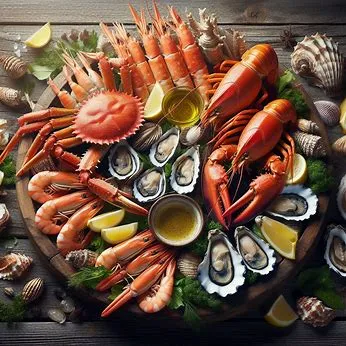
Dive into a sea of fascinating facts with Seafood Trivia Questions and Answers (2026)! Seafood has been an important part of cuisines and cultures around the world for centuries, from popular favorites like shrimp, salmon, and crab to lesser-known fish and shellfish found in oceans, rivers, and coastal waters.
This collection of Seafood Trivia Questions and Answers covers a wide range of topics, including different types of seafood, popular dishes, cooking methods, nutrition, fishing, marine life, world cuisines, and surprising seafood facts.
Whether you’re a food lover, a trivia enthusiast, a seafood fan, or simply looking for entertaining questions for a quiz or gathering, you’ll find plenty of interesting challenges here.
Seafood Trivia Questions and Answers Multiple Choice
1. What is seafood?
Answer: Seafood refers to edible aquatic animals and plants, especially fish and shellfish.
Explanation: Seafood includes fish, shrimp, crabs, oysters, mussels, squid, and many other marine or freshwater foods.
Key Information: Seafood can provide protein, vitamins, minerals, and healthy fats.
2. What is the most commonly eaten type of seafood worldwide?
Answer: Fish.
Explanation: Fish is consumed in many cultures and is available in countless varieties.
Key Information: Popular edible fish include salmon, tuna, cod, sardines, and tilapia.
3. What is shellfish?
Answer: Aquatic invertebrates commonly eaten as food.
Explanation: Shellfish generally includes crustaceans such as shrimp and crabs and mollusks such as oysters and clams.
Key Information: Shellfish can be rich in protein, zinc, iron, and other nutrients.
4. What type of seafood is salmon?
Answer: A fish.
Explanation: Salmon are ray-finned fish known for their distinctive color and migration patterns.
Key Information: Salmon is particularly valued for its omega-3 fatty acids.
5. What is shrimp?
Answer: A small crustacean.
Explanation: Shrimp have segmented bodies, jointed legs, and a hard outer shell.
Key Information: Shrimp are among the most widely consumed seafood products worldwide.
6. What is the main nutritional benefit of eating fish?
Answer: High-quality protein.
Explanation: Fish provides all or most of the essential amino acids needed to build and maintain body tissues.
Key Information: Many fish also provide omega-3 fats, vitamin B12, selenium, and other nutrients.
7. Which seafood is especially rich in omega-3 fatty acids?
Answer: Fatty fish such as salmon, sardines, and mackerel.
Explanation: These fish naturally contain substantial amounts of EPA and DHA.
Key Information: Omega-3 fatty acids are important components of cell membranes and support normal body functions.
8. What is tuna?
Answer: A group of fast-swimming saltwater fish.
Explanation: Tuna belong to the mackerel family and include several species used as food.
Key Information: Tuna is commonly sold fresh, frozen, or canned.
9. What is cod?
Answer: A group of cold-water fish commonly used as food.
Explanation: Cod has mild-flavored white flesh that is popular in many cuisines.
Key Information: Cod is often baked, grilled, fried, or used in fish dishes.
10. What is an oyster?
Answer: A marine mollusk with a hard, hinged shell.
Explanation: Oysters are commonly eaten raw or cooked and are also important filter feeders in coastal ecosystems.
Key Information: Oysters can provide vitamin B12, zinc, iron, and protein.
11. What is a lobster?
Answer: A large marine crustacean.
Explanation: Lobsters have hard shells, jointed legs, and large claws in many species.
Key Information: Lobster meat is considered a delicacy in many parts of the world.
12. What is a crab?
Answer: A crustacean with a hard shell and specialized claws.
Explanation: Crabs live in oceans, rivers, and other aquatic environments depending on the species.
Key Information: Crab meat is used in soups, salads, cakes, and many regional dishes.
13. What is squid?
Answer: A marine mollusk belonging to the cephalopod group.
Explanation: Squid have tentacles, a streamlined body, and an internal shell-like structure called a pen.
Key Information: Squid is commonly grilled, fried, stuffed, or used in seafood dishes.
14. What is calamari?
Answer: A culinary term commonly used for squid.
Explanation: Restaurants often use the word “calamari” for prepared squid, especially fried squid rings.
Key Information: Not every squid dish is fried; squid can also be grilled, steamed, or braised.
15. What is octopus?
Answer: A marine cephalopod with eight arms.
Explanation: Octopuses are highly intelligent invertebrates and have no internal or external skeleton.
Key Information: Octopus is eaten in many Mediterranean and Asian cuisines.
16. What is caviar?
Answer: Salt-cured roe, traditionally referring specifically to sturgeon eggs.
Explanation: Authentic caviar comes from sturgeon, although the term is sometimes used more broadly for other fish eggs.
Key Information: Caviar is traditionally served as a luxury food.
17. Why does seafood spoil quickly?
Answer: Seafood is highly perishable because of its moisture, enzymes, and naturally occurring microorganisms.
Explanation: These factors can cause quality to deteriorate rapidly when seafood is not kept properly chilled.
Key Information: Proper refrigeration or freezing is important for maintaining seafood quality and safety.
18. What does “sushi-grade” mean?
Answer: It is a commonly used commercial term for fish intended to be eaten raw, but it is not a universally standardized legal safety designation.
Explanation: The phrase can vary in meaning between sellers and regions.
Key Information: Raw seafood should come from a reputable source and be handled according to food-safety guidance.
19. Why is seafood often frozen soon after being caught?
Answer: To preserve quality and slow spoilage.
Explanation: Freezing greatly slows microbial growth and chemical changes that can reduce freshness.
Key Information: Properly frozen seafood can retain much of its nutritional value and quality.
20. What is aquaculture?
Answer: The farming of aquatic organisms.
Explanation: Aquaculture involves raising fish, shellfish, algae, and other aquatic species under controlled or managed conditions.
Key Information: Farmed seafood supplies a significant portion of seafood consumed around the world.
Recommended: 142+ Weird Food Trivia Questions and Answers
Seafood Trivia Questions and Answers for Adults
1. What is the difference between fish and shellfish?
Answer: Fish are vertebrate aquatic animals, while shellfish are generally aquatic invertebrates.
Explanation: Fish have backbones, whereas crustaceans and mollusks do not.
Key Information: Shrimp, crab, oysters, and clams are common examples of shellfish.
2. What are crustaceans?
Answer: Crustaceans are aquatic arthropods with jointed legs and hard exoskeletons.
Explanation: Their bodies are protected by an outer shell that they shed as they grow.
Key Information: Shrimp, crabs, lobsters, and crayfish are common crustaceans.
3. What are mollusks?
Answer: Mollusks are soft-bodied invertebrates belonging to a large animal group.
Explanation: Some mollusks have shells, while others, such as squid and octopuses, do not have an external shell.
Key Information: Oysters, clams, mussels, scallops, squid, and octopus are mollusks.
4. Which seafood is known for having a high amount of vitamin B12?
Answer: Clams are especially rich in vitamin B12.
Explanation: Vitamin B12 supports normal nerve function and red blood cell formation.
Key Information: Other seafood sources include sardines, trout, salmon, and tuna.
5. What seafood is commonly used to make fish and chips?
Answer: Cod and haddock are common choices.
Explanation: Their mild flavor and firm white flesh work well when battered and fried.
Key Information: The exact fish used varies by country, restaurant, and region.
6. What is haddock?
Answer: Haddock is a saltwater fish related to cod.
Explanation: It has white flesh and a distinctive dark marking near each side of its body.
Key Information: Haddock is widely used in smoked, baked, and fried seafood dishes.
7. What is sardine?
Answer: Sardine is a common name for several small oily fish.
Explanation: Sardines are often preserved by canning, smoking, or drying.
Key Information: They are a good source of protein, vitamin B12, and omega-3 fatty acids.
8. What is mackerel?
Answer: Mackerel is a group of fast-swimming marine fish.
Explanation: Many mackerel species have relatively high levels of natural oils in their flesh.
Key Information: Mackerel is commonly grilled, smoked, canned, or baked.
9. What is trout?
Answer: Trout are freshwater and migratory fish belonging to the salmon family.
Explanation: Several trout species are raised in aquaculture and are also caught in the wild.
Key Information: Trout has delicate flesh and is commonly baked, grilled, or smoked.
10. What is halibut?
Answer: Halibut is a large flatfish.
Explanation: Halibut live on or near the ocean floor and can grow to very large sizes.
Key Information: Its firm, mild-flavored white meat is popular in many seafood dishes.
11. What is scallop?
Answer: A scallop is a marine bivalve mollusk.
Explanation: Scallops have two fan-shaped shells and a muscular part that is commonly eaten.
Key Information: Scallops are often seared, grilled, or baked.
12. What is a mussel?
Answer: A mussel is a bivalve mollusk with a dark, elongated shell.
Explanation: Mussels are filter feeders that obtain food by filtering particles from water.
Key Information: They are commonly steamed and served in soups, sauces, and seafood dishes.
13. What is a clam?
Answer: A clam is a type of bivalve mollusk with two shells.
Explanation: Clams live in marine or freshwater environments depending on the species.
Key Information: They are commonly used in chowders, pasta, soups, and other dishes.
14. What is a prawn?
Answer: A prawn is a shrimp-like crustacean.
Explanation: The terms “prawn” and “shrimp” can have different meanings depending on the region.
Key Information: Both are widely consumed seafood and are important in global fisheries and aquaculture.
15. What is crayfish?
Answer: A small freshwater crustacean resembling a miniature lobster.
Explanation: Crayfish live mainly in freshwater environments such as streams, rivers, lakes, and wetlands.
Key Information: They are popular in regional cuisines around the world.
16. What is smoked salmon?
Answer: Salmon that has been preserved and flavored through smoking.
Explanation: Smoking can involve either hot-smoking or cold-smoking methods.
Key Information: Smoked salmon is commonly served with bread, salads, eggs, and other foods.
17. What is a fish fillet?
Answer: A boneless or mostly boneless piece of fish cut from the side of the fish.
Explanation: Filleting separates the edible flesh from much of the bones and body structure.
Key Information: Fish fillets are convenient for grilling, baking, frying, and steaming.
18. What is roe in seafood?
Answer: Roe refers to fish eggs or the egg masses of certain aquatic animals.
Explanation: Roe is used as food in many cultures and can be served fresh, salted, or processed.
Key Information: Salmon roe, trout roe, and sturgeon caviar are well-known examples.
19. What is a seafood allergy?
Answer: An immune reaction to certain seafood proteins.
Explanation: Shellfish allergies are particularly common and can cause symptoms ranging from mild reactions to severe allergic responses.
Key Information: Someone with a known seafood allergy should follow medical advice and avoid the triggering food.
20. Why is seafood important to many coastal communities?
Answer: It provides food, employment, and income.
Explanation: Fishing, aquaculture, seafood processing, transportation, and restaurants support many coastal economies.
Key Information: Sustainable management is important for protecting seafood resources for future generations.
Funny Seafood Trivia Questions and Answers
1. What is sustainable seafood?
Answer: Seafood produced or harvested in ways that help maintain healthy aquatic populations and ecosystems.
Explanation: Sustainable practices aim to prevent overfishing and reduce unnecessary environmental damage.
Key Information: Sustainability can involve responsible fishing, aquaculture, habitat protection, and effective fisheries management.
2. What does overfishing mean?
Answer: Catching fish faster than their populations can naturally replace themselves.
Explanation: Continued overfishing can reduce fish populations and disrupt marine ecosystems.
Key Information: Catch limits, protected areas, and monitoring are among the tools used to manage fisheries.
3. What is bycatch?
Answer: Marine animals unintentionally caught while fishing for other species.
Explanation: Bycatch can include unwanted fish, turtles, seabirds, sharks, or marine mammals depending on the fishing method.
Key Information: Improved fishing gear and practices can help reduce unwanted catches.
4. What is a fishery?
Answer: A fishery is an activity or industry involving the catching, harvesting, or management of aquatic organisms.
Explanation: Fisheries can operate in oceans, rivers, lakes, and other bodies of water.
Key Information: Fisheries may be commercial, recreational, or subsistence-based.
5. What is wild-caught seafood?
Answer: Seafood harvested from natural aquatic environments rather than raised on a farm.
Explanation: Wild fish and shellfish are caught using methods such as nets, hooks, traps, or other fishing equipment.
Key Information: The environmental impact varies greatly depending on the species and fishing method.
6. What is farmed seafood?
Answer: Seafood raised through aquaculture.
Explanation: Fish and shellfish can be grown in ponds, tanks, cages, or other managed environments.
Key Information: Common farmed seafood includes salmon, shrimp, tilapia, oysters, and mussels.
7. What is a fish hatchery?
Answer: A facility where fish are bred and raised during early stages of life.
Explanation: Hatcheries may produce young fish for aquaculture or conservation and restocking programs.
Key Information: Hatchery-raised fish can support both commercial production and some wildlife-management efforts.
8. What is a fish market?
Answer: A place where fish and other seafood are sold.
Explanation: Fish markets may sell freshly caught, chilled, frozen, or processed seafood.
Key Information: Traditional fish markets are important parts of food culture in many coastal regions.
9. What is sashimi?
Answer: Thinly sliced seafood traditionally served without being incorporated into sushi rice.
Explanation: Sashimi is commonly prepared from carefully handled raw fish or other seafood.
Key Information: Tuna, salmon, and yellowtail are among the seafood commonly used for sashimi.
10. What is ceviche?
Answer: A dish made from seafood marinated in acidic citrus juice and often mixed with other ingredients.
Explanation: Traditional ceviche commonly uses raw fish that changes in texture and appearance during marination.
Key Information: Ceviche is strongly associated with the cuisines of Latin America, especially Peru.
11. What is fish sauce?
Answer: A fermented liquid condiment made primarily from fish and salt.
Explanation: Fish is fermented for an extended period, producing a savory, salty flavor.
Key Information: Fish sauce is an important ingredient in many Southeast Asian cuisines.
12. What is smoked fish?
Answer: Fish preserved and flavored through exposure to smoke.
Explanation: Smoking can also be combined with salting or other preservation methods.
Key Information: Salmon, trout, haddock, and mackerel are commonly smoked.
13. What is dried fish?
Answer: Fish that has had much of its moisture removed for preservation.
Explanation: Drying reduces the water available for microorganisms that cause spoilage.
Key Information: Dried fish is an important traditional food in many regions.
14. What is salted fish?
Answer: Fish preserved by applying salt.
Explanation: Salt helps reduce available moisture and inhibits the growth of many microorganisms.
Key Information: Salted fish has been used as a preservation method for centuries.
15. What is surimi?
Answer: A processed seafood product made from finely ground fish.
Explanation: The fish paste is washed, blended with other ingredients, and formed into various shapes.
Key Information: Surimi is commonly used to make imitation crab products.
16. What is imitation crab?
Answer: A processed seafood product designed to resemble crab meat.
Explanation: It is usually made primarily from surimi, often using white-fleshed fish.
Key Information: Despite its name, imitation crab generally contains little or no actual crab meat.
17. What is a fish steak?
Answer: A cross-section cut of a large fish.
Explanation: Unlike a fillet, a fish steak may include part of the backbone and surrounding bones.
Key Information: Salmon, tuna, and swordfish are commonly sold as steaks.
18. What is a fish collar?
Answer: The flavorful section of fish located around the head and shoulder area.
Explanation: This cut contains relatively rich meat and fat and is often grilled or roasted.
Key Information: Fish collars are particularly popular in some Japanese and other Asian cuisines.
19. What is seafood stock?
Answer: A flavorful liquid made by simmering seafood parts with vegetables, herbs, and water.
Explanation: Shells, fish bones, and other usable seafood parts can contribute flavor.
Key Information: Seafood stock is commonly used in soups, sauces, stews, and risottos.
20. Why is seafood used in many different cuisines?
Answer: Because aquatic environments provide a wide variety of edible species and seafood adapts to many cooking methods.
Explanation: Fish and shellfish can be grilled, steamed, fried, baked, smoked, dried, fermented, or eaten raw when appropriately prepared.
Key Information: Seafood traditions vary greatly according to local species, geography, culture, and cooking practices.
Related: 142+ Spaghetti Trivia Questions and Answers
Easy Seafood Trivia Questions and Answers
1. Which seafood is commonly associated with New England clam chowder?
Answer: Clams.
Explanation: Clams are the defining seafood ingredient in traditional New England-style clam chowder.
Key Information: The soup commonly includes potatoes, onions, and a creamy broth.
2. What seafood is traditionally used in paella?
Answer: Various seafood such as mussels, shrimp, clams, and squid.
Explanation: Seafood paella combines rice with different ingredients depending on the regional recipe.
Key Information: Traditional paella can also contain chicken, rabbit, or other meats rather than seafood.
3. What fish is traditionally used in Japanese tuna sushi?
Answer: Tuna.
Explanation: Several tuna species and cuts can be used in sushi and sashimi.
Key Information: Fatty tuna cuts such as toro are especially prized in Japanese cuisine.
4. What is toro in Japanese cuisine?
Answer: A fatty cut of tuna belly.
Explanation: Toro contains more intramuscular fat than lean tuna cuts.
Key Information: Otoro generally refers to an especially fatty portion of the tuna belly.
5. What seafood is commonly used in shrimp scampi?
Answer: Shrimp.
Explanation: Shrimp are typically cooked with ingredients such as garlic, butter, olive oil, lemon, and herbs.
Key Information: Despite the name, the Italian term “scampi” refers to a different crustacean.
6. What are scampi?
Answer: Small lobster-like crustaceans, particularly Norway lobsters in European usage.
Explanation: The term can refer to different crustaceans depending on the region.
Key Information: In some countries, “shrimp scampi” describes a shrimp dish prepared in a scampi-style sauce.
7. What seafood is commonly used in fish tacos?
Answer: Fish such as cod, mahi-mahi, tilapia, or other white-fleshed species.
Explanation: The exact fish depends on the recipe and location.
Key Information: Fish tacos are strongly associated with Mexican and Baja California cuisine.
8. What is mahi-mahi?
Answer: A fast-growing marine fish also known as dolphinfish.
Explanation: Despite the name “dolphinfish,” it is not related to dolphins.
Key Information: Mahi-mahi has firm, mild-flavored flesh and is popular for grilling and frying.
9. What is swordfish?
Answer: A large predatory marine fish with a long, sword-like upper jaw.
Explanation: Its firm flesh is often sold as thick steaks.
Key Information: Swordfish is commonly grilled or broiled.
10. What is a grouper?
Answer: A group of large-bodied marine fish found mainly in warm and tropical waters.
Explanation: Groupers are generally robust fish with firm flesh.
Key Information: They are popular food fish but some species are subject to fishing restrictions.
11. What is snapper?
Answer: A common name for various marine fish, especially members of the snapper family.
Explanation: Many snapper species have firm, flavorful flesh.
Key Information: Red snapper is one of the best-known species sold as seafood.
12. What is anchovy?
Answer: A small oily fish commonly preserved by salting or curing.
Explanation: Anchovies have a strong savory flavor and are often used in sauces and toppings.
Key Information: They are an important ingredient in foods such as Caesar dressing and some Mediterranean dishes.
13. What is eel sauce?
Answer: A sweet and savory sauce commonly used with Japanese-style grilled eel and other dishes.
Explanation: It is often made from soy sauce, sugar, and mirin or similar ingredients.
Key Information: Despite its name, commercially prepared eel sauce may contain no eel.
14. What is unagi?
Answer: Japanese freshwater eel.
Explanation: Unagi is commonly grilled and glazed with a sweet-savory sauce.
Key Information: It is a popular ingredient in Japanese cuisine, particularly over rice.
15. What is uni in Japanese cuisine?
Answer: Sea urchin gonads, commonly called sea urchin roe in culinary contexts.
Explanation: Uni has a rich, creamy texture and distinctive ocean flavor.
Key Information: It is often served as sushi or sashimi.
16. What is sea urchin?
Answer: A spiny marine invertebrate belonging to the echinoderm group.
Explanation: Sea urchins have a rounded body covered with movable spines.
Key Information: Their edible interior is prized in several coastal cuisines.
17. What is geoduck?
Answer: A very large burrowing saltwater clam.
Explanation: Geoducks have an unusually long siphon that extends from their shell.
Key Information: They are especially associated with the Pacific Northwest and parts of East Asia.
18. What is abalone?
Answer: A marine gastropod mollusk with a distinctive ear-shaped shell.
Explanation: Abalone have a muscular foot that is eaten in many cuisines.
Key Information: Wild abalone populations are carefully managed in many regions.
19. What is conch?
Answer: A large marine snail with a strong spiral shell.
Explanation: Conch meat is eaten in several Caribbean and tropical cuisines.
Key Information: It can be prepared in salads, fritters, soups, and stews.
20. What is a fish roe?
Answer: The eggs of a fish.
Explanation: Fish roe can be served fresh, cured, smoked, or otherwise prepared.
Key Information: Salmon roe, trout roe, and flying-fish roe are examples used in different cuisines.
Seafood Trivia Questions and Answers for Kids
1. What seafood is known for having blue blood?
Answer: Horseshoe crabs.
Explanation: Their blood contains copper-based hemocyanin, which appears blue when oxygenated.
Key Information: Horseshoe crabs are marine arthropods rather than true crabs.
2. Which seafood animal can regenerate lost arms?
Answer: Starfish, also called sea stars.
Explanation: Many sea star species can regenerate damaged or lost arms over time.
Key Information: Sea stars are echinoderms and are not actually fish.
3. How many arms does an octopus have?
Answer: Eight.
Explanation: Octopuses are cephalopods with eight arms covered with sensory structures and suckers.
Key Information: They are among the most intelligent marine invertebrates.
4. How many arms does a squid have?
Answer: Eight arms and two longer tentacles.
Explanation: Squid use their arms and tentacles to capture and manipulate prey.
Key Information: The two tentacles are generally longer than the eight arms.
5. Which seafood animal can change its skin color and pattern?
Answer: Cuttlefish.
Explanation: Cuttlefish have specialized skin cells that allow rapid changes in color and appearance.
Key Information: These changes help with communication, camouflage, and hunting.
6. What is the largest fish in the world?
Answer: The whale shark.
Explanation: Whale sharks are enormous filter-feeding sharks that live in warm and tropical oceans.
Key Information: Despite their size, they primarily eat plankton and other tiny organisms.
7. What is the largest living bony fish?
Answer: The ocean sunfish, or mola.
Explanation: Ocean sunfish can reach enormous weights and have a distinctive flattened body shape.
Key Information: They feed on jellyfish and other marine organisms.
8. Which seafood animal is famous for producing pearls?
Answer: Oysters.
Explanation: Certain pearl oysters can form pearls when an irritant becomes enclosed by layers of nacre.
Key Information: Most pearls sold commercially today are cultured rather than naturally formed.
9. What is nacre?
Answer: A smooth, iridescent material produced by certain mollusks.
Explanation: Nacre is deposited in layers inside shells and forms the main material of many pearls.
Key Information: It is often called mother-of-pearl.
10. Which seafood animal has a hard exoskeleton that it must shed to grow?
Answer: Crabs.
Explanation: Crabs and other crustaceans cannot expand their rigid outer shells continuously.
Key Information: They periodically molt, leaving behind the old shell and developing a larger one.
11. What is molting in crustaceans?
Answer: The process of shedding an old exoskeleton and forming a new one.
Explanation: A crustacean must molt as its body grows.
Key Information: Newly molted animals can be especially vulnerable because their new shell is initially soft.
12. What is soft-shell crab?
Answer: A crab harvested shortly after molting when its new shell is still soft.
Explanation: The entire crab can be eaten because the newly formed shell has not yet hardened.
Key Information: Soft-shell crab is commonly fried, grilled, or sautéed.
13. Which seafood animal is known for walking sideways?
Answer: Crabs.
Explanation: A crab’s leg structure and joint arrangement make sideways movement particularly efficient.
Key Information: Some crab species can also move forward or backward when necessary.
14. What is the fastest fish in the ocean?
Answer: The sailfish is often cited as one of the fastest fish, with estimated speeds around 68 mph (110 km/h), though exact measurements are debated.
Explanation: Sailfish have streamlined bodies and powerful muscles suited to rapid bursts of speed.
Key Information: Their tall dorsal fins are called sails.
15. What seafood animal uses ink as a defense?
Answer: Squid.
Explanation: Squid can release a dark cloud of ink when threatened.
Key Information: The ink can confuse predators and provide an opportunity for escape.
16. Which seafood animal has three hearts?
Answer: Octopuses.
Explanation: An octopus has two hearts that pump blood to the gills and one that pumps blood around the body.
Key Information: Their blood contains hemocyanin, which is copper-based.
17. What color is an octopus’s blood?
Answer: Blue.
Explanation: Octopus blood uses hemocyanin to transport oxygen rather than the iron-based hemoglobin found in humans.
Key Information: Hemocyanin works especially well in the cold, low-oxygen conditions where many octopuses live.
18. Which seafood animal has a powerful claw that can produce a rapid snapping sound?
Answer: The pistol shrimp.
Explanation: Its specialized claw creates a powerful water jet and shock wave when it snaps shut.
Key Information: The resulting bubble collapse can stun or kill small prey.
19. What is a barnacle?
Answer: A small marine crustacean that usually attaches permanently to hard surfaces.
Explanation: Adult barnacles remain attached to rocks, boats, whales, and other surfaces while filtering food from the water.
Key Information: Although they look like mollusks, barnacles are actually related to crabs and shrimp.
20. What seafood animal is famous for building reefs?
Answer: Coral-building organisms, known as reef-building corals.
Explanation: Corals are marine animals that live in colonies and produce calcium carbonate skeletons.
Key Information: Coral reefs provide habitat for many fish and other marine organisms.
Read More : 146+ Food & Beverage Trivia Questions And Answers
Best Seafood Trivia Questions and Answers
1. What is the most expensive seafood in the world?
Answer: There is no single universally accepted “most expensive” seafood.
Explanation: Prices vary greatly by species, quality, season, location, and auction demand.
Key Information: Rare bluefin tuna and certain premium shellfish can command exceptionally high prices.
2. What is bluefin tuna?
Answer: A group of large, fast-swimming tuna species.
Explanation: Bluefin tuna are powerful predators capable of traveling long distances across oceans.
Key Information: Their fatty meat is highly valued in Japanese cuisine and international seafood markets.
3. Why is bluefin tuna highly valued?
Answer: Its meat can have a rich flavor and high fat content, particularly in prized cuts.
Explanation: Certain parts of the fish are especially sought after for sushi and sashimi.
Key Information: High demand has also made responsible fisheries management important for bluefin populations.
4. What is yellowfin tuna?
Answer: A large, streamlined species of tuna with distinctive yellow coloring on its fins.
Explanation: Yellowfin are found in tropical and subtropical oceans.
Key Information: They are widely sold fresh, frozen, and canned.
5. What is albacore tuna?
Answer: A tuna species known for its lighter-colored flesh.
Explanation: Albacore are widely used for canned tuna and are also sold fresh.
Key Information: In the United States, albacore is commonly marketed as “white tuna.”
6. What is swordfish known for?
Answer: Its long, sword-like bill and powerful swimming ability.
Explanation: The bill gives the fish its distinctive appearance and is associated with its feeding behavior.
Key Information: Swordfish are large predatory fish found in many of the world’s oceans.
7. What is a barracuda?
Answer: A long, predatory marine fish with sharp teeth.
Explanation: Barracudas are fast hunters that commonly ambush smaller fish.
Key Information: Some species are eaten, but certain large tropical barracudas can pose a risk of ciguatera poisoning.
8. What is ciguatera poisoning?
Answer: A type of food poisoning caused by toxins accumulated in certain reef fish.
Explanation: The toxins originate from microscopic organisms associated with coral reef environments and can move through the food chain.
Key Information: Cooking or freezing does not reliably destroy ciguatoxins.
9. What is mercury in seafood?
Answer: A naturally occurring element that can accumulate in aquatic food chains.
Explanation: Larger, older predatory fish can contain higher concentrations of methylmercury.
Key Information: Seafood choices can be varied to obtain nutritional benefits while limiting exposure to excessive mercury.
10. Which seafood is generally considered low in mercury?
Answer: Many smaller fish and shellfish, such as sardines, salmon, shrimp, and tilapia.
Explanation: Mercury levels vary by species and location, but smaller species often accumulate less methylmercury.
Key Information: Official food-safety guidance is useful when choosing seafood, especially for children and pregnant people.
11. What is a fish ladder?
Answer: A structure that helps migrating fish move around dams or other barriers.
Explanation: Fish ladders create a series of pools or passages that allow fish to travel upstream.
Key Information: They are commonly used to support the migration of species such as salmon.
12. Why do salmon migrate upstream?
Answer: Many salmon return to freshwater to reproduce.
Explanation: Salmon are born in freshwater, spend part of their lives in the ocean, and return to freshwater to spawn.
Key Information: Their migration is one of the best-known animal journeys in aquatic ecosystems.
13. What is spawning?
Answer: The process by which aquatic animals reproduce by releasing eggs and sperm.
Explanation: Many fish release eggs and sperm into the water, where fertilization occurs externally.
Key Information: Spawning seasons vary according to species and environmental conditions.
14. What is a filter feeder?
Answer: An animal that obtains food by filtering small particles from water.
Explanation: Filter feeders strain plankton and organic particles from surrounding water.
Key Information: Oysters, mussels, and some large marine animals are examples of filter feeders.
15. How do oysters help filter water?
Answer: They draw water through their bodies and trap suspended particles as food.
Explanation: Their feeding process removes particles from the surrounding water.
Key Information: Oyster reefs can provide important ecological benefits in coastal environments.
16. What is an oyster reef?
Answer: A concentration of oysters living together and building shell structures.
Explanation: Over generations, discarded shells can create complex three-dimensional habitat.
Key Information: Oyster reefs can provide shelter for other organisms and help stabilize shorelines.
17. What is a marine food chain?
Answer: A sequence showing how energy and nutrients move between organisms in an aquatic ecosystem.
Explanation: Small organisms may be eaten by small fish, which are then eaten by larger predators.
Key Information: Seafood species occupy many different positions within marine food webs.
18. Why are plankton important to seafood ecosystems?
Answer: They form the foundation of many aquatic food webs.
Explanation: Tiny planktonic organisms provide food for animals ranging from small fish to enormous whales.
Key Information: Changes in plankton populations can affect many other marine species.
19. What is a marine protected area?
Answer: A designated ocean or coastal region where certain human activities are restricted or managed.
Explanation: Protection levels vary, and regulations depend on the specific area.
Key Information: Such areas can help conserve habitats, species, and important ecological processes.
20. Why is ocean temperature important to seafood species?
Answer: Temperature affects where many aquatic animals can survive, grow, migrate, and reproduce.
Explanation: Different species have different temperature ranges and environmental requirements.
Key Information: Changes in ocean conditions can influence seafood availability and fisheries around the world.
FAQS
1. What is considered seafood?
Seafood includes fish, shellfish, and other edible aquatic animals.
Examples include salmon, shrimp, crab, lobster, and oysters.
2. Which seafood is high in omega-3 fatty acids?
Salmon, sardines, mackerel, and tuna are rich in omega-3 fatty acids.
These fish are popular sources of EPA and DHA.
3. What is the most popular seafood?
Fish and shrimp are among the most commonly consumed seafood worldwide.
Salmon, tuna, and shrimp are especially popular choices.
4. Is seafood a good source of protein?
Yes, many types of seafood are excellent sources of protein.
Fish and shellfish can provide high-quality protein with essential nutrients.
Final Thoughts
From colorful fish and delicious shellfish to fascinating culinary traditions and surprising facts, seafood offers an incredible world of trivia to explore.
These Seafood Trivia Questions and Answers are a fun way to discover more about the foods people enjoy from oceans, rivers, and coastlines around the world.
We hope you enjoyed exploring these questions and picked up some tasty new facts along the way.
Whether you’re testing yourself, challenging friends, or using them for a seafood-themed quiz, see how many answers you can get right and find out who knows the most about seafood!
Read more:
138+ Vegan Trivia Questions and Answers