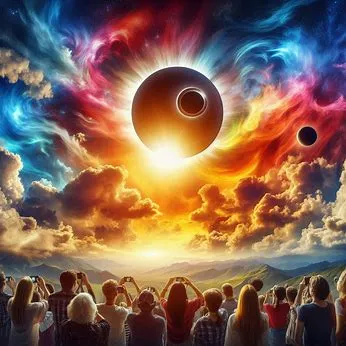
Discover the mysteries of the sky with these exciting Eclipse Trivia Questions and Answers! Whether you are an astronomy enthusiast, a student, a science lover, or simply curious about celestial events, this collection will take you on a fascinating journey through the world of solar and lunar eclipses.
Explore amazing facts about the Moon, Sun, Earth, eclipse history, famous observations, and the science behind these breathtaking natural phenomena.
Perfect for quiz nights, classrooms, educational activities, or testing your space knowledge, these eclipse trivia questions will challenge your mind and help you learn more about one of nature’s most spectacular cosmic events.
Eclipse Trivia Questions and Answer
1. What is a solar eclipse?
A) When the Moon blocks the Sun’s light from reaching Earth
B) When Earth blocks the Moon’s light
C) When stars disappear from the sky
D) When clouds cover the Sun
Answer: A) When the Moon blocks the Sun’s light from reaching Earth
Explanation: A solar eclipse happens when the Moon moves between the Sun and Earth, blocking some or all sunlight.
Key Information: Solar eclipses can only occur during a new moon phase.
2. What is a lunar eclipse?
A) When the Sun blocks Earth
B) When Earth’s shadow covers the Moon
C) When the Moon disappears forever
D) When stars cover the Moon
Answer: B) When Earth’s shadow covers the Moon
Explanation: A lunar eclipse occurs when Earth moves between the Sun and the Moon, casting a shadow on the Moon.
Key Information: Lunar eclipses are safe to watch with the naked eye.
3. Which object moves between Earth and the Sun during a solar eclipse?
A) Mars
B) The Moon
C) Jupiter
D) Venus
Answer: B) The Moon
Explanation: The Moon blocks sunlight by passing directly between Earth and the Sun.
Key Information: The alignment of the three objects is called syzygy.
4. What type of eclipse occurs when the Moon completely covers the Sun?
A) Partial eclipse
B) Total solar eclipse
C) Lunar eclipse
D) Penumbral eclipse
Answer: B) Total solar eclipse
Explanation: A total solar eclipse happens when the Moon completely blocks the Sun’s bright surface.
Key Information: During totality, the Sun’s outer atmosphere called the corona becomes visible.
5. What is the darkest central part of an eclipse shadow called?
A) Penumbra
B) Umbra
C) Orbit
D) Corona
Answer: B) Umbra
Explanation: The umbra is the area where the light source is completely blocked.
Key Information: Observers inside the umbra experience a total eclipse.
6. How often can solar eclipses occur worldwide?
A) Only once every century
B) Several times each year
C) Every day
D) Only every 50 years
Answer: B) Several times each year
Explanation: Solar eclipses happen multiple times each year somewhere on Earth.
Key Information: A specific location may wait many years to experience one.
7. Why don’t solar eclipses happen every month?
A) The Moon does not move
B) The Moon’s orbit is tilted
C) The Sun disappears
D) Earth stops rotating
Answer: B) The Moon’s orbit is tilted
Explanation: The Moon’s orbit is slightly tilted compared with Earth’s orbit around the Sun.
Key Information: Eclipses require very precise alignment.
8. What should people use to safely watch a solar eclipse?
A) Sunglasses
B) Regular binoculars
C) Certified eclipse glasses
D) A camera flash
Answer: C) Certified eclipse glasses
Explanation: Special eclipse glasses protect eyes from harmful solar radiation.
Key Information: Looking directly at the Sun without protection can damage eyesight.
9. What is the “ring of fire” eclipse called?
A) Total eclipse
B) Annular eclipse
C) Lunar eclipse
D) Partial eclipse
Answer: B) Annular eclipse
Explanation: An annular eclipse occurs when the Moon appears smaller and leaves a bright ring of sunlight visible.
Key Information: The Moon’s distance from Earth affects how it appears during an eclipse.
10. Which ancient civilization recorded eclipse events?
A) Ancient Babylonians
B) Modern scientists only
C) Vikings only
D) Romans only
Answer: A) Ancient Babylonians
Explanation: Babylonians carefully observed and recorded eclipse patterns.
Key Information: Ancient eclipse records helped improve astronomy.
11. What causes the Moon to appear red during a lunar eclipse?
A) Volcanoes
B) Earth’s atmosphere scattering sunlight
C) The Moon producing fire
D) Clouds around the Moon
Answer: B) Earth’s atmosphere scattering sunlight
Explanation: Earth’s atmosphere bends red light toward the Moon during a lunar eclipse.
Key Information: This effect is sometimes called a “Blood Moon.”
12. What is the Sun’s outer atmosphere visible during a total solar eclipse called?
A) Corona
B) Core
C) Mantle
D) Eclipse ring
Answer: A) Corona
Explanation: The corona is the Sun’s outer layer of hot plasma.
Key Information: It is normally hidden by the Sun’s brightness.
13. What phase of the Moon is needed for a solar eclipse?
A) Full moon
B) New moon
C) First quarter
D) Last quarter
Answer: B) New moon
Explanation: A solar eclipse requires the Moon to be positioned between Earth and the Sun.
Key Information: Not every new moon creates an eclipse because alignment must be exact.
14. What phase of the Moon is needed for a lunar eclipse?
A) New moon
B) Full moon
C) Crescent moon
D) Half moon
Answer: B) Full moon
Explanation: A lunar eclipse happens when Earth’s shadow falls on a full moon.
Key Information: Lunar eclipses can last for several hours.
15. What is the study of eclipses part of?
A) Astronomy
B) Biology
C) Geology
D) Chemistry
Answer: A) Astronomy
Explanation: Astronomy studies celestial objects and events in space.
Key Information: Eclipses help scientists learn more about the Sun, Moon, and Earth.
16. What is the path where an eclipse is visible as total called?
A) Shadow line
B) Path of totality
C) Solar road
D) Moon track
Answer: B) Path of totality
Explanation: The path of totality is the narrow area where a total solar eclipse can be seen.
Key Information: Millions of people often travel to experience total eclipses.
17. Which planet’s moon can create eclipses from its surface?
A) Earth
B) Jupiter
C) Saturn
D) Neptune
Answer: A) Earth
Explanation: From Earth, the Moon creates solar eclipses by blocking sunlight.
Key Information: Other planets can also experience eclipse-like events with their moons.
18. What happens to temperature during a total solar eclipse?
A) It may temporarily decrease
B) It always increases
C) Nothing changes
D) It becomes freezing instantly
Answer: A) It may temporarily decrease
Explanation: Reduced sunlight can cause a short-term drop in temperature.
Key Information: Animals and plants may react to sudden darkness.
19. Which famous scientist studied eclipses to test Einstein’s theory of relativity?
A) Albert Einstein
B) Isaac Newton
C) Arthur Eddington
D) Galileo Galilei
Answer: C) Arthur Eddington
Explanation: Eddington’s eclipse observations helped support Einstein’s ideas about gravity.
Key Information: The 1919 eclipse became an important event in physics history.
20. What is an eclipse mainly caused by?
A) Perfect alignment of celestial bodies
B) Solar explosions
C) Earthquakes
D) Weather changes
Answer: A) Perfect alignment of celestial bodies
Explanation: Eclipses occur when the Sun, Earth, and Moon line up in a specific way.
Key Information: Eclipses are natural astronomical events that have fascinated humans for thousands of years.**
Easy Eclipse Trivia Questions and Answers
1. How long can a total solar eclipse usually last at its longest?
A) About 7 minutes
B) About 1 hour
C) About 5 hours
D) About 24 hours
Answer: A) About 7 minutes
Explanation: Total solar eclipses are usually brief, with totality lasting only a few minutes.
Key Information: The longest possible total solar eclipse can last slightly over 7 minutes.
2. Which eclipse is safe to watch without special eye protection?
A) Solar eclipse
B) Lunar eclipse
C) Annular eclipse
D) Partial solar eclipse
Answer: B) Lunar eclipse
Explanation: A lunar eclipse only involves Earth’s shadow falling on the Moon.
Key Information: Unlike solar eclipses, lunar eclipses do not harm eyesight.
3. What is the Moon’s shadow on Earth during a solar eclipse called?
A) Eclipse zone
B) Shadow path
C) Lunar shadow
D) Moonlight
Answer: C) Lunar shadow
Explanation: The Moon casts a shadow on Earth when it blocks sunlight.
Key Information: The shadow has different parts, including the umbra and penumbra.
4. What is a partial solar eclipse?
A) The Moon completely covers the Sun
B) Only part of the Sun is covered by the Moon
C) Earth blocks the Moon
D) The Sun disappears permanently
Answer: B) Only part of the Sun is covered by the Moon
Explanation: A partial solar eclipse occurs when the Moon covers only a portion of the Sun.
Key Information: Many solar eclipses are visible as partial eclipses from some locations.
5. Which eclipse happens when Earth’s shadow falls on the Moon?
A) Solar eclipse
B) Lunar eclipse
C) Annular eclipse
D) Ring eclipse
Answer: B) Lunar eclipse
Explanation: Earth blocks sunlight from reaching the Moon during a lunar eclipse.
Key Information: Lunar eclipses can be seen from a large part of Earth’s night side.
6. What is the lighter outer part of an eclipse shadow called?
A) Umbra
B) Penumbra
C) Corona
D) Orbit
Answer: B) Penumbra
Explanation: The penumbra is the area where only part of the light is blocked.
Key Information: Observers in the penumbra see a partial eclipse.
7. Which object is larger: Earth or the Moon?
A) Moon
B) Earth
C) They are the same size
D) Neither
Answer: B) Earth
Explanation: Earth is much larger than the Moon.
Key Information: The Moon’s smaller size affects the type of eclipses it can create.
8. What instrument do astronomers use to study eclipses?
A) Telescope
B) Microscope
C) Thermometer
D) Barometer
Answer: A) Telescope
Explanation: Telescopes allow scientists to observe celestial events.
Key Information: Modern telescopes provide detailed information about the Sun and Moon.
9. Which eclipse occurs when the Moon is too far away to completely cover the Sun?
A) Lunar eclipse
B) Annular eclipse
C) Total eclipse
D) Penumbral eclipse
Answer: B) Annular eclipse
Explanation: During an annular eclipse, the Moon leaves a bright ring of sunlight visible.
Key Information: The Moon’s changing distance from Earth affects eclipse appearance.
10. What is another name for a total solar eclipse’s dark period?
A) Totality
B) Orbit
C) Rotation
D) Reflection
Answer: A) Totality
Explanation: Totality is the short period when the Sun is completely covered.
Key Information: During totality, the sky becomes dark and the corona appears.
11. Which ancient people predicted eclipse patterns using mathematics?
A) Babylonians
B) Egyptians only
C) Vikings only
D) Mayans only
Answer: A) Babylonians
Explanation: Ancient Babylonians studied eclipse cycles and recorded observations.
Key Information: Their records contributed to early astronomy.
12. What is the repeating cycle used to predict eclipses called?
A) Saros cycle
B) Solar cycle
C) Moon cycle
D) Star cycle
Answer: A) Saros cycle
Explanation: The Saros cycle is a period after which similar eclipses repeat.
Key Information: Ancient astronomers used it to predict future eclipses.
13. What happens during a total solar eclipse at midday?
A) The sky can become dark
B) The Moon disappears
C) The Sun explodes
D) Stars leave the galaxy
Answer: A) The sky can become dark
Explanation: The Moon blocks sunlight, creating temporary darkness.
Key Information: Some planets and stars may become visible during totality.
14. Which part of the Sun is normally hidden during an eclipse?
A) Corona
B) Earth’s surface
C) Moon’s core
D) Ocean layer
Answer: A) Corona
Explanation: The bright surface of the Sun usually hides the corona.
Key Information: Eclipses allow scientists to study this outer solar layer.
15. Why are eclipses important to scientists?
A) They help study space objects
B) They stop Earth’s rotation
C) They create weather
D) They change seasons
Answer: A) They help study space objects
Explanation: Eclipses provide opportunities to study the Sun, Moon, and Earth.
Key Information: Scientists have made important discoveries through eclipse observations.
16. What causes the Moon to block the Sun during a solar eclipse?
A) Alignment of Earth, Moon, and Sun
B) Wind movement
C) Ocean waves
D) Earthquakes
Answer: A) Alignment of Earth, Moon, and Sun
Explanation: A solar eclipse requires all three objects to line up correctly.
Key Information: This alignment is called syzygy.
17. Which eclipse can occur only during a full moon?
A) Solar eclipse
B) Lunar eclipse
C) Annular eclipse
D) Partial solar eclipse
Answer: B) Lunar eclipse
Explanation: Earth’s shadow can only reach the Moon when it is opposite the Sun.
Key Information: This position occurs during a full moon.
18. How often does a total solar eclipse occur at the same location?
A) Frequently every month
B) Rarely, often after many years
C) Every week
D) Every day
Answer: B) Rarely, often after many years
Explanation: The path of totality is narrow, so one place may wait a long time.
Key Information: Some locations wait hundreds of years for another total eclipse.
19. What do animals sometimes do during a total solar eclipse?
A) Act as if night has arrived
B) Leave Earth
C) Stop breathing
D) Change species
Answer: A) Act as if night has arrived
Explanation: Sudden darkness can confuse some animals.
Key Information: Birds may stop singing, and nocturnal animals may become active.
20. What is the main difference between a solar and lunar eclipse?
A) Which object’s shadow is involved
B) Their colors only
C) Their temperatures
D) Their locations in space only
Answer: A) Which object’s shadow is involved
Explanation: Solar eclipses involve the Moon’s shadow on Earth, while lunar eclipses involve Earth’s shadow on the Moon.
Key Information: Both events depend on the alignment of the Sun, Earth, and Moon.**
Solar Eclipse Questions for Students
1. What is the rare alignment of the Sun, Earth, and Moon during an eclipse called?
A) Syzygy
B) Galaxy
C) Rotation
D) Revolution
Answer: A) Syzygy
Explanation: Syzygy refers to the straight-line alignment of three celestial bodies.
Key Information: Eclipses occur when the Sun, Earth, and Moon reach this alignment.
2. Which type of eclipse can make the Moon appear orange or red?
A) Solar eclipse
B) Lunar eclipse
C) Annular eclipse
D) Partial eclipse
Answer: B) Lunar eclipse
Explanation: During a lunar eclipse, Earth’s atmosphere filters sunlight and gives the Moon a reddish color.
Key Information: This effect is commonly known as a Blood Moon.
3. What protects Earth from harmful solar radiation?
A) Moon’s shadow
B) Earth’s atmosphere
C) Ocean water
D) Clouds
Answer: B) Earth’s atmosphere
Explanation: Earth’s atmosphere blocks and filters many harmful types of solar radiation.
Key Information: It also creates the red color seen during lunar eclipses.
4. Which eclipse is visible only from a limited area on Earth?
A) Total solar eclipse
B) Lunar eclipse
C) Full moon
D) New moon
Answer: A) Total solar eclipse
Explanation: A total solar eclipse can only be seen from the narrow path of totality.
Key Information: People often travel to specific locations to view it.
5. What happens when the Moon passes through only part of Earth’s shadow?
A) Partial lunar eclipse
B) Total solar eclipse
C) Annular eclipse
D) Solar flare
Answer: A) Partial lunar eclipse
Explanation: A partial lunar eclipse occurs when only a portion of the Moon enters Earth’s shadow.
Key Information: It is less dramatic than a total lunar eclipse.
6. Which celestial body provides the light blocked during a solar eclipse?
A) Earth
B) Moon
C) Sun
D) Mars
Answer: C) Sun
Explanation: The Moon blocks the sunlight coming from the Sun during a solar eclipse.
Key Information: The Sun is the main source of light in our solar system.
7. What is the Sun mainly made of?
A) Rock and metal
B) Hydrogen and helium
C) Ice and water
D) Carbon only
Answer: B) Hydrogen and helium
Explanation: The Sun is mostly composed of hydrogen and helium gases.
Key Information: Nuclear fusion inside the Sun produces its energy.
8. What causes the Moon to have phases?
A) Earth’s shadow always covering it
B) Changing sunlight angles as it orbits Earth
C) The Moon producing light
D) Clouds blocking it
Answer: B) Changing sunlight angles as it orbits Earth
Explanation: The Moon’s appearance changes depending on how sunlight reflects from it.
Key Information: Moon phases are important for understanding eclipses.
9. Which eclipse is sometimes called a “Blood Moon”?
A) Solar eclipse
B) Lunar eclipse
C) Annular eclipse
D) Partial solar eclipse
Answer: B) Lunar eclipse
Explanation: A lunar eclipse can make the Moon appear reddish due to Earth’s atmosphere.
Key Information: The color change is caused by filtered sunlight.
10. What is the outermost layer of the Sun visible during a total eclipse?
A) Core
B) Corona
C) Photosphere
D) Radiation zone
Answer: B) Corona
Explanation: The corona is the Sun’s outer atmosphere.
Key Information: It is usually hidden because the Sun’s surface is much brighter.
11. What tool helps protect cameras when photographing a solar eclipse?
A) Solar filter
B) Regular glass
C) Sunglasses
D) Flashlight
Answer: A) Solar filter
Explanation: Solar filters protect cameras from intense sunlight.
Key Information: Regular cameras without protection can be damaged.
12. Which eclipse happens when the Moon’s shadow falls on Earth?
A) Solar eclipse
B) Lunar eclipse
C) Moon phase
D) Star eclipse
Answer: A) Solar eclipse
Explanation: During a solar eclipse, the Moon blocks sunlight and casts a shadow on Earth.
Key Information: Only people inside the shadow path can see the eclipse.
13. What is the Sun’s visible surface called?
A) Photosphere
B) Corona
C) Core
D) Atmosphere
Answer: A) Photosphere
Explanation: The photosphere is the layer we see as the Sun’s surface.
Key Information: It is the part covered during a total solar eclipse.
14. Which eclipse lasts longer: solar or lunar?
A) Solar eclipse
B) Lunar eclipse
C) Both always last the same
D) Neither
Answer: B) Lunar eclipse
Explanation: Lunar eclipses can last for several hours, while solar eclipses are usually shorter.
Key Information: Earth’s larger shadow makes lunar eclipses longer.
15. What ancient monument is often associated with astronomical observations?
A) Stonehenge
B) Eiffel Tower
C) Colosseum
D) Great Wall
Answer: A) Stonehenge
Explanation: Stonehenge is believed to have been used for observing celestial events.
Key Information: Ancient people studied the sky to track seasons and events.
16. What happens when the Moon completely enters Earth’s darkest shadow during a lunar eclipse?
A) Total lunar eclipse
B) Solar eclipse
C) Annular eclipse
D) New moon
Answer: A) Total lunar eclipse
Explanation: A total lunar eclipse occurs when the entire Moon passes through Earth’s umbra.
Key Information: The Moon may appear red during this event.
17. Which planet’s moon can create eclipse-like events?
A) Jupiter
B) Earth only
C) Mercury
D) Venus
Answer: A) Jupiter
Explanation: Jupiter’s moons can pass in front of the planet and create shadow events.
Key Information: Similar events happen throughout the solar system.
18. Why do eclipses fascinate people worldwide?
A) They are rare and visually impressive
B) They happen every hour
C) They change Earth permanently
D) They create new planets
Answer: A) They are rare and visually impressive
Explanation: Eclipses are unusual natural events that create amazing sky views.
Key Information: Humans have observed and recorded eclipses for thousands of years.
19. What does the word “eclipse” mean?
A) To hide or cover
B) To shine brightly
C) To move quickly
D) To create light
Answer: A) To hide or cover
Explanation: The word comes from Greek meaning “abandonment” or “to hide.”
Key Information: It describes how one celestial body blocks another.
20. Which organization studies and tracks eclipses in space?
A) NASA
B) FIFA
C) UNESCO
D) WHO
Answer: A) NASA
Explanation: NASA studies space events, including eclipses and planetary movements.
Key Information: Space agencies help predict and understand eclipse events.**
Solar and Lunar Eclipse Quiz With Answers
1. Which part of the Moon’s shadow creates a total solar eclipse?
A) Penumbra
B) Umbra
C) Orbit
D) Atmosphere
Answer: B) Umbra
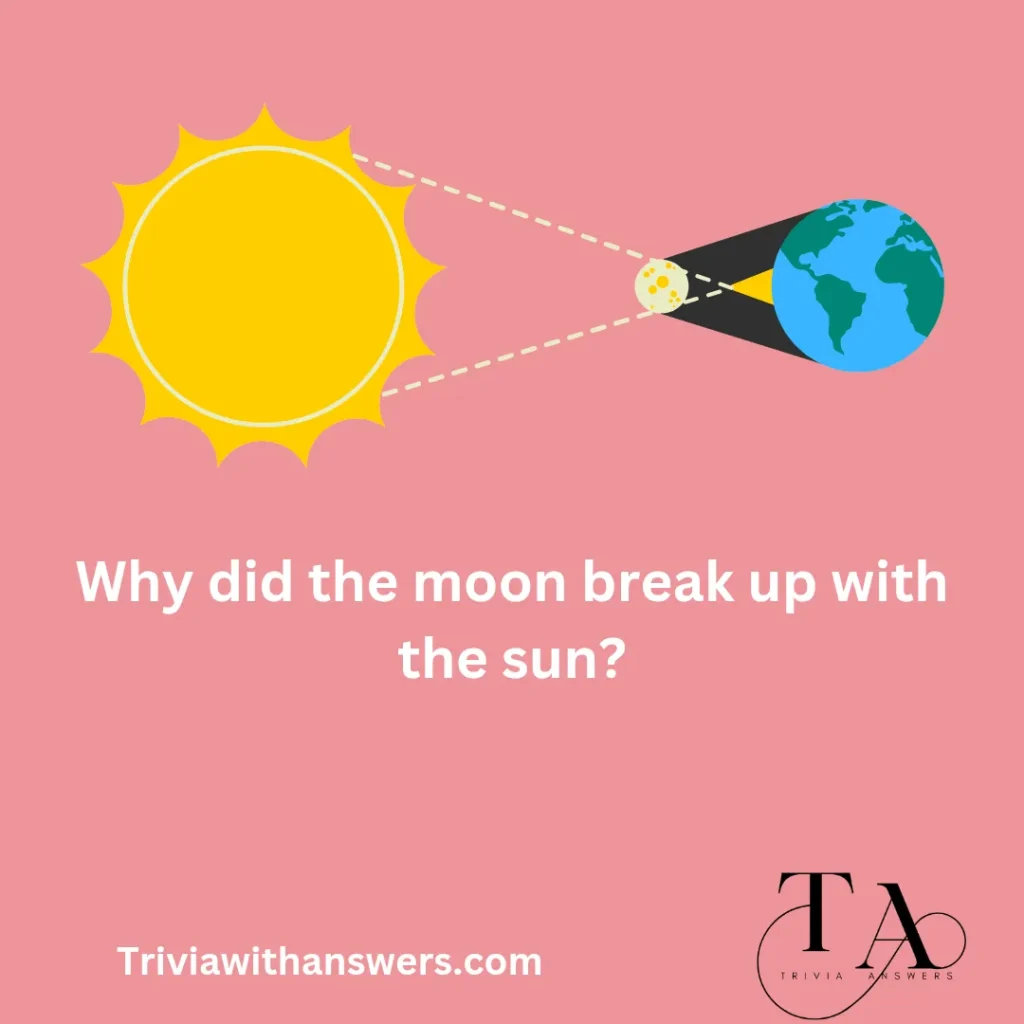
Explanation: The umbra is the darkest part of the Moon’s shadow where the Sun is completely blocked.
Key Information: People inside the umbra experience a total solar eclipse.
2. What is the main reason eclipses do not happen every month?
A) The Sun changes size
B) The Moon’s orbit is tilted
C) Earth stops moving
D) The Moon has no shadow
Answer: B) The Moon’s orbit is tilted
Explanation: The Moon’s orbit is slightly angled compared with Earth’s path around the Sun.
Key Information: Exact alignment is needed for an eclipse.
3. What is the period when the Sun is completely hidden during a total eclipse called?
A) Totality
B) Rotation
C) Reflection
D) Orbit
Answer: A) Totality
Explanation: Totality is the brief time when the Moon completely covers the Sun.
Key Information: It is the most dramatic phase of a total solar eclipse.
4. Which eclipse can be seen from anywhere on Earth’s night side?
A) Lunar eclipse
B) Solar eclipse
C) Annular eclipse
D) Partial solar eclipse
Answer: A) Lunar eclipse
Explanation: Lunar eclipses are visible from large areas because Earth’s shadow covers the Moon.
Key Information: Solar eclipses are visible only from smaller regions.
5. What is the Moon’s average distance from Earth?
A) About 384,400 kilometers
B) About 10,000 kilometers
C) About 1 million kilometers
D) About 50 kilometers
Answer: A) About 384,400 kilometers
Explanation: The Moon orbits Earth at an average distance of about 384,400 km.
Key Information: This distance affects how eclipses appear.
6. What happens during a hybrid eclipse?
A) It changes between total and annular eclipse
B) It happens only at night
C) It involves two Moons
D) It blocks Earth completely
Answer: A) It changes between total and annular eclipse
Explanation: A hybrid eclipse appears differently from different locations on Earth.
Key Information: Hybrid eclipses are among the rarest types of eclipses.
7. Which object has no light of its own but reflects sunlight?
A) Sun
B) Moon
C) Star
D) Galaxy
Answer: B) Moon
Explanation: The Moon shines because it reflects light from the Sun.
Key Information: This reflected light allows us to see the Moon from Earth.
8. What is the darkest part of Earth’s shadow during a lunar eclipse called?
A) Umbra
B) Penumbra
C) Corona
D) Orbit
Answer: A) Umbra
Explanation: The umbra is the central region where sunlight is completely blocked.
Key Information: A total lunar eclipse occurs when the Moon enters the umbra.
9. Which eclipse occurs when the Moon covers only part of the Sun?
A) Partial solar eclipse
B) Total lunar eclipse
C) Blood Moon
D) Hybrid eclipse
Answer: A) Partial solar eclipse
Explanation: A partial solar eclipse happens when the Moon blocks only a portion of sunlight.
Key Information: It is more common than a total solar eclipse.
10. Why does the sky become dark during a total solar eclipse?
A) The Moon blocks sunlight
B) The Sun turns off
C) Earth stops rotating
D) Clouds cover the planet
Answer: A) The Moon blocks sunlight
Explanation: The Moon temporarily prevents sunlight from reaching certain areas of Earth.
Key Information: Darkness during an eclipse can occur even during daytime.
11. What is the name of Earth’s movement around the Sun?
A) Rotation
B) Revolution
C) Eclipse
D) Reflection
Answer: B) Revolution
Explanation: Earth’s revolution around the Sun takes about 365 days.
Key Information: Earth’s orbit affects seasons and eclipse timing.
12. What is Earth’s movement on its own axis called?
A) Rotation
B) Revolution
C) Alignment
D) Shadowing
Answer: A) Rotation
Explanation: Earth rotates once approximately every 24 hours.
Key Information: Rotation causes day and night.
13. Which scientist is famous for improving our understanding of gravity?
A) Isaac Newton
B) Charles Darwin
C) Louis Pasteur
D) Nikola Tesla
Answer: A) Isaac Newton
Explanation: Newton developed important theories about gravity and motion.
Key Information: Gravity plays a role in the movement of celestial bodies.
14. What causes the Moon to orbit Earth?
A) Gravity
B) Wind
C) Heat
D) Light
Answer: A) Gravity
Explanation: Earth’s gravity keeps the Moon in its orbit.
Key Information: Gravity controls the movement of many objects in space.
15. Which eclipse was used to help confirm Einstein’s theory of relativity?
A) 1919 solar eclipse
B) 2000 lunar eclipse
C) 2020 eclipse
D) 1800 eclipse
Answer: A) 1919 solar eclipse
Explanation: Scientists observed starlight bending near the Sun during the eclipse.
Key Information: The observation supported Einstein’s theory of gravity.
16. What is the bright ring seen during an annular eclipse called?
A) Ring of fire
B) Moon halo
C) Solar circle
D) Light path
Answer: A) Ring of fire
Explanation: The Moon leaves a bright circle of sunlight visible around its edges.
Key Information: This happens because the Moon appears smaller than the Sun.
17. Which celestial body is closest to Earth?
A) Moon
B) Sun
C) Mars
D) Jupiter
Answer: A) Moon
Explanation: The Moon is Earth’s nearest natural satellite.
Key Information: Its closeness allows it to create solar eclipses.
18. What is the main source of energy for the Sun?
A) Nuclear fusion
B) Burning coal
C) Electricity
D) Chemical reactions
Answer: A) Nuclear fusion
Explanation: The Sun produces energy by combining hydrogen atoms into helium.
Key Information: This process creates the sunlight needed for life on Earth.
19. What happens to the Moon’s appearance during a lunar eclipse?
A) It may turn reddish
B) It disappears forever
C) It becomes larger
D) It becomes invisible permanently
Answer: A) It may turn reddish
Explanation: Earth’s atmosphere bends red sunlight toward the Moon.
Key Information: This creates the famous Blood Moon effect.
20. Why are eclipse glasses needed during a solar eclipse?
A) To protect eyes from intense sunlight
B) To make the eclipse brighter
C) To see stars better
D) To change colors
Answer: A) To protect eyes from intense sunlight
Explanation: Directly viewing the Sun can cause serious eye damage.
Key Information: Only certified solar viewing equipment should be used.**
Solar Eclipse Trivia Games
1. Which ancient civilization believed eclipses had special meanings?
A) Many ancient civilizations
B) Only modern scientists
C) Only astronauts
D) No civilization
Answer: A) Many ancient civilizations
Explanation: Ancient cultures around the world created stories and beliefs about eclipses.
Key Information: Eclipses often influenced myths, calendars, and traditions.
2. What causes the Moon to appear larger during a total solar eclipse?
A) The Moon moves closer to Earth
B) The Sun becomes smaller
C) Earth stops rotating
D) The Moon creates light
Answer: A) The Moon moves closer to Earth
Explanation: The Moon’s changing distance from Earth affects its apparent size in the sky.
Key Information: This helps determine whether an eclipse is total or annular.
3. What is the main difference between a total and partial solar eclipse?
A) How much of the Sun is covered
B) The color of the Moon
C) The size of Earth
D) The speed of rotation
Answer: A) How much of the Sun is covered
Explanation: A total eclipse completely covers the Sun, while a partial eclipse covers only part of it.
Key Information: Both require the Moon to pass between Earth and the Sun.
4. Which eclipse is sometimes visible for several hours?
A) Lunar eclipse
B) Total solar eclipse
C) Annular eclipse
D) Partial solar eclipse
Answer: A) Lunar eclipse
Explanation: Lunar eclipses last longer because Earth’s shadow is much larger than the Moon’s shadow.
Key Information: A lunar eclipse can be observed from many locations at once.
5. What does the Moon orbit around?
A) Earth
B) Mars
C) The Sun directly
D) Jupiter
Answer: A) Earth
Explanation: The Moon is Earth’s natural satellite and travels around our planet.
Key Information: The Moon’s orbit creates different phases and eclipse opportunities.
6. What does Earth orbit around?
A) The Sun
B) The Moon
C) Mars
D) The Milky Way’s center only
Answer: A) The Sun
Explanation: Earth travels around the Sun in an elliptical orbit.
Key Information: This journey takes about 365 days.
7. Which eclipse happens when the Sun, Moon, and Earth are arranged in a straight line?
A) Solar or lunar eclipse
B) Rainbow
C) Meteor shower
D) Comet event
Answer: A) Solar or lunar eclipse
Explanation: Eclipses require a specific alignment of celestial bodies.
Key Information: This alignment is known as syzygy.
8. What is the Moon’s surface covered with?
A) Craters and dust
B) Oceans and forests
C) Ice oceans only
D) Clouds
Answer: A) Craters and dust
Explanation: The Moon’s surface has many impact craters and a layer of dust called regolith.
Key Information: The Moon has no atmosphere like Earth.
9. Which eclipse can be watched without special glasses?
A) Lunar eclipse
B) Solar eclipse
C) Annular eclipse
D) Partial solar eclipse
Answer: A) Lunar eclipse
Explanation: Lunar eclipses are safe because viewers are looking at reflected sunlight from the Moon.
Key Information: Solar eclipses require eye protection.
10. What is the bright surface of the Sun called?
A) Photosphere
B) Corona
C) Umbra
D) Penumbra
Answer: A) Photosphere
Explanation: The photosphere is the visible layer of the Sun.
Key Information: It is the layer hidden during a total solar eclipse.
11. What type of eclipse occurred when the Moon completely covered the Sun in a specific area?
A) Total solar eclipse
B) Lunar eclipse
C) Penumbral eclipse
D) Moon phase
Answer: A) Total solar eclipse
Explanation: A total solar eclipse occurs when the Moon fully blocks the Sun’s disk.
Key Information: The Sun’s corona becomes visible during totality.
12. What is the Moon’s position during a solar eclipse?
A) Between Earth and the Sun
B) Behind Earth
C) Far away from Earth
D) Between Mars and Earth
Answer: A) Between Earth and the Sun
Explanation: The Moon blocks sunlight by moving directly between Earth and the Sun.
Key Information: This only happens during a new moon.
13. What is the Moon’s position during a lunar eclipse?
A) Earth is between the Sun and Moon
B) Moon is between Earth and Sun
C) Sun is between Earth and Moon
D) Moon disappears
Answer: A) Earth is between the Sun and Moon
Explanation: Earth blocks sunlight from reaching the Moon.
Key Information: This happens during a full moon.
14. Which planet is known as Earth’s neighbor and can also have eclipses?
A) Mars
B) Jupiter
C) Saturn
D) Neptune
Answer: A) Mars
Explanation: Mars has moons that can create eclipse-like events on its surface.
Key Information: Spacecraft have observed these events on Mars.
15. What do astronomers use to predict future eclipses?
A) Mathematical calculations
B) Weather reports only
C) Random guesses
D) Ocean patterns
Answer: A) Mathematical calculations
Explanation: Scientists use orbital data and calculations to predict eclipses.
Key Information: Eclipse predictions can be accurate for thousands of years.
16. What is the shadow area where a partial eclipse is seen called?
A) Penumbra
B) Umbra
C) Corona
D) Core
Answer: A) Penumbra
Explanation: The penumbra is the lighter shadow region where only part of the light is blocked.
Key Information: Observers there see a partial eclipse.
17. Why do eclipses appear rare to people?
A) They are visible only from certain places
B) They never happen
C) They last for years
D) They occur underground
Answer: A) They are visible only from certain places
Explanation: Many eclipses happen globally, but specific locations may not see them often.
Key Information: The path of visibility changes each time.
18. What natural satellite causes solar eclipses on Earth?
A) The Moon
B) Mars
C) Venus
D) Jupiter
Answer: A) The Moon
Explanation: The Moon is positioned between Earth and the Sun during a solar eclipse.
Key Information: Its size and distance make it appear similar in size to the Sun.
19. What is the study of the Sun, Moon, and stars called?
A) Astronomy
B) Biology
C) Chemistry
D) Ecology
Answer: A) Astronomy
Explanation: Astronomy is the scientific study of objects and events in space.
Key Information: Eclipses are important events studied by astronomers.
20. What makes a solar eclipse possible from Earth?
A) The Moon and Sun appear similar in size in the sky
B) The Sun becomes smaller
C) Earth stops moving
D) The Moon creates sunlight
Answer: A) The Moon and Sun appear similar in size in the sky
Explanation: The Moon’s distance and size allow it to cover the Sun from our viewpoint.
Key Information: This unique coincidence makes total solar eclipses possible.**
Solar Eclipse Quiz
1. What is the name of the Moon’s path around Earth?
A) Orbit
B) Rotation
C) Axis
D) Shadow
Answer: A) Orbit
Explanation: The Moon follows a curved path around Earth called an orbit.
Key Information: The Moon completes one orbit around Earth in about 27.3 days.
2. Which type of eclipse happens when the Moon blocks sunlight from reaching Earth?
A) Solar eclipse
B) Lunar eclipse
C) Meteor eclipse
D) Star eclipse
Answer: A) Solar eclipse
Explanation: A solar eclipse occurs when the Moon passes between Earth and the Sun.
Key Information: Only certain areas of Earth can see a solar eclipse.
3. What is the darkest stage of a total solar eclipse called?
A) Totality
B) Penumbra
C) Reflection
D) Twilight
Answer: A) Totality
Explanation: Totality is when the Moon completely covers the Sun’s visible surface.
Key Information: This stage usually lasts only a few minutes.
4. Which eclipse can happen only during a full moon?
A) Lunar eclipse
B) Solar eclipse
C) Annular eclipse
D) Hybrid eclipse
Answer: A) Lunar eclipse
Explanation: A lunar eclipse requires the Moon to be full and opposite the Sun.
Key Information: Earth’s shadow falls on the Moon during this event.
5. What is the Sun classified as?
A) Star
B) Planet
C) Moon
D) Asteroid
Answer: A) Star
Explanation: The Sun is a giant star that produces its own energy and light.
Key Information: It is the center of our solar system.
6. What happens during a penumbral lunar eclipse?
A) The Moon passes through Earth’s lighter shadow
B) The Sun disappears completely
C) The Moon blocks the Sun
D) Earth leaves its orbit
Answer: A) The Moon passes through Earth’s lighter shadow
Explanation: A penumbral eclipse occurs when the Moon enters the penumbra.
Key Information: It is often harder to notice than other lunar eclipses.
7. Which object creates the shadow during a lunar eclipse?
A) Earth
B) Moon
C) Sun
D) Mars
Answer: A) Earth
Explanation: Earth blocks sunlight and casts its shadow onto the Moon.
Key Information: This creates the different stages of a lunar eclipse.
8. Why does the Moon appear bright at night?
A) It reflects sunlight
B) It creates its own light
C) It contains fire
D) It absorbs stars
Answer: A) It reflects sunlight
Explanation: The Moon shines because sunlight reflects from its surface.
Key Information: The Moon is not a source of light.
9. What is the name for the Sun’s outer atmosphere?
A) Corona
B) Core
C) Crust
D) Mantle
Answer: A) Corona
Explanation: The corona is the outermost layer of the Sun.
Key Information: It becomes visible during a total solar eclipse.
10. What happens when the Moon is farther away from Earth during an eclipse?
A) An annular eclipse may occur
B) A lunar eclipse stops forever
C) The Sun disappears
D) Earth changes size
Answer: A) An annular eclipse may occur
Explanation: A smaller-looking Moon may not fully cover the Sun.
Key Information: This creates the bright “ring of fire” effect.
11. Which ancient civilization built records of eclipse observations?
A) Babylonians
B) Robots
C) Future humans
D) Dinosaurs
Answer: A) Babylonians
Explanation: Babylonians carefully observed and recorded eclipse patterns.
Key Information: Their work contributed to early astronomy.
12. What protects astronauts from harmful sunlight in space?
A) Space suits and equipment
B) Rain clouds
C) Oceans
D) Trees
Answer: A) Space suits and equipment
Explanation: Astronauts use protective technology to survive space conditions.
Key Information: Space has intense radiation levels.
13. What causes the Moon to move across the Sun during an eclipse?
A) The Moon’s orbit
B) Ocean waves
C) Wind
D) Earthquakes
Answer: A) The Moon’s orbit
Explanation: The Moon’s movement around Earth creates eclipse alignments.
Key Information: The Moon travels thousands of kilometers through space.
14. Which event allows scientists to study the Sun’s corona?
A) Total solar eclipse
B) Full moon
C) Sunrise
D) Sunset
Answer: A) Total solar eclipse
Explanation: The blocked Sun allows the faint corona to become visible.
Key Information: Scientists use eclipses to study solar activity.
15. What is the Moon’s surface feature caused by impacts called?
A) Craters
B) Clouds
C) Rivers
D) Forests
Answer: A) Craters
Explanation: Craters formed when asteroids and meteoroids hit the Moon.
Key Information: The Moon’s surface preserves evidence of past impacts.
16. Which eclipse creates a shadow that moves across Earth’s surface?
A) Solar eclipse
B) Lunar eclipse
C) Full moon
D) Star eclipse
Answer: A) Solar eclipse
Explanation: The Moon’s shadow travels across Earth during a solar eclipse.
Key Information: This moving shadow creates the eclipse path.
17. What is the main reason scientists study eclipses?
A) To understand space better
B) To stop the Moon
C) To change weather
D) To create sunlight
Answer: A) To understand space better
Explanation: Eclipses provide valuable information about celestial bodies.
Key Information: They have helped improve astronomy and physics.
18. What is the Moon considered in relation to Earth?
A) Natural satellite
B) Planet
C) Star
D) Comet
Answer: A) Natural satellite
Explanation: The Moon naturally orbits Earth.
Key Information: Earth has one major natural satellite.
19. Which eclipse is often easier for large groups of people to observe?
A) Lunar eclipse
B) Total solar eclipse
C) Annular eclipse
D) Hybrid eclipse
Answer: A) Lunar eclipse
Explanation: Lunar eclipses are visible from much larger areas of Earth.
Key Information: They can often be seen by millions of people at once.
20. What is the main requirement for any eclipse to happen?
A) Correct alignment of celestial bodies
B) Strong winds
C) Heavy rain
D) High temperature
Answer: A) Correct alignment of celestial bodies
Explanation: The Sun, Earth, and Moon must line up in a specific way.
Key Information: This alignment determines the type of eclipse.**
FAQS
1. What are Eclipse Trivia Questions and Answers?
Eclipse Trivia Questions and Answers are quiz-style questions that test your knowledge about solar eclipses, lunar eclipses, astronomy, space science, and fascinating facts about these rare celestial events.
2. What topics are covered in eclipse trivia quizzes?
Eclipse trivia quizzes usually include topics like how eclipses happen, the difference between solar and lunar eclipses, famous eclipses in history, eclipse myths, scientific discoveries, and space exploration.
3. Who can enjoy eclipse trivia questions?
Eclipse trivia questions are perfect for students, teachers, astronomy fans, science enthusiasts, quiz lovers, and anyone curious about the wonders of the universe.
4. How can eclipse trivia questions be used?
You can use eclipse trivia questions for classroom activities, science projects, astronomy clubs, quiz competitions, family game nights, or simply to test your knowledge about celestial phenomena.
Final Thoughts
We hope these Eclipse Trivia Questions and Answers helped you discover fascinating facts about eclipses and the incredible relationship between the Sun, Moon, and Earth.
From ancient eclipse observations to modern scientific discoveries, these celestial events continue to inspire curiosity and wonder around the world.
Whether you answered every question correctly or learned something new, sharing trivia is a fun way to explore astronomy and expand your knowledge. Keep looking toward the skies and continue discovering more amazing facts about the universe!
Read more:
151+ Mind-Blowing Eclipse Trivia Questions and Answers
105+ Funny Monday Trivia Questions and Answers