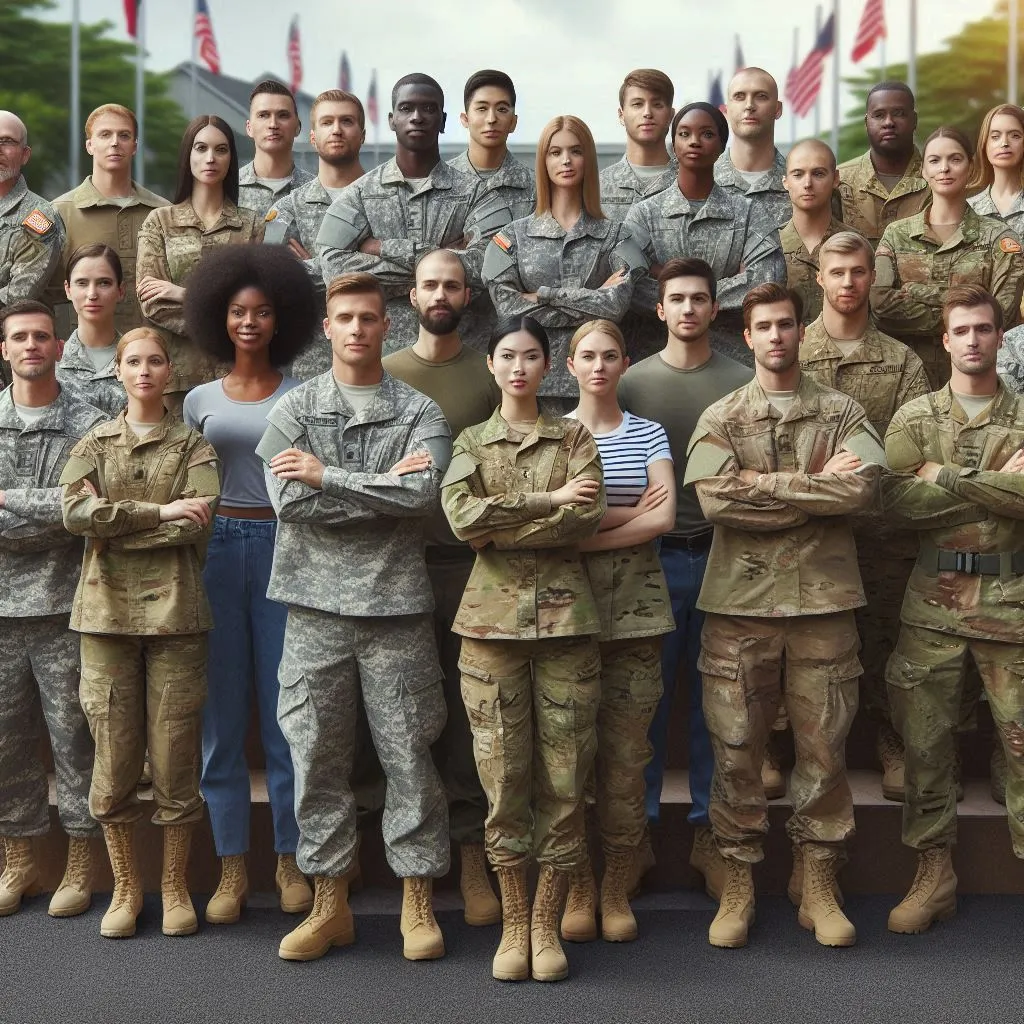
Military history is filled with remarkable events, strategic decisions, influential leaders, and stories that have shaped nations and the world.
These Military Trivia Questions and Answers provide a fun opportunity to revisit important moments and test what you know.
Challenge yourself, compete with friends, and see how many questions you can answer correctly!
Military Trivia Questions and Answers
1. Which branch of the U.S. military was established in 1775?
A. United States Army
B. United States Air Force
C. United States Space Force
D. United States Coast Guard
Answer: A. United States Army
Explanation: The U.S. Army was established on June 14, 1775, during the American Revolution.
Key Information: The Army is the primary land warfare service of the United States.
2. What does NATO stand for?
A. National Allied Treaty Organization
B. North Atlantic Treaty Organization
C. Northern American Treaty Organization
D. North American Tactical Organization
Answer: B. North Atlantic Treaty Organization
Explanation: NATO is an international alliance created in 1949 for collective defense and security cooperation.
Key Information: NATO currently includes member countries from Europe and North America.
3. Which U.S. military branch is primarily responsible for naval operations?
A. Army
B. Navy
C. Air Force
D. Space Force
Answer: B. Navy
Explanation: The U.S. Navy is responsible for maintaining maritime forces and conducting operations at sea.
Key Information: The Navy is one of the oldest branches of the U.S. armed forces.
4. Which U.S. military branch was established as a separate service in 1947?
A. Air Force
B. Marine Corps
C. Navy
D. Army
Answer: A. Air Force
Explanation: The United States Air Force became an independent military service on September 18, 1947.
Key Information: Before becoming independent, military aviation was primarily organized within the Army.
5. What is the U.S. military academy located in West Point, New York?
A. United States Naval Academy
B. United States Military Academy
C. United States Air Force Academy
D. Coast Guard Academy
Answer: B. United States Military Academy
Explanation: The United States Military Academy at West Point trains and educates future U.S. Army officers.
Key Information: West Point was established in 1802.
6. Which military academy is located in Annapolis, Maryland?
A. United States Naval Academy
B. United States Military Academy
C. United States Air Force Academy
D. United States Coast Guard Academy
Answer: A. United States Naval Academy
Explanation: The United States Naval Academy prepares officers for service in the U.S. Navy and Marine Corps.
Key Information: The academy was established in 1845.
7. Which military academy is located in Colorado Springs, Colorado?
A. United States Military Academy
B. United States Naval Academy
C. United States Air Force Academy
D. United States Coast Guard Academy
Answer: C. United States Air Force Academy
Explanation: The U.S. Air Force Academy educates and commissions officers for the Air Force and Space Force.
Key Information: The academy was established in 1954.
8. Which U.S. military service uses the motto “Semper Fidelis”?
A. Army
B. Navy
C. Marine Corps
D. Air Force
Answer: C. Marine Corps
Explanation: “Semper Fidelis” is Latin for “Always Faithful” and expresses the Marine Corps commitment to loyalty and duty.
Key Information: The phrase is commonly shortened to “Semper Fi.”
9. Which U.S. military branch uses the motto “This We’ll Defend”?
A. Army
B. Navy
C. Air Force
D. Marine Corps
Answer: A. Army
Explanation: “This We’ll Defend” is the official motto associated with the United States Army.
Key Information: The motto reflects the Army’s role in defending the nation.
10. What is Veterans Day primarily intended to honor?
A. Current elected officials
B. All U.S. military veterans
C. Military academies
D. Active-duty generals only
Answer: B. All U.S. military veterans
Explanation: Veterans Day honors people who have served in the United States Armed Forces.
Key Information: Veterans Day is observed annually on November 11.
11. Which holiday specifically honors U.S. military personnel who died while serving?
A. Veterans Day
B. Memorial Day
C. Labor Day
D. Independence Day
Answer: B. Memorial Day
Explanation: Memorial Day is a U.S. federal holiday dedicated to remembering military personnel who died while serving.
Key Information: It is observed on the last Monday of May.
12. What does the military acronym AWOL mean?
A. Armed Without Leadership
B. Absent Without Leave
C. Assigned With Official Leave
D. Authorized Without Limits
Answer: B. Absent Without Leave
Explanation: AWOL describes a service member who is absent from an assigned place of duty without authorization.
Key Information: It is a common military abbreviation used in U.S. military terminology.
13. Which famous World War II operation began on June 6, 1944?
A. Operation Torch
B. Operation Overlord
C. Operation Market Garden
D. Operation Barbarossa
Answer: B. Operation Overlord
Explanation: Operation Overlord was the Allied campaign to establish a major foothold in Normandy, France.
Key Information: June 6, 1944, is commonly known as D-Day.
14. Who served as the Supreme Allied Commander during the Normandy invasion?
A. George S. Patton
B. Dwight D. Eisenhower
C. Douglas MacArthur
D. Omar Bradley
Answer: B. Dwight D. Eisenhower
Explanation: General Dwight D. Eisenhower served as Supreme Allied Commander for the Normandy invasion.
Key Information: He later became the 34th president of the United States.
15. Which battle is widely regarded as Napoleon Bonaparte’s final major defeat?
A. Battle of Waterloo
B. Battle of Trafalgar
C. Battle of Austerlitz
D. Battle of Leipzig
Answer: A. Battle of Waterloo
Explanation: Napoleon was decisively defeated at Waterloo in present-day Belgium in 1815.
Key Information: The defeat ended his brief return to power known as the Hundred Days.
16. In which year did World War I begin?
A. 1912
B. 1914
C. 1916
D. 1918
Answer: B. 1914
Explanation: World War I began in 1914 following escalating tensions and the assassination of Archduke Franz Ferdinand.
Key Information: The war lasted until the Armistice of November 11, 1918.
17. In which year did World War II begin in Europe?
A. 1937
B. 1938
C. 1939
D. 1941
Answer: C. 1939
Explanation: World War II in Europe began after Germany invaded Poland on September 1, 1939.
Key Information: Britain and France declared war on Germany shortly afterward.
18. Which ancient civilization was famous for its highly organized military legions?
A. Roman Empire
B. Maya Civilization
C. Phoenicians
D. Minoans
Answer: A. Roman Empire
Explanation: The Roman military was organized into legions that helped Rome expand and maintain its vast empire.
Key Information: Roman legions became one of the most influential military institutions of the ancient world.
19. What was the traditional name for a large organized unit of the Roman army?
A. Legion
B. Battalion
C. Squadron
D. Brigade
Answer: A. Legion
Explanation: A Roman legion was a major military formation made up of Roman soldiers and supporting units.
Key Information: The organization and size of legions changed throughout Roman history.
20. Which country is home to the famous military academy known as Sandhurst?
A. France
B. United Kingdom
C. Germany
D. Canada
Answer: B. United Kingdom
Explanation: The Royal Military Academy Sandhurst is the British Army’s officer training academy.
Key Information: Sandhurst has trained British officers and military leaders from many countries.
Recommended: 145+ Armed Forces Trivia Questions And Answers
Military Trivia Questions and Answers for Students
1. Which branch of the U.S. military was established in 1775?
A. United States Army
B. United States Air Force
C. United States Space Force
D. United States Coast Guard
Answer: A. United States Army
Explanation: The U.S. Army was established on June 14, 1775, during the American Revolution.
Key Information: The Army is the primary land warfare service of the United States.
2. What does NATO stand for?
A. National Allied Treaty Organization
B. North Atlantic Treaty Organization
C. Northern American Treaty Organization
D. North American Tactical Organization
Answer: B. North Atlantic Treaty Organization
Explanation: NATO is an international alliance created in 1949 for collective defense and security cooperation.
Key Information: NATO currently includes member countries from Europe and North America.
3. Which U.S. military branch is primarily responsible for naval operations?
A. Army
B. Navy
C. Air Force
D. Space Force
Answer: B. Navy
Explanation: The U.S. Navy is responsible for maintaining maritime forces and conducting operations at sea.
Key Information: The Navy is one of the oldest branches of the U.S. armed forces.
4. Which U.S. military branch was established as a separate service in 1947?
A. Air Force
B. Marine Corps
C. Navy
D. Army
Answer: A. Air Force
Explanation: The United States Air Force became an independent military service on September 18, 1947.
Key Information: Before becoming independent, military aviation was primarily organized within the Army.
5. What is the U.S. military academy located in West Point, New York?
A. United States Naval Academy
B. United States Military Academy
C. United States Air Force Academy
D. Coast Guard Academy
Answer: B. United States Military Academy
Explanation: The United States Military Academy at West Point trains and educates future U.S. Army officers.
Key Information: West Point was established in 1802.
6. Which military academy is located in Annapolis, Maryland?
A. United States Naval Academy
B. United States Military Academy
C. United States Air Force Academy
D. United States Coast Guard Academy
Answer: A. United States Naval Academy
Explanation: The United States Naval Academy prepares officers for service in the U.S. Navy and Marine Corps.
Key Information: The academy was established in 1845.
7. Which military academy is located in Colorado Springs, Colorado?
A. United States Military Academy
B. United States Naval Academy
C. United States Air Force Academy
D. United States Coast Guard Academy
Answer: C. United States Air Force Academy
Explanation: The U.S. Air Force Academy educates and commissions officers for the Air Force and Space Force.
Key Information: The academy was established in 1954.
8. Which U.S. military service uses the motto “Semper Fidelis”?
A. Army
B. Navy
C. Marine Corps
D. Air Force
Answer: C. Marine Corps
Explanation: “Semper Fidelis” is Latin for “Always Faithful” and expresses the Marine Corps commitment to loyalty and duty.
Key Information: The phrase is commonly shortened to “Semper Fi.”
9. Which U.S. military branch uses the motto “This We’ll Defend”?
A. Army
B. Navy
C. Air Force
D. Marine Corps
Answer: A. Army
Explanation: “This We’ll Defend” is the official motto associated with the United States Army.
Key Information: The motto reflects the Army’s role in defending the nation.
10. What is Veterans Day primarily intended to honor?
A. Current elected officials
B. All U.S. military veterans
C. Military academies
D. Active-duty generals only
Answer: B. All U.S. military veterans
Explanation: Veterans Day honors people who have served in the United States Armed Forces.
Key Information: Veterans Day is observed annually on November 11.
11. Which holiday specifically honors U.S. military personnel who died while serving?
A. Veterans Day
B. Memorial Day
C. Labor Day
D. Independence Day
Answer: B. Memorial Day
Explanation: Memorial Day is a U.S. federal holiday dedicated to remembering military personnel who died while serving.
Key Information: It is observed on the last Monday of May.
12. What does the military acronym AWOL mean?
A. Armed Without Leadership
B. Absent Without Leave
C. Assigned With Official Leave
D. Authorized Without Limits
Answer: B. Absent Without Leave
Explanation: AWOL describes a service member who is absent from an assigned place of duty without authorization.
Key Information: It is a common military abbreviation used in U.S. military terminology.
13. Which famous World War II operation began on June 6, 1944?
A. Operation Torch
B. Operation Overlord
C. Operation Market Garden
D. Operation Barbarossa
Answer: B. Operation Overlord
Explanation: Operation Overlord was the Allied campaign to establish a major foothold in Normandy, France.
Key Information: June 6, 1944, is commonly known as D-Day.
14. Who served as the Supreme Allied Commander during the Normandy invasion?
A. George S. Patton
B. Dwight D. Eisenhower
C. Douglas MacArthur
D. Omar Bradley
Answer: B. Dwight D. Eisenhower
Explanation: General Dwight D. Eisenhower served as Supreme Allied Commander for the Normandy invasion.
Key Information: He later became the 34th president of the United States.
15. Which battle is widely regarded as Napoleon Bonaparte’s final major defeat?
A. Battle of Waterloo
B. Battle of Trafalgar
C. Battle of Austerlitz
D. Battle of Leipzig
Answer: A. Battle of Waterloo
Explanation: Napoleon was decisively defeated at Waterloo in present-day Belgium in 1815.
Key Information: The defeat ended his brief return to power known as the Hundred Days.
16. In which year did World War I begin?
A. 1912
B. 1914
C. 1916
D. 1918
Answer: B. 1914
Explanation: World War I began in 1914 following escalating tensions and the assassination of Archduke Franz Ferdinand.
Key Information: The war lasted until the Armistice of November 11, 1918.
17. In which year did World War II begin in Europe?
A. 1937
B. 1938
C. 1939
D. 1941
Answer: C. 1939
Explanation: World War II in Europe began after Germany invaded Poland on September 1, 1939.
Key Information: Britain and France declared war on Germany shortly afterward.
18. Which ancient civilization was famous for its highly organized military legions?
A. Roman Empire
B. Maya Civilization
C. Phoenicians
D. Minoans
Answer: A. Roman Empire
Explanation: The Roman military was organized into legions that helped Rome expand and maintain its vast empire.
Key Information: Roman legions became one of the most influential military institutions of the ancient world.
19. What was the traditional name for a large organized unit of the Roman army?
A. Legion
B. Battalion
C. Squadron
D. Brigade
Answer: A. Legion
Explanation: A Roman legion was a major military formation made up of Roman soldiers and supporting units.
Key Information: The organization and size of legions changed throughout Roman history.
20. Which country is home to the famous military academy known as Sandhurst?
A. France
B. United Kingdom
C. Germany
D. Canada
Answer: B. United Kingdom
Explanation: The Royal Military Academy Sandhurst is the British Army’s officer training academy.
Key Information: Sandhurst has trained British officers and military leaders from many countries.
Recommended: 144+ Epic Fourth Wing Trivia Questions and Answers
Military Trivia Questions and Answers for Students
1. Which ancient military formation is associated with the soldiers of Sparta?
A. Phalanx
B. Legion
C. Cohort
D. Centuria
Answer: A. Phalanx
Explanation: Greek hoplites commonly fought in a tightly organized formation called a phalanx.
Key Information: The formation relied on closely packed soldiers protecting one another with shields and spears.
2. Which weapon was commonly carried by a medieval knight?
A. Longbow
B. Sword
C. Musket
D. Pistol
Answer: B. Sword
Explanation: Swords were among the most recognizable weapons associated with medieval European knights.
Key Information: Knights also commonly used lances, shields, and various forms of armor.
3. What is the military term for a group of ships operating together?
A. Fleet
B. Battalion
C. Regiment
D. Squadron
Answer: A. Fleet
Explanation: A fleet is a large group of naval vessels organized to operate together.
Key Information: Fleets can contain different types of ships, including aircraft carriers, destroyers, and support vessels.
4. What is a military submarine designed primarily to do?
A. Operate underwater
B. Transport tanks by road
C. Launch aircraft from land
D. Patrol mountain ranges
Answer: A. Operate underwater
Explanation: Submarines are naval vessels designed to operate beneath the surface of the water.
Key Information: Modern submarines can perform surveillance, defense, and other naval missions.
5. Which aircraft is designed primarily for air-to-air combat?
A. Fighter aircraft
B. Transport aircraft
C. Tanker aircraft
D. Cargo aircraft
Answer: A. Fighter aircraft
Explanation: Fighter aircraft are designed primarily to engage and defeat other aircraft.
Key Information: Fighters emphasize speed, maneuverability, sensors, and weapons systems.
6. What is the primary purpose of a military transport aircraft?
A. Carry personnel and equipment
B. Conduct naval battles
C. Build military bridges
D. Operate submarines
Answer: A. Carry personnel and equipment
Explanation: Military transport aircraft move troops, vehicles, supplies, and other equipment over long distances.
Key Information: Air transport allows military forces to move quickly between locations.
7. Which military vehicle is specifically designed for heavily protected ground combat?
A. Tank
B. Jeep
C. Ambulance
D. Motorcycle
Answer: A. Tank
Explanation: Tanks combine armor protection, mobility, and powerful weaponry for ground combat.
Key Information: Tanks became especially important during the 20th century.
8. Which conflict is associated with the use of trench warfare on a massive scale?
A. World War I
B. American Civil War
C. Gulf War
D. Korean War
Answer: A. World War I
Explanation: Extensive trench systems developed along the Western Front during World War I.
Key Information: Trenches were used to protect soldiers from enemy fire and artillery.
9. Which famous battle took place in Normandy during World War II?
A. Battle of the Bulge
B. D-Day landings
C. Battle of Midway
D. Battle of Stalingrad
Answer: B. D-Day landings
Explanation: Allied forces landed on the beaches of Normandy on June 6, 1944.
Key Information: The invasion opened a major Western Front against Nazi Germany.
10. Which ocean battle was a major turning point in the Pacific War during World War II?
A. Battle of Midway
B. Battle of Britain
C. Battle of El Alamein
D. Battle of Dunkirk
Answer: A. Battle of Midway
Explanation: The Battle of Midway in June 1942 was a major U.S. victory against Japanese naval forces.
Key Information: It significantly shifted the strategic balance in the Pacific.
11. Which military conflict lasted from 1950 to 1953 on the Korean Peninsula?
A. Korean War
B. Vietnam War
C. Gulf War
D. Russo-Japanese War
Answer: A. Korean War
Explanation: The Korean War began in 1950 and ended with an armistice in 1953.
Key Information: The Korean Peninsula remains divided between North and South Korea.
12. Which war is commonly associated with the term “Tet Offensive”?
A. Vietnam War
B. Korean War
C. Gulf War
D. World War II
Answer: A. Vietnam War
Explanation: The Tet Offensive was a major series of attacks launched by communist forces in 1968 during the Vietnam War.
Key Information: The offensive had a major effect on public opinion about the war in the United States.
13. Which conflict began after Iraq invaded Kuwait in 1990?
A. Gulf War
B. Korean War
C. Vietnam War
D. Falklands War
Answer: A. Gulf War
Explanation: Iraq invaded Kuwait in August 1990, leading to an international military coalition and the Gulf War.
Key Information: Coalition forces launched Operation Desert Storm in January 1991.
14. What was Operation Desert Storm?
A. The coalition air and ground campaign against Iraq in 1991
B. A World War II naval operation
C. A Korean War evacuation
D. A Vietnam War peace agreement
Answer: A. The coalition air and ground campaign against Iraq in 1991
Explanation: Operation Desert Storm was the combat phase of the Gulf War against Iraqi forces occupying Kuwait.
Key Information: The campaign began in January 1991.
15. Which military alliance was established by the Soviet Union and its allies in 1955?
A. Warsaw Pact
B. NATO
C. European Union
D. League of Nations
Answer: A. Warsaw Pact
Explanation: The Warsaw Pact was a military alliance formed by the Soviet Union and several Eastern European countries during the Cold War.
Key Information: It served as a counterpart to NATO.
16. What was the main period of geopolitical rivalry between the United States and Soviet Union called?
A. Cold War
B. Great War
C. Pacific War
D. Seven Years’ War
Answer: A. Cold War
Explanation: The Cold War was a prolonged political, military, and ideological rivalry between the United States and Soviet Union.
Key Information: It lasted roughly from the end of World War II until the dissolution of the Soviet Union in 1991.
17. Which military technology detects objects using radio waves?
A. Radar
B. Sonar
C. Periscope
D. Compass
Answer: A. Radar
Explanation: Radar uses radio waves to detect and track objects, including aircraft and ships.
Key Information: Radar became especially important for air defense during World War II.
18. Which technology is commonly used by submarines to detect objects underwater?
A. Sonar
B. Radar
C. GPS
D. Infrared camera
Answer: A. Sonar
Explanation: Sonar uses sound waves to detect and locate objects beneath the water.
Key Information: Sonar is widely used for underwater navigation and detection.
19. What does the military term “ceasefire” mean?
A. An agreement to stop fighting
B. A military promotion
C. A new weapons system
D. A troop formation
Answer: A. An agreement to stop fighting
Explanation: A ceasefire is an arrangement in which opposing sides agree to stop hostilities, either temporarily or indefinitely.
Key Information: A ceasefire does not necessarily mean that a formal peace treaty has been reached.
20. What does the military term “armistice” generally refer to?
A. An agreement to stop fighting
B. A type of aircraft
C. A military rank
D. A naval formation
Answer: A. An agreement to stop fighting
Explanation: An armistice is a formal agreement between opposing parties to suspend or end combat.
Key Information: The 1918 armistice brought an end to fighting on the Western Front in World War I.
Military History Trivia Questions and Answers
1. Which military rank is traditionally above captain in the U.S. Army?
A. Lieutenant Colonel
B. Major
C. Lieutenant
D. Sergeant
Answer: A. Lieutenant Colonel
Explanation: In the U.S. Army, lieutenant colonel is above major and below colonel.
Key Information: Military rank structures vary between countries and service branches.
2. Which rank is generally the highest among enlisted personnel in the U.S. Army?
A. Sergeant Major of the Army
B. Staff Sergeant
C. Corporal
D. Private First Class
Answer: A. Sergeant Major of the Army
Explanation: The Sergeant Major of the Army is the highest-ranking enlisted position in the U.S. Army.
Key Information: The position serves as the senior enlisted adviser to the Army Chief of Staff.
3. What is the lowest enlisted rank in the U.S. Army?
A. Private
B. Corporal
C. Sergeant
D. Specialist
Answer: A. Private
Explanation: Private is the entry-level enlisted rank in the U.S. Army.
Key Information: New recruits generally begin their military careers at an entry-level rank.
4. Which rank is represented by two silver bars in the U.S. Army?
A. Captain
B. First Lieutenant
C. Major
D. Colonel
Answer: A. Captain
Explanation: A U.S. Army captain’s insignia consists of two silver bars.
Key Information: Captain is an officer rank above first lieutenant and below major.
5. Which rank is represented by a single gold bar in the U.S. Army?
A. Second Lieutenant
B. First Lieutenant
C. Captain
D. Major
Answer: A. Second Lieutenant
Explanation: A second lieutenant wears a single gold bar as the rank insignia.
Key Information: Second lieutenant is generally the entry-level commissioned officer rank.
6. Which military rank typically comes immediately after major?
A. Lieutenant Colonel
B. Captain
C. Colonel
D. General
Answer: A. Lieutenant Colonel
Explanation: In the U.S. Army rank structure, lieutenant colonel follows major.
Key Information: Lieutenant colonels often command battalion-sized units or serve in senior staff positions.
7. Which rank is higher than lieutenant colonel?
A. Colonel
B. Major
C. Captain
D. First Lieutenant
Answer: A. Colonel
Explanation: Colonel is the next officer rank above lieutenant colonel in the U.S. Army.
Key Information: Colonels may command large units or hold important senior staff assignments.
8. What is the highest general officer rank in the U.S. Army normally used today?
A. General
B. Major General
C. Lieutenant General
D. Brigadier General
Answer: A. General
Explanation: General is a four-star rank and is the highest regular active general officer rank in the U.S. Army.
Key Information: Five-star General of the Army is a special wartime rank that has not been used since the 20th century.
9. How many stars does a U.S. Army lieutenant general have?
A. One
B. Two
C. Three
D. Four
Answer: C. Three
Explanation: A lieutenant general is a three-star general officer.
Key Information: Lieutenant general ranks above major general and below general.
10. How many stars does a U.S. Army major general have?
A. One
B. Two
C. Three
D. Four
Answer: B. Two
Explanation: A major general is a two-star general officer.
Key Information: Major general ranks above brigadier general.
11. How many stars does a U.S. Army brigadier general have?
A. One
B. Two
C. Three
D. Four
Answer: A. One
Explanation: Brigadier general is a one-star general officer rank.
Key Information: It is the lowest of the regular U.S. general officer ranks.
12. What is the primary role of military intelligence?
A. Gather and analyze information
B. Build civilian housing
C. Manufacture uniforms
D. Conduct public elections
Answer: A. Gather and analyze information
Explanation: Military intelligence involves collecting, evaluating, and analyzing information relevant to military operations and security.
Key Information: Intelligence can come from many sources, including imagery, communications, reports, and reconnaissance.
13. What is reconnaissance primarily used for?
A. Gathering information about an area or opposing forces
B. Training musicians
C. Repairing uniforms
D. Managing military finances
Answer: A. Gathering information about an area or opposing forces
Explanation: Reconnaissance involves observing and collecting information about terrain, activities, and potential threats.
Key Information: Reconnaissance can be conducted using personnel, aircraft, satellites, and other systems.
14. What does the military term “logistics” primarily involve?
A. Moving and supplying personnel and equipment
B. Writing military laws
C. Designing uniforms
D. Training musicians
Answer: A. Moving and supplying personnel and equipment
Explanation: Military logistics involves transporting, supplying, maintaining, and supporting forces and equipment.
Key Information: Effective logistics are essential for sustaining military operations.
15. What is a military convoy?
A. A group of vehicles traveling together
B. A naval aircraft
C. A military rank
D. A type of medal
Answer: A. A group of vehicles traveling together
Explanation: A convoy is a group of vehicles that travel together for transportation, organization, or security purposes.
Key Information: Convoys can include supply trucks, troop carriers, and support vehicles.
16. What is an aircraft carrier designed primarily to do?
A. Serve as a mobile base for aircraft
B. Transport tanks by road
C. Operate underground
D. Carry only submarines
Answer: A. Serve as a mobile base for aircraft
Explanation: Aircraft carriers are large warships designed to operate aircraft at sea.
Key Information: They allow naval aviation forces to operate far from land-based airfields.
17. Which type of ship is generally designed to defend against air, surface, and submarine threats?
A. Destroyer
B. Cargo ship
C. Hospital ship
D. Tugboat
Answer: A. Destroyer
Explanation: Modern destroyers are versatile warships equipped for multiple naval missions.
Key Information: Destroyers often provide air defense, anti-submarine warfare, and surface combat capabilities.
18. What is an amphibious military operation?
A. An operation involving movement between sea and land
B. An operation conducted only in deserts
C. An operation involving only aircraft
D. An operation conducted only underground
Answer: A. An operation involving movement between sea and land
Explanation: Amphibious operations involve military forces moving from the sea onto land or conducting coordinated sea-and-land missions.
Key Information: Marines are particularly associated with amphibious operations.
19. Which military branch of the United States is especially associated with amphibious warfare?
A. Marine Corps
B. Space Force
C. Air Force
D. Coast Guard
Answer: A. Marine Corps
Explanation: The U.S. Marine Corps specializes in expeditionary operations and has a long history of amphibious warfare.
Key Information: Marines can operate alongside the U.S. Navy during sea-to-land operations.
20. What is a military medal generally awarded for?
A. Service or achievement
B. Buying military equipment
C. Completing school homework
D. Holding civilian office
Answer: A. Service or achievement
Explanation: Military medals and decorations recognize service, achievement, bravery, or other notable contributions.
Key Information: Different medals have specific eligibility requirements and criteria.
General Military Knowledge Questions
1. Which country is home to the Foreign Legion?
A. France
B. Germany
C. Italy
D. Spain
Answer: A. France
Explanation: The French Foreign Legion is a military formation of the French Army that has historically recruited personnel from many nationalities.
Key Information: It was established in 1831.
2. Which military force is known as the Gurkhas?
A. Nepalese soldiers serving in foreign armies
B. Swiss mountain troops
C. Egyptian naval forces
D. Canadian airborne troops
Answer: A. Nepalese soldiers serving in foreign armies
Explanation: Gurkhas are soldiers from Nepal who have served in military forces, most famously the British Army and Indian Army.
Key Information: Gurkha units have a long history of military service and are renowned for their distinctive traditions.
3. Which traditional curved knife is associated with Gurkha soldiers?
A. Kukri
B. Katana
C. Scimitar
D. Rapier
Answer: A. Kukri
Explanation: The kukri is a distinctive curved knife traditionally associated with Gurkha soldiers.
Key Information: It is an important symbol of Gurkha military heritage.
4. Which country is famous for its Samurai warrior tradition?
A. Japan
B. China
C. Korea
D. Mongolia
Answer: A. Japan
Explanation: Samurai were members of Japan’s historical warrior class who served regional lords and developed a distinctive military culture.
Key Information: Samurai played an important role in Japanese history for centuries.
5. What was the traditional sword of the Japanese samurai called?
A. Katana
B. Kukri
C. Gladius
D. Claymore
Answer: A. Katana
Explanation: The katana was a curved, single-edged sword closely associated with the samurai of Japan.
Key Information: Katana craftsmanship became an important part of Japanese cultural heritage.
6. Which ancient Roman weapon was a short sword used by legionaries?
A. Gladius
B. Katana
C. Falchion
D. Rapier
Answer: A. Gladius
Explanation: The gladius was a short sword widely used by Roman soldiers.
Key Information: It became one of the most recognizable weapons associated with Roman legionaries.
7. Which ancient Roman military formation consisted of several centuries?
A. Cohort
B. Squadron
C. Brigade
D. Platoon
Answer: A. Cohort
Explanation: A Roman cohort was a military unit made up of several centuries.
Key Information: Cohorts formed the main tactical subdivisions of Roman legions.
8. Which empire was famous for its Janissary military corps?
A. Ottoman Empire
B. Roman Empire
C. British Empire
D. Persian Empire
Answer: A. Ottoman Empire
Explanation: The Janissaries were an elite infantry corps of the Ottoman Empire.
Key Information: The corps played an important role in Ottoman military and political history.
9. Which famous warrior tradition is associated with medieval England?
A. Knights
B. Samurai
C. Janissaries
D. Legionaries
Answer: A. Knights
Explanation: Medieval European knights were mounted warriors associated with feudal military service and chivalric traditions.
Key Information: Knights commonly trained in horseback riding, weapons, and armored combat.
10. Which weapon was especially associated with medieval English longbowmen?
A. Longbow
B. Katana
C. Gladius
D. Halberd
Answer: A. Longbow
Explanation: English longbowmen used powerful longbows that played an important role in several medieval battles.
Key Information: English longbowmen were particularly prominent during the Hundred Years’ War.
11. Which battle demonstrated the effectiveness of English longbowmen during the Hundred Years’ War?
A. Battle of Agincourt
B. Battle of Waterloo
C. Battle of Hastings
D. Battle of Trafalgar
Answer: A. Battle of Agincourt
Explanation: English forces used longbowmen effectively during the Battle of Agincourt in 1415.
Key Information: The English victory became one of the most famous battles of the Hundred Years’ War.
12. Which military conflict was fought between England and France from 1337 to 1453?
A. Hundred Years’ War
B. Seven Years’ War
C. Thirty Years’ War
D. War of Spanish Succession
Answer: A. Hundred Years’ War
Explanation: The Hundred Years’ War consisted of a series of conflicts between England and France over several generations.
Key Information: Despite its name, the conflict lasted more than a century.
13. Which ancient Greek city-state was particularly famous for military training?
A. Sparta
B. Athens
C. Corinth
D. Thebes
Answer: A. Sparta
Explanation: Sparta developed a society in which military training and discipline played a central role.
Key Information: Spartan citizens underwent rigorous preparation for military service.
14. Which famous battle involved 300 Spartan warriors according to ancient tradition?
A. Battle of Thermopylae
B. Battle of Marathon
C. Battle of Salamis
D. Battle of Plataea
Answer: A. Battle of Thermopylae
Explanation: A small Greek force led by King Leonidas of Sparta fought the much larger Persian army at Thermopylae in 480 BCE.
Key Information: The story of the 300 Spartans became a famous symbol of courage and sacrifice.
15. Which ancient military leader crossed the Alps with elephants?
A. Hannibal
B. Julius Caesar
C. Alexander the Great
D. Scipio Africanus
Answer: A. Hannibal
Explanation: Carthaginian commander Hannibal famously crossed the Alps during the Second Punic War.
Key Information: His campaign brought Carthaginian forces deep into Roman territory.
16. Which military leader conquered a vast empire before his death at a young age?
A. Alexander the Great
B. Genghis Khan
C. Julius Caesar
D. Cyrus the Great
Answer: A. Alexander the Great
Explanation: Alexander of Macedon created a vast empire stretching across parts of Europe, Asia, and Africa.
Key Information: He died in 323 BCE at the age of 32.
17. Which ruler founded the Mongol Empire?
A. Genghis Khan
B. Kublai Khan
C. Attila the Hun
D. Timur
Answer: A. Genghis Khan
Explanation: Genghis Khan united Mongol tribes and established the Mongol Empire in the early 13th century.
Key Information: The empire eventually became the largest contiguous land empire in history.
18. Which ancient military force was famous for its cavalry archers?
A. Mongols
B. Spartans
C. Romans
D. Vikings
Answer: A. Mongols
Explanation: Mongol armies relied heavily on highly mobile mounted archers.
Key Information: Their mobility, coordination, and tactical flexibility contributed greatly to their military successes.
19. Which seafaring warriors raided parts of Europe during the early medieval period?
A. Vikings
B. Spartans
C. Janissaries
D. Samurai
Answer: A. Vikings
Explanation: Vikings were Scandinavian seafarers who conducted raids, trade, exploration, and settlement across wide areas.
Key Information: Their activity expanded greatly between the late 8th and 11th centuries.
20. Which famous Viking warrior is traditionally associated with the Great Heathen Army?
A. Ivar the Boneless
B. William Wallace
C. Richard the Lionheart
D. Charlemagne
Answer: A. Ivar the Boneless
Explanation: Ivar the Boneless is traditionally identified as one of the leaders associated with the Great Heathen Army’s campaigns in England.
Key Information: Much of Ivar’s life is known through a mixture of historical records and later Scandinavian sagas.
Tricky General Military Questions
1. Which military operation evacuated Allied troops from Dunkirk in 1940?
A. Operation Dynamo
B. Operation Torch
C. Operation Market Garden
D. Operation Husky
Answer: A. Operation Dynamo
Explanation: Operation Dynamo was the evacuation of Allied soldiers from Dunkirk, France, between May 26 and June 4, 1940.
Key Information: Hundreds of thousands of Allied troops were evacuated across the English Channel.
2. Which battle is often called the turning point of the American Revolutionary War?
A. Battle of Saratoga
B. Battle of Yorktown
C. Battle of Bunker Hill
D. Battle of Lexington
Answer: A. Battle of Saratoga
Explanation: The American victory at Saratoga in 1777 was a major turning point in the Revolutionary War.
Key Information: The victory helped persuade France to openly support the American cause.
3. Which military leader commanded the Continental Army during the American Revolutionary War?
A. George Washington
B. Thomas Jefferson
C. Benjamin Franklin
D. John Adams
Answer: A. George Washington
Explanation: George Washington served as commander-in-chief of the Continental Army throughout the Revolutionary War.
Key Information: He later became the first president of the United States.
4. Which battle effectively ended major fighting in the American Revolutionary War?
A. Battle of Yorktown
B. Battle of Saratoga
C. Battle of Trenton
D. Battle of Camden
Answer: A. Battle of Yorktown
Explanation: The British surrender at Yorktown in 1781 effectively ended major combat in the Revolutionary War.
Key Information: American and French forces jointly surrounded the British army.
5. Which French military leader helped the American colonists during the Revolutionary War?
A. Marquis de Lafayette
B. Napoleon Bonaparte
C. Charles de Gaulle
D. Joan of Arc
Answer: A. Marquis de Lafayette
Explanation: Lafayette volunteered to support the American revolutionary cause and became a trusted officer under George Washington.
Key Information: He played an important role in the Yorktown campaign.
6. Which military conflict was fought in the United States between Union and Confederate forces?
A. American Civil War
B. Revolutionary War
C. War of 1812
D. Mexican-American War
Answer: A. American Civil War
Explanation: The American Civil War was fought from 1861 to 1865 between the Union and Confederacy.
Key Information: Major issues included slavery, secession, and the future of the United States.
7. Which Union general accepted Robert E. Lee’s surrender at Appomattox?
A. Ulysses S. Grant
B. William T. Sherman
C. George B. McClellan
D. Philip Sheridan
Answer: A. Ulysses S. Grant
Explanation: General Ulysses S. Grant accepted Confederate General Robert E. Lee’s surrender at Appomattox Court House in April 1865.
Key Information: The surrender marked a major step toward the end of the Civil War.
8. Which famous Confederate general surrendered at Appomattox Court House?
A. Robert E. Lee
B. Stonewall Jackson
C. J. E. B. Stuart
D. Braxton Bragg
Answer: A. Robert E. Lee
Explanation: Robert E. Lee commanded the Army of Northern Virginia and surrendered to Grant in April 1865.
Key Information: His surrender is one of the most important events in U.S. military history.
9. Which battle was the bloodiest single-day battle in American history by casualties?
A. Battle of Antietam
B. Battle of Gettysburg
C. Battle of Vicksburg
D. Battle of Shiloh
Answer: A. Battle of Antietam
Explanation: The Battle of Antietam was fought on September 17, 1862, and resulted in extremely heavy casualties.
Key Information: The battle helped prevent a Confederate invasion of the North from continuing.
10. Which famous Civil War battle lasted three days in July 1863?
A. Battle of Gettysburg
B. Battle of Shiloh
C. Battle of Antietam
D. Battle of Fredericksburg
Answer: A. Battle of Gettysburg
Explanation: The Battle of Gettysburg was fought from July 1 to July 3, 1863, in Pennsylvania.
Key Information: The Union victory became a major turning point in the Civil War.
11. Which military leader delivered the famous Gettysburg Address?
A. Abraham Lincoln
B. Ulysses S. Grant
C. Robert E. Lee
D. Jefferson Davis
Answer: A. Abraham Lincoln
Explanation: President Abraham Lincoln delivered the Gettysburg Address at the dedication of the Soldiers’ National Cemetery in November 1863.
Key Information: The speech emphasized equality, liberty, and the preservation of representative government.
12. Which military operation was the Allied invasion of North Africa in World War II?
A. Operation Torch
B. Operation Overlord
C. Operation Barbarossa
D. Operation Citadel
Answer: A. Operation Torch
Explanation: Operation Torch was the Allied invasion of French North Africa in November 1942.
Key Information: It was an important step in the Allied campaign against Axis forces in North Africa.
13. Which country launched Operation Barbarossa in 1941?
A. Germany
B. Italy
C. Japan
D. Britain
Answer: A. Germany
Explanation: Nazi Germany launched Operation Barbarossa against the Soviet Union on June 22, 1941.
Key Information: It became one of the largest military operations in history.
14. Which battle was a major German defeat on the Eastern Front during World War II?
A. Battle of Stalingrad
B. Battle of Britain
C. Battle of Dunkirk
D. Battle of Crete
Answer: A. Battle of Stalingrad
Explanation: Soviet forces defeated and surrounded a large German army at Stalingrad between 1942 and 1943.
Key Information: The battle became a major turning point on the Eastern Front.
15. Which World War II battle was fought primarily between British and German air forces?
A. Battle of Britain
B. Battle of Midway
C. Battle of Tobruk
D. Battle of El Alamein
Answer: A. Battle of Britain
Explanation: The Battle of Britain was a major air campaign fought in 1940 between Germany and Britain.
Key Information: The Royal Air Force successfully prevented Germany from gaining air superiority over Britain.
16. Which British prime minister was a major wartime leader during World War II?
A. Winston Churchill
B. Neville Chamberlain
C. Clement Attlee
D. Anthony Eden
Answer: A. Winston Churchill
Explanation: Winston Churchill served as British prime minister during much of World War II and became known for his wartime leadership.
Key Information: His speeches and leadership helped maintain British morale during the conflict.
17. Which U.S. military commander became famous for leading Allied forces in the Pacific during World War II?
A. Douglas MacArthur
B. George Patton
C. Omar Bradley
D. George Marshall
Answer: A. Douglas MacArthur
Explanation: General Douglas MacArthur commanded Allied forces in the Southwest Pacific and played a major role in the war against Japan.
Key Information: He later led United Nations forces during the Korean War.
18. Which U.S. admiral commanded the Pacific Fleet during much of World War II?
A. Chester W. Nimitz
B. George Patton
C. Dwight Eisenhower
D. Omar Bradley
Answer: A. Chester W. Nimitz
Explanation: Admiral Chester W. Nimitz served as Commander in Chief of the U.S. Pacific Fleet and later Pacific Ocean Areas.
Key Information: He played a central role in planning and directing major Pacific campaigns.
19. Which military campaign used “island hopping” as a major strategy in the Pacific?
A. Allied Pacific Campaign
B. North African Campaign
C. Italian Campaign
D. Western Front Campaign
Answer: A. Allied Pacific Campaign
Explanation: Allied forces used island hopping to capture strategically important islands while bypassing some heavily defended Japanese positions.
Key Information: The strategy helped Allied forces advance toward Japan.
20. Which naval battle is famous for the sinking of four Japanese aircraft carriers in 1942?
A. Battle of Midway
B. Battle of Leyte Gulf
C. Battle of Coral Sea
D. Battle of Guadalcanal
Answer: A. Battle of Midway
Explanation: The Battle of Midway resulted in the loss of four major Japanese fleet carriers and was a significant Allied victory.
Key Information: The battle shifted the strategic momentum in the Pacific toward the United States and its allies.
Best Military Trivia Questions and Answers
1. Which country was the first to use tanks in battle?
A. Germany
B. Britain
C. France
D. Russia
Answer: B. Britain
Explanation: Britain first used tanks in combat during the Battle of the Somme in September 1916.
Key Information: Early tanks were developed to help cross difficult terrain and overcome trench defenses.
2. What was the name of the first British tank used in combat?
A. Mark I
B. Churchill
C. Centurion
D. Cromwell
Answer: A. Mark I
Explanation: The British Mark I was the first tank to be used in combat during World War I.
Key Information: It made its battlefield debut at Flers-Courcelette in 1916.
3. Which military force was known as the Red Army?
A. Soviet armed forces
B. British armed forces
C. French armed forces
D. Japanese armed forces
Answer: A. Soviet armed forces
Explanation: The Red Army was the principal military force of the Soviet Union for much of its existence.
Key Information: It played a major role in defeating Nazi Germany during World War II.
4. Which military force was known as the Wehrmacht?
A. German armed forces
B. Italian armed forces
C. Japanese armed forces
D. Austrian armed forces
Answer: A. German armed forces
Explanation: The Wehrmacht was the unified armed forces of Nazi Germany from 1935 until 1945.
Key Information: It included the German Army, Navy, and Air Force.
5. What was the German Air Force called during World War II?
A. Luftwaffe
B. Kriegsmarine
C. Wehrmacht
D. Bundeswehr
Answer: A. Luftwaffe
Explanation: The Luftwaffe was the German air force during the Nazi era.
Key Information: It participated in major campaigns across Europe and North Africa.
6. What was the German Navy called during World War II?
A. Kriegsmarine
B. Luftwaffe
C. Bundeswehr
D. Reichsheer
Answer: A. Kriegsmarine
Explanation: The Kriegsmarine was the German navy during the Nazi period.
Key Information: It operated surface warships and submarines during World War II.
7. Which German military unit operated the famous U-boats?
A. German Navy
B. German Army
C. German Air Force
D. German cavalry
Answer: A. German Navy
Explanation: German U-boats were submarines operated by the Kriegsmarine.
Key Information: U-boats were heavily involved in Germany’s campaign against Allied shipping.
8. What does the “U” in U-boat refer to?
A. Unterseeboot
B. United Boat
C. Universal Boat
D. Underwater Battleship
Answer: A. Unterseeboot
Explanation: “Unterseeboot” is German for “undersea boat.”
Key Information: The term became widely associated with German submarines during the World Wars.
9. Which aircraft was famously used by the U.S. during the Doolittle Raid?
A. B-25 Mitchell
B. B-17 Flying Fortress
C. P-51 Mustang
D. F-86 Sabre
Answer: A. B-25 Mitchell
Explanation: Sixteen B-25 Mitchell bombers were used in the Doolittle Raid against Japan in April 1942.
Key Information: The raid was led by Lieutenant Colonel James Doolittle.
10. Which U.S. military operation was the first American air raid on the Japanese home islands during World War II?
A. Doolittle Raid
B. Operation Torch
C. Operation Overlord
D. Operation Neptune
Answer: A. Doolittle Raid
Explanation: The Doolittle Raid took place on April 18, 1942, several months after the attack on Pearl Harbor.
Key Information: The raid was primarily intended to boost American morale and demonstrate that Japan could be reached.
11. Which U.S. military base was attacked by Japan on December 7, 1941?
A. Pearl Harbor
B. Guam
C. Midway
D. Wake Island
Answer: A. Pearl Harbor
Explanation: Japan launched a surprise attack on the U.S. naval base at Pearl Harbor in Hawaii.
Key Information: The attack led the United States to enter World War II.
12. Which U.S. president addressed Congress after the Pearl Harbor attack?
A. Franklin D. Roosevelt
B. Harry Truman
C. Dwight Eisenhower
D. Woodrow Wilson
Answer: A. Franklin D. Roosevelt
Explanation: President Franklin D. Roosevelt addressed Congress on December 8, 1941, requesting a declaration of war against Japan.
Key Information: His speech famously described December 7 as a day that would live in American history.
13. Which military campaign was fought in the North African desert during World War II?
A. North African Campaign
B. Eastern Front Campaign
C. Pacific Campaign
D. Burma Campaign
Answer: A. North African Campaign
Explanation: Allied and Axis forces fought across North Africa from 1940 to 1943.
Key Information: Control of North Africa was strategically important for Mediterranean operations.
14. Which British general was nicknamed the “Desert Fox” by his opponents?
A. Bernard Montgomery
B. Erwin Rommel
C. Alan Brooke
D. Harold Alexander
Answer: B. Erwin Rommel
Explanation: German Field Marshal Erwin Rommel became known as the “Desert Fox” for his campaigns in North Africa.
Key Information: Rommel commanded the German Afrika Korps during part of the North African Campaign.
15. Which battle was a major Allied victory over Rommel’s forces in North Africa?
A. Second Battle of El Alamein
B. Battle of Tobruk
C. Battle of Kasserine Pass
D. Battle of Gazala
Answer: A. Second Battle of El Alamein
Explanation: British and Allied forces defeated Axis forces at the Second Battle of El Alamein in late 1942.
Key Information: The victory helped shift the momentum of the North African Campaign toward the Allies.
16. Which famous British military leader commanded the Eighth Army at El Alamein?
A. Bernard Montgomery
B. Douglas Haig
C. Arthur Harris
D. William Slim
Answer: A. Bernard Montgomery
Explanation: General Bernard Montgomery commanded the British Eighth Army during the Second Battle of El Alamein.
Key Information: His victory became one of the best-known Allied successes of World War II.
17. Which military operation liberated Paris in 1944?
A. Liberation of Paris
B. Operation Market Garden
C. Operation Torch
D. Operation Husky
Answer: A. Liberation of Paris
Explanation: Allied and French forces liberated Paris in August 1944 after the German occupation.
Key Information: The liberation was an important symbolic and strategic victory for the Allies.
18. Which World War II operation involved Allied airborne forces landing in the Netherlands?
A. Operation Market Garden
B. Operation Torch
C. Operation Barbarossa
D. Operation Sea Lion
Answer: A. Operation Market Garden
Explanation: Operation Market Garden took place in September 1944 and involved a major airborne and ground offensive in the Netherlands.
Key Information: The operation attempted to secure bridges leading toward Germany but did not achieve all of its objectives.
19. Which World War II battle was Germany’s last major offensive on the Western Front?
A. Battle of the Bulge
B. Battle of Britain
C. Battle of Dunkirk
D. Battle of Normandy
Answer: A. Battle of the Bulge
Explanation: Germany launched the Ardennes Offensive in December 1944, creating the Battle of the Bulge.
Key Information: Allied forces eventually repelled the offensive and continued advancing into Germany.
20. Which city was the target of the first atomic bomb used in warfare?
A. Hiroshima
B. Nagasaki
C. Tokyo
D. Kyoto
Answer: A. Hiroshima
Explanation: The United States dropped an atomic bomb on Hiroshima on August 6, 1945.
Key Information: A second atomic bomb was dropped on Nagasaki three days later.
FAQS
1. What are military trivia questions?
Answer: Military trivia questions test your knowledge of military history, famous battles, armed forces, military leaders, equipment, and important historical events.
2. What topics are covered in military trivia?
Answer: Military trivia can include wars, armies, naval forces, air forces, military ranks, famous commanders, historic battles, and military traditions.
3. Are military trivia questions suitable for quiz games?
Answer: Yes, military trivia questions are suitable for history quizzes, classroom activities, trivia nights, and general knowledge games.
4. What can you learn from military trivia?
Answer: Military trivia can help you learn interesting facts about major conflicts, military history, influential leaders, strategies, and important events.
Conclusion
Military history is filled with remarkable events, strategic decisions, influential leaders, and stories that have shaped nations and the world.
These Military Trivia Questions and Answers provide a fun opportunity to revisit important moments and test what you know. Challenge yourself, compete with friends, and see how many questions you can answer correctly!