
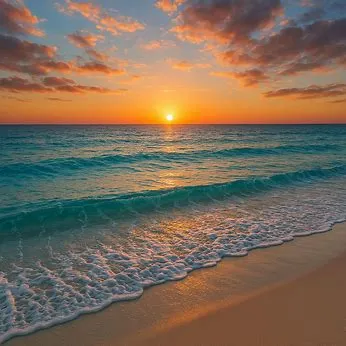
Dive into the fascinating world beneath the waves with these Ocean Trivia Questions and Answers!
Covering everything from incredible marine animals and deep-sea discoveries to coral reefs, ocean geography, famous explorers, tides, and fascinating underwater facts, this collection is perfect for anyone curious about the mysteries of our oceans.
These Ocean Trivia Questions and Answers include a mix of easy, interesting, and challenging questions, making them ideal for trivia nights, classroom activities, family game nights, or anyone who simply loves learning about the sea.
Get ready to test your knowledge and discover amazing facts about the vast blue world that covers much of our planet.
Ocean Trivia Questions and Answers General Knowledge
1. What is the largest ocean on Earth?
Answer: The Pacific Ocean.
Explanation: The Pacific Ocean covers more area than any other ocean and stretches between Asia, Australia, North America, and South America.
Key Information: It covers roughly one-third of Earth’s surface and contains thousands of islands.
2. What is the deepest known point in the world’s oceans?
Answer: Challenger Deep in the Mariana Trench.
Explanation: Challenger Deep is located in the western Pacific Ocean and reaches nearly 11 kilometers below sea level.
Key Information: It is deeper than Mount Everest is tall above sea level.
3. What is the Mariana Trench?
Answer: The deepest oceanic trench known on Earth.
Explanation: It is a long, narrow depression in the seafloor east of the Mariana Islands in the western Pacific.
Key Information: Its deepest section is Challenger Deep.
4. What percentage of Earth’s surface is covered by ocean?
Answer: About 71%.
Explanation: Oceans cover the majority of Earth’s surface, making our planet appear blue when viewed from space.
Key Information: The global ocean contains about 97% of Earth’s water.
5. How many oceans are commonly recognized today?
Answer: Five.
Explanation: The five recognized oceans are the Pacific, Atlantic, Indian, Southern, and Arctic Oceans.
Key Information: They are all connected, forming one global ocean system.
6. Which ocean is the smallest?
Answer: The Arctic Ocean.
Explanation: The Arctic Ocean surrounds the North Pole and is smaller than the other four oceans.
Key Information: Much of its surface can be covered by seasonal or multi-year sea ice.
7. Which ocean surrounds Antarctica?
Answer: The Southern Ocean.
Explanation: The Southern Ocean encircles the Antarctic continent and connects the southern portions of the Atlantic, Pacific, and Indian Oceans.
Key Information: Its powerful Antarctic Circumpolar Current flows continuously around Antarctica.
8. Why does the ocean appear blue?
Answer: Water absorbs more of the longer wavelengths of visible light and scatters shorter blue wavelengths back toward our eyes.
Explanation: Sunlight contains many colors, but water interacts differently with each wavelength.
Key Information: Ocean color can also be influenced by algae, sediments, depth, and other materials in the water.
9. What is bioluminescence?
Answer: The production of light by a living organism.
Explanation: Many marine organisms can create light through chemical reactions inside their bodies.
Key Information: Bioluminescent creatures include certain jellyfish, fish, worms, and microscopic plankton.
10. Which marine animal is the largest animal known to have ever lived?
Answer: The blue whale.
Explanation: Blue whales can grow to enormous lengths and weigh far more than any known land animal.
Key Information: Some blue whales can reach around 30 meters (98 feet) in length.
11. What is coral?
Answer: Coral is made up of tiny marine animals called polyps and the structures they produce.
Explanation: Coral polyps secrete calcium carbonate skeletons, which can accumulate into large reefs over time.
Key Information: Coral reefs provide habitat for a huge variety of marine species.
12. What is the Great Barrier Reef?
Answer: The world’s largest coral reef system.
Explanation: It lies off the northeastern coast of Australia and consists of thousands of individual reefs and islands.
Key Information: It can be seen from space under suitable conditions and supports remarkable marine biodiversity.
13. What causes ocean tides?
Answer: Mainly the gravitational forces of the Moon and the Sun.
Explanation: The Moon’s gravity is the strongest influence on Earth’s regular tidal cycles, while the Sun also contributes.
Key Information: Earth’s rotation and the shape of coastlines and ocean basins influence the actual tides at particular locations.
14. What is an ocean current?
Answer: A large-scale movement of seawater.
Explanation: Ocean currents are driven by factors such as wind, differences in temperature and salinity, Earth’s rotation, and gravity.
Key Information: Currents transport heat and nutrients around the planet and strongly influence climate.
15. What is the Gulf Stream?
Answer: A powerful warm ocean current in the North Atlantic.
Explanation: The Gulf Stream carries warm water from the Gulf of Mexico region toward the North Atlantic.
Key Information: It contributes to the climate of areas around the North Atlantic, including parts of western Europe.
16. What is an ocean whirlpool?
Answer: A rotating body of water.
Explanation: Whirlpool-like currents can form when water moves around underwater features, narrow passages, or opposing currents.
Key Information: Most natural ocean whirlpools are much less dangerous than their dramatic portrayal in fiction.
17. What is an underwater volcano?
Answer: A volcano located beneath the ocean.
Explanation: Underwater volcanoes release magma, gases, and heat onto or beneath the seafloor.
Key Information: A large portion of Earth’s volcanic activity occurs underwater, especially along mid-ocean ridges.
18. What is a hydrothermal vent?
Answer: An opening on the seafloor that releases hot, mineral-rich water.
Explanation: Seawater can penetrate cracks in Earth’s crust, become heated by magma, and return to the ocean carrying dissolved minerals.
Key Information: Hydrothermal vents support unusual ecosystems based largely on chemosynthesis rather than sunlight.
19. What is the “midnight zone” of the ocean?
Answer: The bathypelagic zone, generally found about 1,000 to 4,000 meters below the surface.
Explanation: Almost no sunlight reaches this region, so organisms living there have adapted to extreme darkness and pressure.
Key Information: Many deep-sea animals use bioluminescence to communicate, attract prey, or avoid predators.
20. Why is the deep ocean so dark?
Answer: Sunlight is absorbed and scattered as it travels through seawater.
Explanation: Only a small amount of sunlight reaches great depths, and below the photic zone there is essentially no sunlight available for photosynthesis.
Key Information: Deep-sea ecosystems can still thrive using chemical energy, falling organic material, and other food sources.**
Read Also: 164+ Jaw-Dropping Shark Trivia Questions and Answers
Ocean Trivia Questions and Answers for Adults
1. What is the largest living fish in the ocean?
Answer: The whale shark.
Explanation: Despite its name, the whale shark is a fish rather than a whale. It is a filter feeder that consumes plankton and other tiny organisms.
Key Information: Whale sharks can grow to around 12 meters (40 feet) or more and are generally considered gentle giants.
2. Which ocean animal is famous for changing its skin color and texture to blend into its surroundings?
Answer: The octopus.
Explanation: Octopuses have specialized skin cells that allow them to rapidly change color and create patterns.
Key Information: Some species can also alter their skin texture to resemble rocks, coral, or other surfaces.
3. What is the world’s largest coral reef system?
Answer: The Great Barrier Reef.
Explanation: It consists of thousands of individual reefs and hundreds of islands along Australia’s northeastern coast.
Key Information: It is home to an extraordinary variety of fish, corals, turtles, sharks, and other marine life.
4. What marine mammal is known for using tools such as rocks to open shells?
Answer: The sea otter.
Explanation: Sea otters can use stones to break open hard-shelled prey such as clams and mussels.
Key Information: They are considered a keystone species because their feeding behavior helps control sea urchin populations and supports healthy kelp forests.
5. Which ocean animal has three hearts?
Answer: The octopus.
Explanation: An octopus has two hearts that pump blood toward its gills and one that pumps oxygenated blood to the rest of its body.
Key Information: Octopus blood is blue because it uses the copper-containing protein hemocyanin to transport oxygen.
6. What causes waves on the ocean’s surface most commonly?
Answer: Wind.
Explanation: Wind transfers energy to the water’s surface, creating waves that can travel across large distances.
Key Information: Earthquakes, landslides, volcanic eruptions, and other events can also generate waves such as tsunamis.
7. What is a tsunami?
Answer: A series of large ocean waves usually caused by a major disturbance of the seafloor.
Explanation: Underwater earthquakes are the most common cause, although volcanic eruptions and landslides can also produce tsunamis.
Key Information: A tsunami can travel across an entire ocean and become much higher when it reaches shallow coastal water.
8. What is the largest ocean current system on Earth?
Answer: The Antarctic Circumpolar Current.
Explanation: This current flows continuously around Antarctica, connecting the Atlantic, Pacific, and Indian Oceans.
Key Information: It plays an important role in global ocean circulation and climate.
9. What is the thermohaline circulation?
Answer: A global system of deep and surface ocean circulation driven largely by differences in water temperature and salinity.
Explanation: Cold, salty water is denser and can sink, helping move water through the deep ocean.
Key Information: This circulation transports heat, carbon, oxygen, and nutrients around the planet.
10. What is ocean salinity?
Answer: The amount of dissolved salts in seawater.
Explanation: Seawater contains many dissolved minerals and salts, with sodium chloride being the most abundant.
Key Information: Average open-ocean salinity is roughly 35 parts per thousand, although it varies by location.
11. Why is seawater salty?
Answer: Dissolved minerals and salts enter the ocean through processes such as weathering of rocks, rivers, volcanic activity, and hydrothermal vents.
Explanation: Over very long periods, these dissolved substances accumulate and are redistributed through the ocean.
Key Information: Evaporation removes water but leaves most dissolved salts behind, increasing salinity in some regions.
12. What is the deepest fish ever recorded?
Answer: A snailfish from the genus Pseudoliparis.
Explanation: Scientists have observed snailfish living at extraordinary depths in ocean trenches.
Key Information: A snailfish was filmed at about 8,336 meters below the surface in the Izu-Ogasawara Trench.
13. What is the “twilight zone” of the ocean?
Answer: The mesopelagic zone, generally about 200 to 1,000 meters deep.
Explanation: Some sunlight reaches this region, but it is too weak for most normal photosynthesis.
Key Information: The twilight zone contains enormous numbers of organisms and is important in the movement of carbon through the ocean.
14. What is the ocean’s sunlight zone called?
Answer: The epipelagic or photic zone.
Explanation: This is the upper layer of the ocean where enough sunlight is available for photosynthesis.
Key Information: Most familiar marine life and much of the ocean’s primary production occur within or near this sunlit layer.
15. What is kelp?
Answer: A type of large brown seaweed.
Explanation: Kelp grows rapidly in nutrient-rich coastal waters and can form underwater forests.
Key Information: Kelp forests provide food and shelter for many marine animals and help protect coastal ecosystems.
16. Which marine animal is famous for migrating thousands of kilometers across oceans?
Answer: The humpback whale.
Explanation: Humpback whales commonly migrate between productive feeding grounds in colder waters and breeding areas in warmer waters.
Key Information: Some populations travel many thousands of kilometers during their annual migrations.
17. What is the largest sea turtle species?
Answer: The leatherback sea turtle.
Explanation: Leatherbacks are much larger than other living sea turtle species and have a flexible, leathery shell rather than a hard bony shell.
Key Information: They are capable of long-distance ocean migrations and can dive to impressive depths.
18. What is an ocean gyre?
Answer: A large system of rotating ocean currents.
Explanation: Major gyres are created by global winds, Earth’s rotation, and the arrangement of continents.
Key Information: The five major subtropical gyres are found in the North and South Pacific, North and South Atlantic, and Indian Ocean.
19. What is the Great Pacific Garbage Patch?
Answer: A large area of concentrated floating marine debris in the North Pacific Ocean.
Explanation: Ocean currents cause plastic and other debris to accumulate in certain regions.
Key Information: It is not a solid island of garbage; much of the plastic consists of small pieces called microplastics.
20. What is ocean acidification?
Answer: The decrease in seawater pH caused primarily by the ocean absorbing excess carbon dioxide from the atmosphere.
Explanation: Carbon dioxide reacts with seawater and changes its chemistry, reducing the availability of carbonate ions.
Key Information: Ocean acidification can make it more difficult for organisms such as corals and some shellfish to build and maintain calcium carbonate structures.
Read More: 145+ Sun-Kissed Barbados Trivia Questions and Answers
Easy Ocean Trivia Questions and Answers
1. What is the largest ocean desert in the world?
Answer: The South Pacific Subtropical Gyre.
Explanation: This enormous region of the Pacific has extremely low nutrient levels and very little biological productivity compared with many other ocean areas.
Key Information: Ocean deserts are not completely lifeless; microscopic organisms and other specially adapted creatures still survive there.
2. What is marine snow?
Answer: A continuous shower of organic material that sinks from upper ocean waters toward the deep sea.
Explanation: Marine snow can include dead plankton, waste, mucus, and tiny particles of organic matter.
Key Information: It provides an important source of food for organisms living in the deep ocean and helps transport carbon downward.
3. What is the ocean’s “conveyor belt”?
Answer: A simplified term for the global system of ocean circulation.
Explanation: Differences in temperature and salinity help drive deep-water movement, while winds and other forces influence surface currents.
Key Information: This circulation helps redistribute heat and nutrients around the planet.
4. Which ocean contains the North Pole?
Answer: The Arctic Ocean.
Explanation: The geographic North Pole lies on sea ice floating over the Arctic Ocean.
Key Information: Unlike Antarctica, the Arctic is an ocean surrounded largely by land.
5. Which continent surrounds the South Pole?
Answer: Antarctica.
Explanation: Antarctica is a continent located around the South Pole and is surrounded by the Southern Ocean.
Key Information: The continent is covered by a massive ice sheet that contains most of Earth’s freshwater ice.
6. What is sea ice?
Answer: Frozen seawater.
Explanation: Sea ice forms when ocean water freezes, unlike icebergs, which originate primarily from glaciers and ice shelves on land.
Key Information: Sea ice is especially important in polar ecosystems and influences Earth’s climate by reflecting sunlight.
7. What is an iceberg?
Answer: A large piece of freshwater ice that has broken away from a glacier or ice shelf and floats in the ocean.
Explanation: Icebergs are made from compacted snow that accumulated on land over long periods.
Key Information: Most of an iceberg’s volume is underwater, which is why the visible portion can be misleadingly small.
8. What is an atoll?
Answer: A ring-shaped coral reef, often surrounding a lagoon.
Explanation: Atolls commonly form around volcanic islands as the island slowly subsides while coral continues growing near sea level.
Key Information: Many famous tropical islands are atolls or are associated with atoll reef systems.
9. What is a coral atoll lagoon?
Answer: A body of relatively shallow water enclosed or partly enclosed by an atoll reef.
Explanation: The lagoon occupies the area inside the ring of coral reef.
Key Information: Lagoon conditions vary greatly depending on connections between the lagoon and open ocean.
10. What is a seamount?
Answer: An underwater mountain formed by volcanic activity.
Explanation: Seamounts rise from the seafloor but do not reach the ocean surface.
Key Information: Seamounts can create productive habitats because they alter currents and provide hard surfaces for marine organisms.
11. What is a guyot?
Answer: A flat-topped underwater mountain.
Explanation: Guyots are generally believed to have once been volcanic islands whose tops were eroded near sea level before the structures subsided.
Key Information: They are also called tablemounts because of their distinctive flat tops.
12. What is a mid-ocean ridge?
Answer: A long underwater mountain system formed where tectonic plates move apart.
Explanation: As plates separate, magma rises and cools to create new oceanic crust.
Key Information: The global mid-ocean ridge system stretches for tens of thousands of kilometers across the seafloor.
13. What is the Mid-Atlantic Ridge?
Answer: An underwater mountain ridge running through the Atlantic Ocean.
Explanation: It marks a boundary where tectonic plates are moving apart and new seafloor is being created.
Key Information: Iceland is one of the few places where the Mid-Atlantic Ridge rises above sea level.
14. What is a continental shelf?
Answer: The relatively shallow, submerged edge of a continent.
Explanation: Continental shelves extend from coastlines toward deeper ocean basins.
Key Information: Many productive fisheries and important marine ecosystems are located on continental shelves.
15. What is a continental slope?
Answer: The steeper underwater region connecting a continental shelf to the deep ocean floor.
Explanation: After the relatively shallow shelf, the seafloor generally descends more sharply along the continental slope.
Key Information: Submarine canyons can cut deeply into continental slopes.
16. What is an underwater canyon?
Answer: A deep valley carved into the seafloor, often extending from a continental shelf toward deeper water.
Explanation: Many submarine canyons are shaped by powerful sediment flows and other geological processes.
Key Information: They can transport sediments and nutrients from coastal areas into the deep ocean.
17. What is a hydrothermal vent chimney?
Answer: A mineral structure that forms around a hydrothermal vent as hot, mineral-rich water meets cold seawater.
Explanation: Dissolved minerals precipitate out of the hot water and accumulate around the vent opening.
Key Information: Some vent chimneys can grow to impressive heights and support dense communities of specialized organisms.
18. What is chemosynthesis?
Answer: A process in which organisms use chemical energy to produce organic matter.
Explanation: Unlike photosynthesis, chemosynthesis does not require sunlight. Some microbes obtain energy from chemicals released by hydrothermal vents.
Key Information: Chemosynthetic ecosystems demonstrate that life can thrive in places completely cut off from sunlight.
19. What is a deep-sea anglerfish famous for?
Answer: Its bioluminescent lure.
Explanation: Many deep-sea anglerfish have a modified structure that produces light and can attract prey in the darkness.
Key Information: The glowing lure is called an esca and is associated with a specialized appendage called the illicium.
20. What is the “giant squid” famous for?
Answer: Its enormous size and deep-ocean lifestyle.
Explanation: Giant squid live in the deep ocean and have extremely large eyes, long tentacles, and powerful feeding structures.
Key Information: They can reach around 10–13 meters (33–43 feet) in total length, with females generally larger than males.
Read More: 154+ Fun Ireland Trivia Questions and Answers

Ocean Questions for Students
1. Which marine animal is known for having the largest brain among living animals?
Answer: The sperm whale.
Explanation: Sperm whales have exceptionally large brains compared with other living animals.
Key Information: They are deep-diving whales that can descend to remarkable depths while hunting squid.
2. Which whale is famous for its complex songs?
Answer: The humpback whale.
Explanation: Male humpback whales produce elaborate sequences of sounds, especially during breeding periods.
Key Information: Humpback songs can change over time and may spread through populations.
3. What is echolocation?
Answer: A method of using sound echoes to locate objects and navigate.
Explanation: Animals such as dolphins and toothed whales produce sounds and interpret returning echoes to understand their surroundings.
Key Information: Echolocation is especially useful in dark or murky underwater environments where vision is limited.
4. Which ocean animal is famous for sleeping while keeping one half of its brain active?
Answer: Dolphins.
Explanation: Dolphins use a form of unihemispheric sleep in which one brain hemisphere rests while the other remains active.
Key Information: This adaptation helps dolphins continue breathing and remain alert while resting.
5. What is a dolphin’s blowhole used for?
Answer: Breathing air.
Explanation: Dolphins are mammals and must come to the surface to breathe through their blowholes.
Key Information: A dolphin’s blowhole is located on top of its head, allowing it to breathe efficiently at the surface.
6. What is the largest species of shark?
Answer: The whale shark.
Explanation: Whale sharks are filter-feeding sharks that consume plankton and other small organisms.
Key Information: Despite their huge size, they are generally not considered dangerous to humans.
7. Which shark is famous for its ability to live in both saltwater and freshwater?
Answer: The bull shark.
Explanation: Bull sharks can tolerate a wide range of salinity and can travel into rivers and estuaries.
Key Information: They have been recorded far upstream in several river systems.
8. Which ocean animal is known for having a powerful bite and rows of replaceable teeth?
Answer: The great white shark.
Explanation: Great white sharks use several rows of teeth to grasp and tear prey.
Key Information: Their teeth are continually replaced throughout their lives.
9. What is a manta ray?
Answer: A large cartilaginous marine animal related to sharks and other rays.
Explanation: Manta rays have broad, wing-like fins and feed primarily by filtering tiny organisms from seawater.
Key Information: Some manta rays can have wingspans exceeding 7 meters (23 feet).
10. What is a sea star?
Answer: A marine invertebrate commonly known as a starfish.
Explanation: Sea stars are echinoderms and are related to sea urchins and sea cucumbers.
Key Information: Many species can regenerate lost arms, and some can regenerate much more extensive portions of their bodies.
11. How does a sea star eat?
Answer: Many sea stars can push their stomach partly outside their body to digest prey.
Explanation: This unusual feeding method allows them to consume animals such as mussels that are difficult to swallow whole.
Key Information: Sea stars use tube feet to help pry open the shells of some prey.
12. What is a sea cucumber?
Answer: A soft-bodied marine invertebrate related to sea stars and sea urchins.
Explanation: Sea cucumbers live on or near the seafloor and often feed on organic material in sediment.
Key Information: Some species can eject internal organs as a defense mechanism and later regenerate them.
13. What is a sea urchin?
Answer: A spiny marine invertebrate belonging to the echinoderm group.
Explanation: Sea urchins have rounded bodies covered with movable spines and use specialized mouthparts to scrape food from surfaces.
Key Information: Their grazing can strongly influence the health of kelp forests.
14. What is a nautilus?
Answer: A marine mollusk with a chambered shell.
Explanation: Nautiluses are relatives of octopuses and squids but retain an external shell.
Key Information: Their shells contain chambers that help them control buoyancy.
15. What is a siphon used for in squid and octopuses?
Answer: It helps them move water and control movement.
Explanation: These animals draw water into their bodies and force it through the siphon, producing jet propulsion.
Key Information: The siphon also plays a role in expelling waste and water from the mantle cavity.
16. How do octopuses protect themselves from predators?
Answer: They can use camouflage, release ink, and rapidly change their behavior and appearance.
Explanation: Their sophisticated nervous systems and specialized skin allow them to respond quickly to threats.
Key Information: Some octopuses can mimic the appearance or behavior of other marine animals.
17. What is sea foam?
Answer: Foam created when dissolved organic materials in seawater are mixed with air.
Explanation: Waves and currents can trap air in water containing organic compounds produced by marine organisms.
Key Information: Large amounts of foam can sometimes accumulate along beaches during periods of high biological activity.
18. What is a red tide?
Answer: A common term for certain harmful or unusually dense algal blooms.
Explanation: Some microscopic algae can multiply rapidly under favorable conditions, sometimes producing toxins.
Key Information: Not every algal bloom is red, and not every red-colored bloom is harmful.
19. What is plankton?
Answer: Organisms that drift with ocean currents rather than actively swimming against them.
Explanation: Plankton include microscopic organisms as well as some larger drifting animals.
Key Information: Phytoplankton form the foundation of many marine food webs and produce a significant share of Earth’s oxygen through photosynthesis.
20. What is krill?
Answer: Small shrimp-like marine crustaceans.
Explanation: Krill are important food sources for whales, seals, penguins, fish, and many seabirds.
Key Information: Antarctic krill form enormous swarms and are a crucial part of the Southern Ocean ecosystem.
Ocean Trivia for Kids
1. What is the largest animal migration in the ocean?
Answer: The daily vertical migration of zooplankton and other marine organisms.
Explanation: Every day, enormous numbers of small ocean organisms move toward the surface at night to feed and descend into deeper water during the day.
Key Information: This is considered one of the largest migrations of animals on Earth by total number of individuals.
2. What is diel vertical migration?
Answer: The daily movement of marine organisms between deeper and shallower waters.
Explanation: Many organisms rise toward the surface after sunset to feed and return to deeper water before daylight.
Key Information: This behavior helps organisms find food while reducing their exposure to predators.
3. What is a blue hole in the ocean?
Answer: A deep underwater sinkhole or marine cavern.
Explanation: Blue holes are usually found in shallow coastal or reef environments and can extend far below the surrounding seafloor.
Key Information: Some blue holes contain unique geological features and unusual communities of microorganisms.
4. What is a submarine landslide?
Answer: A large mass of sediment or rock moving down an underwater slope.
Explanation: Submarine landslides can occur on continental margins when unstable sediments collapse.
Key Information: Very large underwater landslides can generate tsunamis.
5. What is a seafloor trench?
Answer: A long, narrow and extremely deep depression in the ocean floor.
Explanation: Most major ocean trenches form where one tectonic plate is forced beneath another in a process called subduction.
Key Information: The Mariana Trench is the deepest known ocean trench.
6. What is subduction?
Answer: The process in which one tectonic plate sinks beneath another.
Explanation: Subduction commonly occurs at convergent plate boundaries and is responsible for forming many deep ocean trenches.
Key Information: Subduction zones are also associated with earthquakes, volcanoes, and mountain-building.
7. What is an oceanic plate?
Answer: A tectonic plate containing oceanic crust and the underlying upper mantle.
Explanation: Oceanic plates are generally denser than continental crust and can sink beneath other plates.
Key Information: Much of Earth’s ocean floor consists of relatively young oceanic crust.
8. What is the oldest oceanic crust?
Answer: Oceanic crust that is roughly 200 million years old or slightly older.
Explanation: Most older oceanic crust has been recycled into Earth’s mantle through subduction.
Key Information: Continental rocks can be billions of years old, making oceanic crust generally much younger.
9. What is a coral spawning event?
Answer: The mass release of eggs and sperm by corals into the ocean.
Explanation: Many reef-building corals release reproductive cells into the water at specific times, often coordinated with environmental cues.
Key Information: Some coral spawning events occur only once a year and can involve thousands of colonies simultaneously.
10. What is coral bleaching?
Answer: The loss of symbiotic algae from coral tissue, causing corals to become pale or white.
Explanation: Stress, especially unusually warm water, can cause corals to expel the microscopic algae that provide much of their energy.
Key Information: Prolonged or severe bleaching can lead to coral death if stressful conditions persist.
11. What are zooxanthellae?
Answer: Photosynthetic algae that live symbiotically inside many coral tissues.
Explanation: These microscopic algae provide corals with energy produced through photosynthesis.
Key Information: The relationship between corals and their symbiotic algae is essential to many tropical reef ecosystems.
12. What is a mangrove forest?
Answer: A coastal ecosystem dominated by salt-tolerant trees and shrubs.
Explanation: Mangroves grow in tropical and subtropical coastal areas where land meets seawater.
Key Information: Mangrove roots provide nursery habitat for fish and help protect shorelines from erosion and storms.
13. What is a seagrass meadow?
Answer: An underwater ecosystem made up of flowering plants adapted to live in seawater.
Explanation: Seagrasses grow in shallow coastal waters where sufficient sunlight reaches the seafloor.
Key Information: Seagrass habitats provide food and shelter for animals such as dugongs, sea turtles, fish, and seahorses.
14. What is a dugong?
Answer: A large marine mammal that feeds mainly on seagrasses.
Explanation: Dugongs are herbivorous relatives of manatees and spend much of their time grazing in shallow coastal waters.
Key Information: Dugongs are found primarily in the warm coastal waters of the Indian and western Pacific Oceans.
15. What is a sea dragon?
Answer: A marine fish related to seahorses.
Explanation: Leafy and weedy sea dragons have remarkable camouflage that makes them resemble drifting seaweed.
Key Information: They are native to coastal waters around southern Australia.
16. What is a seahorse’s unusual reproductive feature?
Answer: The male carries the developing embryos.
Explanation: Female seahorses transfer eggs to a specialized pouch or brood area on the male, where the embryos develop.
Key Information: Seahorses are among the few animals in which males become pregnant and give birth.
17. What is a narwhal’s tusk?
Answer: A long, spiral tooth that projects from the upper jaw.
Explanation: The narwhal’s tusk is actually an elongated canine tooth, usually found in males but also present in some females.
Key Information: Narwhals live mainly in Arctic waters and use the tusk for sensory and social purposes.
18. What is a beluga whale famous for?
Answer: Its white color and wide range of vocal sounds.
Explanation: Belugas have flexible necks and are highly vocal, earning them the nickname “sea canaries.”
Key Information: They live primarily in Arctic and sub-Arctic waters.
19. What is the fastest fish in the ocean?
Answer: The exact answer is debated, but the sailfish is often cited as one of the fastest fish.
Explanation: Sailfish have streamlined bodies and powerful muscles that allow them to accelerate rapidly.
Key Information: Speed estimates for sailfish vary considerably, so claims of a precise maximum speed should be treated cautiously.
20. What is the fastest marine mammal?
Answer: The common dolphin is generally considered among the fastest marine mammals.
Explanation: Common dolphins have streamlined bodies designed for efficient swimming and can reach impressive speeds.
Key Information: Reported speeds vary, but common dolphins can reach roughly 40–60 km/h (25–37 mph) in short bursts.
Hard Ocean Trivia Questions and Answers
1. What is the world’s largest living marine reptile?
Answer: The leatherback sea turtle.
Explanation: The leatherback is the largest living sea turtle and spends most of its life in the open ocean.
Key Information: Unlike other modern sea turtles, it has a flexible, leathery shell rather than a hard bony shell.
2. Which marine animal is known for having a “false killer whale” name despite not being a killer whale?
Answer: The false killer whale.
Explanation: The false killer whale is a large member of the dolphin family, not a true killer whale.
Key Information: It is highly social and can form large groups.
3. What is an orca?
Answer: A killer whale, which is the largest member of the dolphin family.
Explanation: Orcas are toothed cetaceans known for their intelligence, teamwork, and powerful hunting abilities.
Key Information: Different orca populations can have distinct diets, behaviors, and vocal traditions.
4. What is a narwhal sometimes called?
Answer: The unicorn of the sea.
Explanation: Narwhals are famous for their long spiral tusks, which give them a unicorn-like appearance.
Key Information: Narwhals live in Arctic waters and are especially adapted to cold environments.
5. Which marine mammal has the thickest layer of blubber?
Answer: The bowhead whale is known for having an exceptionally thick layer of blubber.
Explanation: Thick blubber provides insulation in the extremely cold Arctic and sub-Arctic waters where bowhead whales live.
Key Information: Bowhead whales can have blubber more than 50 centimeters thick.
6. What is a sea lion’s most distinctive physical feature compared with a seal?
Answer: Sea lions have visible external ear flaps.
Explanation: True seals have small ear openings without external flaps, while sea lions have visible ears.
Key Information: Sea lions can also rotate their hind flippers under their bodies, allowing them to move more effectively on land.
7. What is the world’s largest pinniped?
Answer: The southern elephant seal.
Explanation: Male southern elephant seals can grow enormously large and weigh several tons.
Key Information: Adult males can be more than four times heavier than adult females.
8. What is a pinniped?
Answer: A group of marine mammals that includes seals, sea lions, and walruses.
Explanation: Pinnipeds have limbs adapted into flippers and spend significant portions of their lives in the water.
Key Information: They are mammals, so they breathe air and nurse their young with milk.
9. What is a walrus famous for?
Answer: Its long tusks and prominent whiskers.
Explanation: Walruses use their tusks for various purposes and have sensitive whiskers that help them locate prey on the seafloor.
Key Information: Walruses mainly inhabit Arctic and sub-Arctic regions.
10. What do sea turtles use Earth’s magnetic field for?
Answer: Navigation.
Explanation: Sea turtles can sense aspects of Earth’s magnetic field and use this ability to help navigate across vast ocean distances.
Key Information: Some species can return to regions associated with their birth to reproduce.
11. What is the largest sea turtle nesting population associated with a single beach?
Answer: Olive ridley sea turtles are famous for mass nesting events called arribadas.
Explanation: Thousands or even hundreds of thousands of females can gather to lay eggs in a relatively short period.
Key Information: These spectacular nesting events occur at selected beaches, especially along parts of Central and South America.
12. What is an arribada?
Answer: A mass nesting event of sea turtles.
Explanation: The Spanish word arribada means “arrival” and describes the synchronized arrival of large numbers of turtles on a beach to lay eggs.
Key Information: Olive ridley turtles are particularly famous for this behavior.
13. What is a moon jellyfish?
Answer: A common jellyfish species with a translucent, bell-shaped body.
Explanation: Moon jellyfish are found in many coastal oceans and use their tentacles and oral arms to capture small prey.
Key Information: Their scientific name is Aurelia, and several closely related species are commonly called moon jellies.
14. Do jellyfish have brains?
Answer: No, jellyfish do not have a centralized brain.
Explanation: Instead, they have a decentralized nerve net that helps coordinate movement and responses to their environment.
Key Information: Despite their simple nervous system, jellyfish can sense light, gravity, chemicals, and physical contact.
15. What is the largest jellyfish species?
Answer: The lion’s mane jellyfish.
Explanation: The lion’s mane jellyfish can develop an enormous bell and extremely long trailing tentacles.
Key Information: Its size varies greatly, and some specimens have tentacles extending many meters.
16. What is a Portuguese man o’ war?
Answer: A floating colonial organism made up of specialized individuals called zooids.
Explanation: Although it looks like a jellyfish, it is actually a siphonophore.
Key Information: Its tentacles can deliver a powerful sting, so people should avoid touching stranded specimens.
17. What is a siphonophore?
Answer: A colony of specialized organisms living together as one functional unit.
Explanation: Different zooids within a siphonophore colony can perform different jobs, such as feeding, reproduction, or movement.
Key Information: Some siphonophores can grow remarkably long, making them among the longest known marine organisms.
18. What is a comb jelly?
Answer: A gelatinous marine animal belonging to the phylum Ctenophora.
Explanation: Comb jellies move using rows of tiny hair-like structures called cilia.
Key Information: Some species produce beautiful rainbow-like light effects as their cilia scatter light.
19. What is the ocean’s largest fish-eating predator among sharks?
Answer: The great white shark is one of the ocean’s most powerful large predatory sharks.
Explanation: Great white sharks hunt fish, rays, seabirds, seals, sea lions, and other marine animals.
Key Information: Their bodies are highly streamlined and equipped with powerful jaws and replaceable teeth.
20. Why do many deep-sea animals have very large eyes?
Answer: To capture as much available light as possible.
Explanation: In the deep ocean, sunlight becomes extremely faint, so large eyes can improve an animal’s ability to detect prey, predators, or mates.
Key Information: Some deep-sea species have additional adaptations such as bioluminescence and highly sensitive visual systems.**
Best Ocean Trivia Questions and Answers

1. What is the largest underwater mountain range on Earth?
Answer: The mid-ocean ridge system.
Explanation: The mid-ocean ridge system is a vast chain of underwater mountains that extends through all the major ocean basins.
Key Information: It stretches for roughly 65,000 kilometers (40,000 miles) and is largely formed where tectonic plates move apart.
2. What is the largest ocean basin?
Answer: The Pacific Ocean basin.
Explanation: The Pacific basin contains the world’s largest ocean area and includes many deep trenches and volcanic features.
Key Information: It contains the Mariana Trench, the deepest known part of the global ocean.
3. What is the Ring of Fire?
Answer: A zone surrounding much of the Pacific Ocean with numerous volcanoes and earthquake-prone tectonic boundaries.
Explanation: The Ring of Fire is strongly associated with plate subduction around the Pacific basin.
Key Information: It contains a large proportion of the world’s active volcanoes.
4. What is the largest island in the world?
Answer: Greenland.
Explanation: Greenland is considered the world’s largest island because Australia is classified as a continent.
Key Information: Greenland is located largely within the Arctic region and is mostly covered by a massive ice sheet.
5. What is an ocean basin?
Answer: A large depression of Earth’s crust occupied by an ocean.
Explanation: Ocean basins include deep seafloor regions surrounded by continental margins and other geological features.
Key Information: Ocean basins are constantly changing because of plate tectonics.
6. What is the deepest part of the Atlantic Ocean?
Answer: The Puerto Rico Trench.
Explanation: The Puerto Rico Trench lies north of Puerto Rico and marks one of the deepest areas of the Atlantic Ocean.
Key Information: Its deepest point, known as Milwaukee Deep, reaches more than 8,000 meters below sea level.
7. What is the deepest part of the Indian Ocean?
Answer: The Java Trench.
Explanation: The Java Trench, also called the Sunda Trench, lies south of Indonesia.
Key Information: It formed at a subduction zone where tectonic plates converge.
8. What is the deepest part of the Southern Ocean?
Answer: The South Sandwich Trench.
Explanation: The trench lies near the South Sandwich Islands in the southern Atlantic region.
Key Information: Its deepest sections reach more than 8,000 meters below sea level.
9. What is the deepest part of the Arctic Ocean?
Answer: The Molloy Deep.
Explanation: Molloy Deep is located in the Fram Strait between Greenland and the Svalbard archipelago.
Key Information: It is the deepest known point in the Arctic Ocean.
10. What is an ocean trench formed by?
Answer: Usually by the subduction of one tectonic plate beneath another.
Explanation: As one plate sinks into Earth’s mantle, it creates a long and deep depression in the seafloor.
Key Information: Ocean trenches are among the deepest geological features on Earth.
11. What is the average depth of the global ocean?
Answer: About 3,700 meters (12,100 feet).
Explanation: Although the ocean contains extremely deep trenches, much of its seafloor lies at depths of several kilometers.
Key Information: The average depth varies depending on how different ocean basins and marginal seas are measured.
12. What is the abyssal plain?
Answer: A broad, relatively flat region of the deep ocean floor.
Explanation: Abyssal plains are covered by layers of sediment that accumulate over extremely long periods.
Key Information: They are among the flattest and largest landscapes on Earth.
13. What is an abyssal zone?
Answer: A deep ocean region generally extending from about 4,000 to 6,000 meters below sea level.
Explanation: The abyssal zone is extremely dark, cold, and under enormous pressure.
Key Information: Many organisms living there have specialized adaptations for surviving with little food and no sunlight.
14. What is the hadal zone?
Answer: The deepest ocean environment, found primarily within ocean trenches below about 6,000 meters.
Explanation: The hadal zone is named after Hades, the ancient Greek underworld.
Key Information: Animals living there must tolerate extraordinary pressure and extreme environmental conditions.
15. What happens to water pressure as ocean depth increases?
Answer: Water pressure increases.
Explanation: The deeper an organism travels, the greater the weight of the water above it.
Key Information: At great depths, pressure can be hundreds of times greater than atmospheric pressure at sea level.
16. Why can deep-sea fish look unusual?
Answer: They have evolved adaptations for extreme darkness, pressure, cold, and limited food.
Explanation: Deep-sea animals may have flexible bodies, large mouths, specialized eyes, or bioluminescent organs.
Key Information: Many deep-sea species look dramatically different from animals living near the surface.
17. What is a marine snow particle made of?
Answer: It can contain dead plankton, fecal material, mucus, minerals, and other organic particles.
Explanation: These particles clump together and slowly sink through the water column.
Key Information: Marine snow helps transport carbon from surface waters into the deep ocean.
18. What is the biological carbon pump?
Answer: A natural process that transports carbon from the ocean surface toward deeper waters.
Explanation: Phytoplankton absorb carbon dioxide during photosynthesis, and some of that carbon eventually sinks as organic matter.
Key Information: The biological carbon pump plays an important role in Earth’s carbon cycle.
19. What percentage of the ocean has humans explored?
Answer: There is no single precise percentage.
Explanation: Scientists have mapped much of the seafloor at broad scales, but direct visual exploration of the deep ocean remains limited.
Key Information: New technologies continue to reveal previously unknown species, habitats, and geological features.
20. Why is the deep ocean often described as Earth’s final frontier?
Answer: Because enormous areas remain difficult to access and study.
Explanation: Extreme pressure, darkness, cold temperatures, and vast distances make deep-ocean research technically challenging.
Key Information: Modern submersibles, remotely operated vehicles, autonomous robots, and advanced sonar are helping scientists explore this mysterious environment.
FAQS
1. What is the largest ocean on Earth?
The Pacific Ocean is the largest and deepest ocean on Earth, covering more area than any other ocean.
2. What is the deepest known part of the ocean?
The Mariana Trench contains the Challenger Deep, the deepest known point in Earth’s oceans, reaching nearly 11,000 meters below sea level.
3. What percentage of Earth’s surface is covered by oceans?
Oceans cover about 71% of Earth’s surface, making them one of the planet’s most important natural features.
4. What is the largest animal in the ocean?
The blue whale is the largest animal known to have ever lived, growing to around 30 meters (100 feet) long.
Final Thoughts
These Ocean Trivia Questions and Answers offer an exciting way to explore the incredible world of oceans and marine life.
From mysterious deep-sea creatures and colorful coral reefs to powerful waves, fascinating ocean facts, and remarkable underwater discoveries, there is always something new to learn.
Whether you answered every question correctly or discovered some surprising facts along the way, we hope you enjoyed this deep dive into ocean trivia.
Share these questions with friends and family and see who can make the biggest splash with their score!
Recommend:
146+ Gilligans Island Trivia Questions and Answers