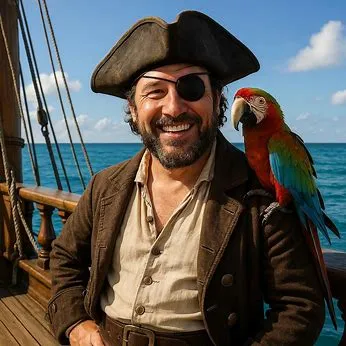
Ahoy, trivia fans! Get ready to sail into a world of legendary pirates, daring adventures, buried treasure, famous ships, and fascinating maritime history.
These Pirate Trivia Questions and Answers are packed with fun facts about notorious pirates, pirate life, nautical traditions, famous battles, treasure hunts, and the golden age of piracy.
Whether you are planning a pirate-themed trivia night, looking for questions for a classroom activity, or simply love stories of pirates and the high seas, this collection has something for everyone.
From easy questions to challenging ones, test your skills and discover surprising facts about the pirates who once ruled the oceans.
Pirate Trivia Questions and Answers
1. Who was the famous pirate known as Blackbeard?
Answer: Edward Teach, also known as Blackbeard.
Explanation: Blackbeard was an English pirate who became one of the most famous pirates of the early 18th century.
Key Information: He was known for his long black beard and intimidating appearance. He operated mainly around the Caribbean and the eastern coast of North America.
2. What was the name of the famous pirate ship commanded by Blackbeard?
Answer: Queen Anne’s Revenge.
Explanation: Blackbeard captured a French ship and renamed it Queen Anne’s Revenge, using it as his flagship.
Key Information: The ship was a powerful vessel with numerous cannons and became one of the most famous ships associated with the Golden Age of Piracy.
3. What is a pirate’s traditional eye covering called?
Answer: An eye patch.
Explanation: An eye patch is a piece of material worn over one eye. Pirates are commonly shown wearing them in popular culture.
Key Information: There is no strong historical evidence that pirates commonly wore eye patches specifically to help them see in darkness.
4. What was the name of the famous pirate who was born Anne Bonny?
Answer: Anne Bonny was her pirate name; she was known simply as Anne Bonny.
Explanation: Anne Bonny was an Irish-born pirate who became active in the Caribbean during the early 18th century.
Key Information: She sailed with Calico Jack Rackham and became one of the best-known women associated with the Golden Age of Piracy.
5. Which pirate was known as Calico Jack?
Answer: John Rackham.
Explanation: John Rackham was an English pirate commonly called Calico Jack because of his colorful calico clothing.
Key Information: He is especially remembered for sailing with Anne Bonny and Mary Read.
6. Who was Mary Read?
Answer: Mary Read was an English pirate who disguised herself as a man for part of her life.
Explanation: Read served as a pirate alongside Anne Bonny and Calico Jack during the early 1700s.
Key Information: Historical accounts describe Read as a skilled fighter who revealed her identity as a woman while serving aboard a pirate ship.
7. What was the name of a pirate’s traditional flag featuring a skull and crossed bones?
Answer: The Jolly Roger.
Explanation: The Jolly Roger is the name commonly given to pirate flags, especially those featuring skulls, bones, or other threatening symbols.
Key Information: Not every pirate used the same design. Different pirate captains sometimes created their own distinctive flags.
8. What does the skull and crossbones symbol on a pirate flag traditionally represent?
Answer: Danger or death.
Explanation: The skull and crossbones were used as a threatening symbol intended to frighten ships into surrendering.
Key Information: Pirate flags could also include skeletons, hearts, swords, hourglasses, or other symbols.
9. What was a pirate’s ship often called when it was used to attack other vessels?
Answer: A pirate ship.
Explanation: Pirate ships were vessels used by pirates to travel, raid, capture cargo, and engage with other ships.
Key Information: Pirates used many types of ships, including sloops, schooners, brigantines, and larger captured vessels.
10. Which famous pirate was nicknamed “Black Bart”?
Answer: Bartholomew Roberts.
Explanation: Bartholomew Roberts, also known as Black Bart, was one of the most successful pirates of the Golden Age of Piracy.
Key Information: He captured hundreds of ships during his career and was active mainly in the Atlantic and along the coast of West Africa.
11. What was the Golden Age of Piracy?
Answer: A period when piracy was especially widespread, mainly during the late 17th and early 18th centuries.
Explanation: During this era, pirates operated across the Caribbean, Atlantic, and other important maritime trade routes.
Key Information: Many famous pirates, including Blackbeard, Calico Jack, and Bartholomew Roberts, were active during this period.
12. Which region was especially famous for pirate activity during the Golden Age of Piracy?
Answer: The Caribbean.
Explanation: The Caribbean had busy trade routes, valuable cargo, and many ports, making it an important area for piracy.
Key Information: Islands and coastal settlements in the Caribbean became central locations in stories and historical accounts of piracy.
13. What was a pirate’s buried treasure traditionally believed to contain?
Answer: Gold, silver, coins, jewels, and other valuables.
Explanation: Stories about pirates often describe them burying stolen treasure on remote islands.
Key Information: Although buried pirate treasure is famous in legends, historical evidence suggests that widespread treasure burial by pirates was uncommon.
14. What is the name of the famous fictional pirate captain from Peter Pan?
Answer: Captain Hook.
Explanation: Captain Hook is the main pirate villain in J.M. Barrie’s Peter Pan stories.
Key Information: Hook is famous for having a hook instead of one hand and for his fear of the crocodile that follows him.
15. What animal is commonly shown sitting on a pirate’s shoulder?
Answer: A parrot.
Explanation: Parrots became strongly associated with pirate stories and illustrations, especially through popular books and movies.
Key Information: The famous pirate-and-parrot image is largely a product of popular culture rather than a common historical pirate practice.
16. What is a pirate’s wooden leg commonly associated with?
Answer: A peg leg.
Explanation: A peg leg is a simple prosthetic limb traditionally depicted as a wooden replacement for a missing leg.
Key Information: Pirates in popular stories are often shown with peg legs, hooks, and eye patches, but these features were not universal among historical pirates.
17. Which famous fictional pirate captain says “Yo ho ho” in popular pirate stories?
Answer: Many fictional pirate characters use the phrase, but it is especially associated with traditional pirate stories and songs.
Explanation: “Yo ho ho” became part of the popular image of pirate speech through literature, theater, and film.
Key Information: Historical pirates probably did not all speak using the exaggerated pirate accent commonly heard in modern entertainment.
18. What was a pirate’s main reason for attacking merchant ships?
Answer: To steal valuable cargo and goods.
Explanation: Pirates attacked ships to obtain money, merchandise, food, weapons, and other valuable supplies.
Key Information: Cargo could include spices, sugar, tobacco, precious metals, textiles, and other trade goods.
19. Which famous pirate was captured and executed in Virginia in 1718?
Answer: Blackbeard.
Explanation: Blackbeard was killed during a battle with forces led by Lieutenant Robert Maynard near Ocracoke Island.
Key Information: His death helped strengthen the historical legend surrounding one of the most famous pirates in history.
20. What is the name of the famous fictional pirate treasure map found in Robert Louis Stevenson’s novel?
Answer: The treasure map in Treasure Island.
Explanation: Robert Louis Stevenson’s Treasure Island is a classic adventure novel featuring pirates, buried treasure, and a mysterious map.
Key Information: The novel helped establish many familiar pirate-story elements, including treasure maps, pirate crews, and memorable characters such as Long John Silver.**
Read More: 141+ Epic One Piece Trivia Questions and Answers
Hard Pirate Trivia Questions and Answers
1. Which famous pirate was known as “Black Bart”?
Answer: Bartholomew Roberts.
Explanation: Bartholomew Roberts was a Welsh pirate who became one of the most successful pirates during the Golden Age of Piracy.
Key Information: He reportedly captured hundreds of vessels during his career and was killed in battle in 1722.
2. What was the name of the famous pirate known as Calico Jack?
Answer: John Rackham.
Explanation: John Rackham was an English pirate who became famous for his colorful clothing and his association with Anne Bonny and Mary Read.
Key Information: His nickname “Calico Jack” came from the brightly colored calico clothes he reportedly wore.
3. Which famous female pirate sailed with Calico Jack?
Answer: Anne Bonny.
Explanation: Anne Bonny was an Irish-born pirate who became one of the most famous women pirates in history.
Key Information: She operated in the Caribbean and became closely associated with Calico Jack Rackham.
4. Which other famous female pirate sailed alongside Anne Bonny?
Answer: Mary Read.
Explanation: Mary Read was an English pirate who served aboard the same crew as Anne Bonny.
Key Information: Historical accounts say Read sometimes dressed as a man and became known as a capable fighter.
5. What is a pirate’s lookout usually called?
Answer: A lookout.
Explanation: A lookout was responsible for watching the horizon and warning the crew about approaching ships, land, or danger.
Key Information: Lookouts were often positioned high on a ship’s mast to get a better view.
6. What part of a ship is commonly called the front?
Answer: The bow.
Explanation: The bow is the forward part of a ship that faces the direction in which the vessel is traveling.
Key Information: The opposite end of a ship is called the stern.
7. What is the back part of a ship called?
Answer: The stern.
Explanation: The stern is the rear section of a ship.
Key Information: Knowing terms such as bow, stern, port, and starboard helped sailors communicate clearly aboard ships.
8. What does “port” mean on a ship?
Answer: The left side when facing forward.
Explanation: If you are standing on a ship and looking toward the bow, the port side is on your left.
Key Information: The right side of a ship is called starboard.
9. What does “starboard” mean on a ship?
Answer: The right side when facing forward.
Explanation: When looking toward the front of a ship, starboard is the right-hand side.
Key Information: These nautical terms help sailors avoid confusion when giving directions.
10. What is a pirate crew’s captain responsible for?
Answer: Leading the crew and making important decisions.
Explanation: A captain generally directed the ship’s course and helped organize the crew during voyages and attacks.
Key Information: Pirate crews sometimes had systems that gave crew members a greater say in choosing captains and dividing captured goods than was common on naval or merchant ships.
11. What is a “cutlass”?
Answer: A short, curved sword.
Explanation: A cutlass was a type of sword commonly associated with sailors because its shape was practical for fighting in confined spaces.
Key Information: Cutlasses were used by sailors, soldiers, and pirates and became an iconic part of the popular pirate image.
12. What was a “doubloon”?
Answer: A Spanish gold coin.
Explanation: Doubloons were Spanish gold coins that circulated widely during the age of European exploration and colonial trade.
Key Information: Spanish coins became associated with pirate treasure because pirates often targeted ships carrying valuable colonial goods.
13. What is a “privateer”?
Answer: A privately owned ship or sailor authorized by a government to attack enemy vessels.
Explanation: Privateers received official permission, usually through a document called a letter of marque, to attack enemy ships during wartime.
Key Information: Unlike pirates, privateers operated with government authorization, although the distinction could sometimes become complicated.
14. What is a “buccaneer”?
Answer: A privateer or pirate, especially one associated with the Caribbean.
Explanation: The term originally referred to hunters on Caribbean islands and later became associated with seafaring raiders.
Key Information: Buccaneers became especially active in the Caribbean during the 17th century.
15. What was a “letter of marque”?
Answer: A government authorization allowing a privateer to attack enemy ships.
Explanation: Governments issued letters of marque during wartime to authorize private vessels to capture enemy ships and cargo.
Key Information: Privateers were expected to follow certain rules, although some eventually crossed the line into piracy.
16. Which fictional pirate is the captain of the ship Black Pearl?
Answer: Captain Jack Sparrow.
Explanation: Jack Sparrow is a fictional character from Disney’s Pirates of the Caribbean films.
Key Information: He is portrayed as a clever, humorous, and unpredictable pirate captain who frequently gets involved in supernatural adventures.
17. What is the name of Captain Jack Sparrow’s famous ship?
Answer: The Black Pearl.
Explanation: The Black Pearl is Jack Sparrow’s famous fictional ship in the Pirates of the Caribbean series.
Key Information: In the films, the ship is known for its exceptional speed and distinctive black sails.
18. Which fictional pirate is famous for having a hook instead of one hand?
Answer: Captain Hook.
Explanation: Captain Hook is the main pirate antagonist in J.M. Barrie’s Peter Pan.
Key Information: He is obsessed with defeating Peter Pan and is terrified of the crocodile that follows him.
19. What is the name of the crocodile that follows Captain Hook in Peter Pan?
Answer: The Crocodile.
Explanation: In the story, the crocodile swallowed Captain Hook’s hand and later followed him because it wanted to eat the rest of him.
Key Information: The crocodile famously swallowed a ticking clock, allowing Hook to hear it approaching.
20. What is the traditional pirate term for a ship’s crew member who works with ropes and sails?
Answer: A deckhand or sailor.
Explanation: Deckhands and sailors perform many practical jobs aboard a ship, including handling ropes, sails, cargo, and equipment.
Key Information: Sailing a large vessel required teamwork, and every crew member had important duties to keep the ship operating.
Read More: 113+ Anime Trivia Questions and Answers
Pirate Trivia Questions and Answers for Adults
1. Which pirate was nicknamed “Black Caesar”?
Answer: Black Caesar.
Explanation: Black Caesar was a legendary African pirate associated with the Florida Keys during the late 17th and early 18th centuries.
Key Information: Much of his story is based on legend, and historians debate how much of the traditional account is historically accurate.
2. Which famous pirate was known for wearing a large black beard decorated with lit fuses?
Answer: Blackbeard.
Explanation: Blackbeard reportedly used slow-burning fuses in his beard during battles to create a frightening appearance.
Key Information: His real name was Edward Teach, and his intimidating image helped enemies surrender without a prolonged fight.
3. What was Blackbeard’s real name?
Answer: Edward Teach.
Explanation: Edward Teach was an English pirate who became famous as Blackbeard during the early 18th century.
Key Information: He operated mainly around the Caribbean and the eastern coast of North America before being killed in 1718.
4. Which pirate captain was famous for capturing the ship Ganj-i-Sawai?
Answer: Henry Every.
Explanation: Henry Every was an English pirate who became notorious after capturing the wealthy Mughal ship Ganj-i-Sawai in 1695.
Key Information: The enormous value of the captured treasure made Every one of the most wanted pirates of his time.
5. Which pirate was also known as Long Ben?
Answer: Henry Every.
Explanation: Long Ben was one of Henry Every’s nicknames during his pirating career.
Key Information: Every became famous for one of the most valuable pirate captures ever recorded and later disappeared from historical records.
6. Which famous pirate became known for capturing numerous ships along the West African coast?
Answer: Bartholomew Roberts.
Explanation: Roberts was highly active in the Atlantic and captured a remarkable number of vessels during his career.
Key Information: He was sometimes called Black Bart and was killed in 1722 during a battle with the British Royal Navy.
7. What was the name of Bartholomew Roberts’s final flagship?
Answer: Royal Fortune.
Explanation: Roberts used several ships during his career, and Royal Fortune was the name he gave to more than one of his captured vessels.
Key Information: The name reflected the pirate’s habit of renaming captured ships.
8. Which pirate became famous for operating from Port Royal in Jamaica?
Answer: Henry Morgan.
Explanation: Henry Morgan was a Welsh privateer who became famous for raids against Spanish settlements in the Caribbean.
Key Information: Morgan was later knighted by the English crown and became Lieutenant Governor of Jamaica, making his career very different from that of an outlaw pirate.
9. What Caribbean settlement became famous as a haven for pirates and privateers?
Answer: Port Royal.
Explanation: Port Royal, Jamaica, became an important center for privateers and pirates during the 17th century.
Key Information: The city was destroyed by a major earthquake and tsunami in 1692, with much of it sinking into the sea.
10. Which pirate city was located on the island of Tortuga?
Answer: Tortuga.
Explanation: Tortuga became an important base for buccaneers and privateers during the 17th century.
Key Information: Its location near major Caribbean shipping routes made it useful for raiders targeting Spanish commerce.
11. What was a “buccaneer” originally known for hunting?
Answer: Wild pigs and cattle.
Explanation: Early buccaneers on Caribbean islands hunted wild animals and preserved their meat using traditional smoking methods.
Key Information: The word eventually became associated with Caribbean privateers and pirates.
12. What was the main purpose of a pirate’s treasure chest in popular stories?
Answer: To store valuables.
Explanation: Pirate stories commonly depict treasure chests filled with coins, jewels, gold, and other valuable objects.
Key Information: The treasure chest is a major symbol of pirate fiction, although historical pirates did not necessarily bury treasure in chests.
13. What does the nautical term “Ahoy” traditionally mean?
Answer: A greeting or call used to attract attention.
Explanation: “Ahoy” is a traditional maritime expression used to hail another person or vessel.
Key Information: The word became strongly associated with pirates through books, movies, cartoons, and other popular entertainment.
14. What is a ship’s “mast”?
Answer: A tall vertical structure that supports sails and rigging.
Explanation: Masts were essential parts of sailing ships because they supported sails used to harness the wind.
Key Information: Large sailing ships could have multiple masts, each supporting different sails and rigging.
15. What is “rigging” on a sailing ship?
Answer: The ropes, cables, and equipment used to support and control the sails.
Explanation: Rigging allowed sailors to raise, lower, adjust, and secure sails and other equipment.
Key Information: Managing rigging required skill and teamwork, especially during storms or combat.
16. What is a “plank” in the famous pirate phrase “walk the plank”?
Answer: A long piece of wood extending from a ship.
Explanation: Popular pirate stories often describe prisoners being forced to walk off a plank into the sea.
Key Information: There is little historical evidence that “walking the plank” was a common pirate punishment; it became famous mainly through fiction.
17. Which famous pirate was captured and executed after being betrayed by members of his own crew?
Answer: Calico Jack Rackham.
Explanation: Rackham and his crew were captured in Jamaica in 1720 after their ship was attacked by authorities.
Key Information: Anne Bonny and Mary Read were also captured during the same incident, while Rackham was later executed.
18. What was the name of the island where many pirates operated during the Golden Age of Piracy?
Answer: Nassau.
Explanation: Nassau in the Bahamas became an important base for pirates during the early 18th century.
Key Information: The settlement became associated with the so-called Pirate Republic, where pirates operated with limited effective government control for a period.
19. Which female pirate became associated with the Pirate Republic of Nassau?
Answer: Anne Bonny.
Explanation: Anne Bonny was active in the Caribbean during the period when Nassau was an important pirate base.
Key Information: Her story, along with that of Mary Read, helped make female pirates a memorable part of Golden Age piracy history.
20. What was the main weapon used by pirates to attack enemy ships from a distance?
Answer: Cannons.
Explanation: Cannons allowed pirates to damage enemy ships, destroy equipment, and intimidate crews before boarding.
Key Information: Pirates often preferred to capture ships intact because a usable vessel and living crew could be more valuable than a completely destroyed ship.
Read More: 136+ Criminal Trivia Questions and Answers
Funny Pirate Trivia Questions and Answers
1. Which famous pirate was known as the “Pirate King” of the Caribbean in popular culture?
Answer: Henry Morgan.
Explanation: Henry Morgan was a Welsh privateer who became one of the most famous maritime raiders in the Caribbean.
Key Information: Unlike many pirates, Morgan operated with government authorization and was later appointed Lieutenant Governor of Jamaica.
2. What was the name of the famous pirate settlement in the Bahamas?
Answer: Nassau.
Explanation: Nassau became an important base for pirates and privateers during the early 18th century.
Key Information: The settlement was associated with the period sometimes called the Pirate Republic of Nassau.
3. Which famous pirate was born in Wales and became one of the most successful pirates of the Golden Age?
Answer: Bartholomew Roberts.
Explanation: Roberts was born John Roberts in Wales and later became known by the nickname Black Bart.
Key Information: He captured hundreds of vessels and was killed in 1722 during a battle off the coast of West Africa.
4. What is the name of the famous pirate ship associated with Captain Kidd?
Answer: Adventure Galley.
Explanation: William Kidd commanded Adventure Galley during his privateering and later controversial career.
Key Information: Kidd originally received government authorization to hunt pirates and enemy ships but was eventually accused and convicted of piracy.
5. Who was Captain Kidd?
Answer: William Kidd.
Explanation: William Kidd was a Scottish privateer who became famous after being accused of piracy.
Key Information: His trial and execution in 1701 helped create legends about buried treasure associated with his name.
6. Which famous pirate is associated with the legendary treasure island of Oak Island?
Answer: Captain Kidd is often associated with treasure legends, although there is no conclusive evidence that he buried treasure on Oak Island.
Explanation: Numerous stories connect famous pirates to hidden treasure, but many of these stories are legends rather than confirmed historical facts.
Key Information: Oak Island is in Nova Scotia, Canada, and its supposed buried treasure has inspired searches for centuries.
7. What is the name of the famous pirate who reportedly buried treasure on Gardiners Island?
Answer: Captain Kidd.
Explanation: Historical accounts say Kidd left valuables on Gardiners Island in New York in 1699.
Key Information: Authorities recovered some of the treasure, making this one of the more historically documented pirate treasure stories.
8. Which pirate was famous for using a flag showing a skeleton holding an hourglass?
Answer: Bartholomew Roberts.
Explanation: Roberts used several distinctive flags during his career, including designs intended to intimidate the crews of targeted ships.
Key Information: Pirate flags were not standardized, and individual captains often created their own symbols.
9. What did the hourglass symbol on some pirate flags represent?
Answer: Limited time or impending death.
Explanation: An hourglass could symbolize that a victim’s time was running out.
Key Information: Pirate flags were designed as psychological weapons intended to frighten opponents into surrendering quickly.
10. What was the name of the famous pirate haven located in Jamaica?
Answer: Port Royal.
Explanation: Port Royal became an important center for privateers and pirates during the 17th century.
Key Information: The city was destroyed by a major earthquake in 1692, after which its importance declined sharply.
11. Which island became a famous base for Caribbean buccaneers?
Answer: Tortuga.
Explanation: Tortuga, located near Hispaniola, became an important base for French and other Caribbean buccaneers.
Key Information: Its strategic location allowed raiders to attack Spanish ships and settlements.
12. What is a “brigantine”?
Answer: A type of sailing ship.
Explanation: A brigantine was a relatively fast sailing vessel that was used for trade, exploration, naval service, and sometimes piracy.
Key Information: Its combination of sails and manageable size made it useful for maneuvering in coastal waters.
13. What is a “sloop”?
Answer: A small, fast sailing vessel with a single mast.
Explanation: Sloops were popular with sailors because they were relatively easy to operate and could maneuver quickly.
Key Information: Their speed and agility made them useful to some privateers and pirates.
14. What is a “galleon”?
Answer: A large sailing ship used for trade and warfare.
Explanation: Spanish and other European powers used galleons extensively during the Age of Sail.
Key Information: Spanish treasure fleets often carried valuable cargo between the Americas and Europe, making them attractive targets for maritime raiders.
15. Why did pirates often prefer fast ships?
Answer: Fast ships helped pirates chase targets and escape from enemies.
Explanation: Speed gave pirates an advantage when pursuing merchant vessels or avoiding naval warships.
Key Information: Maneuverability was also important because pirates often needed to position their ship for boarding.
16. What was the purpose of a pirate’s grappling hook?
Answer: To help secure one ship to another during boarding.
Explanation: Pirates could throw or attach grappling hooks to an enemy vessel and pull the ships closer together.
Key Information: Boarding allowed pirates to fight at close range and attempt to capture the target ship and its cargo.
17. What did pirates usually want when they captured a merchant ship?
Answer: Valuable cargo, money, supplies, or the ship itself.
Explanation: Pirates attacked merchant vessels primarily for economic gain.
Key Information: Cargo could include spices, sugar, tobacco, textiles, precious metals, and other valuable goods.
18. What was a “maroon” in the context of pirate stories?
Answer: A person deliberately left behind or abandoned on an island.
Explanation: Marooning was a punishment sometimes associated with pirates and sailors.
Key Information: Popular stories often depict abandoned pirates being left with limited supplies, although actual practices varied.
19. Which pirate became famous for having a large number of captured ships but rarely killing his prisoners?
Answer: Bartholomew Roberts.
Explanation: Roberts was known for capturing many vessels and for his reputation as an effective and organized pirate commander.
Key Information: His career lasted only a few years, but he became one of the most successful pirates measured by the number of ships captured.
20. What was the “Pirate Round”?
Answer: A maritime route used by some pirates and privateers around the southern tip of Africa toward the Indian Ocean.
Explanation: The route connected the Atlantic and Indian Ocean worlds and provided opportunities to attack valuable merchant shipping.
Key Information: Pirates using this route could target ships carrying valuable goods between Europe and Asia.
Easy Pirate Trivia Questions and Answers
1. Which famous pirate was known for attacking ships along the coast of North America?
Answer: Blackbeard.
Explanation: Blackbeard operated not only in the Caribbean but also along the Atlantic coast of North America.
Key Information: He famously blockaded the port of Charleston, South Carolina, in 1718 while demanding medical supplies.
2. What was the name of Blackbeard’s base in North Carolina?
Answer: Ocracoke Island.
Explanation: Blackbeard used the waters around Ocracoke Island as one of his operating areas.
Key Information: He was killed nearby in November 1718 during a battle with a force led by Lieutenant Robert Maynard.
3. Who led the expedition that killed Blackbeard?
Answer: Lieutenant Robert Maynard.
Explanation: Maynard was a Royal Navy officer who was sent to capture Blackbeard.
Key Information: Maynard and Blackbeard fought in close combat aboard Blackbeard’s ship, and Blackbeard was eventually killed.
4. What happened to Blackbeard’s ship Queen Anne’s Revenge?
Answer: It ran aground and was abandoned.
Explanation: Queen Anne’s Revenge became stranded near Beaufort Inlet, North Carolina, in 1718.
Key Information: The wreck was discovered in 1996, and archaeological research has recovered numerous artifacts from the site.
5. Which pirate was known for his unusual pirate flag showing himself standing on two skulls?
Answer: Christopher Moody.
Explanation: Christopher Moody was a pirate associated with a distinctive red flag featuring a skeleton and skull imagery.
Key Information: His flag is one of several historical pirate flags that differed from the familiar black skull-and-crossbones design.
6. What color was the pirate flag known as the “Jolly Roger”?
Answer: It was commonly black.
Explanation: Many pirate flags were black and featured threatening symbols such as skulls, bones, or skeletons.
Key Information: Some pirates also used red flags, which could signal that no quarter would be given.
7. What did a red pirate flag traditionally signal?
Answer: A warning of violence or no mercy.
Explanation: Red flags were sometimes used by pirates to communicate that they intended to fight aggressively.
Key Information: Pirate flag meanings varied between captains, so there was no universal code followed by every pirate.
8. Which pirate was famous for the phrase “dead men tell no tales” in popular culture?
Answer: It is a popular pirate expression rather than a phrase uniquely belonging to one historical pirate.
Explanation: The saying appears in pirate fiction and stories to suggest that dead victims cannot reveal secrets.
Key Information: Modern pirate language often combines historical nautical terms with expressions created or popularized by literature and film.
9. Which novel helped create many modern ideas about pirates and buried treasure?
Answer: Treasure Island.
Explanation: Robert Louis Stevenson’s 1883 adventure novel became one of the most influential pirate stories ever written.
Key Information: Characters such as Long John Silver and Jim Hawkins helped establish familiar pirate-story themes.
10. Who is the main young character in Treasure Island?
Answer: Jim Hawkins.
Explanation: Jim Hawkins is the young protagonist who becomes involved in a dangerous adventure involving a treasure map and pirates.
Key Information: His journey forms the central storyline of Robert Louis Stevenson’s classic novel.
11. Which pirate character in Treasure Island is famous for having one leg?
Answer: Long John Silver.
Explanation: Long John Silver is a fictional pirate and one of the most memorable characters in Treasure Island.
Key Information: He is portrayed as intelligent, persuasive, and morally complicated rather than simply evil.
12. What animal appears on Long John Silver’s shoulder in Treasure Island adaptations?
Answer: A parrot.
Explanation: Long John Silver’s parrot is named Captain Flint in the novel.
Key Information: The character helped strengthen the popular connection between pirates and parrots.
13. What is the name of Long John Silver’s parrot?
Answer: Captain Flint.
Explanation: Captain Flint is the talking parrot belonging to Long John Silver in Treasure Island.
Key Information: The bird is named after the fictional pirate captain who supposedly buried the treasure.
14. Which fictional pirate captain buried the treasure in Treasure Island?
Answer: Captain Flint.
Explanation: Captain Flint is the former pirate captain whose hidden treasure becomes the focus of the adventure.
Key Information: Although Flint is already dead when the main story begins, his reputation drives much of the plot.
15. What is a pirate’s “cutlass” primarily used for?
Answer: Close-range combat.
Explanation: The cutlass was a short sword that was practical for fighting aboard crowded ships.
Key Information: Its relatively short blade made it easier to use in confined spaces than a long sword.
16. What is a “boarding party” in naval combat?
Answer: A group of sailors who boards another ship to fight or capture it.
Explanation: Boarding was a common method of capturing vessels before modern long-range naval warfare became dominant.
Key Information: Pirates often relied on boarding because capturing a ship intact could provide valuable cargo and a new vessel.
17. Why did pirates sometimes fire warning shots before attacking?
Answer: To intimidate the target into surrendering.
Explanation: Pirates could use cannon fire and threatening flags to convince a crew that resistance was dangerous.
Key Information: Avoiding a long battle helped pirates reduce damage to their own ship and crew.
18. What was a “privateer” allowed to do during wartime?
Answer: Attack and capture enemy ships under government authorization.
Explanation: Privateers received official permission through a letter of marque.
Key Information: The captured goods could be divided among the privateer, crew, and government according to legal rules.
19. What was the main difference between a pirate and a privateer?
Answer: A privateer had government authorization, while a pirate did not.
Explanation: Privateering was a legal wartime activity under the authority of a government, whereas piracy was considered illegal.
Key Information: Some privateers later became pirates when they continued attacking ships without legal authorization.
20. Which ocean became an important area for pirates who followed the Pirate Round?
Answer: The Indian Ocean.
Explanation: Pirates traveling the Pirate Round reached the Indian Ocean, where they could target valuable merchant ships.
Key Information: The route connected Atlantic piracy with major trade routes between Europe, Africa, Arabia, India, and Southeast Asia.
Best Pirate Trivia Questions and Answers
1. Which famous pirate was known for capturing the Spanish treasure ship Ganj-i-Sawai?
Answer: Henry Every.
Explanation: Henry Every became one of the most wanted pirates after his crew captured the Mughal treasure ship Ganj-i-Sawai in 1695.
Key Information: The ship was carrying passengers and valuable goods, making the capture one of the most notorious pirate attacks of the era.
2. Which pirate became famous for disappearing after one of the largest pirate treasure captures?
Answer: Henry Every.
Explanation: After his famous attack on Ganj-i-Sawai, Henry Every managed to escape and was never definitively captured.
Key Information: His disappearance contributed greatly to legends about his hidden treasure and mysterious final years.
3. What was the name of the famous pirate who operated under the flag of the Barbary corsairs?
Answer: Hayreddin Barbarossa.
Explanation: Hayreddin Barbarossa was a famous Ottoman naval commander and corsair active in the Mediterranean during the 16th century.
Key Information: He became a powerful Ottoman admiral and helped establish Ottoman naval dominance in parts of the Mediterranean.
4. What were the Barbary corsairs?
Answer: Muslim privateers and pirates who operated mainly from North African ports.
Explanation: Barbary corsairs operated from places such as Algiers, Tunis, and Tripoli and attacked ships and coastal settlements.
Key Information: Their activities continued for centuries and were connected to warfare, privateering, slavery, and Mediterranean trade.
5. Which North African city became a major base for Barbary corsairs?
Answer: Algiers.
Explanation: Algiers became one of the most important centers of corsair activity in the Mediterranean.
Key Information: Corsairs based there attacked merchant ships and coastal communities and sometimes captured prisoners for ransom or enslavement.
6. What was a corsair?
Answer: A sailor authorized by a government to attack enemy ships.
Explanation: Corsairs were similar to privateers because they operated with government support or authorization.
Key Information: The term was especially associated with Mediterranean maritime warfare.
7. Which famous pirate was also an Ottoman admiral?
Answer: Hayreddin Barbarossa.
Explanation: Barbarossa began as a corsair and eventually became a senior commander in the Ottoman navy.
Key Information: His career demonstrates that the historical line between pirate, privateer, and naval commander could sometimes be complicated.
8. What is a “scimitar”?
Answer: A curved sword associated with parts of the Middle East and surrounding regions.
Explanation: Curved swords were used by various military groups, and scimitars became common symbols in historical and pirate-themed imagery.
Key Information: The term “scimitar” can refer broadly to several types of curved swords rather than one single standardized weapon.
9. Which famous pirate is associated with the Caribbean island of Hispaniola?
Answer: François l’Olonnais.
Explanation: François l’Olonnais was a French buccaneer active in the Caribbean during the 17th century.
Key Information: He became notorious for his attacks on Spanish settlements and ships.
10. What was a buccaneer’s main target during the 17th century Caribbean conflicts?
Answer: Spanish ships and settlements.
Explanation: Buccaneers often attacked Spanish commerce and coastal settlements during conflicts involving European powers.
Key Information: Some buccaneers operated as privateers with government authorization, while others eventually acted independently.
11. What was a pirate “crew” responsible for aboard a ship?
Answer: Operating the ship and carrying out the captain’s orders.
Explanation: Crew members handled sailing, navigation, cooking, repairs, weapons, and other duties.
Key Information: Successful pirate crews required cooperation because sailing and fighting a ship required many specialized skills.
12. What was the pirate practice of dividing captured treasure among crew members called?
Answer: Shares or a division of plunder.
Explanation: Pirate crews commonly divided captured goods according to agreements or articles established by the crew.
Key Information: Captains and officers often received larger shares, while ordinary sailors received smaller portions.
13. What were pirate “articles”?
Answer: Rules or agreements governing a pirate crew.
Explanation: Pirate articles could establish rules about discipline, work, compensation, and the division of captured goods.
Key Information: Some pirate crews used written agreements that gave crew members certain rights and established penalties for breaking the rules.
14. What punishment might pirates impose for stealing from their own crew?
Answer: Punishment could include losing part of one’s share, physical punishment, or being marooned.
Explanation: Pirate crews depended on trust and cooperation, so stealing from fellow crew members could be treated as a serious offense.
Key Information: Punishments varied from one crew to another and were often specified in the crew’s articles.
15. What does “marooning” mean in pirate history?
Answer: Abandoning someone on an isolated island.
Explanation: Marooning was sometimes used as a punishment against pirates or sailors.
Key Information: Stories often portray marooned people receiving a small supply of food, water, or weapons, although actual practices varied.
16. What was a pirate’s “quartermaster” responsible for?
Answer: Helping manage supplies, crew affairs, and sometimes the division of captured goods.
Explanation: The quartermaster could have significant authority within a pirate crew.
Key Information: On some pirate ships, the quartermaster represented the crew’s interests and could balance the authority of the captain.
17. Why were maps important to pirates?
Answer: They helped pirates navigate routes, locate ports, and find islands or dangerous waters.
Explanation: Accurate navigation was essential for sailing across oceans and reaching profitable shipping routes.
Key Information: Pirates could obtain maps from captured ships or ports, and navigational knowledge was a valuable skill.
18. What instrument was commonly used by sailors to help determine latitude?
Answer: A sextant.
Explanation: A sextant measures the angle between celestial objects and the horizon, helping sailors determine their position.
Key Information: Sextants became important navigation instruments during the Age of Sail, although earlier sailors used instruments such as the astrolabe and cross-staff.
19. What was an astrolabe used for by sailors?
Answer: Measuring the altitude of celestial objects to help determine position.
Explanation: Mariners could use an astrolabe to measure the angle of the Sun or stars above the horizon.
Key Information: The mariner’s astrolabe was an important navigation tool before more advanced instruments became widespread.
20. Why was navigation especially important for Golden Age pirates?
Answer: It helped them find trade routes, reach safe ports, and avoid dangers at sea.
Explanation: Pirates operated across large oceans where accurate navigation could mean the difference between finding a valuable target and becoming lost.
Key Information: Knowledge of winds, currents, coastlines, islands, and navigation instruments gave experienced sailors a major advantage.
Tricky Pirate Trivia Questions and Answers
1. Which famous pirate was known as the “Gentleman Pirate”?
Answer: Stede Bonnet.
Explanation: Stede Bonnet was an unusual pirate because he was a wealthy landowner from Barbados who turned to piracy despite having no previous experience as a sailor.
Key Information: He became known as the “Gentleman Pirate” and eventually sailed alongside Blackbeard.
2. Why was Stede Bonnet sometimes called the “Gentleman Pirate”?
Answer: Because he came from a wealthy and respectable background.
Explanation: Bonnet was a plantation owner before becoming a pirate, which was very unusual compared with most pirates of his era.
Key Information: His decision to become a pirate remains one of the more unusual stories from the Golden Age of Piracy.
3. Which pirate briefly sailed with Blackbeard before being captured?
Answer: Stede Bonnet.
Explanation: Bonnet and Blackbeard formed an association after meeting in the Caribbean.
Key Information: Blackbeard eventually took control of Bonnet’s ship and crew, leaving Bonnet with little authority.
4. Which pirate was famous for capturing the Spanish treasure fleet in the Caribbean?
Answer: Sir Francis Drake.
Explanation: Francis Drake was an English privateer and explorer who attacked Spanish ships and settlements during the 16th century.
Key Information: Drake was knighted by Queen Elizabeth I after completing his circumnavigation of the world.
5. Was Sir Francis Drake technically a pirate?
Answer: Not according to the English government that authorized him, but Spain considered him a pirate.
Explanation: Drake operated as an English privateer during conflicts with Spain.
Key Information: His story demonstrates why the difference between a pirate and a privateer depended partly on which government was judging the sailor.
6. Which English privateer became the first Englishman to circumnavigate the world?
Answer: Sir Francis Drake.
Explanation: Drake completed his circumnavigation between 1577 and 1580 aboard the Golden Hind.
Key Information: His voyage combined exploration, trade, and attacks against Spanish interests.
7. What was the name of Sir Francis Drake’s famous ship?
Answer: Golden Hind.
Explanation: Golden Hind was the ship Drake used during his circumnavigation of the world.
Key Information: The ship became famous after Drake returned to England with valuable cargo captured during his voyage.
8. Which famous pirate was sometimes called “The Red Sea Pirate”?
Answer: Henry Every.
Explanation: Henry Every became famous for his activities across major maritime trade routes.
Key Information: His attack on the Mughal treasure ship Ganj-i-Sawai made him one of the most notorious pirates of the late 17th century.
9. What was the main purpose of a pirate’s spyglass?
Answer: To see distant ships, land, or objects more clearly.
Explanation: A spyglass, or early telescope, allowed sailors to observe things beyond the range of normal eyesight.
Key Information: Long-distance observation was useful for identifying potential targets and navigating safely.
10. What is another name for a pirate’s spyglass?
Answer: Telescope.
Explanation: Early telescopes were commonly used by sailors to magnify distant objects.
Key Information: The familiar collapsible spyglass became a popular symbol of pirates and sailors in literature and movies.
11. What was the purpose of a ship’s anchor?
Answer: To keep the ship in place.
Explanation: An anchor is lowered into the water and grips the seabed to prevent a ship from drifting.
Key Information: Anchors were especially important when ships needed to remain safely near a port or coastline.
12. What is a “crow’s nest” on a sailing ship?
Answer: A lookout platform high on a mast.
Explanation: Sailors could climb to the crow’s nest to get a better view of the surrounding ocean.
Key Information: A high lookout could spot approaching ships, land, reefs, or other dangers earlier than someone standing on deck.
13. What is “keel” on a ship?
Answer: The main structural beam running along the bottom of a ship.
Explanation: The keel forms an important part of a ship’s basic structure and helps provide stability.
Key Information: A strong keel was essential for wooden sailing vessels that traveled long distances.
14. What does “avast” mean in traditional nautical language?
Answer: Stop or cease what you are doing.
Explanation: “Avast” was a nautical command used to tell sailors to stop an action.
Key Information: The word is strongly associated with pirate dialogue today, although modern pirate speech often exaggerates historical nautical expressions.
15. What does “aye, aye” traditionally mean aboard a ship?
Answer: Acknowledgment that an order has been heard and understood.
Explanation: Sailors used “aye, aye” to indicate that they understood and would carry out an order.
Key Information: The phrase remains associated with naval and pirate speech in popular culture.
16. What does “landlubber” mean?
Answer: A person who is inexperienced with the sea or sailing.
Explanation: Sailors used the term “landlubber” for someone who lived on land and lacked maritime experience.
Key Information: The word became a popular part of pirate vocabulary through novels, films, and television.
17. What does “matey” mean in pirate-themed speech?
Answer: A friendly term for a companion or fellow sailor.
Explanation: “Mate” has long been used to refer to a companion, while “matey” became especially popular in fictional pirate dialogue.
Key Information: Many phrases associated with pirates today come from literature and entertainment rather than historical pirate conversations.
18. What was the name of the famous pirate ship commanded by William Kidd?
Answer: Adventure Galley.
Explanation: Adventure Galley was a large ship equipped for privateering and hunting pirates.
Key Information: Kidd’s career changed dramatically after he became accused of piracy, leading to his arrest and execution.
19. What happened to Captain Kidd after his arrest?
Answer: He was tried and executed for piracy in 1701.
Explanation: Kidd was transported to England, where he faced trial for piracy and murder.
Key Information: His controversial trial helped turn him into a legendary figure associated with buried pirate treasure.
20. Which famous pirate became one of the inspirations for modern pirate legends about hidden treasure?
Answer: Captain Kidd.
Explanation: Stories about Captain Kidd’s supposed hidden treasure became popular after his execution.
Key Information: Although some of Kidd’s treasure was actually recovered, legends greatly expanded the mystery surrounding his fortune.
FAQS
1. What did pirates traditionally fly from their ships?
Pirates often flew flags, including the famous Jolly Roger, which commonly featured a skull and crossed bones.
2. Who was Blackbeard?
Blackbeard was a notorious English pirate whose real name was Edward Teach. He became famous for his intimidating appearance and fearsome reputation.
3. What is a pirate’s treasure chest usually said to contain?
Pirate treasure is often imagined to include gold coins, jewelry, precious gems, and other valuable items taken during raids.
4. What does the phrase “walk the plank” mean?
“Walk the plank” refers to a popular pirate legend in which a captured person was forced to walk off a wooden plank into the sea.
Final Thoughts
These Pirate Trivia Questions and Answers are a fun way to explore the exciting world of pirates and life on the high seas.
From famous buccaneers and legendary ships to hidden treasures and fascinating pirate traditions, there is plenty to discover.
Whether you answered every question correctly or learned something new along the way, we hope this pirate trivia adventure was entertaining.
Share these questions with friends, family, or fellow trivia lovers and see who can become the ultimate pirate expert!
Recommend:
165+ Famous People Trivia Questions and Answers