
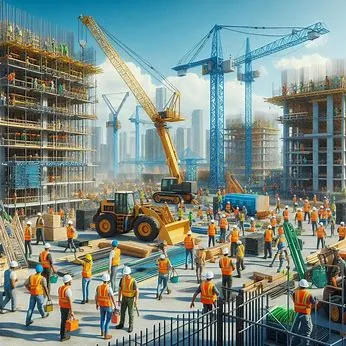
How much do you know about the buildings, bridges, roads, dams, tools, and engineering marvels that helped shape the United States? These U.S. Construction Trivia Questions and Answers cover fascinating facts about iconic American structures, construction history, famous landmarks, materials, machinery, engineering, and the people who helped build them.
Whether you work in construction, enjoy American history, or simply love challenging trivia, there is something here to test your knowledge.
Grab your hard hat and get ready to discover some surprising facts about U.S. construction!
U.S. Construction Trivia Questions and Answers Quizlet
1. What is the main purpose of a building’s foundation?
Answer: To support the structure.
Explanation: A foundation transfers the weight of a building safely into the ground.
Key Information: A strong foundation helps prevent settling and structural damage.
2. What construction machine is mainly used to lift heavy materials vertically?
Answer: Crane.
Explanation: Cranes lift and move heavy materials around construction sites.
Key Information: Tower cranes are commonly used for high-rise construction.
3. What material is commonly used to reinforce concrete?
Answer: Steel rebar.
Explanation: Rebar strengthens concrete and helps it resist tension.
Key Information: Reinforced concrete is widely used in buildings, bridges, and roads.
4. What is the process of removing an old building called?
Answer: Demolition.
Explanation: Demolition involves safely taking down unwanted or unsafe structures.
Key Information: Large structures may require specialized equipment and careful planning.
5. What type of engineer designs structures to withstand loads and stresses?
Answer: Structural Engineer.
Explanation: Structural engineers make sure buildings and other structures can safely carry their loads.
Key Information: They work with materials such as steel, concrete, and timber.
6. What is the horizontal structural member that supports loads above an opening called?
Answer: Beam.
Explanation: A beam transfers loads to supporting columns or walls.
Key Information: Beams are fundamental components of many building structures.
7. What construction material is made primarily from cement, water, sand, and aggregate?
Answer: Concrete.
Explanation: These ingredients combine to form a strong material after curing.
Key Information: Concrete is one of the most widely used construction materials in the world.
8. What tool is commonly used to drive nails into wood?
Answer: Hammer.
Explanation: A hammer uses a striking head to drive nails and fasteners into materials.
Key Information: Claw hammers can also remove nails.
9. What is the temporary framework used to support concrete while it hardens?
Answer: Formwork.
Explanation: Formwork holds wet concrete in the required shape until it becomes strong enough to support itself.
Key Information: It can be made from wood, steel, plastic, or other materials.
10. What is the process of preparing land before construction begins called?
Answer: Site preparation.
Explanation: Workers clear, level, and prepare the ground for construction.
Key Information: Proper site preparation is important for a stable project foundation.
11. What machine is commonly used to move and load large amounts of soil?
Answer: Front-end loader.
Explanation: A loader uses a large bucket to scoop, carry, and move materials.
Key Information: Loaders are useful for handling soil, gravel, and construction debris.
12. What is the vertical structural member that supports beams called?
Answer: Column.
Explanation: Columns transfer loads from beams and upper floors down toward the foundation.
Key Information: Columns can be made from steel, concrete, wood, or other materials.
13. What does OSHA stand for?
Answer: Occupational Safety and Health Administration.
Explanation: OSHA establishes and enforces workplace safety and health standards in the United States.
Key Information: Construction is one of the major industries covered by OSHA regulations.
14. What is the name for a detailed drawing used to guide construction?
Answer: Blueprint.
Explanation: Blueprints or construction drawings show dimensions, layouts, and building details.
Key Information: Modern construction drawings are often created and shared digitally.
15. What machine is designed to compact soil, asphalt, or other materials?
Answer: Roller.
Explanation: Rollers apply pressure and vibration to compact surfaces.
Key Information: They are commonly used when building roads and preparing foundations.
16. What construction trade specializes in installing electrical wiring?
Answer: Electrician.
Explanation: Electricians install and maintain electrical systems in buildings and other structures.
Key Information: Their work includes wiring, outlets, lighting, and electrical equipment.
17. What construction trade specializes in installing water and drainage pipes?
Answer: Plumber.
Explanation: Plumbers install and repair systems that carry water, wastewater, and other fluids.
Key Information: Plumbing is essential for kitchens, bathrooms, and many industrial facilities.
18. What is the term for a wall that does not carry the weight of the building above it?
Answer: Non-load-bearing wall.
Explanation: A non-load-bearing wall mainly divides or encloses spaces.
Key Information: It can usually be removed without affecting the main structural system, subject to professional verification.
19. What construction method involves assembling building components in a factory before transporting them to the site?
Answer: Prefabrication.
Explanation: Components are manufactured away from the construction site and assembled later.
Key Information: Prefabrication can reduce construction time and material waste.
20. What is the process of putting the final surface on a wall, floor, or other structure called?
Answer: Finishing.
Explanation: Finishing gives a construction surface its final appearance and performance characteristics.
Key Information: Examples include painting, tiling, plastering, and flooring.
Recommended: 218+ Nail-Biting Construction Trivia Questions
Easy U.S. Construction Trivia Questions and Answers
1. What is the strongest commonly used structural material in construction?
Answer: Steel.
Explanation: Steel has high strength and can support heavy loads over long spans.
Key Information: It is widely used in buildings, bridges, and industrial structures.
2. What is a building designed to reduce energy use commonly called?
Answer: Energy-efficient building.
Explanation: It uses insulation, efficient equipment, and other methods to reduce energy consumption.
Key Information: Energy-efficient designs can lower heating and cooling costs.
3. What tool is used to check whether a surface is perfectly horizontal or vertical?
Answer: Spirit level.
Explanation: A spirit level uses a bubble to show whether a surface is level or plumb.
Key Information: It is commonly used by carpenters, masons, and other tradespeople.
4. What is asphalt primarily used for in construction?
Answer: Roads and pavements.
Explanation: Asphalt provides a durable surface for vehicles and pedestrians.
Key Information: It is commonly used for highways, parking lots, and driveways.
5. What is the process of mixing cement, sand, aggregate, and water to make concrete called?
Answer: Concrete mixing.
Explanation: The ingredients are combined in specific proportions to produce workable concrete.
Key Information: Proper mixing is important for concrete strength and durability.
6. What machine is commonly used to dig trenches and foundations?
Answer: Excavator.
Explanation: Excavators use a boom, arm, and bucket to remove soil and other materials.
Key Information: They are among the most versatile machines on construction sites.
7. What is insulation used for in a building?
Answer: To reduce heat transfer.
Explanation: Insulation helps keep heat inside during cold weather and outside during hot weather.
Key Information: Common insulation materials include fiberglass, foam, and mineral wool.
8. What is a surveyor’s main job before construction begins?
Answer: Measure and map the site.
Explanation: Surveyors determine boundaries, elevations, and precise locations for construction.
Key Information: Accurate surveying helps ensure that structures are built in the correct positions.
9. What is scaffolding used for?
Answer: Providing temporary access and support at height.
Explanation: Workers use scaffolding to safely reach elevated areas of a building.
Key Information: Scaffolding must be properly assembled and secured.
10. What is the top covering of a building called?
Answer: Roof.
Explanation: A roof protects the interior from weather and helps control water drainage.
Key Information: Common roofing materials include shingles, metal, tile, and membranes.
11. What is masonry?
Answer: Construction using materials such as brick, block, or stone.
Explanation: Masonry involves assembling individual units with mortar or other bonding materials.
Key Information: Masonry walls can provide strength, durability, and fire resistance.
12. What is drywall mainly used for?
Answer: Interior walls and ceilings.
Explanation: Drywall provides a smooth surface that can be painted or finished.
Key Information: It is also called gypsum board or plasterboard.
13. What does a bulldozer primarily do on a construction site?
Answer: Push and level soil.
Explanation: Bulldozers use a large front blade to move earth and prepare surfaces.
Key Information: They are commonly used during site clearing and grading.
14. What is grading in construction?
Answer: Shaping and leveling the ground.
Explanation: Grading creates the proper slopes and elevations needed for construction and drainage.
Key Information: Proper grading helps prevent water from collecting around buildings.
15. What is a building permit?
Answer: Official authorization to carry out certain construction work.
Explanation: Local authorities issue permits to ensure projects meet applicable building requirements.
Key Information: Permit requirements vary by location and type of project.
16. What is a load-bearing wall?
Answer: A wall that supports structural loads.
Explanation: It carries weight from floors, roofs, or other parts of a structure.
Key Information: Removing one may require structural engineering and additional support.
17. What is a foundation made of concrete called?
Answer: Concrete foundation.
Explanation: Concrete foundations transfer building loads safely into the ground.
Key Information: Common types include slabs, footings, and foundation walls.
18. What is a backhoe used for?
Answer: Digging and material handling.
Explanation: A backhoe combines a front loader with a digging arm at the rear.
Key Information: It is useful for trenches, utility work, and small excavation projects.
19. What is the purpose of a construction site safety helmet?
Answer: To protect the head from hazards.
Explanation: Hard hats help protect workers from falling objects and certain impacts.
Key Information: Head protection is an important part of construction-site safety.
20. What is a construction contract?
Answer: A legally binding agreement for construction work.
Explanation: It defines responsibilities, payment terms, scope, and other project conditions.
Key Information: Clear contracts help reduce misunderstandings between project parties.
Related : 143+ Workplace Trivia Questions and Answers
U.S. Construction Trivia Questions and Answers for Kids
1. What is the strongest commonly used structural material in construction?
Answer: Steel.
Explanation: Steel has high strength and can support heavy loads over long spans.
Key Information: It is widely used in buildings, bridges, and industrial structures.
2. What is a building designed to reduce energy use commonly called?
Answer: Energy-efficient building.
Explanation: It uses insulation, efficient equipment, and other methods to reduce energy consumption.
Key Information: Energy-efficient designs can lower heating and cooling costs.
3. What tool is used to check whether a surface is perfectly horizontal or vertical?
Answer: Spirit level.
Explanation: A spirit level uses a bubble to show whether a surface is level or plumb.
Key Information: It is commonly used by carpenters, masons, and other tradespeople.
4. What is asphalt primarily used for in construction?
Answer: Roads and pavements.
Explanation: Asphalt provides a durable surface for vehicles and pedestrians.
Key Information: It is commonly used for highways, parking lots, and driveways.
5. What is the process of mixing cement, sand, aggregate, and water to make concrete called?
Answer: Concrete mixing.
Explanation: The ingredients are combined in specific proportions to produce workable concrete.
Key Information: Proper mixing is important for concrete strength and durability.
6. What machine is commonly used to dig trenches and foundations?
Answer: Excavator.
Explanation: Excavators use a boom, arm, and bucket to remove soil and other materials.
Key Information: They are among the most versatile machines on construction sites.
7. What is insulation used for in a building?
Answer: To reduce heat transfer.
Explanation: Insulation helps keep heat inside during cold weather and outside during hot weather.
Key Information: Common insulation materials include fiberglass, foam, and mineral wool.
8. What is a surveyor’s main job before construction begins?
Answer: Measure and map the site.
Explanation: Surveyors determine boundaries, elevations, and precise locations for construction.
Key Information: Accurate surveying helps ensure that structures are built in the correct positions.
9. What is scaffolding used for?
Answer: Providing temporary access and support at height.
Explanation: Workers use scaffolding to safely reach elevated areas of a building.
Key Information: Scaffolding must be properly assembled and secured.
10. What is the top covering of a building called?
Answer: Roof.
Explanation: A roof protects the interior from weather and helps control water drainage.
Key Information: Common roofing materials include shingles, metal, tile, and membranes.
11. What is masonry?
Answer: Construction using materials such as brick, block, or stone.
Explanation: Masonry involves assembling individual units with mortar or other bonding materials.
Key Information: Masonry walls can provide strength, durability, and fire resistance.
12. What is drywall mainly used for?
Answer: Interior walls and ceilings.
Explanation: Drywall provides a smooth surface that can be painted or finished.
Key Information: It is also called gypsum board or plasterboard.
13. What does a bulldozer primarily do on a construction site?
Answer: Push and level soil.
Explanation: Bulldozers use a large front blade to move earth and prepare surfaces.
Key Information: They are commonly used during site clearing and grading.
14. What is grading in construction?
Answer: Shaping and leveling the ground.
Explanation: Grading creates the proper slopes and elevations needed for construction and drainage.
Key Information: Proper grading helps prevent water from collecting around buildings.
15. What is a building permit?
Answer: Official authorization to carry out certain construction work.
Explanation: Local authorities issue permits to ensure projects meet applicable building requirements.
Key Information: Permit requirements vary by location and type of project.
16. What is a load-bearing wall?
Answer: A wall that supports structural loads.
Explanation: It carries weight from floors, roofs, or other parts of a structure.
Key Information: Removing one may require structural engineering and additional support.
17. What is a foundation made of concrete called?
Answer: Concrete foundation.
Explanation: Concrete foundations transfer building loads safely into the ground.
Key Information: Common types include slabs, footings, and foundation walls.
18. What is a backhoe used for?
Answer: Digging and material handling.
Explanation: A backhoe combines a front loader with a digging arm at the rear.
Key Information: It is useful for trenches, utility work, and small excavation projects.
19. What is the purpose of a construction site safety helmet?
Answer: To protect the head from hazards.
Explanation: Hard hats help protect workers from falling objects and certain impacts.
Key Information: Head protection is an important part of construction-site safety.
20. What is a construction contract?
Answer: A legally binding agreement for construction work.
Explanation: It defines responsibilities, payment terms, scope, and other project conditions.
Key Information: Clear contracts help reduce misunderstandings between project parties.
Simple U.S. Construction Trivia Questions and Answers
1. What is a girder in construction?
Answer: A large structural beam.
Explanation: Girders support smaller beams, joists, or other structural members.
Key Information: They are commonly made from steel, concrete, or engineered wood.
2. What is excavation in construction?
Answer: The process of removing soil or rock.
Explanation: Excavation creates space for foundations, basements, trenches, and other structures.
Key Information: Excavation is one of the earliest stages of many construction projects.
3. What is a scaffold plank used for?
Answer: Providing a working platform.
Explanation: Workers stand on scaffold planks while performing tasks at elevated locations.
Key Information: Planks must be suitable for the intended loads and properly supported.
4. What is a retaining wall commonly used for?
Answer: Holding soil in place.
Explanation: Retaining walls prevent soil from sliding or eroding on sloped land.
Key Information: They are commonly used along roads, landscaping projects, and foundations.
5. What is a concrete pump used for?
Answer: Moving concrete to a placement location.
Explanation: Concrete pumps transport wet concrete through pipes or hoses.
Key Information: They are especially useful for tall or difficult-to-access areas.
6. What is a construction foreman?
Answer: A worker who supervises a crew on a job site.
Explanation: Foremen coordinate workers, tasks, tools, and daily site activities.
Key Information: They often serve as an important link between workers and project management.
7. What is a masonry trowel used for?
Answer: Spreading mortar.
Explanation: Masons use trowels to apply and shape mortar between bricks and blocks.
Key Information: Different trowel shapes are designed for different masonry tasks.
8. What is a laser level used for?
Answer: Establishing accurate horizontal or vertical reference lines.
Explanation: Laser levels project precise lines or points to help workers align construction elements.
Key Information: They are widely used in modern construction and interior work.
9. What is a site plan?
Answer: A drawing showing the layout of a construction site.
Explanation: Site plans show buildings, roads, utilities, boundaries, and other important features.
Key Information: They help guide construction and site organization.
10. What is a vapor barrier used for?
Answer: Limiting moisture movement.
Explanation: Vapor barriers help control moisture passing through walls, floors, or ceilings.
Key Information: Their use depends on climate, building design, and local construction requirements.
11. What is a concrete footing designed to do?
Answer: Distribute structural loads to the soil.
Explanation: Footings spread the weight of walls or columns over a larger ground area.
Key Information: Proper footing size depends on soil conditions and structural loads.
12. What is a nail gun used for?
Answer: Driving nails quickly into construction materials.
Explanation: Nail guns use compressed air, fuel, or electricity to drive fasteners.
Key Information: They are commonly used in framing, roofing, and finish carpentry.
13. What is a dump truck used for on a construction site?
Answer: Transporting loose materials.
Explanation: Dump trucks carry materials such as soil, gravel, sand, and demolition debris.
Key Information: Their beds can be raised to unload materials quickly.
14. What is a concrete vibrator used for?
Answer: Removing trapped air from freshly placed concrete.
Explanation: Vibration helps concrete flow around reinforcement and into forms.
Key Information: Proper vibration can improve the quality and density of concrete.
15. What is a roof truss?
Answer: A structural framework that supports a roof.
Explanation: Roof trusses distribute roof loads to the building’s supporting walls.
Key Information: Many modern houses use factory-built roof trusses.
16. What is a construction joint?
Answer: A planned location where separate concrete placements meet.
Explanation: Construction joints allow concrete work to be completed in stages.
Key Information: Proper joint placement helps manage construction and structural performance.
17. What is a building envelope?
Answer: The exterior boundary separating the inside from the outside.
Explanation: It includes components such as walls, roofs, windows, and doors.
Key Information: A well-designed envelope helps control air, water, heat, and moisture.
18. What is a concrete screed used for?
Answer: Leveling freshly placed concrete.
Explanation: A screed is drawn across the concrete surface to establish a uniform level.
Key Information: Screeding is an important step before finishing concrete.
19. What is a construction subcontractor?
Answer: A company or individual hired to perform specialized work.
Explanation: Subcontractors may handle electrical, plumbing, roofing, concrete, or other trades.
Key Information: They usually work under a general contractor or another higher-tier contractor.
20. What is project closeout in construction?
Answer: The final process of completing and handing over a project.
Explanation: Closeout includes final inspections, documentation, corrections, and turnover.
Key Information: It marks the transition from construction to completed operation.
Read More : 142 + Architecture Trivia Questions and Answers
U.S. Construction Trivia Questions and Answers for Adults
1. What is a bulldozer blade used for?
Answer: Moving and leveling soil.
Explanation: The blade pushes soil, sand, gravel, and other loose materials.
Key Information: Bulldozers are commonly used for grading and site preparation.
2. What is a concrete column?
Answer: A vertical structural support made of concrete.
Explanation: Concrete columns transfer loads from upper parts of a building toward the foundation.
Key Information: Steel reinforcement is often placed inside concrete columns.
3. What is a construction crane’s hook used for?
Answer: Lifting loads.
Explanation: The hook connects lifting equipment to materials being moved.
Key Information: Hooks are commonly attached to slings, chains, or other rigging equipment.
4. What is a curb in road construction?
Answer: A raised edge along a road or pavement.
Explanation: Curbs separate roadways from sidewalks and can help control drainage.
Key Information: Curbs are often made from concrete.
5. What is asphalt paving?
Answer: Installing asphalt as a road or surface material.
Explanation: Hot-mix asphalt is placed and compacted to create a durable pavement surface.
Key Information: Proper compaction is important for pavement performance.
6. What is a construction laser used for?
Answer: Accurate alignment and measurement.
Explanation: Lasers help workers establish levels, slopes, and straight reference lines.
Key Information: They can improve accuracy compared with traditional measuring methods.
7. What is a drywall screw used for?
Answer: Attaching drywall to framing.
Explanation: Drywall screws secure gypsum panels to wood or metal studs.
Key Information: Screw type and length depend on the framing and drywall thickness.
8. What is a pile driver used for?
Answer: Installing piles into the ground.
Explanation: Pile-driving equipment pushes or vibrates deep foundation elements into soil.
Key Information: Piles are often used where surface soils have insufficient bearing capacity.
9. What is a concrete form?
Answer: A mold used to shape fresh concrete.
Explanation: Forms hold wet concrete in the desired shape until it gains enough strength.
Key Information: Forms can be reusable or designed for one-time use.
10. What is a roof flashing?
Answer: A material used to prevent water intrusion.
Explanation: Flashing directs water away from joints, edges, and openings in roofs.
Key Information: It is commonly installed around chimneys, vents, and roof intersections.
11. What is a foundation wall?
Answer: A structural wall that forms part of a building’s foundation.
Explanation: Foundation walls support the structure above and may also enclose basements.
Key Information: They are commonly constructed from concrete or concrete masonry units.
12. What is a skid steer’s bucket used for?
Answer: Moving loose materials.
Explanation: The bucket can scoop, carry, and dump soil, gravel, and debris.
Key Information: Skid steers can use many other attachments besides buckets.
13. What is a construction stake used for?
Answer: Marking locations on a construction site.
Explanation: Surveyors and contractors use stakes to identify boundaries, elevations, and construction points.
Key Information: Stakes help transfer plans and measurements to the actual site.
14. What is a rebar cutter used for?
Answer: Cutting reinforcing steel bars.
Explanation: Rebar cutters allow steel reinforcement to be prepared to specified lengths.
Key Information: Reinforcing steel is commonly used inside concrete structures.
15. What is a concrete trowel used for?
Answer: Smoothing and finishing concrete surfaces.
Explanation: Trowels help create the desired texture and flatness after concrete is placed.
Key Information: Power trowels are often used on large concrete slabs.
16. What is a utility pole used for?
Answer: Supporting overhead utility lines.
Explanation: Utility poles carry electrical, telephone, and communication cables.
Key Information: Wood, concrete, and steel poles are commonly used.
17. What is a construction specification?
Answer: A written description of required materials and workmanship.
Explanation: Specifications provide detailed requirements that complement construction drawings.
Key Information: They can define quality standards, products, installation methods, and testing.
18. What is a building expansion joint?
Answer: A designed gap that allows movement in a structure.
Explanation: Expansion joints accommodate movement caused by temperature changes, shrinkage, or other effects.
Key Information: They help reduce unwanted cracking and structural stress.
19. What is a general contractor?
Answer: The main contractor responsible for managing construction work.
Explanation: General contractors coordinate workers, subcontractors, materials, schedules, and site activities.
Key Information: They typically oversee the overall execution of the project.
20. What is a construction schedule?
Answer: A plan showing when project activities should occur.
Explanation: It organizes tasks, durations, milestones, and dependencies throughout a project.
Key Information: Schedules help teams coordinate work and track progress.
Hard U.S. Construction Trivia Questions and Answers
1. What is a concrete batch plant used for?
Answer: Producing concrete.
Explanation: A batch plant measures and mixes cement, aggregates, water, and other ingredients.
Key Information: It can supply concrete for large construction projects.
2. What is a grader used for in construction?
Answer: Leveling and shaping surfaces.
Explanation: Motor graders use a long adjustable blade to create precise slopes and grades.
Key Information: They are commonly used in road construction.
3. What is a form tie used for?
Answer: Holding concrete forms in position.
Explanation: Form ties resist the pressure of wet concrete against the formwork.
Key Information: They are removed or treated according to the formwork system used.
4. What is a retaining basin designed to do?
Answer: Store and control stormwater.
Explanation: Retention basins temporarily or permanently hold runoff to reduce flooding.
Key Information: They are commonly included in large site-development projects.
5. What is a concrete aggregate?
Answer: Granular material mixed into concrete.
Explanation: Sand, gravel, and crushed stone are common aggregates.
Key Information: Aggregate makes up a large portion of typical concrete mixtures.
6. What is a tower crane mainly used for?
Answer: Lifting heavy materials on tall construction projects.
Explanation: Tower cranes provide height and reach for moving materials around large sites.
Key Information: They are commonly seen on high-rise building projects.
7. What is a construction hoist used for?
Answer: Moving people or materials vertically.
Explanation: Hoists transport workers, tools, and construction materials between levels.
Key Information: They are especially useful on tall buildings.
8. What is a utility locator used for?
Answer: Finding underground utilities.
Explanation: Utility locating helps identify buried pipes, cables, and other services before excavation.
Key Information: Locating utilities helps reduce the risk of damaging underground infrastructure.
9. What is a masonry block?
Answer: A building unit used to construct walls.
Explanation: Concrete masonry units are commonly assembled with mortar to create walls.
Key Information: Blocks are available in different sizes and shapes.
10. What is a roofing underlayment?
Answer: A protective layer installed beneath roofing materials.
Explanation: Underlayment provides an additional barrier against moisture.
Key Information: Common types include asphalt-saturated felt and synthetic materials.
11. What is a construction trailer used for?
Answer: Providing temporary site offices and facilities.
Explanation: Project managers and contractors often use trailers for meetings, paperwork, and administration.
Key Information: They are commonly placed near the entrance of large construction sites.
12. What is a concrete saw used for?
Answer: Cutting concrete.
Explanation: Concrete saws can create openings, joints, or sections in slabs and pavement.
Key Information: Different saws are designed for different depths and applications.
13. What is a trench box?
Answer: A protective system used inside excavations.
Explanation: Trench boxes help protect workers from cave-ins by providing a shield within a trench.
Key Information: Excavation protection must comply with applicable safety requirements.
14. What is a construction hoarding?
Answer: Temporary fencing or barriers around a construction site.
Explanation: Hoarding separates construction activities from the public and can help secure the site.
Key Information: It may also display project information or advertisements.
15. What is a footing drain?
Answer: A drainage system installed around a foundation footing.
Explanation: It collects groundwater and directs it away from the foundation.
Key Information: Proper drainage can help reduce basement moisture problems.
16. What is a thermal bridge in a building?
Answer: An area where heat moves more easily through the building envelope.
Explanation: Thermal bridges can occur around structural connections, windows, and other components.
Key Information: Reducing thermal bridging can improve energy efficiency.
17. What is a construction change order?
Answer: A formal modification to the original construction contract.
Explanation: Change orders can alter the scope, cost, materials, or schedule of a project.
Key Information: They are normally documented and approved by the relevant parties.
18. What is a concrete finishing machine called a power screed?
Answer: A machine used to level fresh concrete.
Explanation: A power screed moves across freshly placed concrete to help achieve a consistent surface.
Key Information: It can speed up work on large slabs.
19. What is a site superintendent?
Answer: The person responsible for day-to-day construction-site operations.
Explanation: Superintendents coordinate crews, subcontractors, safety, materials, and site progress.
Key Information: They play a central role in keeping construction work organized.
20. What is a building inspection?
Answer: An examination of construction work for compliance and quality.
Explanation: Inspectors check whether work meets applicable codes, approved plans, and requirements.
Key Information: Inspections may occur at several stages of a construction project.
U.S. Construction Trivia Questions and Answers
1. What is a concrete foundation slab?
Answer: A flat concrete base that supports a building.
Explanation: A slab foundation can serve as both the building’s foundation and ground-level floor.
Key Information: It is commonly used for homes and other low-rise structures.
2. What is a backfill in construction?
Answer: Soil or other material placed back into an excavation.
Explanation: Backfill is used after foundations, pipes, or other underground work is installed.
Key Information: Proper compaction helps prevent future settlement.
3. What is a lintel?
Answer: A structural member above an opening.
Explanation: A lintel supports the wall or load above doors and windows.
Key Information: Lintels can be made from concrete, steel, stone, or timber.
4. What is a construction benchmark?
Answer: A fixed reference point used for elevation measurements.
Explanation: Surveyors use benchmarks to establish accurate heights across a construction site.
Key Information: Benchmarks help ensure different parts of a project are built at the correct elevations.
5. What is a concrete curing compound?
Answer: A material applied to concrete to reduce moisture loss.
Explanation: It helps maintain conditions needed for proper concrete curing.
Key Information: Curing is important for developing concrete strength and durability.
6. What is a boom lift?
Answer: An aerial work platform with an extendable arm.
Explanation: Boom lifts allow workers to safely reach elevated and difficult-to-access areas.
Key Information: They are commonly used for building maintenance, installation, and construction.
7. What is a concrete expansion joint?
Answer: A joint that allows concrete sections to move.
Explanation: It provides space for expansion and contraction caused by temperature changes and other movement.
Key Information: Expansion joints help reduce unwanted cracking.
8. What is a construction compactor used for?
Answer: Densifying soil or other materials.
Explanation: Compaction equipment removes air spaces and increases the density of fill or pavement materials.
Key Information: Proper compaction is important for stable foundations and roads.
9. What is a ridge in a roof?
Answer: The highest horizontal line of a sloped roof.
Explanation: Roof slopes commonly meet at the ridge.
Key Information: Ridge vents may be installed there to improve attic ventilation.
10. What is a vapor retarder?
Answer: A material that slows the movement of water vapor.
Explanation: It helps control moisture movement through building assemblies.
Key Information: Its placement depends on climate and building design.
11. What is a construction joint in a road?
Answer: A planned joint between sections of pavement.
Explanation: Joints allow pavement construction to be completed in manageable sections.
Key Information: Proper joint design helps control cracking and movement.
12. What is a concrete anchor bolt used for?
Answer: Securing structural elements to concrete.
Explanation: Anchor bolts connect items such as steel columns or sill plates to concrete foundations.
Key Information: Correct placement and embedment are important for structural performance.
13. What is a pile cap?
Answer: A structural element that connects foundation piles.
Explanation: A pile cap distributes building loads among multiple piles.
Key Information: It is commonly made from reinforced concrete.
14. What is a construction screed?
Answer: A tool used to level material.
Explanation: Screeds are used on concrete, mortar, and other materials to achieve a uniform surface.
Key Information: They can be manual or powered.
15. What is a fire-rated wall?
Answer: A wall designed to resist fire for a specified period.
Explanation: Fire-rated walls slow the spread of fire and smoke between areas.
Key Information: Their construction must meet applicable fire-code requirements.
16. What is a construction mobilization phase?
Answer: The process of preparing a site for construction operations.
Explanation: Mobilization includes bringing equipment, materials, temporary facilities, and workers to the site.
Key Information: It usually occurs before major construction activities begin.
17. What is a concrete batch ticket?
Answer: A record describing a delivered batch of concrete.
Explanation: It can include details such as mix designation, quantity, time, and other production information.
Key Information: These records help with quality control and project documentation.
18. What is a curb and gutter system?
Answer: A roadside structure that helps manage drainage.
Explanation: The curb defines the edge of the roadway while the gutter carries stormwater.
Key Information: It is common on urban streets.
19. What is a construction safety harness used for?
Answer: Protecting workers from falls when working at height.
Explanation: A properly used harness can connect a worker to an approved fall-protection system.
Key Information: Fall protection is a major safety concern in construction.
20. What is a construction material takeoff?
Answer: A detailed calculation of materials needed for a project.
Explanation: Takeoffs identify quantities of items such as concrete, lumber, steel, and finishes.
Key Information: Accurate takeoffs help contractors estimate project costs.
U.S. Construction Trivia Questions and Answers for Workers
1. What is a header in construction?
Answer: A structural member placed over an opening.
Explanation: A header supports the load above doors, windows, and other openings.
Key Information: Headers are commonly made from wood, steel, or engineered lumber.
2. What is a sill plate?
Answer: A horizontal member connecting a framed wall to its foundation.
Explanation: The sill plate transfers wall loads to the foundation.
Key Information: It is typically anchored to concrete using bolts or approved connectors.
3. What is a concrete footing drain designed to prevent?
Answer: Water buildup around the foundation.
Explanation: The drain collects groundwater and directs it away from the building.
Key Information: It is often installed alongside waterproofing and drainage materials.
4. What is a masonry bond?
Answer: The pattern used to arrange masonry units.
Explanation: Different bond patterns improve wall appearance and can affect structural performance.
Key Information: Running bond is one of the most common brick patterns.
5. What is a roof valley?
Answer: The inside angle where two roof slopes meet.
Explanation: Roof valleys collect and direct rainwater toward drainage areas.
Key Information: Proper flashing and waterproofing are important at valleys.
6. What is a construction stakeout?
Answer: Marking the planned locations of construction elements on the site.
Explanation: Surveyors transfer positions from project drawings to the physical site.
Key Information: Stakeout helps crews build at the correct locations.
7. What is a concrete finishing float used for?
Answer: Smoothing and leveling fresh concrete.
Explanation: A float brings fine material toward the surface and removes small irregularities.
Key Information: It is used before final concrete finishing operations.
8. What is a utility vault?
Answer: An underground chamber providing access to utilities.
Explanation: Utility vaults can contain electrical, telecommunications, or other infrastructure.
Key Information: Access allows workers to inspect and maintain underground systems.
9. What is a roof soffit?
Answer: The underside of a roof overhang.
Explanation: Soffits cover the underside of roof edges and can help provide ventilation.
Key Information: Vented soffits are common in residential roofing.
10. What is a construction hoarding fence used for?
Answer: Securing and separating a construction area.
Explanation: Hoarding keeps unauthorized people away from active work zones.
Key Information: It can also reduce dust and debris exposure around the site.
11. What is a concrete control joint?
Answer: A planned groove or weakened plane that controls cracking.
Explanation: Concrete naturally shrinks as it dries, and control joints guide where cracks are likely to form.
Key Information: They are common in sidewalks, slabs, and pavements.
12. What is a foundation anchor?
Answer: A connector that secures structural components to a foundation.
Explanation: Anchors help resist movement and transfer forces between the structure and foundation.
Key Information: Different anchor systems are selected based on structural requirements.
13. What is a construction detail drawing?
Answer: A drawing showing specific building components in greater detail.
Explanation: Detail drawings clarify how materials and components should be assembled.
Key Information: They are especially useful for complex connections and assemblies.
14. What is a roof rafter?
Answer: A sloped structural member supporting a roof.
Explanation: Rafters extend from the roof ridge or upper support down toward the exterior walls.
Key Information: Traditional roofs often use individually cut rafters.
15. What is a concrete finishing broom used for?
Answer: Creating a textured concrete surface.
Explanation: A broom is drawn across fresh concrete to create small grooves for texture.
Key Information: Broom finishes can improve slip resistance.
16. What is a construction trailer commonly used for?
Answer: Temporary project offices.
Explanation: Contractors use trailers for meetings, paperwork, scheduling, and site management.
Key Information: They are common on large or long-term projects.
17. What is a structural inspection?
Answer: An examination of structural components for safety and compliance.
Explanation: Inspectors evaluate elements such as foundations, beams, columns, and connections.
Key Information: Inspections may be required at specific construction stages.
18. What is a concrete admixture?
Answer: An ingredient added to concrete to modify its properties.
Explanation: Admixtures can change setting time, workability, durability, or other characteristics.
Key Information: Common types include water reducers, accelerators, and retarders.
19. What is a construction laydown area?
Answer: A designated area for storing materials and equipment.
Explanation: Contractors organize materials in laydown areas until they are needed for installation.
Key Information: Proper organization helps improve site efficiency and safety.
20. What is a building setback?
Answer: The required distance between a structure and a property line or other boundary.
Explanation: Setbacks are established by zoning or other local regulations.
Key Information: Requirements vary depending on the location and type of property.
FAQS
1. What is the most commonly used material in modern construction?
Answer: Concrete is one of the most widely used construction materials.
It is strong, durable, and used in buildings, roads, and bridges.
2. What does OSHA stand for in the construction industry?
Answer: OSHA stands for Occupational Safety and Health Administration.
It helps protect workers by setting and enforcing safety standards.
3. What is the purpose of scaffolding on a construction site?
Answer: Scaffolding provides a temporary platform for workers and materials.
It also gives workers safe access to elevated areas.
4. What machine is commonly used to lift heavy materials on construction sites?
Answer: A crane is commonly used to lift and move heavy materials.
Cranes are especially useful when materials need to reach higher floors.
Final Thoughts
From towering skyscrapers and massive dams to historic bridges and innovative construction techniques, American construction has produced some truly remarkable achievements.
We hope these U.S. Construction Trivia Questions and Answers gave you an entertaining challenge and taught you a few new facts along the way.
Now check your score, challenge your fellow trivia fans, and see who can build the perfect score!
Recommend:
165+ U.S. Civil War Trivia Questions and Answers
137+ American Presidents Trivia Questions and Answers
165+ Fascinating NYC Trivia Questions and Answers