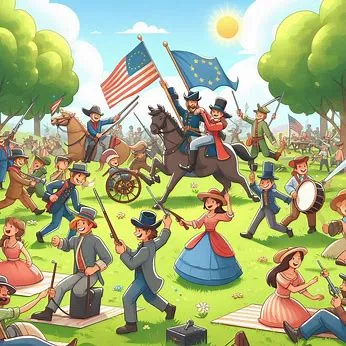
Ready to test your knowledge of one of the most important events in American history? This collection of U.S. Civil War trivia questions and answers is designed for history enthusiasts, students, teachers, and anyone curious about the conflict that shaped the United States.
From famous battles and influential leaders to key dates, military strategies, and the lasting impact of the war, these trivia questions cover a wide range of fascinating Civil War facts.
Whether you’re preparing for a history quiz, hosting a trivia night, or simply looking to expand your knowledge, this collection includes easy, medium, and challenging questions for every skill level.
Explore the people, events, and turning points that defined the American Civil War while having fun along the way.
Us Civil War Trivia Questions And Answers
1. In what year did the American Civil War begin?
A. 1776
B. 1812
C. 1861
D. 1865
Answer: C. 1861
Explanation: The Civil War began on April 12, 1861, when Confederate forces attacked Fort Sumter.
Key Information: The war lasted from 1861 to 1865.
2. Which U.S. president led the Union during the Civil War?
A. Andrew Johnson
B. Ulysses S. Grant
C. Abraham Lincoln
D. James Buchanan
Answer: C. Abraham Lincoln
Explanation: Lincoln served as the 16th president and worked to preserve the Union.
Key Information: He issued the Emancipation Proclamation in 1863.
3. Which event officially started the Civil War?
A. Battle of Gettysburg
B. Attack on Fort Sumter
C. Battle of Antietam
D. Emancipation Proclamation
Answer: B. Attack on Fort Sumter
Explanation: Confederate forces fired on Fort Sumter in South Carolina, beginning the conflict.
Key Information: The attack occurred on April 12, 1861.
4. What were the northern states collectively known as?
A. The Confederacy
B. The Union
C. The Colonies
D. The Republic
Answer: B. The Union
Explanation: The Union consisted of states that remained loyal to the United States.
Key Information: It included 20 free states and several border states.
5. What were the southern states that seceded called?
A. The Patriots
B. The Confederacy
C. The Federation
D. The Alliance
Answer: B. The Confederacy
Explanation: Eleven Southern states formed the Confederate States of America.
Key Information: Jefferson Davis served as its president.
6. Who was the president of the Confederate States of America?
A. Robert E. Lee
B. Jefferson Davis
C. Stonewall Jackson
D. James Longstreet
Answer: B. Jefferson Davis
Explanation: Davis led the Confederacy throughout the Civil War.
Key Information: He was inaugurated in 1861.
7. Which state was the first to secede from the Union?
A. Virginia
B. Georgia
C. South Carolina
D. Alabama
Answer: C. South Carolina
Explanation: South Carolina became the first state to secede in December 1860.
Key Information: Its decision encouraged other Southern states to follow.
8. Which Union general later became the 18th U.S. president?
A. George B. McClellan
B. William T. Sherman
C. Ulysses S. Grant
D. Philip Sheridan
Answer: C. Ulysses S. Grant
Explanation: Grant led Union forces to victory before becoming president.
Key Information: He served as president from 1869 to 1877.
9. Which Confederate general commanded the Army of Northern Virginia?
A. Stonewall Jackson
B. Robert E. Lee
C. J. E. B. Stuart
D. Nathan Bedford Forrest
Answer: B. Robert E. Lee
Explanation: Lee was the Confederacy’s most famous military commander.
Key Information: He surrendered at Appomattox Court House in 1865.
10. Which battle is considered the turning point of the Civil War?
A. Battle of Bull Run
B. Battle of Antietam
C. Battle of Gettysburg
D. Battle of Shiloh
Answer: C. Battle of Gettysburg
Explanation: The Union victory halted Lee’s invasion of the North.
Key Information: The battle took place in July 1863.
11. In which state was the Battle of Gettysburg fought?
A. Virginia
B. Maryland
C. Pennsylvania
D. Tennessee
Answer: C. Pennsylvania
Explanation: Gettysburg is located in southern Pennsylvania.
Key Information: It was the deadliest battle of the Civil War.
12. What was the main goal of the Emancipation Proclamation?
A. End all taxes
B. Free enslaved people in Confederate-held territory
C. End the Civil War immediately
D. Create new states
Answer: B. Free enslaved people in Confederate-held territory
Explanation: Lincoln issued the proclamation on January 1, 1863.
Key Information: It shifted the war’s focus toward ending slavery.
13. Which famous speech did Abraham Lincoln deliver after the Battle of Gettysburg?
A. Farewell Address
B. Gettysburg Address
C. Second Inaugural Address
D. Emancipation Speech
Answer: B. Gettysburg Address
Explanation: Lincoln honored the fallen soldiers with a brief but powerful speech.
Key Information: The speech contains fewer than 300 words.
14. Which battle was the bloodiest single-day battle in American history?
A. Gettysburg
B. Antietam
C. Bull Run
D. Fredericksburg
Answer: B. Antietam
Explanation: More than 22,000 soldiers were killed, wounded, or missing.
Key Information: The battle occurred on September 17, 1862.
15. What was the capital of the Confederacy for most of the Civil War?
A. Atlanta
B. Charleston
C. Richmond
D. New Orleans
Answer: C. Richmond
Explanation: Richmond, Virginia, served as the Confederate capital.
Key Information: The city fell to Union forces in April 1865.
16. Which Union general is famous for his March to the Sea?
A. Ulysses S. Grant
B. George Meade
C. William T. Sherman
D. George McClellan
Answer: C. William T. Sherman
Explanation: Sherman led a destructive campaign across Georgia in 1864.
Key Information: His strategy targeted military and economic resources.
17. At which location did Robert E. Lee surrender to Ulysses S. Grant?
A. Fort Sumter
B. Appomattox Court House
C. Gettysburg
D. Richmond
Answer: B. Appomattox Court House
Explanation: Lee surrendered on April 9, 1865, effectively ending the Civil War.
Key Information: The surrender took place in Virginia.
18. Which amendment to the U.S. Constitution abolished slavery?
A. 10th Amendment
B. 12th Amendment
C. 13th Amendment
D. 15th Amendment
Answer: C. 13th Amendment
Explanation: The amendment permanently ended slavery throughout the United States.
Key Information: It was ratified in December 1865.
19. Which Union victory gave President Lincoln the opportunity to issue the Emancipation Proclamation?
A. Battle of Gettysburg
B. Battle of Antietam
C. Battle of Shiloh
D. First Battle of Bull Run
Answer: B. Battle of Antietam
Explanation: Although tactically inconclusive, Antietam was enough of a Union success for Lincoln to announce the proclamation.
Key Information: It changed the international perception of the war.
20. In what year did the American Civil War end?
A. 1863
B. 1864
C. 1865
D. 1866
Answer: C. 1865
Explanation: The Civil War ended after the major Confederate armies surrendered in 1865.
Key Information: The conflict remains the deadliest war in American history.
Us Civil War Trivia Questions And Answers Quizlet
1. Which fort was the target of the first shots of the Civil War?
A. Fort McHenry
B. Fort Sumter
C. Fort Monroe
D. Fort Pickens
Answer: B. Fort Sumter
Explanation: Confederate forces bombarded Fort Sumter, prompting the Union to respond and beginning the Civil War.
Key Information: Fort Sumter is located in Charleston Harbor, South Carolina.
2. Which border state never officially seceded from the Union despite allowing slavery?
A. Virginia
B. Kentucky
C. Maryland
D. Both B and C
Answer: D. Both B and C
Explanation: Kentucky and Maryland remained in the Union, although both permitted slavery.
Key Information: Border states were strategically important to the Union.
3. What was the nickname of Confederate General Thomas J. Jackson?
A. Fighting Joe
B. Stonewall
C. Black Jack
D. Old Blood and Guts
Answer: B. Stonewall
Explanation: Jackson earned the nickname “Stonewall” for standing firm during the First Battle of Bull Run.
Key Information: He became one of the Confederacy’s most respected generals.
4. Which battle was the first major battle of the Civil War?
A. Gettysburg
B. Antietam
C. First Battle of Bull Run
D. Chancellorsville
Answer: C. First Battle of Bull Run
Explanation: The battle took place in July 1861 and ended in a Confederate victory.
Key Information: It is also known as the First Battle of Manassas.
5. Which Confederate general was accidentally shot by his own soldiers?
A. Robert E. Lee
B. Stonewall Jackson
C. James Longstreet
D. J. E. B. Stuart
Answer: B. Stonewall Jackson
Explanation: Jackson was mistakenly shot by Confederate troops at the Battle of Chancellorsville.
Key Information: He died from complications several days later.
6. Which Civil War battle lasted three days?
A. Battle of Shiloh
B. Battle of Gettysburg
C. Battle of Antietam
D. Battle of Fredericksburg
Answer: B. Battle of Gettysburg
Explanation: The battle was fought from July 1 to July 3, 1863.
Key Information: It resulted in more than 50,000 casualties.
7. Which state supplied the largest number of soldiers to the Union Army?
A. Pennsylvania
B. Ohio
C. New York
D. Illinois
Answer: C. New York
Explanation: New York contributed more Union soldiers than any other state.
Key Information: Over 400,000 New Yorkers served during the war.
8. What was the name of the famous Confederate ironclad warship?
A. USS Monitor
B. CSS Virginia
C. USS Constitution
D. CSS Alabama
Answer: B. CSS Virginia
Explanation: The CSS Virginia fought the USS Monitor in the first battle between ironclad warships.
Key Information: It was rebuilt from the former USS Merrimack.
9. Which Union ironclad fought the CSS Virginia?
A. USS Enterprise
B. USS Monitor
C. USS Maine
D. USS Hartford
Answer: B. USS Monitor
Explanation: The USS Monitor featured a revolutionary rotating gun turret.
Key Information: The Battle of Hampton Roads changed naval warfare forever.
10. Which battle is known as the bloodiest battle of the Civil War overall?
A. Gettysburg
B. Antietam
C. Shiloh
D. Chickamauga
Answer: A. Gettysburg
Explanation: Gettysburg had the highest total number of casualties of any Civil War battle.
Key Information: More than 50,000 soldiers were killed, wounded, or missing.
11. Which Union general accepted Robert E. Lee’s surrender?
A. George Meade
B. William T. Sherman
C. Ulysses S. Grant
D. Philip Sheridan
Answer: C. Ulysses S. Grant
Explanation: Grant accepted Lee’s surrender at Appomattox Court House.
Key Information: The event marked the effective end of the Civil War.
12. What was the primary advantage of the Union over the Confederacy?
A. Larger navy and greater industrial capacity
B. Better cavalry
C. More experienced officers only
D. Stronger European alliances
Answer: A. Larger navy and greater industrial capacity
Explanation: The Union had more factories, railroads, and resources to support the war effort.
Key Information: These advantages proved decisive over time.
13. Which Civil War battle is famous for Pickett’s Charge?
A. Antietam
B. Gettysburg
C. Bull Run
D. Shiloh
Answer: B. Gettysburg
Explanation: Pickett’s Charge was a failed Confederate assault on the third day of the battle.
Key Information: The attack resulted in heavy Confederate losses.
14. Who assassinated President Abraham Lincoln?
A. John Wilkes Booth
B. Lee Harvey Oswald
C. Charles Guiteau
D. Leon Czolgosz
Answer: A. John Wilkes Booth
Explanation: Booth shot Lincoln at Ford’s Theatre on April 14, 1865.
Key Information: Lincoln died the following morning.
15. Which Civil War prison became infamous for overcrowding and harsh conditions?
A. Alcatraz
B. Andersonville Prison
C. Sing Sing
D. Fort Leavenworth
Answer: B. Andersonville Prison
Explanation: Thousands of Union prisoners suffered and died at Andersonville in Georgia.
Key Information: It is now preserved as a National Historic Site.
16. Which amendment granted citizenship to all persons born or naturalized in the United States after the Civil War?
A. 13th Amendment
B. 14th Amendment
C. 15th Amendment
D. 16th Amendment
Answer: B. 14th Amendment
Explanation: The amendment established birthright citizenship and equal protection under the law.
Key Information: It was ratified in 1868.
17. Which amendment prohibited denying citizens the right to vote based on race?
A. 13th Amendment
B. 14th Amendment
C. 15th Amendment
D. 19th Amendment
Answer: C. 15th Amendment
Explanation: The amendment protected voting rights regardless of race or previous condition of servitude.
Key Information: It was ratified in 1870.
18. Which Confederate commerce raider was famous for attacking Union merchant ships around the world?
A. CSS Virginia
B. CSS Alabama
C. CSS Tennessee
D. CSS Arkansas
Answer: B. CSS Alabama
Explanation: The CSS Alabama captured or destroyed dozens of Union merchant vessels.
Key Information: It was sunk in 1864 by the USS Kearsarge.
19. Which Union general earned the nickname The Rock of Chickamauga?
A. George G. Meade
B. George H. Thomas
C. Philip Sheridan
D. Winfield Scott Hancock
Answer: B. George H. Thomas
Explanation: Thomas earned the nickname for holding Union lines during the Battle of Chickamauga.
Key Information: His leadership prevented a complete Union defeat.
20. What period followed the Civil War and focused on rebuilding the South?
A. Progressive Era
B. Reconstruction
C. Gilded Age
D. New Deal
Answer: B. Reconstruction
Explanation: Reconstruction was the effort to rebuild the Southern states and integrate formerly enslaved people into American society.
Key Information: Reconstruction lasted from 1865 to 1877.
Civil War Questions And Answers
1. Which battle gave the Union control of the Mississippi River?
A. Battle of Gettysburg
B. Battle of Vicksburg
C. Battle of Shiloh
D. Battle of Fort Donelson
Answer: B. Battle of Vicksburg
Explanation: The Union’s capture of Vicksburg split the Confederacy in two by securing the Mississippi River.
Key Information: Vicksburg surrendered on July 4, 1863.
2. Who commanded Union forces at the Battle of Gettysburg?
A. Ulysses S. Grant
B. George G. Meade
C. William T. Sherman
D. George B. McClellan
Answer: B. George G. Meade
Explanation: Meade led the Army of the Potomac to victory over Robert E. Lee.
Key Information: Gettysburg was Meade’s first major battle as commander.
3. Which Civil War battle was fought in Tennessee and surprised Union troops in 1862?
A. Battle of Antietam
B. Battle of Shiloh
C. Battle of Chancellorsville
D. Battle of Fredericksburg
Answer: B. Battle of Shiloh
Explanation: Confederate forces launched a surprise attack before the Union rallied to win.
Key Information: Shiloh was one of the war’s bloodiest battles up to that point.
4. Which Confederate general earned the nickname The Gray Ghost?
A. J. E. B. Stuart
B. John Mosby
C. Nathan Bedford Forrest
D. James Longstreet
Answer: B. John Mosby
Explanation: Mosby led fast-moving Confederate partisan rangers behind Union lines.
Key Information: His unit became known as Mosby’s Rangers.
5. Which Union general captured Atlanta in 1864?
A. George G. Meade
B. William T. Sherman
C. Philip Sheridan
D. Ambrose Burnside
Answer: B. William T. Sherman
Explanation: Sherman’s capture of Atlanta was a major Union victory.
Key Information: The victory boosted Abraham Lincoln’s chances of reelection.
6. Which Civil War battle was fought near Sharpsburg, Maryland?
A. Antietam
B. Gettysburg
C. Bull Run
D. Wilderness
Answer: A. Antietam
Explanation: The Battle of Antietam is named after a nearby creek.
Key Information: It remains the bloodiest single day in American military history.
7. Which Confederate cavalry commander was famous for his reconnaissance missions?
A. Robert E. Lee
B. J. E. B. Stuart
C. Braxton Bragg
D. Joseph E. Johnston
Answer: B. J. E. B. Stuart
Explanation: Stuart’s cavalry gathered intelligence and protected Confederate forces.
Key Information: He was one of the Confederacy’s most skilled cavalry leaders.
8. Which Union victory is often paired with Gettysburg as a turning point in the Civil War?
A. Battle of Fort Sumter
B. Battle of Vicksburg
C. Battle of Bull Run
D. Battle of Chancellorsville
Answer: B. Battle of Vicksburg
Explanation: The victories at Gettysburg and Vicksburg occurred within days of each other.
Key Information: Together they greatly weakened the Confederacy.
9. Which Union general became known for his aggressive cavalry campaigns in the Shenandoah Valley?
A. Philip Sheridan
B. George Meade
C. Ambrose Burnside
D. George McClellan
Answer: A. Philip Sheridan
Explanation: Sheridan’s campaigns disrupted Confederate supplies and transportation.
Key Information: He later became Commanding General of the U.S. Army.
10. What color uniforms did most Union soldiers wear?
A. Gray
B. Blue
C. Green
D. Brown
Answer: B. Blue
Explanation: Union troops were commonly called the Bluecoats because of their uniforms.
Key Information: Confederate soldiers generally wore gray uniforms.
11. Which Confederate city fell to Union forces just days before Robert E. Lee surrendered?
A. Atlanta
B. Richmond
C. Charleston
D. Mobile
Answer: B. Richmond
Explanation: Richmond, the Confederate capital, was captured in April 1865.
Key Information: Confederate leaders evacuated the city before Union troops arrived.
12. Which battle is remembered for the defense of Little Round Top?
A. Gettysburg
B. Antietam
C. Chickamauga
D. Fredericksburg
Answer: A. Gettysburg
Explanation: Union troops successfully defended Little Round Top from Confederate attacks.
Key Information: The position was critical to the Union victory.
13. Which Union officer commanded the defense of Little Round Top?
A. Joshua Lawrence Chamberlain
B. George Custer
C. Philip Sheridan
D. Winfield Scott Hancock
Answer: A. Joshua Lawrence Chamberlain
Explanation: Chamberlain’s regiment famously held the Union left flank and launched a bayonet charge.
Key Information: He later received the Medal of Honor.
14. Which Civil War battle resulted in a major Confederate victory over Union General Joseph Hooker?
A. Chancellorsville
B. Gettysburg
C. Shiloh
D. Vicksburg
Answer: A. Chancellorsville
Explanation: Robert E. Lee defeated a much larger Union army at Chancellorsville.
Key Information: Stonewall Jackson was mortally wounded during the campaign.
15. Which Confederate general was nicknamed The Wizard of the Saddle?
A. J. E. B. Stuart
B. Nathan Bedford Forrest
C. John Bell Hood
D. Joseph E. Johnston
Answer: B. Nathan Bedford Forrest
Explanation: Forrest was known for his exceptional cavalry tactics.
Key Information: He became one of the Confederacy’s most effective cavalry commanders.
16. Which document formally announced the surrender of Confederate forces at Appomattox?
A. Treaty of Paris
B. Terms of Surrender
C. Compromise of 1850
D. Missouri Compromise
Answer: B. Terms of Surrender
Explanation: Grant offered generous surrender terms to Lee’s army.
Key Information: Confederate soldiers were allowed to return home after surrendering their weapons.
17. Which famous Civil War photographer documented soldiers and battlefields?
A. Matthew Brady
B. Ansel Adams
C. Dorothea Lange
D. Lewis Hine
Answer: A. Matthew Brady
Explanation: Brady and his team produced some of the most iconic images of the Civil War.
Key Information: His photographs brought the realities of war to the public.
18. Which river was especially important to Union strategy during the Civil War?
A. Colorado River
B. Mississippi River
C. Hudson River
D. Potomac River
Answer: B. Mississippi River
Explanation: Controlling the Mississippi River was a key objective of the Union’s Anaconda Plan.
Key Information: The river divided the Confederacy when captured by Union forces.
19. Which Union general developed the Anaconda Plan?
A. Winfield Scott
B. Ulysses S. Grant
C. George McClellan
D. William T. Sherman
Answer: A. Winfield Scott
Explanation: Scott proposed surrounding the Confederacy with a naval blockade and controlling the Mississippi River.
Key Information: Although initially criticized, many parts of the plan were eventually carried out.
20. Which Confederate army surrendered last in the Civil War?
A. Army of Northern Virginia
B. Army of Tennessee
C. Trans-Mississippi Department
D. Army of the Potomac
Answer: C. Trans-Mississippi Department
Explanation: The Trans-Mississippi Department was the last major Confederate command to surrender in May 1865.
Key Information: Its surrender marked the final collapse of organized Confederate resistance.
Easy Us Civil War Trivia Questions And Answers
1. Which Union victory prompted many European nations to avoid recognizing the Confederacy?
A. Battle of Antietam
B. Battle of Bull Run
C. Battle of Fredericksburg
D. Battle of Cold Harbor
Answer: A. Battle of Antietam
Explanation: The Union’s success at Antietam gave Abraham Lincoln the opportunity to issue the Emancipation Proclamation, making foreign support for the Confederacy less likely.
Key Information: Britain and France ultimately did not recognize the Confederacy.
2. Which battle became known as the High Water Mark of the Confederacy?
A. Battle of Gettysburg
B. Battle of Shiloh
C. Battle of Chickamauga
D. Battle of Fort Donelson
Answer: A. Battle of Gettysburg
Explanation: Pickett’s Charge at Gettysburg marked the furthest advance of Confederate forces into Union territory.
Key Information: After Gettysburg, Robert E. Lee never again launched a major invasion of the North.
3. Which Union general earned the nickname Unconditional Surrender Grant?
A. George G. Meade
B. Ulysses S. Grant
C. William T. Sherman
D. George B. McClellan
Answer: B. Ulysses S. Grant
Explanation: Grant received the nickname after demanding unconditional surrender at Fort Donelson.
Key Information: His initials, U.S., matched the nickname.
4. Which battle was fought between the ironclads USS Monitor and CSS Virginia?
A. Battle of Mobile Bay
B. Battle of Hampton Roads
C. Battle of New Orleans
D. Battle of Charleston Harbor
Answer: B. Battle of Hampton Roads
Explanation: This was the first battle in history between ironclad warships.
Key Information: The battle ended in a tactical draw but changed naval warfare forever.
5. Which Confederate state was the last to secede from the Union?
A. Tennessee
B. Virginia
C. North Carolina
D. Arkansas
Answer: C. North Carolina
Explanation: North Carolina seceded on May 20, 1861, after Lincoln called for troops.
Key Information: It was the 11th and final state to join the Confederacy.
6. Which Union general was nicknamed Fighting Joe?
A. Joseph Hooker
B. George Meade
C. Philip Sheridan
D. Ambrose Burnside
Answer: A. Joseph Hooker
Explanation: A newspaper accidentally shortened a headline, giving Hooker the nickname “Fighting Joe.”
Key Information: Hooker disliked the nickname.
7. Which Civil War campaign ended with the capture of Atlanta?
A. Peninsula Campaign
B. Atlanta Campaign
C. Red River Campaign
D. Overland Campaign
Answer: B. Atlanta Campaign
Explanation: William T. Sherman led Union forces to capture Atlanta in September 1864.
Key Information: The victory greatly boosted Northern morale.
8. Which Confederate general was known as the Hero of Chickamauga?
A. Braxton Bragg
B. John Bell Hood
C. Nathan Bedford Forrest
D. James Longstreet
Answer: D. James Longstreet
Explanation: Longstreet’s leadership contributed significantly to the Confederate victory at Chickamauga.
Key Information: He was one of Robert E. Lee’s most trusted corps commanders.
9. Which Union naval officer captured New Orleans in 1862?
A. David Farragut
B. John Dahlgren
C. David Dixon Porter
D. Samuel Du Pont
Answer: A. David Farragut
Explanation: Farragut led a successful naval campaign that captured the Confederacy’s largest city.
Key Information: He later became the first full admiral in U.S. Navy history.
10. What was the primary purpose of the Union’s naval blockade?
A. Protect Northern ports
B. Prevent Confederate trade and supplies
C. Capture Canada
D. Invade Mexico
Answer: B. Prevent Confederate trade and supplies
Explanation: The blockade limited the Confederacy’s ability to import weapons and export cotton.
Key Information: It was a key part of the Anaconda Plan.
11. Which Confederate port city remained under Confederate control until February 1865?
A. Richmond
B. Charleston
C. Savannah
D. Mobile
Answer: B. Charleston
Explanation: Charleston, where the war began, remained in Confederate hands for most of the conflict.
Key Information: Union forces occupied the city on February 18, 1865.
12. Which battle saw General George A. Custer play a significant cavalry role for the Union?
A. Gettysburg
B. Antietam
C. Fort Sumter
D. Fort Henry
Answer: A. Gettysburg
Explanation: Custer’s cavalry brigade helped repel Confederate cavalry attacks.
Key Information: He later became famous for his role in the Indian Wars.
13. Which Civil War battle was fought entirely at sea?
A. Battle of Hampton Roads
B. Battle of Gettysburg
C. Battle of Antietam
D. Battle of Shiloh
Answer: A. Battle of Hampton Roads
Explanation: The battle involved only naval forces and marked a turning point in naval technology.
Key Information: Wooden warships soon became obsolete after this battle.
14. Which Confederate general replaced Joseph E. Johnston during the Atlanta Campaign?
A. Robert E. Lee
B. John Bell Hood
C. P. G. T. Beauregard
D. Braxton Bragg
Answer: B. John Bell Hood
Explanation: Hood took command and launched several aggressive attacks against Union forces.
Key Information: Atlanta fell to Sherman shortly afterward.
15. Which Union victory secured Tennessee for the North early in the war?
A. Battle of Fort Donelson
B. Battle of Gettysburg
C. Battle of Chancellorsville
D. Battle of Cold Harbor
Answer: A. Battle of Fort Donelson
Explanation: Grant’s victory opened much of Tennessee to Union control.
Key Information: It was one of the Union’s first major successes.
16. Which Confederate general surrendered the last major Confederate army east of the Mississippi River?
A. Joseph E. Johnston
B. Robert E. Lee
C. John Bell Hood
D. Braxton Bragg
Answer: A. Joseph E. Johnston
Explanation: Johnston surrendered his forces to William T. Sherman in April 1865.
Key Information: His surrender involved nearly 90,000 Confederate soldiers.
17. Which battle was the largest fought in the Western Theater of the Civil War?
A. Battle of Chickamauga
B. Battle of Antietam
C. Battle of Bull Run
D. Battle of Cold Harbor
Answer: A. Battle of Chickamauga
Explanation: Chickamauga resulted in a major Confederate victory in Georgia.
Key Information: More than 34,000 soldiers became casualties.
18. Which famous speech began with the words Four score and seven years ago?
A. Emancipation Proclamation
B. Gettysburg Address
C. Second Inaugural Address
D. Farewell Address
Answer: B. Gettysburg Address
Explanation: Abraham Lincoln delivered the speech in November 1863.
Key Information: It remains one of the most celebrated speeches in American history.
19. Which Confederate general famously said, War means fighting, and fighting means killing?
A. Nathan Bedford Forrest
B. Robert E. Lee
C. Stonewall Jackson
D. James Longstreet
Answer: A. Nathan Bedford Forrest
Explanation: Forrest was known for his aggressive military tactics and direct statements about warfare.
Key Information: He was one of the Confederacy’s most effective cavalry commanders.
20. Which Civil War battle is widely regarded as the final major battle of the conflict?
A. Battle of Palmito Ranch
B. Battle of Gettysburg
C. Battle of Antietam
D. Battle of Shiloh
Answer: A. Battle of Palmito Ranch
Explanation: Fought in Texas in May 1865, Palmito Ranch occurred after Lee’s surrender but before news had reached all Confederate forces.
Key Information: It is generally recognized as the last major battle of the American Civil War.
Civil War Quiz Questions
1. Which Union victory helped secure Kentucky for the North early in the Civil War?
A. Battle of Fort Donelson
B. Battle of Gettysburg
C. Battle of Chancellorsville
D. Battle of Petersburg
Answer: A. Battle of Fort Donelson
Explanation: Grant’s victory at Fort Donelson forced Confederate troops to retreat from much of Kentucky and Tennessee.
Key Information: The battle took place in February 1862.
2. Which Confederate general commanded forces at the First Battle of Bull Run?
A. Robert E. Lee
B. P. G. T. Beauregard
C. Joseph E. Johnston
D. Braxton Bragg
Answer: B. P. G. T. Beauregard
Explanation: Beauregard led Confederate troops during the first major battle of the Civil War.
Key Information: He also commanded Confederate forces at Fort Sumter.
3. What was the primary objective of Sherman’s March to the Sea?
A. Capture Richmond
B. Destroy Confederate infrastructure and morale
C. Defend Washington, D.C.
D. Invade Canada
Answer: B. Destroy Confederate infrastructure and morale
Explanation: Sherman aimed to weaken the Confederacy by destroying railroads, factories, and supplies.
Key Information: The campaign stretched from Atlanta to Savannah.
4. Which Civil War battle is also known as the Battle of Manassas?
A. Battle of Antietam
B. First Battle of Bull Run
C. Battle of Gettysburg
D. Battle of Shiloh
Answer: B. First Battle of Bull Run
Explanation: Union forces named battles after nearby rivers, while Confederates used nearby towns.
Key Information: Thus, Bull Run and Manassas refer to the same battle.
5. Which Confederate general defended Vicksburg before surrendering to Ulysses S. Grant?
A. John Bell Hood
B. John C. Pemberton
C. Joseph E. Johnston
D. James Longstreet
Answer: B. John C. Pemberton
Explanation: Pemberton commanded Confederate forces during the Siege of Vicksburg.
Key Information: He surrendered on July 4, 1863.
6. Which Union victory opened the Deep South to invasion?
A. Capture of Atlanta
B. Capture of Vicksburg
C. Battle of Gettysburg
D. Battle of Fredericksburg
Answer: A. Capture of Atlanta
Explanation: Atlanta was a major railroad and manufacturing center for the Confederacy.
Key Information: Its fall paved the way for Sherman’s March to the Sea.
7. Which famous battlefield is now a U.S. National Military Park in Pennsylvania?
A. Antietam
B. Gettysburg
C. Shiloh
D. Vicksburg
Answer: B. Gettysburg
Explanation: Gettysburg National Military Park preserves the site of the Civil War’s most famous battle.
Key Information: It attracts millions of visitors each year.
8. Which Confederate cavalry leader was killed at the Battle of Yellow Tavern?
A. Nathan Bedford Forrest
B. J. E. B. Stuart
C. John Mosby
D. Wade Hampton
Answer: B. J. E. B. Stuart
Explanation: Stuart was mortally wounded during the battle in 1864.
Key Information: He was one of Robert E. Lee’s most trusted cavalry commanders.
9. Which Union general earned the nickname Old Brains?
A. George B. McClellan
B. George G. Meade
C. William T. Sherman
D. Philip Sheridan
Answer: A. George B. McClellan
Explanation: McClellan was respected for his organizational skills but criticized for his caution.
Key Information: He later ran against Abraham Lincoln in the 1864 presidential election.
10. Which Confederate city was known as the Cradle of Secession?
A. Richmond
B. Charleston
C. Atlanta
D. Montgomery
Answer: B. Charleston
Explanation: Charleston played a central role in the secession movement.
Key Information: The Civil War began in Charleston Harbor.
11. Which Civil War battle featured the famous Sunken Road, also called Bloody Lane?
A. Gettysburg
B. Antietam
C. Chickamauga
D. Shiloh
Answer: B. Antietam
Explanation: Bloody Lane was the site of intense fighting during the Battle of Antietam.
Key Information: Thousands of soldiers became casualties in just a few hours.
12. Which Confederate state was never completely occupied by Union forces during the Civil War?
A. Texas
B. Virginia
C. South Carolina
D. Georgia
Answer: A. Texas
Explanation: Although Union forces controlled parts of Texas, they never occupied the entire state.
Key Information: Texas remained an important source of cattle and supplies for the Confederacy.
13. Which Union admiral famously said, Damn the torpedoes, full speed ahead!?
A. David Farragut
B. David Dixon Porter
C. John Dahlgren
D. Samuel Du Pont
Answer: A. David Farragut
Explanation: Farragut made the statement during the Battle of Mobile Bay.
Key Information: The quote remains one of the most famous in U.S. naval history.
14. Which Confederate capital served before Richmond became the capital?
A. Atlanta
B. Montgomery
C. Nashville
D. Charleston
Answer: B. Montgomery
Explanation: Montgomery, Alabama, was the Confederacy’s first capital.
Key Information: The capital moved to Richmond in 1861.
15. Which Civil War battle resulted in the surrender of an entire Confederate army to Ulysses S. Grant?
A. Fort Donelson
B. Gettysburg
C. Chancellorsville
D. Cold Harbor
Answer: A. Fort Donelson
Explanation: Grant captured more than 12,000 Confederate soldiers.
Key Information: The victory made Grant a national hero.
16. Which Confederate officer became famous for leading Mosby’s Rangers?
A. John Mosby
B. J. E. B. Stuart
C. Nathan Bedford Forrest
D. Wade Hampton
Answer: A. John Mosby
Explanation: Mosby specialized in surprise raids against Union forces.
Key Information: His unit was officially known as the 43rd Battalion, Virginia Cavalry.
17. Which battle was fought after Robert E. Lee surrendered but before all Confederate forces laid down their arms?
A. Battle of Palmito Ranch
B. Battle of Antietam
C. Battle of Gettysburg
D. Battle of Vicksburg
Answer: A. Battle of Palmito Ranch
Explanation: News of Lee’s surrender had not yet reached all Confederate forces.
Key Information: The battle occurred in Texas in May 1865.
18. Which Union general led the Army of the Tennessee for much of the Civil War?
A. Ulysses S. Grant
B. George Meade
C. Ambrose Burnside
D. Joseph Hooker
Answer: A. Ulysses S. Grant
Explanation: Grant commanded the Army of the Tennessee before becoming General-in-Chief of all Union armies.
Key Information: His victories in the Western Theater were crucial to Union success.
19. Which Confederate general was nicknamed the Savior of Richmond?
A. Joseph E. Johnston
B. Robert E. Lee
C. Braxton Bragg
D. P. G. T. Beauregard
Answer: B. Robert E. Lee
Explanation: Lee’s leadership during the Seven Days Battles protected the Confederate capital.
Key Information: His success greatly increased his reputation.
20. Which Civil War strategy emphasized wearing down the Confederacy through superior Union resources over time?
A. Blitzkrieg
B. Attrition
C. Island Hopping
D. Trench Assault
Answer: B. Attrition
Explanation: Union leaders relied on their larger population, industry, and resources to gradually weaken Confederate forces.
Key Information: This strategy became especially effective under General Ulysses S. Grant.
Civil War Test Questions High School
1. Which Union victory helped secure Kentucky for the North early in the Civil War?
A. Battle of Fort Donelson
B. Battle of Gettysburg
C. Battle of Chancellorsville
D. Battle of Petersburg
Answer: A. Battle of Fort Donelson
Explanation: Grant’s victory at Fort Donelson forced Confederate troops to retreat from much of Kentucky and Tennessee.
Key Information: The battle took place in February 1862.
2. Which Confederate general commanded forces at the First Battle of Bull Run?
A. Robert E. Lee
B. P. G. T. Beauregard
C. Joseph E. Johnston
D. Braxton Bragg
Answer: B. P. G. T. Beauregard
Explanation: Beauregard led Confederate troops during the first major battle of the Civil War.
Key Information: He also commanded Confederate forces at Fort Sumter.
3. What was the primary objective of Sherman’s March to the Sea?
A. Capture Richmond
B. Destroy Confederate infrastructure and morale
C. Defend Washington, D.C.
D. Invade Canada
Answer: B. Destroy Confederate infrastructure and morale
Explanation: Sherman aimed to weaken the Confederacy by destroying railroads, factories, and supplies.
Key Information: The campaign stretched from Atlanta to Savannah.
4. Which Civil War battle is also known as the Battle of Manassas?
A. Battle of Antietam
B. First Battle of Bull Run
C. Battle of Gettysburg
D. Battle of Shiloh
Answer: B. First Battle of Bull Run
Explanation: Union forces named battles after nearby rivers, while Confederates used nearby towns.
Key Information: Thus, Bull Run and Manassas refer to the same battle.
5. Which Confederate general defended Vicksburg before surrendering to Ulysses S. Grant?
A. John Bell Hood
B. John C. Pemberton
C. Joseph E. Johnston
D. James Longstreet
Answer: B. John C. Pemberton
Explanation: Pemberton commanded Confederate forces during the Siege of Vicksburg.
Key Information: He surrendered on July 4, 1863.
6. Which Union victory opened the Deep South to invasion?
A. Capture of Atlanta
B. Capture of Vicksburg
C. Battle of Gettysburg
D. Battle of Fredericksburg
Answer: A. Capture of Atlanta
Explanation: Atlanta was a major railroad and manufacturing center for the Confederacy.
Key Information: Its fall paved the way for Sherman’s March to the Sea.
7. Which famous battlefield is now a U.S. National Military Park in Pennsylvania?
A. Antietam
B. Gettysburg
C. Shiloh
D. Vicksburg
Answer: B. Gettysburg
Explanation: Gettysburg National Military Park preserves the site of the Civil War’s most famous battle.
Key Information: It attracts millions of visitors each year.
8. Which Confederate cavalry leader was killed at the Battle of Yellow Tavern?
A. Nathan Bedford Forrest
B. J. E. B. Stuart
C. John Mosby
D. Wade Hampton
Answer: B. J. E. B. Stuart
Explanation: Stuart was mortally wounded during the battle in 1864.
Key Information: He was one of Robert E. Lee’s most trusted cavalry commanders.
9. Which Union general earned the nickname Old Brains?
A. George B. McClellan
B. George G. Meade
C. William T. Sherman
D. Philip Sheridan
Answer: A. George B. McClellan
Explanation: McClellan was respected for his organizational skills but criticized for his caution.
Key Information: He later ran against Abraham Lincoln in the 1864 presidential election.
10. Which Confederate city was known as the Cradle of Secession?
A. Richmond
B. Charleston
C. Atlanta
D. Montgomery
Answer: B. Charleston
Explanation: Charleston played a central role in the secession movement.
Key Information: The Civil War began in Charleston Harbor.
11. Which Civil War battle featured the famous Sunken Road, also called Bloody Lane?
A. Gettysburg
B. Antietam
C. Chickamauga
D. Shiloh
Answer: B. Antietam
Explanation: Bloody Lane was the site of intense fighting during the Battle of Antietam.
Key Information: Thousands of soldiers became casualties in just a few hours.
12. Which Confederate state was never completely occupied by Union forces during the Civil War?
A. Texas
B. Virginia
C. South Carolina
D. Georgia
Answer: A. Texas
Explanation: Although Union forces controlled parts of Texas, they never occupied the entire state.
Key Information: Texas remained an important source of cattle and supplies for the Confederacy.
13. Which Union admiral famously said, Damn the torpedoes, full speed ahead!?
A. David Farragut
B. David Dixon Porter
C. John Dahlgren
D. Samuel Du Pont
Answer: A. David Farragut
Explanation: Farragut made the statement during the Battle of Mobile Bay.
Key Information: The quote remains one of the most famous in U.S. naval history.
14. Which Confederate capital served before Richmond became the capital?
A. Atlanta
B. Montgomery
C. Nashville
D. Charleston
Answer: B. Montgomery
Explanation: Montgomery, Alabama, was the Confederacy’s first capital.
Key Information: The capital moved to Richmond in 1861.
15. Which Civil War battle resulted in the surrender of an entire Confederate army to Ulysses S. Grant?
A. Fort Donelson
B. Gettysburg
C. Chancellorsville
D. Cold Harbor
Answer: A. Fort Donelson
Explanation: Grant captured more than 12,000 Confederate soldiers.
Key Information: The victory made Grant a national hero.
16. Which Confederate officer became famous for leading Mosby’s Rangers?
A. John Mosby
B. J. E. B. Stuart
C. Nathan Bedford Forrest
D. Wade Hampton
Answer: A. John Mosby
Explanation: Mosby specialized in surprise raids against Union forces.
Key Information: His unit was officially known as the 43rd Battalion, Virginia Cavalry.
17. Which battle was fought after Robert E. Lee surrendered but before all Confederate forces laid down their arms?
A. Battle of Palmito Ranch
B. Battle of Antietam
C. Battle of Gettysburg
D. Battle of Vicksburg
Answer: A. Battle of Palmito Ranch
Explanation: News of Lee’s surrender had not yet reached all Confederate forces.
Key Information: The battle occurred in Texas in May 1865.
18. Which Union general led the Army of the Tennessee for much of the Civil War?
A. Ulysses S. Grant
B. George Meade
C. Ambrose Burnside
D. Joseph Hooker
Answer: A. Ulysses S. Grant
Explanation: Grant commanded the Army of the Tennessee before becoming General-in-Chief of all Union armies.
Key Information: His victories in the Western Theater were crucial to Union success.
19. Which Confederate general was nicknamed the Savior of Richmond?
A. Joseph E. Johnston
B. Robert E. Lee
C. Braxton Bragg
D. P. G. T. Beauregard
Answer: B. Robert E. Lee
Explanation: Lee’s leadership during the Seven Days Battles protected the Confederate capital.
Key Information: His success greatly increased his reputation.
20. Which Civil War strategy emphasized wearing down the Confederacy through superior Union resources over time?
A. Blitzkrieg
B. Attrition
C. Island Hopping
D. Trench Assault
Answer: B. Attrition
Explanation: Union leaders relied on their larger population, industry, and resources to gradually weaken Confederate forces.
Key Information: This strategy became especially effective under General Ulysses S. Grant.
Civil War Questions And Answers For 7th Grade
1. Which Confederate general led the Army of Tennessee for much of the Civil War?
A. Robert E. Lee
B. Braxton Bragg
C. George Pickett
D. Jubal Early
Answer: B. Braxton Bragg
Explanation: Bragg commanded the Army of Tennessee from 1862 to 1863, though his leadership was often criticized.
Key Information: The Army of Tennessee was the Confederacy’s principal army in the Western Theater.
2. Which Union general replaced George B. McClellan after the Battle of Antietam?
A. Ambrose Burnside
B. Joseph Hooker
C. George Meade
D. Philip Sheridan
Answer: A. Ambrose Burnside
Explanation: Lincoln removed McClellan because of his reluctance to pursue Lee’s retreating army.
Key Information: Burnside later commanded the Union at the Battle of Fredericksburg.
3. Which battle marked the end of Lee’s Gettysburg Campaign?
A. Battle of Antietam
B. Battle of Gettysburg
C. Battle of Cold Harbor
D. Battle of Chancellorsville
Answer: B. Battle of Gettysburg
Explanation: Lee retreated to Virginia after his defeat at Gettysburg.
Key Information: The campaign ended on July 3, 1863.
4. Which Union victory led to the capture of Savannah, Georgia?
A. Sherman’s March to the Sea
B. Battle of Antietam
C. Battle of Fort Sumter
D. Battle of Bull Run
Answer: A. Sherman’s March to the Sea
Explanation: Sherman’s forces reached and occupied Savannah in December 1864.
Key Information: Sherman presented Savannah to President Lincoln as a Christmas gift.
5. Which Confederate state had the largest population during the Civil War?
A. Texas
B. Georgia
C. Virginia
D. North Carolina
Answer: C. Virginia
Explanation: Virginia was the Confederacy’s most populous state and home to its capital.
Key Information: Many major Civil War battles were fought in Virginia.
6. Which Civil War battle is considered the largest cavalry battle fought in North America?
A. Battle of Brandy Station
B. Battle of Antietam
C. Battle of Shiloh
D. Battle of Fort Donelson
Answer: A. Battle of Brandy Station
Explanation: More than 20,000 cavalry troops fought at Brandy Station.
Key Information: The battle occurred on June 9, 1863.
7. Which Union general successfully defended Cemetery Ridge at Gettysburg?
A. Winfield Scott Hancock
B. George Custer
C. Joseph Hooker
D. Ambrose Burnside
Answer: A. Winfield Scott Hancock
Explanation: Hancock organized the Union defense during Pickett’s Charge.
Key Information: He was severely wounded during the battle.
8. Which Confederate general was nicknamed Old Pete?
A. James Longstreet
B. Braxton Bragg
C. Joseph E. Johnston
D. John Bell Hood
Answer: A. James Longstreet
Explanation: Longstreet was one of Robert E. Lee’s most dependable commanders.
Key Information: He served in many of the Confederacy’s major campaigns.
9. Which Union victory forced the Confederates to abandon Nashville?
A. Battle of Nashville
B. Battle of Gettysburg
C. Battle of Fredericksburg
D. Battle of Chancellorsville
Answer: A. Battle of Nashville
Explanation: Union forces decisively defeated the Confederate Army of Tennessee.
Key Information: The battle took place in December 1864.
10. Which river formed a natural barrier between many Union and Confederate forces in the East?
A. Missouri River
B. Potomac River
C. Columbia River
D. Rio Grande
Answer: B. Potomac River
Explanation: The Potomac River separated Washington, D.C., from Confederate Virginia.
Key Information: Several campaigns involved crossings of the Potomac.
11. Which Civil War battle was fought in Pennsylvania in July 1863?
A. Battle of Gettysburg
B. Battle of Shiloh
C. Battle of Antietam
D. Battle of Vicksburg
Answer: A. Battle of Gettysburg
Explanation: Gettysburg became the turning point of the Civil War.
Key Information: It lasted from July 1–3, 1863.
12. Which Union general led the successful Siege of Vicksburg?
A. Ulysses S. Grant
B. George Meade
C. Joseph Hooker
D. George McClellan
Answer: A. Ulysses S. Grant
Explanation: Grant surrounded the city until Confederate forces surrendered.
Key Information: The siege lasted 47 days.
13. Which Confederate city was called the Gibraltar of the Confederacy because of its strategic importance?
A. Richmond
B. Atlanta
C. Vicksburg
D. Charleston
Answer: C. Vicksburg
Explanation: Vicksburg’s location on the Mississippi River made it a vital Confederate stronghold.
Key Information: Its fall split the Confederacy in two.
14. Which Union general became General-in-Chief of all Union armies in 1864?
A. George Meade
B. Ulysses S. Grant
C. William T. Sherman
D. Philip Sheridan
Answer: B. Ulysses S. Grant
Explanation: Lincoln promoted Grant after his many victories in the Western Theater.
Key Information: Grant coordinated Union military strategy until the war ended.
15. Which Confederate army defended Petersburg during the final months of the war?
A. Army of Tennessee
B. Army of Northern Virginia
C. Army of Mississippi
D. Army of Kentucky
Answer: B. Army of Northern Virginia
Explanation: Lee’s army defended Petersburg before retreating to Appomattox.
Key Information: The Siege of Petersburg lasted from 1864 to 1865.
16. Which Civil War battle is famous for the Hornet’s Nest defensive position?
A. Battle of Shiloh
B. Battle of Gettysburg
C. Battle of Antietam
D. Battle of Chancellorsville
Answer: A. Battle of Shiloh
Explanation: Union troops defended the Hornet’s Nest for several hours despite repeated Confederate attacks.
Key Information: The stand delayed Confederate advances.
17. Which Union general was known as the Hero of Little Round Top?
A. Joshua Lawrence Chamberlain
B. George Meade
C. Philip Sheridan
D. George Custer
Answer: A. Joshua Lawrence Chamberlain
Explanation: Chamberlain’s bayonet charge helped save the Union left flank.
Key Information: His actions became one of Gettysburg’s most famous moments.
18. Which Confederate general was wounded three times during the Battle of Seven Pines?
A. Joseph E. Johnston
B. Robert E. Lee
C. James Longstreet
D. Jubal Early
Answer: A. Joseph E. Johnston
Explanation: Johnston’s injuries led to Robert E. Lee taking command of the Army of Northern Virginia.
Key Information: Lee’s appointment changed the course of the war.
19. Which Civil War battle resulted in the Union capturing Fort Fisher?
A. Battle of Fort Fisher
B. Battle of Gettysburg
C. Battle of Bull Run
D. Battle of Antietam
Answer: A. Battle of Fort Fisher
Explanation: The capture closed the Confederacy’s last major Atlantic port.
Key Information: Fort Fisher fell in January 1865.
20. Which Union strategy aimed to capture the Confederate capital of Richmond?
A. Peninsula Campaign
B. Atlanta Campaign
C. Red River Campaign
D. Valley Campaign
Answer: A. Peninsula Campaign
Explanation: General George B. McClellan launched the Peninsula Campaign in 1862 to seize Richmond.
Key Information: The campaign ended after the Seven Days Battles forced the Union army to withdraw.
FAQS
1. What are US Civil War trivia questions?
US Civil War trivia questions are quiz questions about the American Civil War, covering major battles, important leaders, key events, military strategies, and the political issues that shaped the conflict from 1861 to 1865.
2. What topics are included in US Civil War trivia?
These quizzes often feature questions about Abraham Lincoln, the Confederate and Union armies, famous generals, the Emancipation Proclamation, the Battle of Gettysburg, the Gettysburg Address, and significant Civil War dates and locations.
3. Are US Civil War trivia questions suitable for students?
Yes. Civil War trivia can be adapted for all ages, with easy questions for students and more challenging ones for history enthusiasts, making it ideal for classrooms, study groups, and history quizzes.
4. Why is US Civil War trivia popular?
US Civil War trivia is popular because it helps people learn about one of the most important periods in American history in an engaging way while testing their knowledge of historical events, influential figures, and lasting impacts.
Final Thoughts
We hope you enjoyed these U.S. Civil War trivia questions and answers and learned something new about this pivotal period in American history.
Whether you correctly answered every question or discovered new historical facts, this quiz is a fun and educational way to explore the events, battles, and individuals that changed the course of the nation.
Be sure to share these U.S. Civil War trivia questions and answers with friends, family, classmates, or fellow history lovers to see who knows the most about the American Civil War.
Don’t forget to bookmark this page and check back for more engaging history trivia, educational quizzes, and fun question-and-answer collections to keep learning and challenging yourself.
Recommend:
127+ U.S. Construction Trivia Questions and Answers
142+ Epic Civil War Trivia Questions