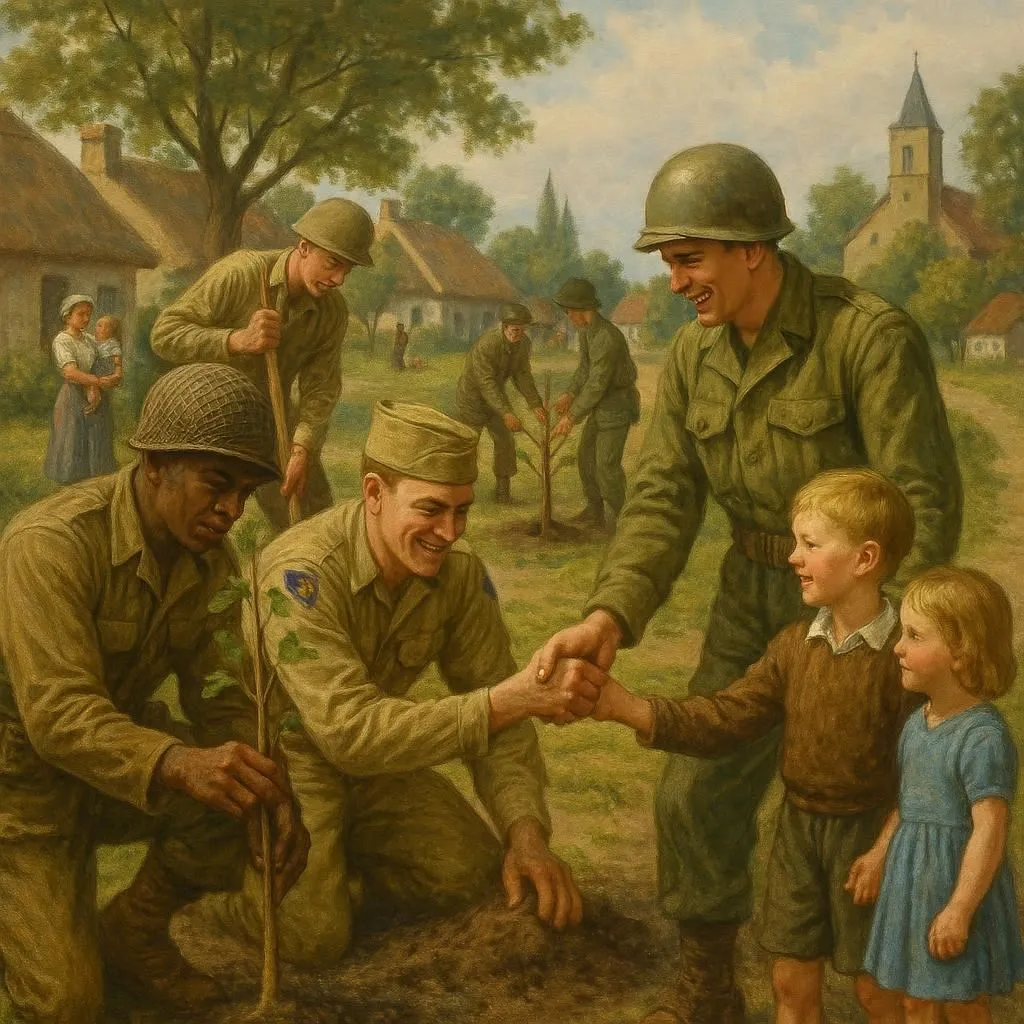
Ready to test your knowledge of one of the most significant events in modern history? These World War II Trivia Questions and Answers cover major battles, important leaders, key events, military strategies, historical dates, and fascinating facts from the war.
Whether you’re a history enthusiast, student, or trivia fan, this collection offers an engaging challenge and a great opportunity to learn more about World War II.
World War 2 Trivia Questions and Answers
1. In which year did World War II begin in Europe?
A) 1937
B) 1938
C) 1939
D) 1941
Answer: C) 1939
Explanation: World War II in Europe began when Germany invaded Poland on September 1, 1939.
Key Information: Britain and France declared war on Germany two days later.
2. Which country did Germany invade on September 1, 1939?
A) France
B) Poland
C) Belgium
D) Norway
Answer: B) Poland
Explanation: Germany invaded Poland using a rapid military strategy that helped trigger the wider European war.
Key Information: The invasion led Britain and France to declare war on Germany.
3. Who was the leader of Nazi Germany during World War II?
A) Benito Mussolini
B) Adolf Hitler
C) Joseph Stalin
D) Winston Churchill
Answer: B) Adolf Hitler
Explanation: Adolf Hitler was the dictator of Nazi Germany from 1933 until his death in 1945.
Key Information: His expansionist policies and invasion of Poland helped start the European war.
4. Which country was led by Winston Churchill during much of World War II?
A) United Kingdom
B) United States
C) Canada
D) Australia
Answer: A) United Kingdom
Explanation: Winston Churchill became British prime minister in 1940 and led Britain through much of the war.
Key Information: He became famous for his speeches and determination to continue fighting Nazi Germany.
5. Who was the president of the United States when it entered World War II?
A) Harry Truman
B) Franklin D. Roosevelt
C) Dwight Eisenhower
D) Herbert Hoover
Answer: B) Franklin D. Roosevelt
Explanation: Franklin D. Roosevelt was U.S. president when Japan attacked Pearl Harbor in December 1941.
Key Information: The United States subsequently declared war on Japan and entered the global conflict.
6. Which event brought the United States directly into World War II?
A) Battle of Britain
B) Attack on Pearl Harbor
C) D-Day
D) Battle of Stalingrad
Answer: B) Attack on Pearl Harbor
Explanation: Japan attacked the U.S. naval base at Pearl Harbor, Hawaii, on December 7, 1941.
Key Information: The United States declared war on Japan the following day.
7. On which date did Japan attack Pearl Harbor?
A) December 7, 1941
B) November 11, 1941
C) June 6, 1942
D) August 15, 1941
Answer: A) December 7, 1941
Explanation: Japanese aircraft launched a surprise attack on Pearl Harbor on December 7, 1941.
Key Information: The attack caused major losses to the U.S. Pacific Fleet and changed the course of the war.
8. Which Japanese city was the first city hit by an atomic bomb during World War II?
A) Tokyo
B) Hiroshima
C) Osaka
D) Kyoto
Answer: B) Hiroshima
Explanation: The United States dropped an atomic bomb on Hiroshima on August 6, 1945.
Key Information: The weapon was known as “Little Boy.”
9. Which Japanese city was struck by the second atomic bomb?
A) Nagasaki
B) Yokohama
C) Kobe
D) Sapporo
Answer: A) Nagasaki
Explanation: The United States dropped a second atomic bomb on Nagasaki on August 9, 1945.
Key Information: The bomb was known as “Fat Man.”
10. What was the code name for the Allied invasion of Normandy?
A) Operation Overlord
B) Operation Torch
C) Operation Market Garden
D) Operation Barbarossa
Answer: A) Operation Overlord
Explanation: Operation Overlord was the Allied plan for the invasion of Nazi-occupied Normandy.
Key Information: The invasion began on June 6, 1944, commonly known as D-Day.
11. What does the term “D-Day” most famously refer to in World War II?
A) Allied invasion of Normandy
B) Attack on Pearl Harbor
C) German invasion of Poland
D) Liberation of Paris
Answer: A) Allied invasion of Normandy
Explanation: D-Day refers specifically to June 6, 1944, when Allied forces landed on the beaches of Normandy, France.
Key Information: It opened a major Western front against Nazi Germany.
12. Which German military operation invaded the Soviet Union in 1941?
A) Operation Barbarossa
B) Operation Overlord
C) Operation Torch
D) Operation Sea Lion
Answer: A) Operation Barbarossa
Explanation: Operation Barbarossa began on June 22, 1941, when Germany and its allies invaded the Soviet Union.
Key Information: It became one of the largest military operations in history.
13. Which battle is often considered a major turning point on the Eastern Front?
A) Battle of Stalingrad
B) Battle of Dunkirk
C) Battle of Midway
D) Battle of El Alamein
Answer: A) Battle of Stalingrad
Explanation: The Soviet victory at Stalingrad in 1942–1943 severely weakened the German military’s position on the Eastern Front.
Key Information: The battle resulted in enormous casualties and the surrender of a large German force.
14. Which battle was a major naval turning point in the Pacific War?
A) Battle of Midway
B) Battle of Dunkirk
C) Battle of the Bulge
D) Battle of El Alamein
Answer: A) Battle of Midway
Explanation: The Battle of Midway in June 1942 resulted in a major U.S. victory against Japan.
Key Information: Japan lost four fleet aircraft carriers, significantly weakening its offensive capabilities.
15. Which country was Benito Mussolini the dictator of?
A) Italy
B) Spain
C) Germany
D) Hungary
Answer: A) Italy
Explanation: Benito Mussolini led Fascist Italy and allied his country with Nazi Germany during World War II.
Key Information: Mussolini was removed from power in 1943, although fighting continued in Italy.
16. Which military alliance included Germany, Italy, and Japan?
A) Axis Powers
B) Allied Powers
C) League of Nations
D) Triple Entente
Answer: A) Axis Powers
Explanation: Germany, Italy, and Japan were the principal members of the Axis Powers.
Key Information: Several other countries also cooperated with the Axis during the war.
17. Which countries were the principal Allied powers?
A) Germany, Italy, Japan
B) Britain, Soviet Union, United States
C) Germany, France, Japan
D) Italy, Spain, Britain
Answer: B) Britain, Soviet Union, United States
Explanation: Britain, the Soviet Union, and the United States were among the most important Allied powers.
Key Information: China and France were also major members of the Allied coalition.
18. What was the Holocaust?
A) Nazi persecution and systematic murder of Jews and other targeted groups
B) A major naval battle
C) A German military strategy
D) A peace agreement
Answer: A) Nazi persecution and systematic murder of Jews and other targeted groups
Explanation: The Holocaust was the systematic persecution and murder of approximately six million Jews by Nazi Germany and its collaborators.
Key Information: Millions of other victims were also persecuted and murdered by the Nazi regime.
19. Which concentration camp became one of the most infamous symbols of the Holocaust?
A) Auschwitz-Birkenau
B) Versailles
C) Dunkirk
D) Normandy
Answer: A) Auschwitz-Birkenau
Explanation: Auschwitz-Birkenau was the largest Nazi concentration and extermination camp complex.
Key Information: It has become a major symbol of the Holocaust and Nazi crimes.
20. In which year did World War II end?
A) 1943
B) 1944
C) 1945
D) 1946
Answer: C) 1945
Explanation: Germany surrendered in May 1945, while Japan formally surrendered in September 1945.
Key Information: September 2, 1945, is generally recognized as the date of Japan’s formal surrender, marking the end of World War II.
Recommended: 146+ Epic Star Wars Trivia Questions and Answers
World War 2 Trivia Questions and Answers for Students
1. Which country was the first to declare war on Germany after its invasion of Poland?
A) United States
B) Britain
C) Soviet Union
D) Canada
Answer: B) Britain
Explanation: Britain declared war on Germany on September 3, 1939, after Germany invaded Poland.
Key Information: France also declared war on Germany the same day.
2. Which French city was liberated by Allied forces in August 1944?
A) Paris
B) Lyon
C) Marseille
D) Bordeaux
Answer: A) Paris
Explanation: Allied and Free French forces liberated Paris in August 1944 after the Normandy invasion.
Key Information: The liberation became a major symbolic victory for the Allies.
3. Which operation was the Allied invasion of North Africa in 1942?
A) Operation Torch
B) Operation Overlord
C) Operation Barbarossa
D) Operation Neptune
Answer: A) Operation Torch
Explanation: Operation Torch was the Allied invasion of French North Africa in November 1942.
Key Information: The campaign helped the Allies gain control of North Africa.
4. Who was the Supreme Commander of Allied forces during the Normandy invasion?
A) Dwight D. Eisenhower
B) George Patton
C) Douglas MacArthur
D) Bernard Montgomery
Answer: A) Dwight D. Eisenhower
Explanation: General Dwight D. Eisenhower served as Supreme Allied Commander for the Normandy invasion.
Key Information: He later became the 34th president of the United States.
5. Which British general was an important Allied commander in North Africa and Europe?
A) Bernard Montgomery
B) Alan Brooke
C) Harold Alexander
D) Arthur Harris
Answer: A) Bernard Montgomery
Explanation: Bernard Montgomery commanded British forces during several important campaigns.
Key Information: He became particularly famous for his victory at the Second Battle of El Alamein.
6. Which battle in North Africa was a major Allied victory in 1942?
A) Second Battle of El Alamein
B) Battle of Dunkirk
C) Battle of Kursk
D) Battle of Midway
Answer: A) Second Battle of El Alamein
Explanation: British forces under Montgomery defeated Axis forces at El Alamein in Egypt.
Key Information: The victory helped push Axis forces out of North Africa.
7. Which German city was the capital of Nazi Germany during World War II?
A) Munich
B) Berlin
C) Hamburg
D) Frankfurt
Answer: B) Berlin
Explanation: Berlin served as the political and administrative center of Nazi Germany.
Key Information: Soviet forces captured Berlin in the final stages of the European war in 1945.
8. Which city was the site of the famous Nuremberg Trials after World War II?
A) Berlin
B) Nuremberg
C) Dresden
D) Cologne
Answer: B) Nuremberg
Explanation: The Nuremberg Trials prosecuted major Nazi leaders for war crimes and crimes against humanity.
Key Information: The trials helped establish important principles of international criminal law.
9. Which German battleship was sunk by the British in 1941?
A) Bismarck
B) Tirpitz
C) Scharnhorst
D) Gneisenau
Answer: A) Bismarck
Explanation: The German battleship Bismarck was sunk by British naval forces in May 1941.
Key Information: Its destruction followed a major naval pursuit in the North Atlantic.
10. Which German battleship sister ship survived longer and was eventually sunk in 1944?
A) Tirpitz
B) Bismarck
C) Deutschland
D) Admiral Scheer
Answer: A) Tirpitz
Explanation: Tirpitz was Bismarck’s sister ship and became a major target for British attacks.
Key Information: It was sunk by British aircraft in a Norwegian fjord in 1944.
11. Which American general commanded Allied forces in the Pacific’s Southwest Pacific Area?
A) Douglas MacArthur
B) Dwight Eisenhower
C) Omar Bradley
D) George Marshall
Answer: A) Douglas MacArthur
Explanation: General Douglas MacArthur commanded Allied forces in the Southwest Pacific.
Key Information: He famously returned to the Philippines in 1944 after being forced to leave in 1942.
12. Which island nation was the primary enemy of the United States in the Pacific War?
A) Japan
B) Italy
C) Germany
D) France
Answer: A) Japan
Explanation: Japan fought the United States and other Allied powers throughout the Pacific War.
Key Information: Major battles included Midway, Guadalcanal, Iwo Jima, and Okinawa.
13. Which Pacific island was the site of a famous 1945 battle and flag-raising?
A) Iwo Jima
B) Saipan
C) Guam
D) Wake Island
Answer: A) Iwo Jima
Explanation: U.S. Marines captured Iwo Jima after intense fighting in February and March 1945.
Key Information: The flag-raising on Mount Suribachi became one of the most famous images of the war.
14. Which Pacific island was the site of one of the bloodiest battles of the war in 1945?
A) Okinawa
B) Midway
C) Guadalcanal
D) Wake Island
Answer: A) Okinawa
Explanation: The Battle of Okinawa lasted from April to June 1945 and caused enormous military and civilian casualties.
Key Information: The battle demonstrated how costly an invasion of the Japanese home islands might be.
15. What was the name of the U.S. program that developed the atomic bomb?
A) Manhattan Project
B) Liberty Project
C) Victory Project
D) Trinity Program
Answer: A) Manhattan Project
Explanation: The Manhattan Project was the secret Allied program that developed the first atomic weapons.
Key Information: The first successful nuclear test occurred at Trinity Site in New Mexico in July 1945.
16. What was the code name for the first successful atomic bomb test?
A) Trinity
B) Little Boy
C) Fat Man
D) Overlord
Answer: A) Trinity
Explanation: The Trinity test took place on July 16, 1945, in New Mexico.
Key Information: It demonstrated that the newly developed atomic weapon worked.
17. Which country was invaded by the Soviet Union in August 1945?
A) Japan
B) Germany
C) Manchuria
D) Italy
Answer: C) Manchuria
Explanation: The Soviet Union declared war on Japan and invaded Japanese-held Manchuria in August 1945.
Key Information: The Soviet offensive rapidly defeated Japanese forces in the region.
18. Which conference brought together Roosevelt, Churchill, and Stalin in February 1945?
A) Yalta Conference
B) Tehran Conference
C) Potsdam Conference
D) Casablanca Conference
Answer: A) Yalta Conference
Explanation: The Yalta Conference took place in Crimea and focused on planning for the end of the war and the postwar world.
Key Information: Roosevelt, Churchill, and Stalin discussed Germany, Eastern Europe, and the emerging international order.
19. Which conference was held after Germany’s surrender in July-August 1945?
A) Potsdam Conference
B) Yalta Conference
C) Tehran Conference
D) Munich Conference
Answer: A) Potsdam Conference
Explanation: The Potsdam Conference was held near Berlin after Germany surrendered.
Key Information: Harry Truman represented the United States, while Stalin represented the Soviet Union.
20. Which U.S. president authorized the use of atomic bombs against Japan?
A) Franklin D. Roosevelt
B) Harry S. Truman
C) Dwight D. Eisenhower
D) Herbert Hoover
Answer: B) Harry S. Truman
Explanation: Harry S. Truman became president after Roosevelt died in April 1945 and authorized the use of atomic bombs.
Key Information: The bombs were dropped on Hiroshima and Nagasaki in August 1945.
Recommended: 174+ Winter Trivia Questions & Answers
World War Quiz Questions and Answers
1. Which country was known as the Soviet Union during World War II?
A) USSR
B) USA
C) UK
D) ROC
Answer: A) USSR
Explanation: The Soviet Union was officially known as the Union of Soviet Socialist Republics, or USSR.
Key Information: It became one of the most important Allied powers after Germany invaded it in 1941.
2. What was the name of the German air campaign against Britain in 1940?
A) Battle of Britain
B) Blitzkrieg
C) Operation Sea Lion
D) Western Offensive
Answer: A) Battle of Britain
Explanation: The Battle of Britain was a major air campaign fought between Germany’s Luftwaffe and Britain’s Royal Air Force.
Key Information: Britain’s ability to resist the German air campaign helped prevent a German invasion.
3. What was the German term for its rapid warfare strategy?
A) Blitzkrieg
B) Wehrmacht
C) Luftkrieg
D) Sturmkrieg
Answer: A) Blitzkrieg
Explanation: Blitzkrieg, meaning “lightning war,” emphasized rapid movement and coordinated attacks.
Key Information: Germany used this approach successfully during several early campaigns.
4. Which German military branch was responsible for the air force?
A) Luftwaffe
B) Kriegsmarine
C) Wehrmacht
D) Gestapo
Answer: A) Luftwaffe
Explanation: The Luftwaffe was Nazi Germany’s air force during World War II.
Key Information: It played a major role in the invasions of Poland, France, and the Battle of Britain.
5. What was Nazi Germany’s navy called?
A) Kriegsmarine
B) Luftwaffe
C) Reichswehr
D) Bundesmarine
Answer: A) Kriegsmarine
Explanation: The Kriegsmarine was the German navy during the Nazi era.
Key Information: Its submarines, known as U-boats, were central to Germany’s Atlantic naval campaign.
6. What were German submarines commonly called during World War II?
A) U-boats
B) Sea Wolves
C) Unterships
D) Kriegboats
Answer: A) U-boats
Explanation: U-boat was a common English term for German submarines.
Key Information: German U-boats attempted to disrupt Allied shipping in the Atlantic.
7. Which ocean was the main setting for the Battle of the Atlantic?
A) Atlantic Ocean
B) Pacific Ocean
C) Indian Ocean
D) Arctic Ocean
Answer: A) Atlantic Ocean
Explanation: The Battle of the Atlantic was a prolonged campaign between Allied and Axis naval forces.
Key Information: Protecting supply routes from North America to Britain was crucial to the Allied war effort.
8. Which British prime minister served when Germany surrendered in 1945?
A) Winston Churchill
B) Neville Chamberlain
C) Clement Attlee
D) Anthony Eden
Answer: A) Winston Churchill
Explanation: Churchill was prime minister when Germany surrendered in May 1945.
Key Information: He remained in office until the British general election later that year.
9. Which U.S. general became known as “Old Blood and Guts”?
A) George S. Patton
B) Dwight Eisenhower
C) Omar Bradley
D) Douglas MacArthur
Answer: A) George S. Patton
Explanation: General George S. Patton was famous for his aggressive leadership and armored warfare tactics.
Key Information: He commanded U.S. forces during campaigns in North Africa, Sicily, and Europe.
10. Which American general was known for commanding Allied forces in the Philippines?
A) Douglas MacArthur
B) George Patton
C) Omar Bradley
D) Mark Clark
Answer: A) Douglas MacArthur
Explanation: MacArthur commanded U.S. and Allied forces in the Southwest Pacific.
Key Information: His famous promise to return to the Philippines became a major wartime symbol.
11. Which country did Germany occupy after invading it in May 1940?
A) France
B) Spain
C) Switzerland
D) Sweden
Answer: A) France
Explanation: German forces invaded France in May 1940 and defeated French forces within weeks.
Key Information: France was divided into occupied and collaborationist zones.
12. Which French resistance leader later became president of France?
A) Charles de Gaulle
B) Philippe Pétain
C) Georges Clemenceau
D) Pierre Laval
Answer: A) Charles de Gaulle
Explanation: Charles de Gaulle led the Free French movement during World War II.
Key Information: He later became one of France’s most influential postwar political leaders.
13. What was the name of the French government based in Vichy during the German occupation?
A) Vichy France
B) Free France
C) New France
D) Republican France
Answer: A) Vichy France
Explanation: Vichy France was the French regime that collaborated with Nazi Germany after France’s defeat in 1940.
Key Information: Its government was headed by Marshal Philippe Pétain.
14. Which country invaded Greece during World War II alongside German forces?
A) Italy
B) Canada
C) United States
D) Spain
Answer: A) Italy
Explanation: Fascist Italy invaded Greece in October 1940 but encountered strong Greek resistance.
Key Information: Germany later intervened and conquered Greece in 1941.
15. Which Scandinavian country was invaded by Germany in April 1940?
A) Norway
B) Finland
C) Iceland
D) Sweden
Answer: A) Norway
Explanation: Germany launched an invasion of Norway in April 1940 as part of its northern European campaign.
Key Information: Norway’s strategic coastline and access to resources made it important to Germany.
16. Which country was occupied by Germany but remained officially neutral during most of World War II?
A) Switzerland
B) Poland
C) Belgium
D) Denmark
Answer: A) Switzerland
Explanation: Switzerland maintained armed neutrality throughout the war despite being surrounded by Axis-controlled territory.
Key Information: Its geography and defensive preparations helped preserve its independence.
17. Which city endured a nearly 900-day German siege during World War II?
A) Leningrad
B) Moscow
C) Kiev
D) Minsk
Answer: A) Leningrad
Explanation: German and allied Axis forces besieged Leningrad from 1941 to 1944.
Key Information: The siege caused enormous civilian suffering and loss of life.
18. Which major Soviet city was defended during a famous 1941 battle against Germany?
A) Moscow
B) Warsaw
C) Prague
D) Budapest
Answer: A) Moscow
Explanation: German forces advanced toward Moscow in late 1941 but failed to capture the Soviet capital.
Key Information: The Soviet defense marked an important setback for Germany’s invasion of the USSR.
19. Which 1943 battle involved the largest tank battle of the war?
A) Battle of Kursk
B) Battle of Tobruk
C) Battle of Dunkirk
D) Battle of Crete
Answer: A) Battle of Kursk
Explanation: The Battle of Kursk was a major German-Soviet confrontation on the Eastern Front.
Key Information: The Soviet victory further shifted the strategic initiative toward the Red Army.
20. Which city was the target of the famous 1940 evacuation of Allied troops?
A) Dunkirk
B) Calais
C) Rouen
D) Lille
Answer: A) Dunkirk
Explanation: Allied troops were evacuated from Dunkirk, France, between May and June 1940.
Key Information: The evacuation rescued hundreds of thousands of Allied soldiers from advancing German forces.
Recommended: 167+ US Civil War Trivia Questions and Answers
Easy World War 2 Trivia Questions and Answers
1. Which country was invaded by Germany in 1941 in Operation Barbarossa?
A) Soviet Union
B) France
C) Belgium
D) Norway
Answer: A) Soviet Union
Explanation: Germany launched Operation Barbarossa against the Soviet Union on June 22, 1941.
Key Information: It opened the largest land front of World War II.
2. Which city was the capital of the Soviet Union during World War II?
A) Moscow
B) Leningrad
C) Kiev
D) Stalingrad
Answer: A) Moscow
Explanation: Moscow served as the capital and political center of the Soviet Union.
Key Information: German forces attempted to capture Moscow in 1941 but were stopped by Soviet resistance.
3. Which Soviet leader commanded the USSR during most of World War II?
A) Joseph Stalin
B) Vladimir Lenin
C) Nikita Khrushchev
D) Leon Trotsky
Answer: A) Joseph Stalin
Explanation: Joseph Stalin led the Soviet Union throughout World War II.
Key Information: Under his leadership, the Soviet military eventually pushed German forces back toward Berlin.
4. Which country fought alongside Germany on the Eastern Front and later switched sides?
A) Romania
B) Britain
C) Canada
D) Sweden
Answer: A) Romania
Explanation: Romania initially fought with the Axis against the Soviet Union but changed sides in 1944.
Key Information: Romanian forces were involved in major fighting on the Eastern Front.
5. Which country was invaded by the Soviet Union in November 1939?
A) Finland
B) Denmark
C) Belgium
D) Austria
Answer: A) Finland
Explanation: The Soviet Union invaded Finland in the Winter War of 1939–1940.
Key Information: Finland resisted strongly despite being outnumbered and outgunned.
6. What was the name of the conflict between Finland and the Soviet Union from 1939 to 1940?
A) Winter War
B) Continuation War
C) Northern War
D) Baltic War
Answer: A) Winter War
Explanation: The Winter War began when the Soviet Union invaded Finland in November 1939.
Key Information: Finland eventually ceded territory but retained its independence.
7. Which country was occupied by Germany and later became a major battlefield after the Allied invasion of 1944?
A) France
B) Spain
C) Portugal
D) Ireland
Answer: A) France
Explanation: Much of France was occupied by Germany until Allied forces liberated the country in 1944.
Key Information: The Normandy landings were crucial to the liberation of France.
8. Which beach was one of the five main landing areas during D-Day?
A) Omaha Beach
B) Dunkirk Beach
C) Calais Beach
D) Marseille Beach
Answer: A) Omaha Beach
Explanation: Omaha Beach was one of five Allied landing beaches in Normandy on June 6, 1944.
Key Information: U.S. forces encountered particularly heavy German resistance there.
9. Which other beach was assigned to U.S. forces during the Normandy invasion?
A) Utah Beach
B) Juno Beach
C) Gold Beach
D) Sword Beach
Answer: A) Utah Beach
Explanation: Utah Beach was the westernmost of the five main Normandy landing beaches.
Key Information: U.S. troops landed there as part of the invasion of occupied France.
10. Which Allied country was responsible for Juno Beach on D-Day?
A) Canada
B) United States
C) Britain
D) France
Answer: A) Canada
Explanation: Canadian forces landed at Juno Beach during the Normandy invasion.
Key Information: Canadian troops advanced farther inland than many other Allied units on D-Day.
11. Which Allied country landed troops at Sword Beach?
A) Britain
B) Canada
C) United States
D) Poland
Answer: A) Britain
Explanation: British forces were responsible for the easternmost landing beach, Sword Beach.
Key Information: British troops fought to secure the area and link with other Allied forces.
12. Which Allied country was primarily responsible for Gold Beach?
A) Britain
B) Canada
C) United States
D) France
Answer: A) Britain
Explanation: British forces landed at Gold Beach during the Normandy invasion.
Key Information: The landing helped establish a secure Allied bridgehead in Normandy.
13. What was the name of the German counteroffensive launched in December 1944?
A) Battle of the Bulge
B) Battle of Kursk
C) Operation Torch
D) Operation Market Garden
Answer: A) Battle of the Bulge
Explanation: The Battle of the Bulge was Germany’s major counteroffensive in the Ardennes region.
Key Information: It created a large “bulge” in the Allied front line before the offensive was defeated.
14. In which region did the Battle of the Bulge primarily take place?
A) Ardennes
B) Normandy
C) Sicily
D) Tuscany
Answer: A) Ardennes
Explanation: The German offensive began in the heavily forested Ardennes region of Belgium and Luxembourg.
Key Information: Harsh winter weather affected both sides during the battle.
15. Which city was liberated by Allied forces shortly after the Normandy invasion?
A) Rome
B) Berlin
C) Vienna
D) Warsaw
Answer: A) Rome
Explanation: Allied forces captured Rome on June 4, 1944, shortly before D-Day.
Key Information: Rome became the first Axis capital captured by the Allies.
16. Which country was invaded by Allied forces in July 1943 as part of the Italian campaign?
A) Sicily
B) Austria
C) Hungary
D) Yugoslavia
Answer: A) Sicily
Explanation: Allied forces invaded Sicily in July 1943 during Operation Husky.
Key Information: The invasion contributed to the collapse of Mussolini’s government.
17. What was the name of the Allied invasion of Sicily?
A) Operation Husky
B) Operation Avalanche
C) Operation Torch
D) Operation Neptune
Answer: A) Operation Husky
Explanation: Operation Husky was the Allied invasion of Sicily in July 1943.
Key Information: It opened the way for the Allied invasion of mainland Italy.
18. Which Italian city was the target of Operation Avalanche in 1943?
A) Salerno
B) Milan
C) Venice
D) Turin
Answer: A) Salerno
Explanation: Operation Avalanche was the Allied landing near Salerno on the Italian mainland in September 1943.
Key Information: The campaign faced strong German resistance.
19. Which country surrendered to the Allies in September 1943 but continued fighting after German occupation?
A) Italy
B) Spain
C) Hungary
D) Bulgaria
Answer: A) Italy
Explanation: Italy signed an armistice with the Allies in September 1943, after which Germany occupied much of northern and central Italy.
Key Information: Italian forces later fought alongside the Allies against Germany.
20. Which dictator of Italy was executed in 1945?
A) Benito Mussolini
B) Adolf Hitler
C) Francisco Franco
D) Pietro Badoglio
Answer: A) Benito Mussolini
Explanation: Mussolini was captured and executed by Italian partisans in April 1945.
Key Information: His death occurred shortly before Germany’s surrender in Europe.
Hard World War 2 Questions and Answers
1. Which operation involved the Allied airborne assault during the Normandy invasion?
A) Operation Neptune
B) Operation Torch
C) Operation Market Garden
D) Operation Husky
Answer: A) Operation Neptune
Explanation: Operation Neptune was the naval and amphibious component of the larger Normandy invasion plan.
Key Information: It supported the landing of Allied troops on the beaches of Normandy on June 6, 1944.
2. Which operation was the Allied attempt to seize bridges in the Netherlands in 1944?
A) Operation Market Garden
B) Operation Overlord
C) Operation Torch
D) Operation Citadel
Answer: A) Operation Market Garden
Explanation: Operation Market Garden took place in September 1944 and aimed to capture a series of bridges in the Netherlands.
Key Information: The operation ultimately failed to achieve all of its objectives.
3. Which famous bridge was one of the objectives of Operation Market Garden?
A) Arnhem Bridge
B) London Bridge
C) Remagen Bridge
D) Waterloo Bridge
Answer: A) Arnhem Bridge
Explanation: Allied airborne forces attempted to capture the bridge at Arnhem.
Key Information: The fighting around Arnhem became one of the best-known episodes of the operation.
4. Which German city was the site of a bridge captured intact by U.S. forces in 1945?
A) Remagen
B) Hamburg
C) Munich
D) Frankfurt
Answer: A) Remagen
Explanation: U.S. troops captured the Ludendorff Bridge at Remagen in March 1945.
Key Information: The intact bridge allowed Allied forces to cross the Rhine quickly.
5. Which river was crossed using the captured bridge at Remagen?
A) Rhine River
B) Danube River
C) Elbe River
D) Seine River
Answer: A) Rhine River
Explanation: The Ludendorff Bridge crossed the Rhine, a major natural barrier in western Germany.
Key Information: Capturing the bridge helped the Allies establish a bridgehead east of the Rhine.
6. Which Allied country provided the largest number of troops for the Normandy invasion?
A) United States
B) Canada
C) Britain
D) Poland
Answer: A) United States
Explanation: American forces supplied a very large portion of the Allied troops involved in the Normandy campaign.
Key Information: British, Canadian, and forces from several other Allied nations also participated.
7. Which resistance movement fought against German occupation in France?
A) French Resistance
B) Warsaw Resistance
C) Alpine Guard
D) Free Legion
Answer: A) French Resistance
Explanation: The French Resistance included numerous groups that opposed German occupation and the Vichy regime.
Key Information: Resistance members carried out sabotage, intelligence gathering, and assistance to Allied personnel.
8. Which famous French city became the headquarters of the Free French movement?
A) London
B) Paris
C) Lyon
D) Bordeaux
Answer: A) London
Explanation: Charles de Gaulle established the Free French movement in London after France’s defeat in 1940.
Key Information: From London, de Gaulle called on French citizens and soldiers to continue resisting Germany.
9. Which European country experienced a major uprising against German occupation in 1944?
A) Poland
B) Spain
C) Portugal
D) Switzerland
Answer: A) Poland
Explanation: The Warsaw Uprising began in August 1944 as Polish resistance fighters attempted to liberate Warsaw.
Key Information: The uprising lasted about two months before German forces suppressed it.
10. Which city was the center of the 1944 Polish uprising?
A) Warsaw
B) Kraków
C) Gdańsk
D) Łódź
Answer: A) Warsaw
Explanation: The Warsaw Uprising was organized by the Polish underground against German occupation.
Key Information: The city suffered massive destruction during and after the uprising.
11. Which country was invaded by Germany in April 1941?
A) Yugoslavia
B) Ireland
C) Switzerland
D) Sweden
Answer: A) Yugoslavia
Explanation: Germany invaded Yugoslavia in April 1941 as part of its Balkan campaign.
Key Information: German forces quickly defeated the country’s conventional military resistance.
12. Which Balkan country was also invaded by Germany in 1941?
A) Greece
B) Turkey
C) Albania
D) Cyprus
Answer: A) Greece
Explanation: Germany invaded Greece in April 1941 after Italy’s unsuccessful invasion had begun the conflict there.
Key Information: Greece was occupied by Axis forces for several years.
13. Which island was the site of a major airborne invasion by Germany in 1941?
A) Crete
B) Sicily
C) Malta
D) Cyprus
Answer: A) Crete
Explanation: Germany launched a large airborne invasion of Crete in May 1941.
Key Information: It was one of the first major airborne invasions in military history.
14. Which Mediterranean island was strategically important to the Allies because of its location?
A) Malta
B) Corsica
C) Sardinia
D) Cyprus
Answer: A) Malta
Explanation: Malta was strategically located in the central Mediterranean and was used by the Allies to attack Axis supply routes.
Key Information: The island endured heavy bombing during the war.
15. Which city was the target of a famous German bombing campaign known as the Blitz?
A) London
B) Paris
C) Rome
D) Madrid
Answer: A) London
Explanation: German aircraft heavily bombed London and other British cities during the Blitz.
Key Information: The campaign began in 1940 and targeted Britain’s cities and infrastructure.
16. What was the name commonly given to Germany’s bombing campaign against British cities in 1940–1941?
A) The Blitz
B) The Storm
C) The Thunder
D) The Iron Campaign
Answer: A) The Blitz
Explanation: “The Blitz” refers to the sustained German bombing of British cities during World War II.
Key Information: London was heavily targeted, but many other British cities were also bombed.
17. Which British aircraft was famously used during the Battle of Britain?
A) Spitfire
B) Lancaster
C) Hurricane
D) Mosquito
Answer: A) Spitfire
Explanation: The Supermarine Spitfire became one of the most famous British fighter aircraft of the war.
Key Information: It played an important role in defending Britain against the Luftwaffe.
18. Which British aircraft was another important fighter during the Battle of Britain?
A) Hurricane
B) Lancaster
C) Wellington
D) Halifax
Answer: A) Hurricane
Explanation: The Hawker Hurricane was a key Royal Air Force fighter during the Battle of Britain.
Key Information: Hurricanes accounted for a large share of RAF fighter victories during the campaign.
19. Which German aircraft was a major fighter during the Battle of Britain?
A) Messerschmitt Bf 109
B) Junkers Ju 52
C) Heinkel He 111
D) Focke-Wulf Fw 200
Answer: A) Messerschmitt Bf 109
Explanation: The Bf 109 was Germany’s principal single-seat fighter during much of the Battle of Britain.
Key Information: It was one of the most widely produced fighter aircraft of the war.
20. Which British radar system helped detect incoming German aircraft during the Battle of Britain?
A) Chain Home
B) Coastal Watch
C) Sky Guard
D) Royal Radar Net
Answer: A) Chain Home
Explanation: Chain Home was Britain’s network of early-warning radar stations.
Key Information: It gave RAF commanders valuable information about approaching German aircraft and helped coordinate the defense of Britain.
World War 2 Trivia for Kids
1. Which American aircraft carrier was sunk during the Battle of Midway?
A) USS Yorktown
B) USS Enterprise
C) USS Lexington
D) USS Hornet
Answer: A) USS Yorktown
Explanation: USS Yorktown was badly damaged during the Battle of Midway and later sank after being attacked by a Japanese submarine.
Key Information: Its loss came despite the overall U.S. victory at Midway.
2. How many Japanese aircraft carriers were sunk during the Battle of Midway?
A) Two
B) Three
C) Four
D) Five
Answer: C) Four
Explanation: The United States sank four Japanese fleet carriers: Akagi, Kaga, Soryu, and Hiryu.
Key Information: The loss of these experienced carriers and aircrews was a major setback for Japan.
3. Which Japanese aircraft carrier survived the Battle of Midway?
A) Akagi
B) Kaga
C) Hiryu
D) None of these
Answer: D) None of these
Explanation: All four Japanese fleet carriers committed to the battle were sunk.
Key Information: The carrier losses significantly weakened Japan’s ability to conduct large-scale offensive operations.
4. Which U.S. commander led the Pacific Fleet during the Battle of Midway?
A) Chester W. Nimitz
B) Douglas MacArthur
C) William Halsey
D) George Marshall
Answer: A) Chester W. Nimitz
Explanation: Admiral Chester W. Nimitz was commander in chief of the U.S. Pacific Fleet.
Key Information: He played a central role in planning the American response to Japanese expansion.
5. Which American admiral became famous for his “island-hopping” strategy in the Pacific?
A) Chester Nimitz
B) George Patton
C) Omar Bradley
D) Dwight Eisenhower
Answer: A) Chester Nimitz
Explanation: Nimitz commanded major naval operations across the Central Pacific.
Key Information: The island-hopping strategy focused on capturing strategically important islands while bypassing some heavily fortified positions.
6. Which island was the site of a major six-month battle beginning in 1942?
A) Guadalcanal
B) Iwo Jima
C) Okinawa
D) Saipan
Answer: A) Guadalcanal
Explanation: The Guadalcanal campaign began in August 1942 and lasted until early 1943.
Key Information: It was the first major Allied offensive against Japanese forces in the Pacific.
7. Which American aircraft became famous for its long-range bombing missions against Japan?
A) B-29 Superfortress
B) P-51 Mustang
C) P-40 Warhawk
D) B-17 Flying Fortress
Answer: A) B-29 Superfortress
Explanation: The B-29 Superfortress was a long-range heavy bomber used extensively against Japan.
Key Information: B-29 aircraft dropped the atomic bombs on Hiroshima and Nagasaki.
8. What was the name of the B-29 that dropped the atomic bomb on Hiroshima?
A) Enola Gay
B) Bockscar
C) Memphis Belle
D) Little Boy
Answer: A) Enola Gay
Explanation: Enola Gay was the B-29 bomber that dropped the “Little Boy” atomic bomb on Hiroshima.
Key Information: The mission took place on August 6, 1945.
9. What was the name of the B-29 that dropped the atomic bomb on Nagasaki?
A) Bockscar
B) Enola Gay
C) Fat Man
D) Indianapolis
Answer: A) Bockscar
Explanation: Bockscar carried and dropped the “Fat Man” atomic bomb on Nagasaki on August 9, 1945.
Key Information: The mission followed the Hiroshima bombing by three days.
10. Which U.S. Navy cruiser transported components of the Hiroshima atomic bomb and was later sunk?
A) USS Indianapolis
B) USS Missouri
C) USS Arizona
D) USS Nevada
Answer: A) USS Indianapolis
Explanation: USS Indianapolis delivered components of the atomic bomb to the Pacific island of Tinian in July 1945.
Key Information: A Japanese submarine sank the cruiser shortly afterward, resulting in one of the worst U.S. naval disasters of the war.
11. Which U.S. battleship hosted Japan’s formal surrender ceremony?
A) USS Missouri
B) USS Iowa
C) USS New Jersey
D) USS Arizona
Answer: A) USS Missouri
Explanation: Japan formally surrendered aboard USS Missouri in Tokyo Bay on September 2, 1945.
Key Information: The ceremony officially ended World War II.
12. Who signed the Japanese surrender document on behalf of Japan?
A) Mamoru Shigemitsu
B) Hideki Tojo
C) Hirohito
D) Isoroku Yamamoto
Answer: A) Mamoru Shigemitsu
Explanation: Foreign Minister Mamoru Shigemitsu signed the Instrument of Surrender for Japan.
Key Information: Several Japanese representatives participated in the ceremony.
13. Who signed the surrender document for the Allied powers?
A) Douglas MacArthur
B) Dwight Eisenhower
C) Chester Nimitz
D) George Patton
Answer: A) Douglas MacArthur
Explanation: General Douglas MacArthur signed as Supreme Commander for the Allied Powers.
Key Information: He also delivered remarks during the surrender ceremony aboard USS Missouri.
14. Which Japanese emperor remained on the throne during World War II?
A) Hirohito
B) Akihito
C) Meiji
D) Taisho
Answer: A) Hirohito
Explanation: Emperor Hirohito, formally known as Emperor Shōwa, was Japan’s emperor during the war.
Key Information: He announced Japan’s surrender to the Japanese public in August 1945.
15. What was the name of Japan’s attack force that targeted Pearl Harbor?
A) First Air Fleet
B) Imperial Strike Force
C) Pacific Assault Fleet
D) Southern Fleet
Answer: A) First Air Fleet
Explanation: The Japanese carrier strike force assembled under Vice Admiral Chuichi Nagumo for the Pearl Harbor attack.
Key Information: Six aircraft carriers participated in the attack.
16. Which Japanese admiral planned the Pearl Harbor attack?
A) Isoroku Yamamoto
B) Chuichi Nagumo
C) Togo Heihachiro
D) Hirohito
Answer: A) Isoroku Yamamoto
Explanation: Admiral Isoroku Yamamoto was the principal architect of the Pearl Harbor attack.
Key Information: He understood the risks of confronting the industrial power of the United States.
17. Which Japanese admiral commanded the carrier force during the Pearl Harbor attack?
A) Chuichi Nagumo
B) Isoroku Yamamoto
C) Minoru Genda
D) Takeo Kurita
Answer: A) Chuichi Nagumo
Explanation: Vice Admiral Chuichi Nagumo commanded the Japanese carrier striking force during the attack.
Key Information: The force launched two major waves of aircraft against Pearl Harbor.
18. Which American battleship was famously sunk during the attack on Pearl Harbor?
A) USS Arizona
B) USS Missouri
C) USS Iowa
D) USS Texas
Answer: A) USS Arizona
Explanation: USS Arizona suffered a catastrophic explosion and sank during the Japanese attack.
Key Information: More than 1,000 crew members died aboard the ship.
19. Which U.S. military base was attacked by Japan in the Philippines shortly after Pearl Harbor?
A) Clark Field
B) Fort Knox
C) Camp Pendleton
D) Fort Bragg
Answer: A) Clark Field
Explanation: Japanese aircraft attacked Clark Field in the Philippines on December 8, 1941.
Key Information: The attack severely damaged American air power in the Philippines.
20. Which U.S. island territory was invaded by Japanese forces shortly after Pearl Harbor?
A) Guam
B) Hawaii
C) Puerto Rico
D) Alaska
Answer: A) Guam
Explanation: Japanese forces invaded Guam in December 1941 and captured it from American forces.
Key Information: Guam remained under Japanese occupation until U.S. forces recaptured it in 1944.
FAQS
1. When did World War II begin?
World War II began in 1939 when Nazi Germany invaded Poland, prompting Britain and France to declare war on Germany.
2. Which countries were the main Allied Powers?
The main Allied Powers included the United States, United Kingdom, Soviet Union, China, and France.
3. What was D-Day?
D-Day was the June 6, 1944 Allied invasion of Normandy, France, which opened a major Western Front against Nazi Germany.
4. When did World War II end?
World War II ended in 1945. Germany surrendered in May, and Japan surrendered in September after the atomic bombings of Hiroshima and Nagasaki.
Final Thoughts
How well did you do on these World War II Trivia Questions and Answers? From pivotal battles and influential leaders to important dates and lesser-known historical facts, World War II offers countless fascinating stories to explore.
Whether you achieved a perfect score or discovered something new, we hope you enjoyed the challenge.
Share these trivia questions with fellow history fans and keep testing your knowledge!