
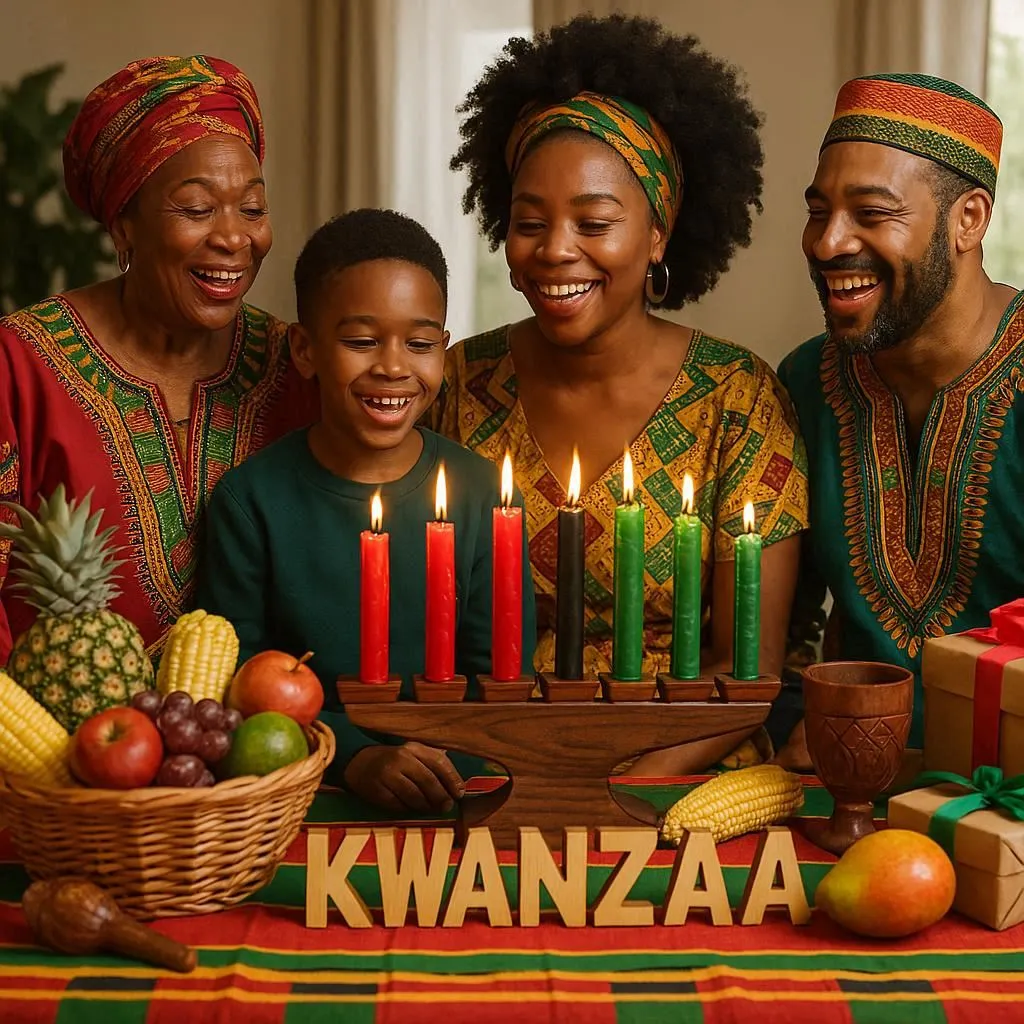
Celebrate culture, community, and tradition with these Vibrant Kwanzaa Trivia Questions and Answers!
Explore the fascinating history of Kwanzaa, learn about its seven guiding principles, and test your knowledge of its meaningful symbols, customs, colors, and celebrations.
Whether you’re preparing for a holiday trivia game or simply looking to learn something new, this collection offers an engaging way to discover more about Kwanzaa.
Best Kwanzaa Trivia Questions and Answers
1. What is Kwanzaa primarily celebrated as?
A. A harvest celebration honoring African heritage
B. A winter sports festival
C. A New Year’s religious ceremony
D. A national independence holiday
Correct Answer: A. A harvest celebration honoring African heritage
Explanation: Kwanzaa is a cultural holiday celebrating African heritage, community, family, and values.
Key Information: Kwanzaa is observed annually from December 26 through January 1.
2. Who created Kwanzaa?
A. Maya Angelou
B. Maulana Karenga
C. James Baldwin
D. Martin Luther King Jr.
Correct Answer: B. Maulana Karenga
Explanation: Maulana Karenga created Kwanzaa in 1966 as a celebration of African American culture and heritage.
Key Information: Karenga was a professor and activist who developed Kwanzaa during the Black Freedom Movement.
3. On which date does Kwanzaa traditionally begin?
A. December 24
B. December 25
C. December 26
D. December 31
Correct Answer: C. December 26
Explanation: Kwanzaa begins each year on December 26.
Key Information: The seven-day celebration continues through January 1.
4. How many days does Kwanzaa last?
A. Five days
B. Six days
C. Seven days
D. Eight days
Correct Answer: C. Seven days
Explanation: Kwanzaa is celebrated for seven days, with each day focusing on one of its seven principles.
Key Information: The principles are collectively called the Nguzo Saba.
5. What language are the names of Kwanzaa’s seven principles primarily derived from?
A. Arabic
B. Swahili
C. Hebrew
D. Latin
Correct Answer: B. Swahili
Explanation: The names of Kwanzaa’s seven principles come from Swahili.
Key Information: Swahili is a widely spoken language in parts of East and Central Africa.
6. What does “Kwanzaa” mean?
A. Family
B. First fruits
C. Celebration
D. Unity
Correct Answer: B. First fruits
Explanation: The name Kwanzaa comes from the Swahili phrase “matunda ya kwanza,” meaning “first fruits.”
Key Information: The holiday draws inspiration from African first-fruits harvest traditions.
7. What is the first principle of Kwanzaa?
A. Umoja
B. Nia
C. Kuumba
D. Imani
Correct Answer: A. Umoja
Explanation: Umoja means “Unity” and emphasizes maintaining unity in family, community, and other groups.
Key Information: Umoja is observed on the first day of Kwanzaa.
8. What does the Kwanzaa principle “Kujichagulia” mean?
A. Cooperative Economics
B. Self-Determination
C. Creativity
D. Faith
Correct Answer: B. Self-Determination
Explanation: Kujichagulia means defining, naming, and speaking for oneself.
Key Information: It is the second principle of Kwanzaa.
9. Which Kwanzaa principle means “Ujima”?
A. Collective Work and Responsibility
B. Purpose
C. Unity
D. Faith
Correct Answer: A. Collective Work and Responsibility
Explanation: Ujima encourages people to work together to solve problems and improve their communities.
Key Information: Ujima is the third principle of Kwanzaa.
10. What does “Ujamaa” mean in Kwanzaa?
A. Creativity
B. Cooperative Economics
C. Self-Determination
D. Purpose
Correct Answer: B. Cooperative Economics
Explanation: Ujamaa encourages building and supporting businesses within the community.
Key Information: Ujamaa is the fourth principle of Kwanzaa.
11. Which principle of Kwanzaa means “Purpose”?
A. Imani
B. Nia
C. Umoja
D. Kuumba
Correct Answer: B. Nia
Explanation: Nia means “Purpose” and encourages people to contribute to the development of their community.
Key Information: Nia is the fifth principle of Kwanzaa.
12. What does “Kuumba” mean?
A. Creativity
B. Unity
C. Faith
D. Responsibility
Correct Answer: A. Creativity
Explanation: Kuumba means “Creativity” and encourages people to leave their communities better than they found them.
Key Information: Kuumba is the sixth principle of Kwanzaa.
13. Which is the seventh and final principle of Kwanzaa?
A. Umoja
B. Ujamaa
C. Imani
D. Nia
Correct Answer: C. Imani
Explanation: Imani means “Faith” and encourages belief in oneself, one’s community, and the values of Kwanzaa.
Key Information: Imani is celebrated on the final day, January 1.
14. What is the Kwanzaa candle holder called?
A. Kinara
B. Mishumaa
C. Kikombe
D. Mkeka
Correct Answer: A. Kinara
Explanation: The kinara is the special candle holder used during Kwanzaa.
Key Information: It holds seven candles representing the seven principles.
15. How many candles are placed in a kinara?
A. Five
B. Six
C. Seven
D. Eight
Correct Answer: C. Seven
Explanation: The kinara holds seven candles, known as mishumaa saba.
Key Information: There are one black candle, three red candles, and three green candles.
16. What does the black candle in the kinara traditionally represent?
A. The people
B. The future
C. The harvest
D. Creativity
Correct Answer: A. The people
Explanation: The black candle represents the African American people.
Key Information: The red candles represent struggle, while the green candles represent the future and hope.
17. What is the name of the Kwanzaa mat placed beneath the symbolic objects?
A. Kikombe
B. Mkeka
C. Kinara
D. Mazao
Correct Answer: B. Mkeka
Explanation: The mkeka is a traditional mat on which other Kwanzaa symbols are arranged.
Key Information: It represents tradition and the cultural foundation on which communities are built.
18. What is the Kwanzaa unity cup called?
A. Kikombe cha Umoja
B. Kinara
C. Mishumaa Saba
D. Mkeka
Correct Answer: A. Kikombe cha Umoja
Explanation: Kikombe cha Umoja means “Unity Cup” and symbolizes unity among family and community.
Key Information: The unity cup is often used during the Kwanzaa ceremony.
19. What are the seven Kwanzaa candles collectively called?
A. Mazao
B. Mishumaa Saba
C. Nguzo Saba
D. Zawadi
Correct Answer: B. Mishumaa Saba
Explanation: Mishumaa Saba is the Swahili term for the seven candles used during Kwanzaa.
Key Information: Each candle represents one of the seven principles.
20. What are gifts given during Kwanzaa called?
A. Mazao
B. Zawadi
C. Mkeka
D. Umoja
Correct Answer: B. Zawadi
Explanation: Zawadi means “gifts” in Swahili and refers to gifts exchanged during Kwanzaa.
Key Information: Kwanzaa gifts often emphasize education, heritage, creativity, and meaningful connections.
Recommended: 167+ Ultimate Black History Trivia Questions and Answers
Easy Kwanzaa Trivia Questions and Answers
1. Which African harvest tradition inspired many elements of Kwanzaa?
A. First-fruits celebrations
B. Rain festivals
C. Spring planting ceremonies
D. Fishing festivals
Correct Answer: A. First-fruits celebrations
Explanation: Kwanzaa draws inspiration from African first-fruits harvest celebrations that emphasize community, gratitude, and shared abundance.
Key Information: The concept of first fruits is reflected in the meaning of the word Kwanzaa.
2. What is the Swahili name for the seven principles of Kwanzaa?
A. Mishumaa Saba
B. Nguzo Saba
C. Mazao Saba
D. Zawadi Saba
Correct Answer: B. Nguzo Saba
Explanation: Nguzo Saba means “Seven Principles” in Swahili.
Key Information: The seven principles provide the central values of the Kwanzaa celebration.
3. Which color traditionally represents the African American people during Kwanzaa?
A. Green
B. Red
C. Black
D. Gold
Correct Answer: C. Black
Explanation: Black represents the people in the traditional Kwanzaa color symbolism.
Key Information: Red represents struggle, while green represents the future and hope.
4. What do the three red candles on the kinara traditionally symbolize?
A. Creativity
B. Struggle
C. Family
D. Harvest
Correct Answer: B. Struggle
Explanation: The red candles represent the struggles and sacrifices made by African Americans.
Key Information: The three red candles are placed alongside one black and three green candles.
5. What do the three green candles on the kinara traditionally represent?
A. The future and hope
B. Past generations
C. Seven principles
D. Family traditions
Correct Answer: A. The future and hope
Explanation: The green candles symbolize growth, hope, and the future.
Key Information: Green is one of the three traditional colors associated with Kwanzaa.
6. Which Kwanzaa symbol represents the crops or fruits of the harvest?
A. Mazao
B. Kinara
C. Mkeka
D. Zawadi
Correct Answer: A. Mazao
Explanation: Mazao means “crops” or “fruits” and represents the fruits of collective labor.
Key Information: Fruits and vegetables may be displayed as part of the Kwanzaa setting.
7. Which Kwanzaa symbol represents children and the future of the community?
A. Muhindi
B. Kikombe
C. Kinara
D. Mkeka
Correct Answer: A. Muhindi
Explanation: Muhindi, represented by ears of corn, symbolizes children and the hope they bring to future generations.
Key Information: Traditionally, one ear of corn is displayed for each child in the household.
8. What does the Kwanzaa greeting “Habari Gani?” mean?
A. Where are you going?
B. What is the news?
C. Happy New Year!
D. What is your name?
Correct Answer: B. What is the news?
Explanation: “Habari Gani?” is a Swahili greeting meaning “What is the news?”
Key Information: During Kwanzaa, the response is usually the principle associated with that day.
9. What is traditionally said in response to “Habari Gani?” on the first day of Kwanzaa?
A. Nia
B. Imani
C. Umoja
D. Kuumba
Correct Answer: C. Umoja
Explanation: The first day focuses on Umoja, meaning Unity.
Key Information: Each day has its own principle that serves as the response to the Kwanzaa greeting.
10. Which Kwanzaa principle emphasizes supporting businesses within the community?
A. Ujamaa
B. Nia
C. Imani
D. Umoja
Correct Answer: A. Ujamaa
Explanation: Ujamaa means Cooperative Economics and encourages building economic strength within the community.
Key Information: It is the fourth principle of Kwanzaa.
11. Which Kwanzaa principle encourages people to define and speak for themselves?
A. Kuumba
B. Kujichagulia
C. Ujima
D. Imani
Correct Answer: B. Kujichagulia
Explanation: Kujichagulia means Self-Determination.
Key Information: It is the second principle and emphasizes identity and self-definition.
12. Which principle encourages people to repair and improve their communities together?
A. Ujima
B. Nia
C. Umoja
D. Ujamaa
Correct Answer: A. Ujima
Explanation: Ujima means Collective Work and Responsibility.
Key Information: It emphasizes solving community problems through cooperation.
13. Which Kwanzaa principle encourages people to use their talents to improve their communities?
A. Imani
B. Kuumba
C. Umoja
D. Ujamaa
Correct Answer: B. Kuumba
Explanation: Kuumba means Creativity and encourages people to make their communities more beautiful and beneficial.
Key Information: It is the sixth principle of Kwanzaa.
14. Which principle focuses on believing in people, communities, and African heritage?
A. Imani
B. Nia
C. Ujima
D. Kujichagulia
Correct Answer: A. Imani
Explanation: Imani means Faith and is the seventh principle.
Key Information: Imani is observed on the final day of Kwanzaa.
15. What is the traditional Kwanzaa feast called?
A. Kwanzaa Karamu
B. Umoja Feast
C. Mazao Dinner
D. Nguzo Banquet
Correct Answer: A. Kwanzaa Karamu
Explanation: The Kwanzaa Karamu is a festive gathering that may include food, music, dancing, storytelling, and cultural presentations.
Key Information: The Karamu is commonly held on December 31.
16. Which date is associated with the Kwanzaa Karamu in many celebrations?
A. December 26
B. December 28
C. December 31
D. January 1
Correct Answer: C. December 31
Explanation: December 31 is traditionally associated with the large Kwanzaa feast known as the Karamu.
Key Information: The celebration can bring family and community members together for food and cultural activities.
17. What is commonly done with the Kwanzaa candles during the seven-day celebration?
A. All are lit on the first day
B. One is lit each day
C. They are only lit on January 1
D. They are never lit
Correct Answer: B. One is lit each day
Explanation: The candles are traditionally lit throughout the seven days, highlighting each principle.
Key Information: The candle-lighting ceremony provides an opportunity to discuss the principle of the day.
18. Which language is especially important to Kwanzaa’s terminology and greetings?
A. Swahili
B. French
C. Spanish
D. Greek
Correct Answer: A. Swahili
Explanation: Many Kwanzaa terms, including the seven principles and common greetings, come from Swahili.
Key Information: Swahili is a major African language spoken in several countries.
19. What does the Kwanzaa symbol “Zawadi” represent?
A. Crops
B. Gifts
C. Unity
D. Creativity
Correct Answer: B. Gifts
Explanation: Zawadi means gifts and represents meaningful offerings exchanged during Kwanzaa.
Key Information: Gifts are often chosen to reinforce cultural values, education, and family bonds.
20. What is one major purpose of Kwanzaa?
A. To celebrate African heritage and community values
B. To mark the beginning of spring
C. To celebrate a military victory
D. To honor a specific historical battle
Correct Answer: A. To celebrate African heritage and community values
Explanation: Kwanzaa focuses on African heritage, culture, family, community, and the seven guiding principles.
Key Information: Kwanzaa is a cultural celebration observed from December 26 through January 1.
Kwanzaa Trivia Questions and Answers for Adults
1. In which year was Kwanzaa first celebrated?
A. 1955
B. 1966
C. 1975
D. 1982
Correct Answer: B. 1966
Explanation: Kwanzaa was first celebrated in 1966 after being created by Maulana Karenga.
Key Information: The holiday was established to celebrate African American culture, heritage, and community.
2. What is the primary focus of Kwanzaa?
A. African American culture and heritage
B. Winter sports
C. Religious pilgrimage
D. National independence
Correct Answer: A. African American culture and heritage
Explanation: Kwanzaa celebrates African heritage and encourages cultural pride, family unity, and community development.
Key Information: It is a cultural holiday rather than a specifically religious holiday.
3. Which person created Kwanzaa?
A. W. E. B. Du Bois
B. Maulana Karenga
C. Booker T. Washington
D. Langston Hughes
Correct Answer: B. Maulana Karenga
Explanation: Maulana Karenga established Kwanzaa in 1966.
Key Information: Karenga developed the holiday around African cultural values and traditions.
4. What does the Swahili word “Umoja” mean?
A. Creativity
B. Unity
C. Faith
D. Purpose
Correct Answer: B. Unity
Explanation: Umoja means Unity and encourages people to maintain unity within families and communities.
Key Information: Umoja is the first of the seven Kwanzaa principles.
5. Which principle is celebrated on December 27?
A. Umoja
B. Kujichagulia
C. Ujima
D. Ujamaa
Correct Answer: B. Kujichagulia
Explanation: December 27 is the second day of Kwanzaa and focuses on Kujichagulia.
Key Information: Kujichagulia means Self-Determination.
6. Which principle is associated with December 28?
A. Ujima
B. Nia
C. Kuumba
D. Imani
Correct Answer: A. Ujima
Explanation: Ujima is the third principle and is observed on December 28.
Key Information: Ujima emphasizes Collective Work and Responsibility.
7. Which principle is observed on December 29?
A. Umoja
B. Ujamaa
C. Nia
D. Imani
Correct Answer: B. Ujamaa
Explanation: Ujamaa is the fourth principle and is celebrated on December 29.
Key Information: Ujamaa means Cooperative Economics.
8. Which principle is celebrated on December 30?
A. Nia
B. Ujima
C. Kuumba
D. Umoja
Correct Answer: A. Nia
Explanation: Nia is the fifth principle of Kwanzaa and is observed on December 30.
Key Information: Nia means Purpose and encourages contributing to community development.
9. Which principle is celebrated on December 31?
A. Imani
B. Kuumba
C. Ujamaa
D. Kujichagulia
Correct Answer: B. Kuumba
Explanation: Kuumba is the sixth principle and is observed on December 31.
Key Information: Kuumba means Creativity.
10. Which principle is celebrated on January 1?
A. Umoja
B. Ujima
C. Imani
D. Nia
Correct Answer: C. Imani
Explanation: Imani is the seventh and final principle of Kwanzaa.
Key Information: Imani means Faith.
11. What does the Kwanzaa term “Mkeka” refer to?
A. A woven mat
B. A candle
C. A gift
D. A fruit basket
Correct Answer: A. A woven mat
Explanation: The mkeka is a mat on which Kwanzaa symbols are traditionally arranged.
Key Information: It represents African traditions and the cultural foundation of the community.
12. What does “Mishumaa Saba” mean?
A. Seven principles
B. Seven candles
C. Seven gifts
D. Seven fruits
Correct Answer: B. Seven candles
Explanation: Mishumaa Saba is the Swahili name for the seven Kwanzaa candles.
Key Information: The candles symbolize the seven principles of Kwanzaa.
13. Which Kwanzaa symbol represents children?
A. Muhindi
B. Mazao
C. Mkeka
D. Kinara
Correct Answer: A. Muhindi
Explanation: Muhindi refers to the ears of corn displayed during Kwanzaa and represents children.
Key Information: Children symbolize hope and the future of the community.
14. What does “Mazao” represent in Kwanzaa?
A. Gifts
B. Crops
C. Candles
D. Unity
Correct Answer: B. Crops
Explanation: Mazao represents the fruits and crops of the harvest.
Key Information: It symbolizes productive work and the rewards of collective effort.
15. Which Kwanzaa symbol is specifically associated with unity?
A. Kikombe cha Umoja
B. Mkeka
C. Muhindi
D. Mazao
Correct Answer: A. Kikombe cha Umoja
Explanation: Kikombe cha Umoja is the Unity Cup and represents togetherness.
Key Information: Families and communities may share from the cup during Kwanzaa ceremonies.
16. What is commonly placed on the mkeka during Kwanzaa?
A. Kwanzaa symbols
B. Sports equipment
C. Musical instruments only
D. Books only
Correct Answer: A. Kwanzaa symbols
Explanation: The mkeka provides the foundation for displaying important Kwanzaa symbols.
Key Information: Items such as the kinara, crops, and corn may be arranged on the mat.
17. Which three colors are traditionally associated with Kwanzaa?
A. Blue, white, and gold
B. Black, red, and green
C. Purple, orange, and yellow
D. Brown, silver, and white
Correct Answer: B. Black, red, and green
Explanation: Black, red, and green are the traditional colors of Kwanzaa.
Key Information: The colors are associated with the people, struggle, and future or hope.
18. What is the traditional Kwanzaa candle holder called?
A. Kinara
B. Mkeka
C. Mazao
D. Zawadi
Correct Answer: A. Kinara
Explanation: The kinara is the seven-branched candle holder used during Kwanzaa.
Key Information: It holds one black, three red, and three green candles.
19. What does the word “Zawadi” mean in Kwanzaa terminology?
A. Gifts
B. Faith
C. Crops
D. Unity
Correct Answer: A. Gifts
Explanation: Zawadi is the Swahili word for gifts.
Key Information: Kwanzaa gifts often have educational, cultural, or meaningful significance.
20. What greeting is commonly used during Kwanzaa?
A. Habari Gani?
B. Jambo Kwanza!
C. Umoja Sawa!
D. Karibu Afrika!
Correct Answer: A. Habari Gani?
Explanation: Habari Gani? means “What is the news?” in Swahili.
Key Information: The response is traditionally the principle associated with that particular day of Kwanzaa.
Dirty Trivia Questions and Answers

1. What does the Kwanzaa celebration emphasize about family?
A. Individual competition
B. Family unity and togetherness
C. Business success only
D. Political activities
Correct Answer: B. Family unity and togetherness
Explanation: Kwanzaa places strong importance on family relationships, community, and shared cultural values.
Key Information: Family and community are central themes throughout the seven-day celebration.
2. Which type of decorations are commonly associated with a Kwanzaa display?
A. African-inspired artwork and symbolic objects
B. Snow globes only
C. Easter eggs
D. Halloween masks
Correct Answer: A. African-inspired artwork and symbolic objects
Explanation: Kwanzaa displays often include African-inspired decorations and the holiday’s traditional symbols.
Key Information: Decorations may highlight African heritage, creativity, and cultural identity.
3. What is one reason Kwanzaa uses Swahili terms?
A. Swahili is the only African language
B. Swahili provides a widely recognized African linguistic connection
C. Swahili was created specifically for Kwanzaa
D. Swahili is a European language
Correct Answer: B. Swahili provides a widely recognized African linguistic connection
Explanation: Swahili was selected for Kwanzaa terminology partly because it is a major African language with broad cultural significance.
Key Information: Many Kwanzaa words and greetings are derived from Swahili.
4. Which activity can be part of a Kwanzaa celebration?
A. Storytelling
B. Only silent meditation
C. Competitive racing
D. Fireworks competitions
Correct Answer: A. Storytelling
Explanation: Storytelling is one way families and communities can share history, culture, and traditions during Kwanzaa.
Key Information: Music, dancing, poetry, and educational activities may also be included.
5. What is the main purpose of discussing one principle each day of Kwanzaa?
A. To learn and reflect on important community values
B. To memorize historical dates
C. To select a holiday gift
D. To prepare for a sporting event
Correct Answer: A. To learn and reflect on important community values
Explanation: Each day provides an opportunity to focus on one of the Nguzo Saba.
Key Information: The seven principles cover values such as unity, responsibility, purpose, creativity, and faith.
6. Which Kwanzaa principle is most directly connected with community economic cooperation?
A. Ujamaa
B. Imani
C. Kuumba
D. Umoja
Correct Answer: A. Ujamaa
Explanation: Ujamaa focuses on Cooperative Economics and encourages economic cooperation within the community.
Key Information: It is the fourth principle of Kwanzaa.
7. What does Kwanzaa encourage people to appreciate?
A. African heritage and cultural traditions
B. Only modern technology
C. Competitive achievements
D. One specific type of food
Correct Answer: A. African heritage and cultural traditions
Explanation: Appreciating African heritage and cultural identity is a major purpose of Kwanzaa.
Key Information: The celebration highlights history, values, creativity, and community.
8. Which item is traditionally represented by corn in Kwanzaa symbolism?
A. Children and future generations
B. Economic wealth
C. The seven principles
D. The unity cup
Correct Answer: A. Children and future generations
Explanation: Muhindi, represented by ears of corn, symbolizes children and the hope they represent.
Key Information: The corn also connects the celebration to agricultural and harvest traditions.
9. What does the Kwanzaa principle Nia encourage?
A. Having a meaningful purpose
B. Avoiding community involvement
C. Collecting gifts
D. Competing with others
Correct Answer: A. Having a meaningful purpose
Explanation: Nia encourages people to make their collective vocation the building and development of their community.
Key Information: Nia is the fifth of the seven principles.
10. Which principle encourages using creativity to improve the community?
A. Kuumba
B. Ujima
C. Umoja
D. Ujamaa
Correct Answer: A. Kuumba
Explanation: Kuumba means Creativity and encourages people to use their talents constructively.
Key Information: It is the sixth principle of Kwanzaa.
11. What is one common feature of the Kwanzaa Karamu?
A. A communal meal
B. A formal election
C. A sporting tournament
D. A religious pilgrimage
Correct Answer: A. A communal meal
Explanation: The Karamu is a festive Kwanzaa gathering that traditionally includes a large communal feast.
Key Information: Cultural performances, music, dancing, and storytelling may accompany the meal.
12. Which date is the final day of Kwanzaa?
A. December 30
B. December 31
C. January 1
D. January 2
Correct Answer: C. January 1
Explanation: Kwanzaa concludes on January 1 after seven days of celebration.
Key Information: The final day focuses on Imani, meaning Faith.
13. What does the Kwanzaa principle Ujima emphasize?
A. Collective work and responsibility
B. Personal wealth
C. Artistic competition
D. Individual isolation
Correct Answer: A. Collective work and responsibility
Explanation: Ujima encourages people to work together and take responsibility for solving community problems.
Key Information: It is the third principle of Kwanzaa.
14. Which principle of Kwanzaa is connected to self-definition?
A. Kujichagulia
B. Ujamaa
C. Nia
D. Imani
Correct Answer: A. Kujichagulia
Explanation: Kujichagulia means Self-Determination and focuses on defining and speaking for oneself.
Key Information: It is the second principle of Kwanzaa.
15. What does the unity cup symbolize during Kwanzaa?
A. Togetherness
B. Creativity
C. Harvest crops
D. Economic success
Correct Answer: A. Togetherness
Explanation: The Kikombe cha Umoja represents unity among family members and the wider community.
Key Information: “Umoja” means unity in Swahili.
16. Which Kwanzaa symbol represents the foundation of African traditions and culture?
A. Mkeka
B. Zawadi
C. Muhindi
D. Mishumaa Saba
Correct Answer: A. Mkeka
Explanation: The mkeka, or mat, symbolizes the cultural and historical foundation upon which communities build.
Key Information: Kwanzaa symbols are traditionally arranged on the mkeka.
17. What does the term “Karamu” generally refer to during Kwanzaa?
A. A festive feast and celebration
B. A candle holder
C. A greeting
D. A principle
Correct Answer: A. A festive feast and celebration
Explanation: The Kwanzaa Karamu is a special communal celebration featuring food and cultural activities.
Key Information: It is often held on December 31.
18. Which of these is NOT one of the seven principles of Kwanzaa?
A. Umoja
B. Ujamaa
C. Kuumba
D. Shukrani
Correct Answer: D. Shukrani
Explanation: Shukrani means gratitude in Swahili but is not one of the seven Nguzo Saba.
Key Information: The seven principles are Umoja, Kujichagulia, Ujima, Ujamaa, Nia, Kuumba, and Imani.
19. What does Kwanzaa’s emphasis on creativity encourage people to do?
A. Leave their communities better than they found them
B. Avoid artistic activities
C. Focus only on personal success
D. Ignore cultural traditions
Correct Answer: A. Leave their communities better than they found them
Explanation: The principle of Kuumba encourages constructive creativity that benefits the community.
Key Information: Creativity is viewed as a way to strengthen cultural and community life.
20. Why is Kwanzaa often described as a cultural holiday?
A. It centers on heritage, values, family, and community
B. It celebrates only a religious doctrine
C. It focuses exclusively on commerce
D. It commemorates a single battle
Correct Answer: A. It centers on heritage, values, family, and community
Explanation: Kwanzaa was created as a cultural celebration emphasizing African heritage and community-centered values.
Key Information: The seven-day observance runs from December 26 through January 1.
Kwanzaa Trivia Questions and Answers for Hard
1. Which Kwanzaa symbol consists of seven candles?
A. Mkeka
B. Kinara
C. Kikombe cha Umoja
D. Mazao
Correct Answer: B. Kinara
Explanation: The kinara is the candle holder used during Kwanzaa and holds seven candles.
Key Information: The seven candles represent the seven principles of Kwanzaa.
2. What does the word “Kwanzaa” come from?
A. A Swahili phrase meaning “first fruits”
B. A Latin word for winter
C. A Greek word for family
D. An Arabic word for celebration
Correct Answer: A. A Swahili phrase meaning “first fruits”
Explanation: Kwanzaa comes from the Swahili phrase “matunda ya kwanza,” meaning “first fruits.”
Key Information: First-fruits celebrations are traditional harvest observances found in various African cultures.
3. Which day of Kwanzaa focuses on Unity?
A. First day
B. Second day
C. Sixth day
D. Seventh day
Correct Answer: A. First day
Explanation: The first day of Kwanzaa is dedicated to Umoja, meaning Unity.
Key Information: Umoja encourages unity within families, communities, and other groups.
4. Which Kwanzaa principle means “Self-Determination”?
A. Ujima
B. Kujichagulia
C. Nia
D. Imani
Correct Answer: B. Kujichagulia
Explanation: Kujichagulia means Self-Determination and focuses on defining and speaking for oneself.
Key Information: It is the second of the seven principles.
5. Which principle means “Collective Work and Responsibility”?
A. Ujima
B. Ujamaa
C. Kuumba
D. Umoja
Correct Answer: A. Ujima
Explanation: Ujima encourages people to work together and take responsibility for improving their communities.
Key Information: It is the third principle of Kwanzaa.
6. Which principle means “Cooperative Economics”?
A. Nia
B. Ujamaa
C. Imani
D. Kujichagulia
Correct Answer: B. Ujamaa
Explanation: Ujamaa encourages cooperative economic activity and community economic strength.
Key Information: It is the fourth principle.
7. Which Kwanzaa principle means “Purpose”?
A. Nia
B. Umoja
C. Ujima
D. Kuumba
Correct Answer: A. Nia
Explanation: Nia means Purpose and encourages people to contribute to the development of their community.
Key Information: Nia is the fifth principle.
8. Which principle means “Creativity”?
A. Imani
B. Kuumba
C. Ujamaa
D. Ujima
Correct Answer: B. Kuumba
Explanation: Kuumba means Creativity and encourages constructive contributions to the community.
Key Information: Kuumba is the sixth principle.
9. Which principle means “Faith”?
A. Imani
B. Nia
C. Umoja
D. Ujamaa
Correct Answer: A. Imani
Explanation: Imani means Faith and is the seventh and final principle.
Key Information: Imani is observed on January 1, the final day of Kwanzaa.
10. What is the collective name for Kwanzaa’s seven principles?
A. Nguzo Saba
B. Mishumaa Saba
C. Mazao Saba
D. Zawadi Saba
Correct Answer: A. Nguzo Saba
Explanation: Nguzo Saba is the Swahili term for the Seven Principles.
Key Information: The principles form the philosophical foundation of Kwanzaa.
11. What is the Swahili term for the seven Kwanzaa candles?
A. Mishumaa Saba
B. Nguzo Saba
C. Mazao
D. Muhindi
Correct Answer: A. Mishumaa Saba
Explanation: Mishumaa Saba means “Seven Candles” in Swahili.
Key Information: The candles are displayed in the kinara.
12. What does the Kwanzaa term “Muhindi” refer to?
A. Corn
B. Gifts
C. Crops
D. Candles
Correct Answer: A. Corn
Explanation: Muhindi refers to corn, which is displayed as a symbol of children and future generations.
Key Information: Corn also connects Kwanzaa with agricultural and harvest traditions.
13. What does “Mazao” mean in Kwanzaa?
A. Crops
B. Faith
C. Unity
D. Gifts
Correct Answer: A. Crops
Explanation: Mazao refers to crops and fruits of the harvest.
Key Information: Mazao symbolizes the rewards of collective work and productivity.
14. Which Kwanzaa symbol is associated with gifts?
A. Zawadi
B. Mazao
C. Muhindi
D. Mkeka
Correct Answer: A. Zawadi
Explanation: Zawadi is the Swahili word for gifts.
Key Information: Kwanzaa gifts are often selected to encourage learning, cultural appreciation, and family connection.
15. What does the name “Kikombe cha Umoja” mean?
A. Unity Cup
B. Seven Candles
C. Harvest Basket
D. Creative Cup
Correct Answer: A. Unity Cup
Explanation: Kikombe cha Umoja translates to “Unity Cup.”
Key Information: It represents unity among family members and the wider community.
16. Which Kwanzaa symbol is a mat?
A. Mkeka
B. Kinara
C. Zawadi
D. Mazao
Correct Answer: A. Mkeka
Explanation: Mkeka is the traditional mat used as the foundation for arranging Kwanzaa symbols.
Key Information: It symbolizes tradition and cultural heritage.
17. What is the traditional Kwanzaa feast held on December 31 called?
A. Karamu
B. Umoja
C. Zawadi
D. Mazao
Correct Answer: A. Karamu
Explanation: The Karamu is a festive gathering featuring food and cultural activities.
Key Information: It may include music, dancing, storytelling, poetry, and other forms of celebration.
18. Which colors appear on the Kwanzaa kinara?
A. Black, red, and green
B. Blue, white, and gold
C. Orange, purple, and yellow
D. Brown, silver, and white
Correct Answer: A. Black, red, and green
Explanation: The traditional Kwanzaa colors are black, red, and green.
Key Information: The black candle is placed in the center, with red and green candles on either side.
19. How many red candles are traditionally placed on a Kwanzaa kinara?
A. One
B. Two
C. Three
D. Four
Correct Answer: C. Three
Explanation: A traditional kinara contains three red candles, three green candles, and one black candle.
Key Information: Together, they make seven candles representing the Nguzo Saba.
20. How many green candles are traditionally placed on a Kwanzaa kinara?
A. One
B. Two
C. Three
D. Five
Correct Answer: C. Three
Explanation: The kinara traditionally holds three green candles alongside three red and one black candle.
Key Information: The green candles are associated with growth, hope, and the future.
Kwanzaa Trivia Questions and Answers for Kids
1. What is the traditional Kwanzaa greeting used between participants?
A. Habari Gani?
B. Jambo Afrika!
C. Karibu Kwanzaa!
D. Umoja Habari!
Correct Answer: A. Habari Gani?
Explanation: Habari Gani? is a Swahili greeting meaning “What is the news?”
Key Information: The response is connected to the principle being celebrated on that day.
2. Which African language provides many of Kwanzaa’s traditional names and phrases?
A. Amharic
B. Swahili
C. Zulu
D. Yoruba
Correct Answer: B. Swahili
Explanation: Kwanzaa uses numerous Swahili words for its principles, symbols, and greetings.
Key Information: Swahili is widely spoken in East Africa and is an important African lingua franca.
3. In which month does Kwanzaa begin?
A. November
B. December
C. January
D. February
Correct Answer: B. December
Explanation: Kwanzaa begins on December 26 each year.
Key Information: The celebration continues for seven days and concludes on January 1.
4. In which month does Kwanzaa conclude?
A. October
B. December
C. January
D. March
Correct Answer: C. January
Explanation: Kwanzaa ends on January 1.
Key Information: Its final day is dedicated to the principle of Imani.
5. Which annual event is especially associated with the final night before the last day of Kwanzaa?
A. Kwanzaa Karamu
B. Spring Festival
C. Harvest Parade
D. Unity March
Correct Answer: A. Kwanzaa Karamu
Explanation: The Karamu is a major festive gathering traditionally held on December 31.
Key Information: It can include a communal meal, music, dance, storytelling, and cultural performances.
6. What kind of foods may be featured at a Kwanzaa Karamu?
A. Foods reflecting African and African American culinary traditions
B. Only desserts
C. Only seafood
D. Only raw vegetables
Correct Answer: A. Foods reflecting African and African American culinary traditions
Explanation: Kwanzaa feasts can feature a wide variety of foods inspired by African and African American cultures.
Key Information: There is no single required Kwanzaa menu.
7. Which of these can be included in a Kwanzaa cultural program?
A. African drumming
B. Ice hockey
C. Ski racing
D. Car shows
Correct Answer: A. African drumming
Explanation: Music and drumming can play an important role in cultural Kwanzaa celebrations.
Key Information: Dance, poetry, and storytelling may also be part of community programs.
8. What type of performance may be featured during Kwanzaa celebrations?
A. Traditional or culturally inspired dance
B. Motor racing
C. Competitive swimming
D. Circus racing
Correct Answer: A. Traditional or culturally inspired dance
Explanation: Dance is often used to celebrate African heritage and express cultural creativity.
Key Information: Performances can vary widely between families and communities.
9. What role can storytelling play during Kwanzaa?
A. Sharing history and cultural knowledge
B. Teaching driving skills
C. Organizing sports teams
D. Predicting weather
Correct Answer: A. Sharing history and cultural knowledge
Explanation: Storytelling can help families pass history, traditions, and values between generations.
Key Information: Passing knowledge to younger generations is consistent with Kwanzaa’s emphasis on heritage.
10. Which type of artwork may commonly appear in Kwanzaa decorations?
A. African-inspired artwork
B. Traffic signs
C. Sports trophies
D. Industrial diagrams
Correct Answer: A. African-inspired artwork
Explanation: African-inspired art can be used to highlight heritage and cultural identity.
Key Information: Decorative choices can differ according to family and community traditions.
11. What does Kwanzaa encourage communities to strengthen?
A. Cultural identity
B. Competitive rankings
C. Political campaigns
D. Commercial advertising
Correct Answer: A. Cultural identity
Explanation: Kwanzaa was created to encourage appreciation of African heritage and cultural identity.
Key Information: Family, community, heritage, and shared values are important themes.
12. Which group is especially important in passing Kwanzaa traditions from one generation to another?
A. Families
B. Professional athletes
C. Government agencies
D. Tourists
Correct Answer: A. Families
Explanation: Families can teach children about Kwanzaa’s principles, symbols, history, and cultural meaning.
Key Information: Intergenerational learning is an important part of cultural celebrations.
13. What does Kwanzaa encourage people to recognize through its harvest symbolism?
A. The results of productive work
B. The beginning of winter sports
C. The invention of technology
D. The arrival of spring
Correct Answer: A. The results of productive work
Explanation: Harvest symbolism highlights the connection between effort, productivity, and shared rewards.
Key Information: This theme is reflected in the Kwanzaa symbol Mazao.
14. Which type of activity best reflects the community spirit of Kwanzaa?
A. Working together on a community project
B. Competing individually for prizes
C. Avoiding neighbors
D. Working without helping others
Correct Answer: A. Working together on a community project
Explanation: Cooperative community work reflects the values emphasized by Kwanzaa.
Key Information: Collective responsibility is particularly connected with the principle Ujima.
15. What can Kwanzaa gifts emphasize besides material value?
A. Knowledge and cultural appreciation
B. Competition
C. Luxury
D. Fame
Correct Answer: A. Knowledge and cultural appreciation
Explanation: Zawadi can be meaningful gifts that encourage learning and strengthen family or cultural connections.
Key Information: Gifts are not required to be expensive to have significance.
16. Which type of gathering can bring several families together during Kwanzaa?
A. Community celebration
B. Business convention
C. Sporting draft
D. Science competition
Correct Answer: A. Community celebration
Explanation: Kwanzaa may be celebrated privately with family or publicly through community gatherings.
Key Information: Community participation can include cultural performances, educational activities, and shared meals.
17. What is one important theme of Kwanzaa’s seven-day structure?
A. Daily reflection on cultural values
B. Daily sporting competitions
C. Daily gift contests
D. Daily travel activities
Correct Answer: A. Daily reflection on cultural values
Explanation: Each day highlights one of the seven principles and provides an opportunity to discuss its meaning.
Key Information: The principles collectively form the Nguzo Saba.
18. Which historical movement was occurring around the time Kwanzaa was created in the United States?
A. Black Freedom Movement
B. Space Race only
C. Gold Rush
D. Industrial Revolution
Correct Answer: A. Black Freedom Movement
Explanation: Kwanzaa was created in 1966 during a period of major Black political and cultural activism in the United States.
Key Information: Its creation was connected to efforts to strengthen African American cultural identity and community consciousness.
19. What is one way people may honor African heritage during Kwanzaa?
A. Learning about African history and traditions
B. Ignoring cultural history
C. Avoiding traditional arts
D. Focusing only on commerce
Correct Answer: A. Learning about African history and traditions
Explanation: Learning about heritage is a meaningful way to connect with Kwanzaa’s cultural purpose.
Key Information: Educational activities can include reading, storytelling, music, art, and historical discussions.
20. Which phrase best describes Kwanzaa?
A. A seven-day cultural celebration
B. A one-day sporting event
C. A month-long religious pilgrimage
D. A national election ceremony
Correct Answer: A. A seven-day cultural celebration
Explanation: Kwanzaa is a seven-day cultural observance focused on African heritage, family, community, and shared values.
Key Information: It takes place annually from December 26 through January 1.
Best Kwanzaa Trivia Questions and Answers
1. Which Kwanzaa principle encourages people to maintain unity in their families and communities?
A. Umoja
B. Nia
C. Imani
D. Kuumba
Correct Answer: A. Umoja
Explanation: Umoja means Unity and encourages people to maintain togetherness within their families and communities.
Key Information: Umoja is the first of the seven Kwanzaa principles.
2. Which principle encourages people to define themselves and speak for themselves?
A. Ujima
B. Kujichagulia
C. Ujamaa
D. Imani
Correct Answer: B. Kujichagulia
Explanation: Kujichagulia means Self-Determination and emphasizes identity and self-definition.
Key Information: It is the second principle of Kwanzaa.
3. Which Kwanzaa principle focuses on solving community problems together?
A. Ujima
B. Nia
C. Kuumba
D. Umoja
Correct Answer: A. Ujima
Explanation: Ujima means Collective Work and Responsibility.
Key Information: It encourages people to work together to improve their communities.
4. Which principle promotes building and supporting community businesses?
A. Imani
B. Ujamaa
C. Nia
D. Kujichagulia
Correct Answer: B. Ujamaa
Explanation: Ujamaa means Cooperative Economics and encourages economic cooperation.
Key Information: Ujamaa is the fourth principle.
5. Which Kwanzaa principle encourages people to develop a meaningful direction for their communities?
A. Nia
B. Umoja
C. Ujima
D. Kuumba
Correct Answer: A. Nia
Explanation: Nia means Purpose and emphasizes contributing to community development.
Key Information: Nia is the fifth principle.
6. Which principle encourages people to use creativity for the benefit of their community?
A. Kuumba
B. Imani
C. Ujamaa
D. Ujima
Correct Answer: A. Kuumba
Explanation: Kuumba means Creativity and encourages constructive artistic and cultural contributions.
Key Information: It is the sixth principle.
7. Which principle emphasizes belief in the community and its people?
A. Nia
B. Imani
C. Umoja
D. Ujima
Correct Answer: B. Imani
Explanation: Imani means Faith and encourages confidence in people, communities, and shared values.
Key Information: Imani is the seventh and final principle.
8. What does “Nguzo Saba” literally refer to?
A. Seven Principles
B. Seven Candles
C. Seven Gifts
D. Seven Crops
Correct Answer: A. Seven Principles
Explanation: Nguzo Saba is the Swahili term used for Kwanzaa’s seven principles.
Key Information: These principles guide the cultural and community focus of the celebration.
9. Which Kwanzaa object serves as the base for the holiday’s symbolic display?
A. Mkeka
B. Kinara
C. Zawadi
D. Kikombe
Correct Answer: A. Mkeka
Explanation: The mkeka is a traditional mat on which the other Kwanzaa symbols may be arranged.
Key Information: It represents the foundation provided by tradition and heritage.
10. Which Kwanzaa symbol is associated with the harvest?
A. Mazao
B. Imani
C. Kinara
D. Zawadi
Correct Answer: A. Mazao
Explanation: Mazao represents agricultural products and the fruits of productive labor.
Key Information: Harvest symbolism is an important part of Kwanzaa’s connection to African first-fruits traditions.
11. Which symbol represents children in the Kwanzaa display?
A. Muhindi
B. Mkeka
C. Kinara
D. Mazao
Correct Answer: A. Muhindi
Explanation: Muhindi refers to corn, which symbolizes children and future generations.
Key Information: Corn also represents the agricultural foundation of many communities.
12. What is the main purpose of the kinara?
A. To hold the seven candles
B. To store gifts
C. To display fruit
D. To serve food
Correct Answer: A. To hold the seven candles
Explanation: The kinara is the traditional candle holder used during Kwanzaa.
Key Information: It contains one black candle, three red candles, and three green candles.
13. What does the black candle traditionally represent?
A. The people
B. The harvest
C. Creativity
D. Gifts
Correct Answer: A. The people
Explanation: The black candle symbolizes the people of African heritage.
Key Information: It is positioned in the center of the kinara.
14. What does the red color traditionally symbolize in Kwanzaa?
A. Struggle
B. Peace
C. Wealth
D. Winter
Correct Answer: A. Struggle
Explanation: Red is traditionally associated with the struggles and sacrifices of African-descended people.
Key Information: Three red candles are included in the kinara.
15. What does the green color traditionally symbolize in Kwanzaa?
A. Future and hope
B. Conflict
C. Family history
D. Gifts
Correct Answer: A. Future and hope
Explanation: Green is associated with growth, hope, and the future.
Key Information: Three green candles are traditionally placed in the kinara.
16. What is the Swahili word for “gifts” used in Kwanzaa?
A. Zawadi
B. Mazao
C. Muhindi
D. Ujima
Correct Answer: A. Zawadi
Explanation: Zawadi means gifts in Swahili.
Key Information: Kwanzaa gifts are intended to be meaningful and can emphasize learning or heritage.
17. What is the name of the Kwanzaa unity cup?
A. Kikombe cha Umoja
B. Mishumaa Saba
C. Nguzo Saba
D. Mazao
Correct Answer: A. Kikombe cha Umoja
Explanation: Kikombe cha Umoja means Unity Cup.
Key Information: The cup symbolizes unity among family members and community members.
18. Which Kwanzaa symbol is directly connected with the seven candles?
A. Mishumaa Saba
B. Mazao
C. Muhindi
D. Mkeka
Correct Answer: A. Mishumaa Saba
Explanation: Mishumaa Saba is the Swahili term for the Seven Candles.
Key Information: Each candle represents one of the Nguzo Saba.
19. Which event is traditionally associated with a large Kwanzaa feast?
A. Karamu
B. Umoja
C. Zawadi
D. Kinara
Correct Answer: A. Karamu
Explanation: The Karamu is a festive Kwanzaa gathering that commonly includes a communal meal.
Key Information: It is often held on December 31.
20. Which of these best represents the educational side of Kwanzaa?
A. Learning about African heritage and cultural traditions
B. Memorizing sports statistics
C. Studying only modern technology
D. Avoiding historical discussions
Correct Answer: A. Learning about African heritage and cultural traditions
Explanation: Education about African and African American history and culture is an important part of many Kwanzaa observances.
Key Information: Families may use storytelling, books, music, art, and discussions to pass knowledge between generations.
FAQS
1. What are Vibrant Kwanzaa Trivia Questions and Answers?
Vibrant Kwanzaa Trivia Questions and Answers are fun quiz questions about Kwanzaa, its history, traditions, symbols, principles, and cultural significance.
2. When is Kwanzaa celebrated?
Kwanzaa is celebrated annually from December 26 through January 1, honoring African heritage, culture, and community.
3. What topics are covered in Kwanzaa Trivia?
Questions can cover the Seven Principles of Kwanzaa, its symbols, colors, celebrations, greetings, traditions, and the history behind the holiday.
4. Who can enjoy Kwanzaa Trivia?
Kwanzaa trivia can be enjoyed by families, students, educators, and anyone interested in learning more about the holiday and its cultural traditions.
Final Thoughts
These Vibrant Kwanzaa Trivia Questions and Answers provide a fun opportunity to learn about the history, traditions, principles, and symbols associated with Kwanzaa.
Whether you’re celebrating with family, organizing a holiday quiz, or exploring the meaning behind this special observance, these questions can make learning both enjoyable and memorable.