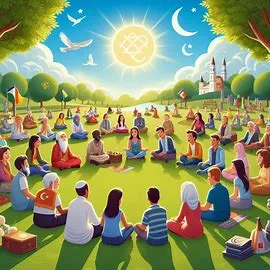
How much do you really know about the world’s religions, beliefs, traditions, sacred texts, historical figures, and fascinating customs? These Religion trivia questions and answers are designed to test your knowledge while helping you discover interesting facts about major world religions and their rich histories.
From well-known religious traditions to lesser-known facts and important figures, this collection includes easy, medium, and challenging questions.
Whether you’re studying religion, preparing for a quiz, or simply curious to learn something new, these religion trivia questions offer an engaging way to test your knowledge.
Religion Trivia Questions and Answers
1. What is the sacred text of Islam?
Answer: The Quran
Explanation: Muslims believe the Quran is the word of God revealed to the Prophet Muhammad.
Key Information: The Quran is written in Arabic and is divided into 114 chapters called surahs.
2. What is the sacred text of Christianity?
Answer: The Bible
Explanation: The Bible is the central collection of scriptures in Christianity.
Key Information: It consists of the Old Testament and New Testament.
3. What is the sacred text of Judaism?
Answer: The Torah
Explanation: The Torah contains the foundational teachings and laws of Judaism.
Key Information: It consists of the first five books of the Hebrew Bible.
4. Who is considered the founder of Buddhism?
Answer: Siddhartha Gautama, the Buddha
Explanation: Siddhartha Gautama was a spiritual teacher whose teachings became the foundation of Buddhism.
Key Information: “Buddha” means “the awakened one.”
5. What is the Hindu sacred collection of ancient texts called?
Answer: The Vedas
Explanation: The Vedas are among the oldest sacred texts associated with Hinduism.
Key Information: The four Vedas are Rigveda, Samaveda, Yajurveda, and Atharvaveda.
6. What is the central place of worship in Islam called?
Answer: A mosque
Explanation: Muslims gather in mosques for prayer, community activities, and religious learning.
Key Information: The Arabic word for mosque is “masjid.”
7. What is the Jewish place of worship called?
Answer: Synagogue
Explanation: A synagogue is a place where Jewish communities gather for prayer, Torah study, and communal activities.
Key Information: Synagogues can also serve educational and community functions.
8. What is the Christian place of worship commonly called?
Answer: Church
Explanation: Christians gather in churches for worship, prayer, teaching, and religious ceremonies.
Key Information: Different Christian denominations use various forms of church architecture and worship.
9. What is the Hindu festival known as the Festival of Lights?
Answer: Diwali
Explanation: Diwali is a major Hindu festival associated with light overcoming darkness and good overcoming evil.
Key Information: It is celebrated with lamps, prayers, decorations, and family gatherings.
10. What is the Islamic month of fasting called?
Answer: Ramadan
Explanation: During Ramadan, Muslims fast from dawn until sunset and devote additional attention to prayer and charity.
Key Information: Ramadan is the ninth month of the Islamic lunar calendar.
11. What is the pilgrimage to Mecca called in Islam?
Answer: Hajj
Explanation: Hajj is the major pilgrimage to Mecca that Muslims who are physically and financially able are expected to perform at least once.
Key Information: Hajj takes place during the Islamic month of Dhul-Hijjah.
12. What is the Christian celebration of Jesus Christ’s resurrection called?
Answer: Easter
Explanation: Easter commemorates the resurrection of Jesus, which is central to Christian belief.
Key Information: Easter is celebrated on different dates each year.
13. What is the Jewish festival commemorating the rededication of the Temple called?
Answer: Hanukkah
Explanation: Hanukkah commemorates the rededication of the Second Temple in Jerusalem.
Key Information: It is traditionally celebrated for eight nights.
14. What is the Buddhist term for the cycle of birth, death, and rebirth?
Answer: Samsara
Explanation: Samsara refers to the continuing cycle of existence from which Buddhists seek liberation.
Key Information: The goal of Buddhist practice is traditionally described as achieving Nirvana.
15. What is the Hindu concept of moral cause and effect called?
Answer: Karma
Explanation: Karma refers broadly to the consequences associated with a person’s actions and intentions.
Key Information: Karma is an important concept in several Indian religious traditions.
16. What is the Sikh place of worship called?
Answer: Gurdwara
Explanation: Sikhs gather in gurdwaras for prayer, scripture readings, and community service.
Key Information: Many gurdwaras provide free communal meals called langar.
17. Who founded Sikhism?
Answer: Guru Nanak
Explanation: Guru Nanak was the first of the ten Sikh Gurus and established the foundations of Sikh teachings.
Key Information: He lived during the 15th and early 16th centuries.
18. What is the sacred scripture of Sikhism called?
Answer: Guru Granth Sahib
Explanation: The Guru Granth Sahib contains hymns and teachings central to Sikh faith and worship.
Key Information: Sikhs regard it as their eternal Guru.
19. What is the central ethical teaching known as the Golden Rule?
Answer: Treat others as you would want to be treated
Explanation: Similar versions of this principle appear in several religious and philosophical traditions.
Key Information: It emphasizes empathy, fairness, and respect toward others.
20. What is the term for a person who follows the teachings of Christianity?
Answer: Christian
Explanation: Christians are followers of Jesus Christ and the teachings of Christianity.
Key Information: Christianity includes many denominations and traditions.
Read More: 127+ Islamic Trivia Questions
Religion Trivia Questions and Answers for Adults
1. What is the holiest city in Islam?
Answer: Mecca
Explanation: Mecca is the birthplace of the Prophet Muhammad and the location of the Kaaba.
Key Information: Muslims around the world face the Kaaba during daily prayers.
2. What is the second-holiest city in Islam?
Answer: Medina
Explanation: Medina is where the Prophet Muhammad migrated and where he established the first Muslim community.
Key Information: The Prophet’s Mosque, Al-Masjid an-Nabawi, is located there.
3. What is the holiest city in Judaism?
Answer: Jerusalem
Explanation: Jerusalem has been central to Jewish religious history for thousands of years.
Key Information: The Western Wall is one of Judaism’s most important sacred sites.
4. What is the holiest city in Christianity?
Answer: Jerusalem
Explanation: Jerusalem is closely associated with major events in the life, death, and resurrection of Jesus.
Key Information: The Church of the Holy Sepulchre is one of Christianity’s most important holy sites.
5. What is the name of the sacred black stone associated with the Kaaba?
Answer: The Black Stone
Explanation: The Black Stone is set into the eastern corner of the Kaaba in Mecca.
Key Information: It is traditionally associated with the pilgrimage rituals of Hajj and Umrah.
6. What is the Kaaba?
Answer: A sacred structure in the Great Mosque of Mecca
Explanation: The Kaaba is the focal point toward which Muslims face during prayer.
Key Information: Muslims perform circumambulation, called tawaf, around the Kaaba during pilgrimage.
7. What is the Jewish day of rest called?
Answer: Shabbat
Explanation: Shabbat begins before sunset on Friday and ends after nightfall on Saturday.
Key Information: It is traditionally observed as a weekly day of rest and worship.
8. What is the Christian season leading up to Christmas called?
Answer: Advent
Explanation: Advent is a period of preparation and expectation before Christmas.
Key Information: It traditionally lasts for four Sundays before Christmas.
9. What is the Christian season of fasting before Easter called?
Answer: Lent
Explanation: Lent is traditionally a period of prayer, fasting, repentance, and spiritual preparation.
Key Information: It lasts approximately 40 days, reflecting the biblical account of Jesus fasting in the wilderness.
10. What is the Buddhist place of worship commonly called?
Answer: Temple
Explanation: Buddhist temples are places for meditation, prayer, teachings, and offerings.
Key Information: Buddhist temples vary greatly in design across different countries and traditions.
11. What is Nirvana in Buddhism?
Answer: Liberation from suffering and the cycle of rebirth
Explanation: Nirvana represents the end of craving and the liberation sought through Buddhist practice.
Key Information: Different Buddhist traditions explain Nirvana in somewhat different ways.
12. What is the Noble Eightfold Path?
Answer: A Buddhist path of practice leading toward liberation
Explanation: It consists of eight interconnected practices concerning wisdom, ethical conduct, and mental discipline.
Key Information: It is one of the central teachings of Buddhism.
13. What is the Hindu sacred river traditionally considered especially holy?
Answer: The Ganges
Explanation: The Ganges is deeply sacred in Hindu tradition and is associated with purification and religious pilgrimage.
Key Information: It is also known as the Ganga.
14. What is the Hindu festival celebrating the birth of Krishna called?
Answer: Janmashtami
Explanation: Janmashtami commemorates the birth of Krishna, one of Hinduism’s most widely revered deities.
Key Information: Celebrations often include fasting, devotional singing, and midnight ceremonies.
15. What is the sacred symbol commonly associated with Hinduism?
Answer: Om
Explanation: Om is a sacred syllable and symbol used in Hindu prayer, meditation, and spiritual practice.
Key Information: It is also represented as the Sanskrit character ॐ.
16. What is the sacred symbol of Sikhism called?
Answer: Khanda
Explanation: The Khanda is a prominent symbol representing Sikh beliefs and principles.
Key Information: It consists of several elements, including a double-edged sword and two kirpans.
17. What is the Zoroastrian sacred scripture called?
Answer: Avesta
Explanation: The Avesta is the collection of sacred texts central to Zoroastrianism.
Key Information: Zoroastrianism is one of the world’s oldest continuously practiced religions.
18. Who is the central prophet of Zoroastrianism?
Answer: Zoroaster
Explanation: Zoroaster, also known as Zarathustra, is regarded as the prophet and founder of Zoroastrianism.
Key Information: His teachings emphasize the struggle between truth and falsehood.
19. What is the Baha’i holy book called?
Answer: The Kitáb-i-Aqdas
Explanation: The Kitáb-i-Aqdas is one of the central sacred texts of the Baháʼí Faith.
Key Information: It was written by Bahá’u’lláh, the founder of the Baháʼí Faith.
20. What is Jainism’s central principle of nonviolence called?
Answer: Ahimsa
Explanation: Ahimsa means avoiding harm to living beings and is one of the most important principles in Jainism.
Key Information: The principle also has major significance in Hinduism and Buddhism.
Read Also: 150+ Civil Rights Trivia Questions and Answers
Christian Religion Trivia Questions and Answers
1. Who was the first prophet in Islam according to Islamic tradition?
Answer: Adam
Explanation: Islam teaches that Adam was the first human being and the first prophet.
Key Information: Muslims believe that all prophets taught submission to one God.
2. Who is considered the final prophet in Islam?
Answer: Muhammad
Explanation: Muslims believe Muhammad is the final prophet sent by God.
Key Information: He is commonly called the Seal of the Prophets.
3. How many pillars are there in Islam?
Answer: Five
Explanation: The Five Pillars summarize fundamental acts and beliefs of Islamic practice.
Key Information: They are Shahada, Salah, Zakat, Sawm, and Hajj.
4. What is the Islamic declaration of faith called?
Answer: Shahada
Explanation: The Shahada affirms belief in the oneness of God and Muhammad as His messenger.
Key Information: It is the first of the Five Pillars of Islam.
5. How many times a day do Muslims traditionally perform obligatory prayers?
Answer: Five times
Explanation: Muslims perform five daily obligatory prayers at specified times throughout the day.
Key Information: The prayers are Fajr, Dhuhr, Asr, Maghrib, and Isha.
6. What is obligatory charity in Islam called?
Answer: Zakat
Explanation: Zakat is a form of obligatory charitable giving for Muslims who meet the required financial conditions.
Key Information: It is one of the Five Pillars of Islam.
7. What is fasting during Ramadan called?
Answer: Sawm
Explanation: Sawm refers to fasting from dawn until sunset during Ramadan.
Key Information: Muslims also emphasize prayer, charity, and self-discipline during Ramadan.
8. What is the Jewish sacred collection of writings called?
Answer: Tanakh
Explanation: The Tanakh is the canonical collection of Jewish scriptures.
Key Information: It is divided into Torah, Nevi’im, and Ketuvim.
9. How many books are in the Torah?
Answer: Five
Explanation: The Torah consists of Genesis, Exodus, Leviticus, Numbers, and Deuteronomy.
Key Information: These are also known as the Five Books of Moses.
10. Who is traditionally considered the founder of Christianity?
Answer: Jesus Christ
Explanation: Christianity is centered on the life, teachings, death, and resurrection of Jesus.
Key Information: Christians believe Jesus is the Messiah and Son of God.
11. What is the Christian ceremony of initiation involving water called?
Answer: Baptism
Explanation: Baptism is a Christian rite involving water that symbolizes faith, repentance, and entry into the Christian community.
Key Information: Different Christian denominations practice baptism in different ways.
12. What is the Christian ceremony commemorating the Last Supper commonly called?
Answer: Communion
Explanation: Communion remembers Jesus’ Last Supper with his disciples through bread and wine or their equivalents.
Key Information: It is also called the Eucharist or Lord’s Supper.
13. Who was the first person to be called a pope according to Catholic tradition?
Answer: Saint Peter
Explanation: Catholic tradition considers Peter the first pope and the first bishop of Rome.
Key Information: Catholics believe Jesus entrusted Peter with a special leadership role among the apostles.
14. What is the headquarters of the Roman Catholic Church?
Answer: Vatican City
Explanation: Vatican City is an independent city-state surrounded by Rome and serves as the administrative center of the Catholic Church.
Key Information: It is the world’s smallest independent state by area and population.
15. What is the Hindu concept of duty and righteous living called?
Answer: Dharma
Explanation: Dharma refers broadly to duty, moral order, right conduct, and the responsibilities appropriate to one’s life and circumstances.
Key Information: Its meaning varies depending on context and Hindu tradition.
16. What is the Buddhist term for suffering or unsatisfactoriness?
Answer: Dukkha
Explanation: Dukkha is a central concept in Buddhism describing suffering, dissatisfaction, and the unstable nature of conditioned existence.
Key Information: Understanding dukkha is central to the Buddha’s teaching of the Four Noble Truths.
17. What are the Four Noble Truths?
Answer: Buddhist teachings about suffering, its cause, its cessation, and the path leading to its cessation
Explanation: They form one of the foundational frameworks of Buddhist teaching.
Key Information: The Eightfold Path is traditionally presented as the path leading to the cessation of dukkha.
18. What is the main sacred symbol of Christianity?
Answer: The cross
Explanation: The cross represents the crucifixion of Jesus and is a central symbol of Christian faith.
Key Information: It appears prominently in Christian churches, art, and personal devotional objects.
19. What is the Jewish festival of Passover called in Hebrew?
Answer: Pesach
Explanation: Pesach commemorates the Israelites’ liberation from slavery in ancient Egypt.
Key Information: The traditional Passover meal is called a Seder.
20. What is the Islamic festival marking the end of Ramadan called?
Answer: Eid al-Fitr
Explanation: Eid al-Fitr marks the conclusion of the month of Ramadan and is celebrated with communal prayers, meals, charity, and family gatherings.
Key Information: The date follows the Islamic lunar calendar
Religion Questions for Students
1. What is the Hindu festival known as the festival of colors?
Answer: Holi
Explanation: Holi celebrates spring and is associated with themes of renewal, joy, and the triumph of good over evil.
Key Information: People traditionally celebrate by throwing colored powders and water.
2. What is the Buddhist festival celebrating the Buddha’s birth, enlightenment, and death called?
Answer: Vesak
Explanation: Vesak is an important Buddhist observance commemorating major events in the Buddha’s life.
Key Information: It is celebrated on different dates depending on the Buddhist tradition and country.
3. What is the Jain festival of forgiveness called?
Answer: Paryushana
Explanation: Paryushana is a major period of reflection, fasting, repentance, and spiritual renewal in Jainism.
Key Information: Forgiveness is an important theme during the observance.
4. What is the Sikh festival celebrating the creation of the Khalsa called?
Answer: Vaisakhi
Explanation: Vaisakhi commemorates the founding of the Khalsa by Guru Gobind Singh in 1699.
Key Information: It is also an important harvest festival in Punjab.
5. What is the Zoroastrian New Year festival called?
Answer: Nowruz
Explanation: Nowruz marks the Persian New Year and is celebrated by many Zoroastrians and other communities.
Key Information: The celebration is associated with spring and renewal.
6. What is the Jewish New Year called?
Answer: Rosh Hashanah
Explanation: Rosh Hashanah marks the beginning of the Jewish year and is a time of prayer and reflection.
Key Information: It begins the period known as the Ten Days of Repentance.
7. What is the Jewish Day of Atonement called?
Answer: Yom Kippur
Explanation: Yom Kippur is devoted to fasting, prayer, repentance, and seeking forgiveness.
Key Information: It is considered the holiest day of the Jewish year.
8. What is the Jewish festival celebrating the giving of the Torah traditionally called?
Answer: Shavuot
Explanation: Shavuot commemorates the revelation of the Torah at Mount Sinai according to Jewish tradition.
Key Information: It occurs seven weeks after Passover.
9. What is the Jewish festival of booths called?
Answer: Sukkot
Explanation: Sukkot commemorates the Israelites’ journey through the wilderness after the Exodus.
Key Information: Jews traditionally build temporary shelters called sukkot during the festival.
10. What is the Hindu festival celebrating the victory of good over evil through the story of Rama and Ravana called?
Answer: Dussehra
Explanation: Dussehra is associated with Rama’s victory over Ravana in the Ramayana tradition.
Key Information: Large effigies of Ravana are burned in many celebrations.
11. What is the Hindu festival celebrating the goddess Durga’s victory over Mahishasura called?
Answer: Durga Puja
Explanation: Durga Puja honors the goddess Durga and celebrates her victory over the buffalo demon Mahishasura.
Key Information: It is especially prominent in West Bengal and other parts of India.
12. What is the Buddhist concept of compassion called?
Answer: Karuna
Explanation: Karuna refers to compassion and the wish to relieve suffering.
Key Information: It is an important virtue across several Buddhist traditions.
13. What is the Buddhist concept of loving-kindness called?
Answer: Metta
Explanation: Metta means loving-kindness or benevolence toward oneself and other beings.
Key Information: Metta meditation is a well-known Buddhist practice.
14. What is the Hindu concept of liberation from the cycle of rebirth called?
Answer: Moksha
Explanation: Moksha refers to spiritual liberation from samsara, the cycle of birth and rebirth.
Key Information: Different Hindu traditions describe the path to moksha in different ways.
15. What is the Sikh principle of selfless service called?
Answer: Seva
Explanation: Seva means voluntary selfless service performed for the benefit of others.
Key Information: Seva is commonly practiced in gurdwaras and Sikh communities.
16. What is the Sikh communal kitchen called?
Answer: Langar
Explanation: Langar provides free meals to people regardless of religion, caste, gender, or social status.
Key Information: It reflects the Sikh emphasis on equality and community service.
17. What is the Islamic pilgrimage performed outside the specific Hajj period called?
Answer: Umrah
Explanation: Umrah is a pilgrimage to Mecca that can be performed at various times of the year.
Key Information: Unlike Hajj, Umrah is not one of the Five Pillars.
18. What is the Islamic direction of prayer called?
Answer: Qibla
Explanation: Qibla is the direction toward the Kaaba in Mecca that Muslims face during prayer.
Key Information: Mosques commonly indicate the qibla with a niche called a mihrab.
19. What is the Christian celebration of Jesus’ birth called?
Answer: Christmas
Explanation: Christmas commemorates the birth of Jesus Christ.
Key Information: It is traditionally celebrated on December 25 in many Christian traditions.
20. What is the Christian celebration of Jesus’ ascension called?
Answer: Ascension Day
Explanation: Ascension Day commemorates the Christian belief that Jesus ascended into heaven after his resurrection.
Key Information: It is traditionally observed 40 days after Easter.
World Religion Trivia Questions and Answers
1. What is the sacred language of the Quran?
Answer: Arabic
Explanation: The Quran was revealed in Arabic to the Prophet Muhammad.
Key Information: Classical Quranic Arabic has had a major influence on the Arabic language and Islamic scholarship.
2. What language was much of the Old Testament originally written in?
Answer: Hebrew
Explanation: Most of the Hebrew Bible was written in Biblical Hebrew, with some portions in Aramaic.
Key Information: Hebrew is the primary language of the Tanakh.
3. What language was the New Testament primarily written in?
Answer: Koine Greek
Explanation: The books of the New Testament were primarily composed in Koine Greek.
Key Information: Koine Greek was widely used throughout the eastern Roman world.
4. What language are many of the earliest Buddhist scriptures written in?
Answer: Pali
Explanation: The Pali Canon, an important collection of Theravada Buddhist scriptures, is preserved in the Pali language.
Key Information: Pali is closely related to Sanskrit and other ancient Indo-Aryan languages.
5. What is the Hindu sacred language traditionally associated with the Vedas?
Answer: Sanskrit
Explanation: The Vedas and many other important Hindu scriptures were composed in forms of Sanskrit.
Key Information: Sanskrit remains an important liturgical language in Hindu traditions.
6. What is the sacred scripture of Buddhism called in the Theravada tradition?
Answer: The Pali Canon
Explanation: The Pali Canon contains teachings attributed to the Buddha and other early Buddhist material.
Key Information: It is also known as the Tipitaka or Tripitaka.
7. What does the word “Torah” generally mean?
Answer: Teaching or instruction
Explanation: Torah comes from a Hebrew word associated with teaching, instruction, or law.
Key Information: It can refer specifically to the Five Books of Moses or more broadly to Jewish teaching.
8. What is the first book of the Bible?
Answer: Genesis
Explanation: Genesis begins with accounts of creation, early humanity, and the ancestors of the Israelite people.
Key Information: It is the first book of both the Christian Old Testament and the Jewish Torah.
9. What is the last book of the Christian New Testament?
Answer: Revelation
Explanation: Revelation contains apocalyptic visions traditionally attributed to John.
Key Information: It is also known as the Apocalypse of John.
10. What is the first month of the Islamic calendar?
Answer: Muharram
Explanation: Muharram is the first month of the Islamic lunar calendar.
Key Information: It is considered one of the four sacred months in Islam.
11. What is the ninth month of the Islamic calendar?
Answer: Ramadan
Explanation: Ramadan is the month during which Muslims traditionally fast from dawn until sunset.
Key Information: The Quran is traditionally believed to have begun being revealed during Ramadan.
12. What is the tenth month of the Islamic calendar?
Answer: Shawwal
Explanation: Shawwal follows Ramadan in the Islamic lunar calendar.
Key Information: Eid al-Fitr begins on the first day of Shawwal.
13. What is the Christian prayer commonly known as the Lord’s Prayer?
Answer: A prayer taught by Jesus to his disciples
Explanation: The prayer appears in the Gospels of Matthew and Luke.
Key Information: It begins with the words “Our Father” in many English translations.
14. What is the central prayer of Judaism called?
Answer: Amidah
Explanation: The Amidah is a central component of Jewish daily and festival prayer services.
Key Information: It is also known as the Shemoneh Esrei.
15. What is the Jewish prayer declaring God’s oneness called?
Answer: Shema
Explanation: The Shema is a foundational Jewish declaration of faith in one God.
Key Information: Its central verse comes from Deuteronomy 6:4.
16. What is the Christian sacrament involving bread and wine called in Catholicism?
Answer: Eucharist
Explanation: The Eucharist commemorates the Last Supper and is central to Catholic worship.
Key Information: Different Christian denominations use terms such as Communion or the Lord’s Supper.
17. What is the Buddhist community of monks and nuns called?
Answer: Sangha
Explanation: Sangha commonly refers to the Buddhist monastic community, though its meaning can vary by tradition.
Key Information: It is one of the Three Jewels of Buddhism.
18. What are the Three Jewels of Buddhism?
Answer: Buddha, Dharma, and Sangha
Explanation: Buddhists traditionally take refuge in the Buddha, his teachings, and the Buddhist community.
Key Information: They form a foundational expression of Buddhist commitment.
19. What are the three main branches of Christianity?
Answer: Catholicism, Eastern Orthodoxy, and Protestantism
Explanation: These are broad historical traditions within Christianity, though Christianity contains many denominations and communities.
Key Information: The Protestant Reformation began in the 16th century.
20. What are the two major branches of Islam?
Answer: Sunni and Shia
Explanation: Sunni and Shia Islam developed distinct traditions concerning religious authority and leadership after the death of Muhammad.
Key Information: Both share the Quran, belief in one God, and many foundational Islamic beliefs.
Easy Religion Trivia Questions and Answers
1. What is the name of the mountain where Moses is traditionally believed to have received the Ten Commandments?
Answer: Mount Sinai
Explanation: According to the biblical account, Moses received the commandments from God at Mount Sinai.
Key Information: Mount Sinai is an important sacred site in Judaism, Christianity, and Islam.
2. How many commandments are in the biblical Ten Commandments?
Answer: Ten
Explanation: The Ten Commandments are a set of religious and ethical laws found in the Hebrew Bible and Christian Old Testament.
Key Information: Their numbering and wording vary somewhat among religious traditions.
3. Who is traditionally regarded as the first patriarch of Judaism?
Answer: Abraham
Explanation: Abraham is regarded as a foundational figure in Judaism and is also important in Christianity and Islam.
Key Information: He is traditionally considered the ancestor of the Israelites through Isaac.
4. Who was Abraham’s son with Sarah?
Answer: Isaac
Explanation: Isaac is one of the patriarchs in the Hebrew Bible and the son of Abraham and Sarah.
Key Information: Isaac’s son Jacob later becomes known as Israel.
5. What was Jacob’s other name?
Answer: Israel
Explanation: According to the biblical account, Jacob receives the name Israel after wrestling with a mysterious figure.
Key Information: The twelve tribes of Israel are traditionally associated with Jacob’s twelve sons.
6. Who was Moses’ brother?
Answer: Aaron
Explanation: Aaron served as Moses’ spokesperson during the Israelites’ Exodus from Egypt.
Key Information: Aaron is traditionally regarded as the first high priest of the Israelites.
7. Who was Moses’ sister?
Answer: Miriam
Explanation: Miriam is described as a prophetess and an important leader among the Israelites.
Key Information: She is traditionally regarded as the sister of Moses and Aaron.
8. Who was the first king of ancient Israel according to the Hebrew Bible?
Answer: Saul
Explanation: Saul was chosen as the first king of Israel during a period when the Israelites sought centralized leadership.
Key Information: He was later succeeded by David.
9. Who was King David’s son who became king after him?
Answer: Solomon
Explanation: Solomon succeeded David and became famous for his wisdom and wealth.
Key Information: Biblical tradition associates Solomon with the construction of the First Temple in Jerusalem.
10. Who is traditionally credited with building the First Temple in Jerusalem?
Answer: Solomon
Explanation: The Hebrew Bible describes Solomon as commissioning the construction of the First Temple.
Key Information: The Temple became the central sanctuary of ancient Israelite worship.
11. Who was the mother of Jesus?
Answer: Mary
Explanation: Mary is described in the New Testament as the mother of Jesus.
Key Information: She is highly honored in Christianity, especially in Catholic and Eastern Orthodox traditions.
12. Who was Jesus’ earthly guardian or legal father?
Answer: Joseph
Explanation: Joseph is described in the New Testament as Mary’s husband and the legal father of Jesus.
Key Information: He is honored as Saint Joseph in many Christian traditions.
13. Who baptized Jesus according to the New Testament?
Answer: John the Baptist
Explanation: John baptized Jesus in the Jordan River and preached repentance.
Key Information: John is an important prophetic figure in Christianity and Islam.
14. What river is traditionally associated with the baptism of Jesus?
Answer: The Jordan River
Explanation: The Gospels describe Jesus being baptized by John in the Jordan.
Key Information: The Jordan River is an important religious site for Christians and Jews.
15. How many apostles did Jesus traditionally choose?
Answer: Twelve
Explanation: The New Testament describes Jesus selecting twelve apostles as his principal disciples.
Key Information: They became central figures in the early Christian movement.
16. Which apostle is traditionally known for betraying Jesus?
Answer: Judas Iscariot
Explanation: The Gospels describe Judas as betraying Jesus to the authorities for payment.
Key Information: Judas later regrets his actions in the biblical accounts.
17. Which apostle is traditionally known for denying Jesus three times?
Answer: Peter
Explanation: The Gospels describe Peter denying that he knew Jesus three times before Jesus’ crucifixion.
Key Information: Peter later becomes one of the most prominent leaders of the early Christian movement.
18. Who is traditionally considered the first martyr of Christianity?
Answer: Saint Stephen
Explanation: The Book of Acts describes Stephen being executed for his faith and preaching.
Key Information: His story appears in Acts chapters 6 and 7.
19. What is the holy city associated with the Buddha’s enlightenment?
Answer: Bodh Gaya
Explanation: Buddhist tradition holds that Siddhartha Gautama attained enlightenment while meditating beneath the Bodhi Tree at Bodh Gaya.
Key Information: The Mahabodhi Temple complex is located there.
20. Under what type of tree did the Buddha attain enlightenment?
Answer: Bodhi Tree
Explanation: Buddhist tradition states that Siddhartha Gautama attained enlightenment while meditating beneath a sacred fig tree.
Key Information: The Bodhi Tree is one of the most important symbols in Buddhism.
Best Religion Trivia Questions and Answers
1. What is the holiest shrine in Sikhism?
Answer: Golden Temple
Explanation: The Golden Temple, officially known as Harmandir Sahib, is the most important pilgrimage site in Sikhism.
Key Information: It is located in Amritsar, Punjab, India.
2. What is the original name of the Golden Temple?
Answer: Harmandir Sahib
Explanation: Harmandir Sahib means “Abode of God” and is the formal name of the shrine.
Key Information: The temple is surrounded by the sacred pool called Amrit Sarovar.
3. What is the sacred pool surrounding the Golden Temple called?
Answer: Amrit Sarovar
Explanation: Amrit Sarovar is the large pool of holy water surrounding Harmandir Sahib.
Key Information: Pilgrims traditionally bathe in the pool as an act of devotion.
4. Who founded the city of Amritsar?
Answer: Guru Ram Das
Explanation: The fourth Sikh Guru established the settlement that developed into Amritsar.
Key Information: Amritsar became one of the most important centers of Sikhism.
5. Who founded the Khalsa?
Answer: Guru Gobind Singh
Explanation: Guru Gobind Singh established the Khalsa in 1699 as a community dedicated to Sikh faith and principles.
Key Information: The founding took place at Anandpur Sahib.
6. What are the Five Ks of Sikhism?
Answer: Kesh, Kangha, Kara, Kachera, and Kirpan
Explanation: These five articles of faith are traditionally worn by initiated members of the Khalsa.
Key Information: Each represents an important aspect of Sikh identity and discipline.
7. What does Kesh mean?
Answer: Uncut hair
Explanation: Kesh represents respect for the natural form given by God.
Key Information: Maintaining uncut hair is an important Sikh practice.
8. What is a Kara?
Answer: A steel or iron bracelet
Explanation: The Kara is worn around the wrist and serves as a reminder of faith and ethical conduct.
Key Information: It is one of the Five Ks.
9. What is a Kangha?
Answer: A small wooden comb
Explanation: The Kangha is used to keep the hair clean and orderly.
Key Information: It is traditionally kept with the uncut hair.
10. What is a Kachera?
Answer: A specific type of undergarment
Explanation: Kachera symbolizes modesty, discipline, and self-control.
Key Information: It is one of the Five Ks worn by initiated Sikhs.
11. What is a Kirpan?
Answer: A ceremonial sword or blade
Explanation: The Kirpan symbolizes the duty to protect the innocent and stand against injustice.
Key Information: It is one of the Five Ks of Sikhism.
12. Who was the tenth Sikh Guru?
Answer: Guru Gobind Singh
Explanation: Guru Gobind Singh was the tenth and final human Sikh Guru.
Key Information: He established the Khalsa and designated the Guru Granth Sahib as the eternal Guru.
13. Who was the first Sikh Guru?
Answer: Guru Nanak
Explanation: Guru Nanak founded Sikhism and taught devotion to one God, equality, and honest living.
Key Information: He traveled widely to share his teachings.
14. What is the Sikh scripture that is regarded as the eternal Guru?
Answer: Guru Granth Sahib
Explanation: Sikhs regard the Guru Granth Sahib as the living and eternal spiritual authority of the Sikh community.
Key Information: It contains hymns and teachings from Sikh Gurus and other respected spiritual figures.
15. What is the Sikh concept of remembering God’s name called?
Answer: Naam Simran
Explanation: Naam Simran refers to meditative remembrance or repetition of God’s name.
Key Information: It is an important practice for spiritual awareness.
16. What is the Sikh principle of earning an honest living called?
Answer: Kirat Karo
Explanation: Kirat Karo teaches Sikhs to earn their livelihood honestly through honorable work.
Key Information: It is commonly presented alongside Naam Japna and Vand Chakna.
17. What does Vand Chakna mean?
Answer: Sharing with others
Explanation: Vand Chakna encourages sharing one’s earnings and resources with those in need.
Key Information: The principle supports equality, generosity, and community service.
18. What is the Sikh concept of equality called in practice through communal dining?
Answer: Langar
Explanation: Langar provides free meals to everyone regardless of religion, caste, gender, or social status.
Key Information: It is a major expression of Sikh equality and selfless service.
19. What is the name of the Sikh holy city associated with Guru Nanak’s birthplace?
Answer: Nankana Sahib
Explanation: Nankana Sahib is the birthplace of Guru Nanak.
Key Information: It is located in present-day Punjab, Pakistan.
20. What is the name of the Sikh pilgrimage site where Guru Nanak is traditionally believed to have been born?
Answer: Gurdwara Janam Asthan
Explanation: Gurdwara Janam Asthan marks the traditional birthplace of Guru Nanak in Nankana Sahib.
Key Information: It is one of the most important Sikh historical sites in Pakistan.
FAQS
1. What is the holy book of Christianity?
Answer: The holy book of Christianity is the Bible. It contains the Old Testament and the New Testament and is central to Christian faith and teachings.
2. What is the holy book of Islam?
Answer: The holy book of Islam is the Quran. Muslims believe it is the word of God revealed to the Prophet Muhammad.
3. What is the holy book of Judaism?
Answer: The Torah is the central sacred text of Judaism. It contains the foundational teachings and laws of Jewish tradition.
4. What is Buddhism’s main goal?
Answer: A central goal in Buddhism is achieving enlightenment and freedom from suffering. This is traditionally associated with attaining Nirvana.
Conclusion
How many Religion trivia questions and answers did you get right? Whether you achieved a perfect score or discovered some new facts along the way, this quiz is a great way to explore the diverse beliefs, traditions, histories, and cultures found around the world.
Share your score with friends and family and challenge them to beat your result. Keep exploring for more interesting trivia questions and answers on history, culture, geography, and other fascinating topics.
Read also:
165+ The Sopranos Trivia Questions and Answers
176+ Islamic Trivia Questions and Answers