
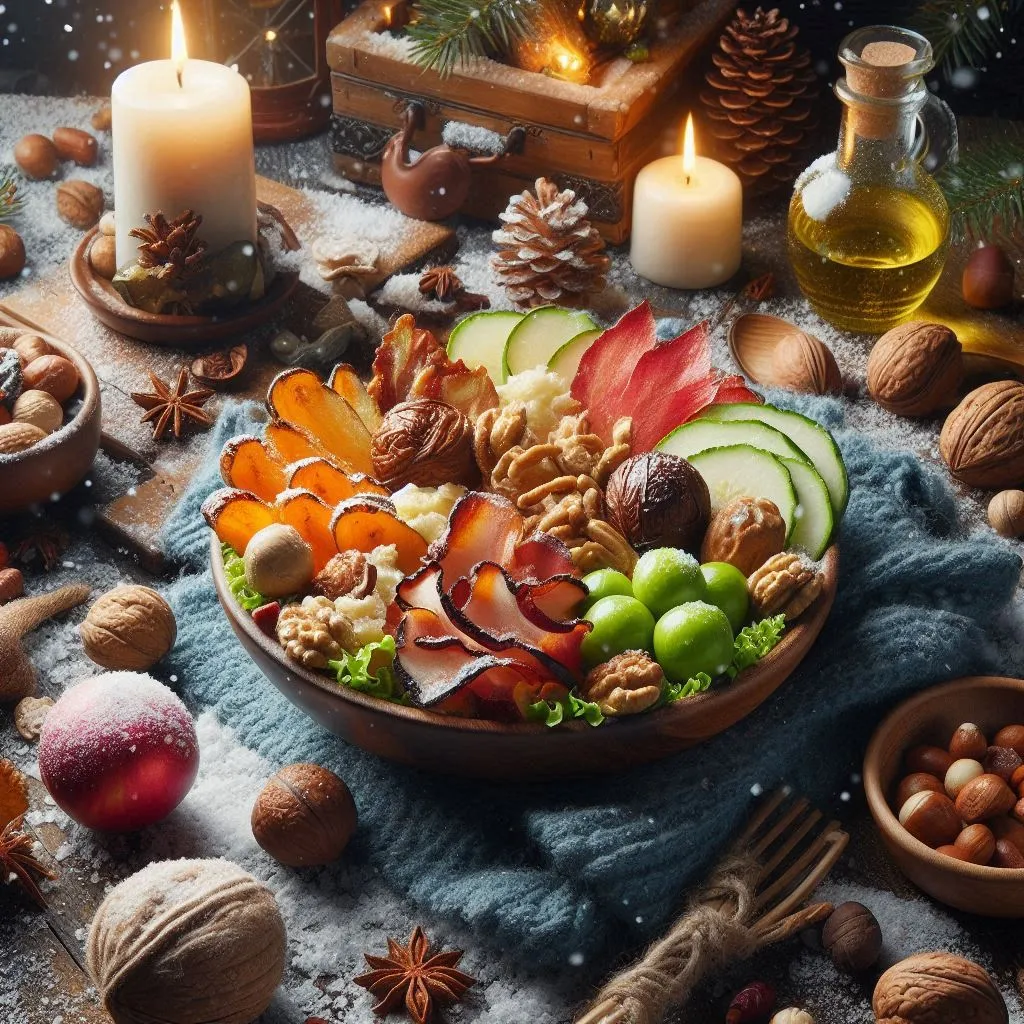
Winter is the perfect season to gather around the table, enjoy comforting meals, and create lasting memories with family and friends. From hearty soups and roasted vegetables to festive holiday desserts and warm drinks, winter foods are packed with rich flavors and seasonal traditions.
If you love discovering fun food facts or want to add some excitement to your next holiday party, these Winter Food Trivia Questions and Answers are just what you need.
Whether you’re hosting a cozy game night, planning a classroom activity, organizing a holiday gathering, or simply testing your own knowledge, this collection has something for everyone.
You’ll find easy, medium, and challenging questions covering classic winter dishes, seasonal ingredients, holiday treats, international winter cuisine, and fascinating food facts.
Get ready to challenge your friends, learn something new, and celebrate the flavors of the season with these fun and engaging winter food trivia questions!
Fun Winter Food Trivia Questions And Answers
1. Which fruit is traditionally made into a tart sauce for Thanksgiving and winter holiday dinners?
A. Apple
B. Cranberry
C. Cherry
D. Orange
Correct Answer: B. Cranberry
Explanation: Cranberries are a classic winter fruit used to make cranberry sauce, a favorite side dish during Thanksgiving and Christmas dinners.
2. What warm holiday drink is made with milk, eggs, sugar, and spices?
A. Lemonade
B. Eggnog
C. Iced Tea
D. Fruit Punch
Correct Answer: B. Eggnog
Explanation: Eggnog is a creamy holiday beverage flavored with spices like nutmeg and cinnamon, making it a winter tradition.
3. Which spice is commonly added to gingerbread cookies?
A. Ginger
B. Basil
C. Dill
D. Rosemary
Correct Answer: A. Ginger
Explanation: Ground ginger gives gingerbread cookies their signature warm, spicy flavor.
4. Which soup is a comforting favorite on cold winter days?
A. Gazpacho
B. Chicken Noodle Soup
C. Potato Salad
D. Coleslaw
Correct Answer: B. Chicken Noodle Soup
Explanation: Chicken noodle soup is served hot and is one of the most popular comfort foods during winter.
5. What type of squash is often used in creamy winter soups?
A. Zucchini
B. Butternut Squash
C. Cucumber
D. Eggplant
Correct Answer: B. Butternut Squash
Explanation: Butternut squash has a naturally sweet flavor and smooth texture, making it ideal for hearty soups.
6. Which nut is famously roasted during the holiday season?
A. Almonds
B. Chestnuts
C. Walnuts
D. Pecans
Correct Answer: B. Chestnuts
Explanation: Roasted chestnuts have been a traditional winter snack for centuries and are even mentioned in classic holiday songs.
7. Which dessert is a Thanksgiving and Christmas favorite in North America?
A. Pumpkin Pie
B. Lemon Tart
C. Chocolate Mousse
D. Cheesecake
Correct Answer: A. Pumpkin Pie
Explanation: Pumpkin pie is a classic holiday dessert made with pumpkin puree and warm spices.
8. What hot drink is often topped with marshmallows?
A. Coffee
B. Tea
C. Hot Chocolate
D. Apple Juice
Correct Answer: C. Hot Chocolate
Explanation: Hot chocolate is a winter favorite, especially when topped with marshmallows or whipped cream.
9. Which spice comes from the bark of a tree?
A. Nutmeg
B. Cinnamon
C. Ginger
D. Cloves
Correct Answer: B. Cinnamon
Explanation: Cinnamon is harvested from the inner bark of trees in the Cinnamomum family.
10. Which citrus fruit is especially popular during the winter holidays?
A. Watermelon
B. Mandarin Orange
C. Kiwi
D. Grapes
Correct Answer: B. Mandarin Orange
Explanation: Mandarins are sweet, easy to peel, and commonly enjoyed during the holiday season.
11. Which root vegetable is commonly mashed and served with gravy?
A. Radish
B. Potato
C. Beet
D. Turnip
Correct Answer: B. Potato
Explanation: Mashed potatoes are one of the most popular side dishes for winter holiday meals.
12. What ingredient gives peppermint bark its refreshing flavor?
A. Mint
B. Vanilla
C. Lemon
D. Coconut
Correct Answer: A. Mint
Explanation: Peppermint bark combines chocolate with peppermint candy or peppermint extract.
13. Which dried fruit is a traditional ingredient in fruitcake?
A. Raisins
B. Bananas
C. Mangoes
D. Peaches
Correct Answer: A. Raisins
Explanation: Raisins are one of the most common dried fruits used in holiday fruitcakes.
14. Which vegetable is commonly roasted alongside turkey during winter holidays?
A. Carrots
B. Lettuce
C. Cucumbers
D. Spinach
Correct Answer: A. Carrots
Explanation: Roasted carrots are a colorful and flavorful addition to festive holiday meals.
15. Which sweet topping is commonly poured over pancakes on chilly mornings?
A. Soy Sauce
B. Maple Syrup
C. Mustard
D. Barbecue Sauce
Correct Answer: B. Maple Syrup
Explanation: Maple syrup is a classic topping for pancakes and waffles, especially during cozy winter breakfasts.
16. Which grain is most commonly used to make holiday stuffing?
A. Rice
B. Bread
C. Barley
D. Oats
Correct Answer: B. Bread
Explanation: Traditional stuffing is made from seasoned bread cubes mixed with herbs and vegetables.
17. Which warm dessert features baked apples and a crispy topping?
A. Apple Crisp
B. Ice Cream Sundae
C. Lemon Pie
D. Brownie
Correct Answer: A. Apple Crisp
Explanation: Apple crisp is a comforting dessert made with baked apples and a buttery oat topping.
18. Which berry is commonly made into a holiday sauce?
A. Blueberry
B. Cranberry
C. Raspberry
D. Blackberry
Correct Answer: B. Cranberry
Explanation: Cranberry sauce is a staple side dish at many Thanksgiving and Christmas dinners.
19. Which holiday cookie is often shaped like people or houses?
A. Sugar Cookie
B. Gingerbread Cookie
C. Oatmeal Cookie
D. Peanut Butter Cookie
Correct Answer: B. Gingerbread Cookie
Explanation: Gingerbread cookies are often decorated as people, stars, or houses during the holiday season.
20. Which spice is often sprinkled on hot chocolate and holiday desserts?
A. Oregano
B. Cinnamon
C. Parsley
D. Sage
Correct Answer: B. Cinnamon
Explanation: Cinnamon adds warmth, sweetness, and a festive aroma to many winter foods and drinks.
Winter Food Trivia Questions And Answers For Adults
1. What popular winter drink is made by heating red wine with spices like cinnamon, cloves, and citrus?
A) Eggnog
B) Mulled wine
C) Hot toddy
D) Glögg only
Correct Answer: B) Mulled wine
Explanation: Mulled wine (known as Glühwein in Germany and Glögg in Scandinavia) is a classic winter warmer enjoyed at Christmas markets across Europe.
2. Which root vegetable becomes sweeter after a frost and is a staple in winter stews and mashed dishes?
A) Carrot
B) Potato
C) Brussels sprouts
D) Parsnip
Correct Answer: D) Parsnip
Explanation: Cold temperatures convert starches in parsnips into sugars, making them naturally sweeter in winter.
3. What traditional British Christmas dessert is often set alight with brandy before serving?
A) Trifle
B) Christmas pudding
C) Mince pie
D) Fruitcake
Correct Answer: B) Christmas pudding
Explanation: Also called plum pudding, it is steamed for hours and traditionally flamed with brandy for a dramatic holiday presentation.
4. Which citrus fruit was once a prized winter gift placed in Christmas stockings?
A) Lemon
B) Grapefruit
C) Orange
D) Lime
Correct Answer: C) Orange
Explanation: Fresh oranges were rare and expensive in winter months, making them a special treat for children.
5. What creamy winter soup is traditionally made with leeks, potatoes, and cream?
A) Tomato soup
B) Potato leek soup
C) Clam chowder
D) Minestrone
Correct Answer: B) Potato leek soup
Explanation: This comforting soup is a classic cold-weather dish. The chilled version is known as Vichyssoise.
6. Which spice, made from tree bark, is essential in gingerbread, mulled drinks, and winter baking?
A) Nutmeg
B) Cinnamon
C) Cardamom
D) Clove
Correct Answer: B) Cinnamon
Explanation: Cinnamon adds a warm, sweet aroma and is one of the most-used spices in holiday and winter recipes.
7. What German Christmas bread is packed with dried fruits, nuts, and often dusted with powdered sugar?
A) Brioche
B) Stollen
C) Baguette
D) Focaccia
Correct Answer: B) Stollen
Explanation: The powdered sugar coating is said to represent a snowy winter landscape.
8. Which hearty Hungarian stew is flavored with paprika and perfect for cold weather?
A) Borscht
B) Goulash
C) Chili
D) Beef stew
Correct Answer: B) Goulash
Explanation: Traditional Hungarian goulash is a hearty soup or stew seasoned generously with paprika, Hungary’s signature spice.
9. What small British pastry filled with spiced dried fruit is traditionally eaten at Christmas?
A) Scone
B) Mince pie
C) Eccles cake
D) Cornish pasty
Correct Answer: B) Mince pie
Explanation: Modern mince pies are sweet, though the original versions contained actual minced meat mixed with fruit and spices.
10. Which winter vegetable is known for improving in flavor after exposure to frost?
A) Broccoli
B) Brussels sprouts
C) Cauliflower
D) Cabbage
Correct Answer: B) Brussels sprouts
Explanation: A light frost converts starches to sugars, reducing bitterness and enhancing sweetness.
11. What classic winter drink is often topped with marshmallows or whipped cream?
A) Coffee
B) Hot chocolate
C) Tea
D) Apple cider
Correct Answer: B) Hot chocolate
Explanation: Hot chocolate (or hot cocoa) has been a comforting winter beverage for centuries, especially popular with children and adults alike.
12. Which Scandinavian dish features cured salmon traditionally served with dill and mustard sauce?
A) Smoked salmon
B) Gravlax
C) Lox
D) Sashimi
Correct Answer: B) Gravlax
Explanation: Gravlax is cured—not smoked—with salt, sugar, and dill. It is traditionally served with a sweet mustard-dill sauce called hovmästarsås.
13. What tall Italian Christmas cake is light, airy, and filled with candied fruit and raisins?
A) Tiramisu
B) Panettone
C) Cannoli
D) Sfogliatella
Correct Answer: B) Panettone
Explanation: Traditional panettone requires a long, careful fermentation process that can take several days.
14. Which winter root vegetable has a slightly peppery flavor and stores well through the cold months?
A) Beet
B) Turnip
C) Radish (winter varieties)
D) Sweet potato
Correct Answer: B) Turnip
Explanation: Turnips have a mildly peppery flavor and were an important winter storage crop because they keep well for months in cool conditions.
15. What spiced cookie is traditionally shaped like people or houses and decorated at Christmas?
A) Shortbread
B) Gingerbread
C) Sugar cookie
D) Snickerdoodle
Correct Answer: B) Gingerbread
Explanation: Gingerbread has been associated with winter festivals for centuries and is famous for both cookies and elaborate houses.
16. Which warm winter beverage is made by heating apple cider with spices?
A) Mulled wine
B) Hot apple cider
C) Eggnog
D) Hot toddy
Correct Answer: B) Hot apple cider
Explanation: Spiced apple cider is a non-alcoholic favorite at winter gatherings and holiday markets.
17. What rich, creamy drink made with eggs, milk, sugar, and spirits is a holiday classic?
A) Milkshake
B) Eggnog
C) Smoothie
D) Protein shake
Correct Answer: B) Eggnog
Explanation: Eggnog dates back to medieval Britain and became a Christmas staple in North America.
18. Which French winter stew is made with beef, red wine, and vegetables?
A) Ratatouille
B) Beef bourguignon
C) Coq au vin
D) Cassoulet
Correct Answer: B) Beef bourguignon
Explanation: This slow-cooked dish from Burgundy is ideal for cold weather and gains deep flavor from long simmering.
19. What Japanese winter hot pot dish features broth, vegetables, meat or seafood, and is cooked at the table?
A) Sushi
B) Ramen
C) Nabe
D) Tempura
Correct Answer: C) Nabe
Explanation: Nabe is a general term for Japanese hot pot dishes. Popular varieties include shabu-shabu, sukiyaki, and chanko nabe, all of which are enjoyed during the colder months.
20. Which winter fruit is often used in cranberry sauce and grows well in cold climates?
A) Strawberry
B) Cranberry
C) Blueberry
D) Raspberry
Correct Answer: B) Cranberry
Explanation: Cranberries are harvested in the fall and store well, making them a traditional accompaniment to winter holiday meals.
Best Winter Season Questions And Answers
1. What astronomical event officially marks the beginning of winter in the Northern Hemisphere?
A) Winter Equinox
B) Winter Solstice
C) Perihelion
D) Aphelion
Correct Answer: B) Winter Solstice
Explanation: The winter solstice, which occurs around December 21 or 22, marks the shortest day and longest night of the year in the Northern Hemisphere.
2. Why is winter colder than summer in northern regions?
A) The Earth is significantly farther from the Sun in winter.
B) The Earth’s tilt causes sunlight to hit at a shallow angle and for fewer hours.
C) Solar flares produce less heat during winter months.
D) Ocean currents slow down and stop transferring warm water.
Correct Answer: B) The Earth’s tilt causes sunlight to hit at a shallow angle and for fewer hours.
Explanation: Earth’s 23.5° axial tilt changes the angle and duration of sunlight, making winters colder despite Earth being slightly closer to the Sun in early January.
3. What is the technical term for the phenomenon where the sky appears pink, purple, or golden just before sunrise or after sunset on cold winter days?
A) Sun Dog
B) Alpenglow
C) Belt of Venus
D) Diamond Dust
Correct Answer: C) Belt of Venus
Explanation: The Belt of Venus is the pinkish band seen above the horizon opposite the setting or rising Sun, often especially vivid on clear winter days.
4. What microscopic structure causes all snow crystals to fundamentally form with six sides or arms?
A) The hexagonal arrangement of water molecules (H₂O) when freezing
B) The shape of dust particles at the center of raindrops
C) Atmospheric pressure at freezing altitudes
D) Wind speed variations inside storm clouds
Correct Answer: A) The hexagonal arrangement of water molecules (H₂O) when freezing
Explanation: Water molecules naturally bond into a hexagonal crystal lattice, giving snowflakes their six-sided symmetry.
5. Which of the following is an adaptation used by wood frogs (Lithobates sylvaticus) to survive freezing winter temperatures?
A) They build deep underground mud nests below the frost line.
B) They produce high levels of glucose that act as a natural antifreeze inside their cells.
C) They migrate thousands of miles south to tropical swamps.
D) They maintain a constant body heat by shivering rapidly for months.
Correct Answer: B) They produce high levels of glucose that act as a natural antifreeze inside their cells.
Explanation: Wood frogs can survive partial freezing because glucose protects their cells from damage during winter.
6. What causes the atmospheric optics phenomenon known as a “Sun Dog” (parhelion)?
A) Sunlight reflecting off ocean waves onto low clouds
B) Sunlight refracting through hexagonal ice crystals in cirrus clouds
C) Volcanic ash reflecting sunlight in the upper atmosphere
D) Moonlight passing through thick winter smog
Correct Answer: B) Sunlight refracting through hexagonal ice crystals in cirrus clouds
Explanation: Sun dogs appear as bright spots beside the Sun when sunlight passes through hexagonal ice crystals suspended in high-altitude clouds.
7. In what year were the very first Winter Olympic Games held?
A) 1896
B) 1908
C) 1924
D) 1936
Correct Answer: C) 1924
Explanation: The inaugural Winter Olympics took place in 1924 and featured athletes from 16 nations.
8. What city hosted the first Winter Olympic Games?
A) Lake Placid, USA
B) Chamonix, France
C) St. Moritz, Switzerland
D) Oslo, Norway
Correct Answer: B) Chamonix, France
Explanation: Chamonix hosted the first Winter Olympics in 1924 at the foot of Mont Blanc.
9. What is “Thundersnow”?
A) Thunder and lightning occurring during a snowfall event
B) The sound made by a massive avalanche crashing down a mountain
C) Heavy wind gusts blowing dry snow across open plains
D) Hail hitting frozen ice sheets at high speed
Correct Answer: A) Thunder and lightning occurring during a snowfall event
Explanation: Thundersnow is a rare weather event in which thunderstorms produce snow instead of rain.
10. What is the name of the winter weather phenomenon where rain falls through a freezing layer of air and turns into ice immediately upon striking surfaces?
A) Graupel
B) Sleet
C) Freezing Rain
D) Frost Heave
Correct Answer: C) Freezing Rain
Explanation: Freezing rain remains liquid while falling but freezes instantly on contact with below-freezing surfaces.
11. How does snow act as an effective insulator for dormant plants and small burrowing animals during deep winter?
A) Snow absorbs geothermal radiation from the Earth’s core.
B) Trapped air pockets between ice crystals slow down heat transfer from the ground to the cold air.
C) Snow reflects cold air currents away from the topsoil.
D) Frozen water releases continuous kinetic friction heat as it rests.
Correct Answer: B) Trapped air pockets between ice crystals slow down heat transfer from the ground to the cold air.
Explanation: Fresh snow contains many tiny air pockets, making it an excellent natural insulator.
12. Which famous composer wrote The Four Seasons, including the famous violin concerto “Winter”?
A) Johann Sebastian Bach
B) Wolfgang Amadeus Mozart
C) Antonio Vivaldi
D) Ludwig van Beethoven
Correct Answer: C) Antonio Vivaldi
Explanation: Vivaldi’s The Four Seasons is one of the most celebrated works of the Baroque period.
13. What is the process called when snow or ice turns directly into water vapor without first melting into liquid water?
A) Evaporation
B) Condensation
C) Sublimation
D) Deposition
Correct Answer: C) Sublimation
Explanation: Sublimation occurs when ice changes directly into water vapor under certain temperature and humidity conditions.
14. What rare atmospheric condition creates “Diamond Dust”?
A) Frozen rain falling through volcanic cloud smoke
B) Tiny ice crystals floating in clear, extremely cold ground-level air
C) Hailstones breaking apart against mountain peaks
D) High humidity mixed with high ocean winds at 0°C (32°F)
Correct Answer: B) Tiny ice crystals floating in clear, extremely cold ground-level air
Explanation: Diamond dust sparkles brilliantly as sunlight reflects off countless suspended ice crystals.
15. What plant is traditionally hung in doorways during the winter holiday season and is known for its white berries and hemiparasitic nature?
A) Holly
B) Mistletoe
C) Poinsettia
D) Ivy
Correct Answer: B) Mistletoe
Explanation: Mistletoe is famous for the holiday tradition of kissing beneath it and grows by attaching to host trees.
16. What is the difference between sleet and freezing rain?
A) Sleet freezes in mid-air before hitting the ground; freezing rain freezes upon contact with cold surfaces.
B) Freezing rain consists of ice pellets; sleet consists of slushy snow mixed with water.
C) Sleet occurs only during thunderstorms; freezing rain occurs during calm weather.
D) There is no difference; they are different regional terms for the exact same weather event.
Correct Answer: A) Sleet freezes in mid-air before hitting the ground; freezing rain freezes upon contact with cold surfaces.
Explanation: Sleet falls as frozen ice pellets, while freezing rain falls as liquid droplets that freeze after landing.
17. Which mammal is famous for undergoing true torpor or hibernation during winter, dropping its heart rate from about 550 beats per minute to as low as 5 beats per minute?
A) Black Bear
B) Arctic Fox
C) Groundhog (Woodchuck)
D) Mountain Lion
Correct Answer: C) Groundhog (Woodchuck)
Explanation: Groundhogs are true hibernators, dramatically lowering their body temperature, breathing rate, and heart rate to conserve energy.
18. What causes the phenomenon known as “Lake-Effect Snow”?
A) Warm rain clouds passing over a frozen lake bed
B) Cold air masses moving across warmer lake water, picking up moisture and producing snow downwind
C) Strong mountain winds pushing valley snow onto large lake surfaces
D) Melting ice caps raising ambient water temperatures suddenly
Correct Answer: B) Cold air masses moving across warmer lake water, picking up moisture and producing snow downwind
Explanation: The cold air absorbs moisture from relatively warm lakes, creating intense snowfall on the downwind shores.
19. What soft, white pellets form when supercooled water droplets coat a falling snowflake (often called “soft hail”)?
A) Rime
B) Sleet
C) Graupel
D) Hoarfrost
Correct Answer: C) Graupel
Explanation: Graupel forms when supercooled water droplets freeze onto snowflakes, giving them a soft, rounded appearance.
20. At what temperature do the Fahrenheit and Celsius scales show the same numerical value?
A) 0°
B) -32°
C) -40°
D) -100°
Correct Answer: C) -40°
Explanation: At -40°, the Celsius and Fahrenheit temperature scales intersect, making it the only temperature with the same value on both scales.
Easy Winter Food Trivia Questions And Answers
1. Why did the snowman eat soup?
Answer: Because it was chill food
2. What’s a snowman’s favorite dessert?
Answer: Ice cream because it’s cool
3. Why did the winter vegetables become good friends?
Answer: They were rooted in the same kitchen
4. What’s the best winter food to keep warm?
Answer: Stew because it’s hot and hearty
5. Why do winter foods love to stay inside?
Answer: They prefer to be soup-er cozy
6. What do you call a hot drink in winter?
Answer: A brew-tiful way to stay warm
7. Why did the carrot love winter?
Answer: Because it felt right at home in the stew
8. Why is hot chocolate always the center of attention?
Answer: Because it’s hot stuff
9. What’s a snowman’s favorite meal?
Answer: A chill sandwich
10. What did the bread say to the winter soup?
Answer: I’m ready to toast with you
11. Why did the apple pie get invited to every winter gathering?
Answer: It was always crust the party
12. What do you call a slow-cooked winter meal?
Answer: A stewing masterpiece
13. Why do winter vegetables always have great manners?
Answer: Because they know how to beet the cold with kindness
14. What’s a snowman’s favorite snack?
Answer: A chill pretzel
15. Why did the soup stay calm in the winter?
Answer: It knew how to stir up some peace
16. What’s a winter favorite among fruits?
Answer: Citrus because it’s always fresh for the season
17. Why was the winter salad so popular?
Answer: Because it was always dressed to impress
18. What’s the best way to enjoy winter food?
Answer: With a side of comfort
19. Why did the potatoes get along with the carrots?
Answer: Because they always mash well together
20. Why do winter foods always win at trivia?
Answer: Because they’re always well-seasoned
Funny Food Quiz Questions With Answers
1. Why did the tomato blush?
Answer: Because it saw the salad dressing
2. What do you call cheese that isn’t yours?
Answer: Nacho cheese
3. Why don’t eggs tell jokes?
Answer: Because they’d crack each other up
4. What do you call fake spaghetti?
Answer: An impasta
5. Why did the banana go to the doctor?
Answer: Because it wasn’t peeling well
6. What’s orange and sounds like a parrot?
Answer: A carrot
7. Why don’t melons get married?
Answer: Because they cantaloupe
8. What did the grape do when it got stepped on?
Answer: Nothing, it just let out a little wine
9. Why was the math book sad?
Answer: Because it had too many problems (Oops, that’s not food-related, my bad!)
10. How do you make a tissue dance?
Answer: You put a little boogie in it! (Okay, another slip-up—still giggly-worthy!)
11. Why do mushrooms always get invited to parties?
Answer: Because they’re such fungi
12. Why was the scarecrow a good chef?
Answer: Because he was outstanding in his field
13. What’s a potato’s favorite form of communication?
Answer: Mash-up messages
14. Why did the bread cross the road?
Answer: To butter up the neighbors
15. What do you call a nosy pepper?
Answer: Jalapeño business
16. Why don’t oysters share their pearls?
Answer: Because they’re shellfish
17. How do you fix a broken pizza?
Answer: With tomato paste
18. What did one plate say to the other plate?
Answer: Lunch is on me
19. Why did the apple stop in the middle of the road?
Answer: Because it ran out of juice
20. What do you call a cow with no legs?
Answer: Ground beef
Easy Food Quiz Questions And Answers
1. Why did the pizza go to the doctor?
Answer: It had a saucy attitude
2. What did the grape say when it got stepped on?
Answer: Nothing, it just let out a little wine
3. Why did the cookie go to the doctor?
Answer: It felt crumby
4. What do you call a cheese that’s not yours?
Answer: Nacho cheese
5. Why did the banana go to the doctor?
Answer: He wasn’t peeling well
6. What did the coffee file a police report for?
Answer: It got mugged
7. Why did the apple join the gym?
Answer: To get some core strength
8. What do you call a group of eggs playing instruments?
Answer: An egg-cellent band
9. Why did the mushroom go to the party?
Answer: Because he was a fun-gi
10. Why did the orange stop in the middle of the road?
Answer: It ran out of juice
11. What do you call a bear with no socks on?
Answer: Barefoot
12. Why did the baker go to the bank?
Answer: He needed dough
13. Why did the tomato turn red?
Answer: Because it saw the salad dressing
14. What do you call a can opener that doesn’t work?
Answer: A can’t opener
15. Why did the peanut go to the doctor?
Answer: It was feeling a little nutty
16. Why did the ice cream truck break down?
Answer: It had a meltdown
17. What do you call a fish with no eyes?
Answer: A fsh
18. Why did the chicken go to the doctor?
Answer: It had fowl breath
19. Why did the rabbit go to the doctor?
Answer: To get some hare care
20. What do you call a cow with no legs?
Answer: Ground beef
Winter Trivia Questions And Answers Printable
1. Why did the snowman call for a meeting?
Answer: Because he wanted to chill with the cool crowd
2. What do you call a snowman with a six-pack?
Answer: An abdominal snowman
3. Why was the winter trivia book so popular?
Answer: Because it had all the frosty facts
4. What did one winter storm say to the other?
Answer: I think we should blizzard together
5. How do winter animals stay warm?
Answer: They always bear their coats
6. What’s a snowflake’s favorite type of music?
Answer: Chill-out tunes
7. Why did the winter athlete bring string to the competition?
Answer: To tie up some loose ends
8. What do you get when you cross a snowman and a vampire?
Answer: Frostbite
9. Why are winter trivia nights so cold?
Answer: Because they always have too many chilly questions
10. What do you call an elf who sings?
Answer: A wrapper
11. Why did the penguin break up with his girlfriend?
Answer: She was too ice-olated
12. What did the ice cube say to the glass?
Answer: You crack me up
13. Why do winter trees never get lost?
Answer: Because they always follow their roots
14. What’s a snowman’s favorite drink?
Answer: Ice tea
15. How do you know when it’s too cold outside?
Answer: When you see penguins wearing jackets
16. Why did the frost go to school?
Answer: To get a little cooler
17. What do you call a snowman party?
Answer: A frosty gathering
18. How does a snowman get around town?
Answer: By riding a slushie bike
19. What did the thermometer say to the other thermometer?
Answer: You make me feel so warm inside
20. Why are winter sports so popular?
Answer: Because they’re always a hit on ice
Final Thoughts
We hope these Winter Food Trivia Questions and Answers brought a little extra fun to your winter celebrations and helped you discover interesting facts about seasonal foods from around the world. Whether you aced every question or learned something new, trivia is a great way to bring people together while celebrating the comforting flavors that make winter so special.
Feel free to use these questions for holiday parties, family game nights, classroom quizzes, office events, or cozy evenings at home. Don’t forget to bookmark this page and share it with fellow food lovers so they can join the fun too. If you enjoyed this quiz, be sure to explore our other food trivia collections for even more entertaining questions and answers to enjoy all year long.