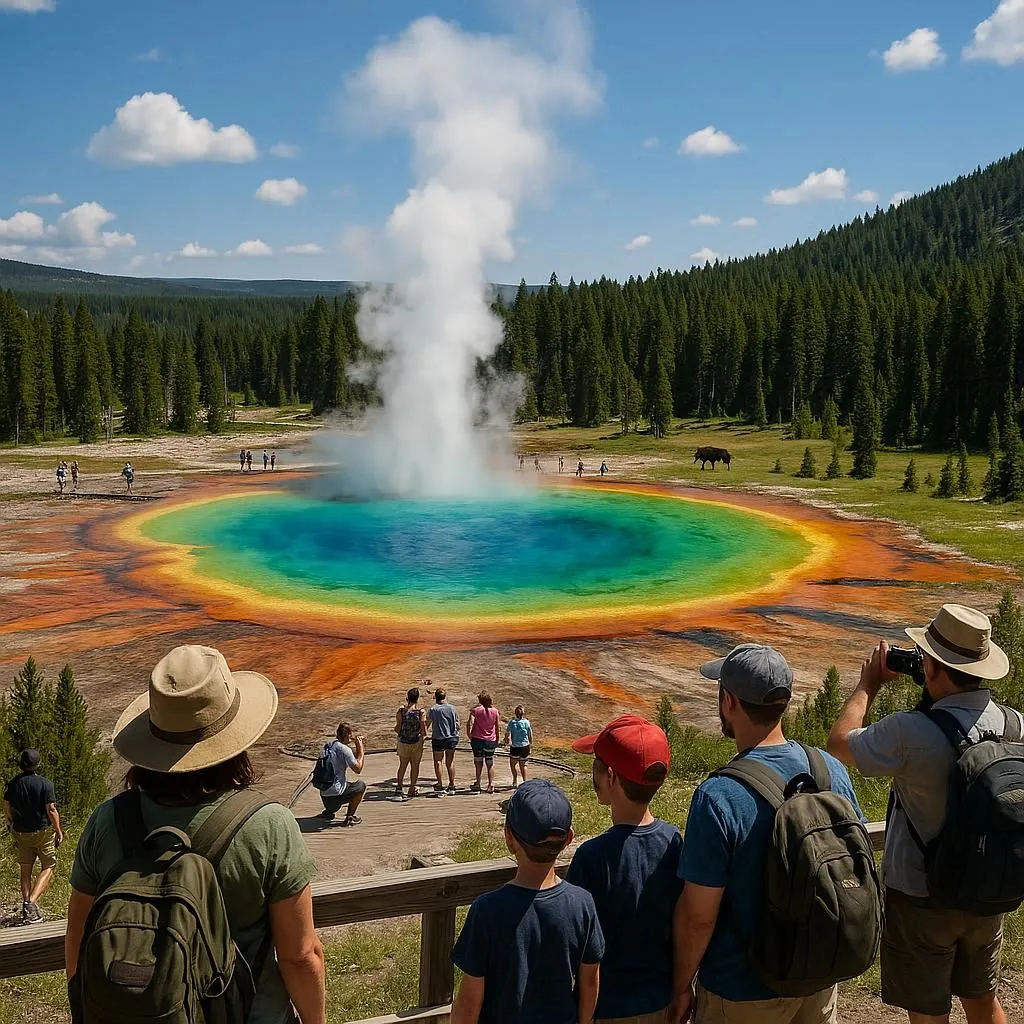
Are you ready to explore the wonders of America’s first national park? These Yellowstone Trivia Questions and Answers are packed with fascinating facts about Yellowstone National Park, including its history, geography, wildlife, geysers, hot springs, landmarks, ecosystems, and famous natural features.
Whether you’re a national park enthusiast, a nature lover, or simply enjoy challenging trivia, this collection offers an exciting way to test your knowledge.
From the legendary Old Faithful and colorful Grand Prismatic Spring to Yellowstone’s abundant wildlife and remarkable geological features, these Yellowstone Trivia Questions and Answers cover a wide variety of interesting topics. Challenge yourself, discover surprising facts, and see how much you really know about Yellowstone!
Yellowstone Trivia Questions and Answers
1. What is Yellowstone National Park primarily famous for?
A. Tropical beaches
B. Geysers and geothermal features
C. Desert dunes
D. Coral reefs
Correct Answer: B. Geysers and geothermal features
Explanation: Yellowstone is renowned for its geysers, hot springs, mud pots, and other geothermal features.
Key Information: It contains one of the world’s largest concentrations of geothermal activity.
2. In which year was Yellowstone National Park established?
A. 1865
B. 1872
C. 1885
D. 1890
Correct Answer: B. 1872
Explanation: Yellowstone was established as the world’s first national park on March 1, 1872.
Key Information: The park was created to protect its remarkable landscapes and natural wonders for future generations.
3. Which U.S. states contain parts of Yellowstone National Park?
A. Utah and Idaho
B. Montana and Wyoming
C. Wyoming, Montana, and Idaho
D. Colorado and Wyoming
Correct Answer: C. Wyoming, Montana, and Idaho
Explanation: Yellowstone extends across three states, although most of the park lies within Wyoming.
Key Information: About 96% of Yellowstone is in Wyoming, with smaller portions in Montana and Idaho.
4. Which famous geyser is located in Yellowstone National Park?
A. Old Faithful
B. Grand Prismatic
C. Mammoth
D. Yellowstone Falls
Correct Answer: A. Old Faithful
Explanation: Old Faithful is one of Yellowstone’s most famous attractions because of its frequent eruptions.
Key Information: Its eruptions can reach heights of roughly 100–180 feet.
5. What type of natural feature is Old Faithful?
A. Waterfall
B. Geyser
C. Volcano crater
D. Hot spring
Correct Answer: B. Geyser
Explanation: Old Faithful is a cone geyser that periodically shoots hot water and steam into the air.
Key Information: Its eruption intervals are predictable enough for visitors to receive estimated eruption times.
6. Which Yellowstone feature is famous for its vivid blue, orange, yellow, and green colors?
A. Grand Prismatic Spring
B. Yellowstone Lake
C. Tower Fall
D. Mammoth Hot Springs
Correct Answer: A. Grand Prismatic Spring
Explanation: Grand Prismatic Spring is famous for its striking colors caused by heat-loving microorganisms and mineral-rich water.
Key Information: It is the largest hot spring in the United States.
7. What is the largest lake in Yellowstone National Park?
A. Yellowstone Lake
B. Lewis Lake
C. Shoshone Lake
D. Heart Lake
Correct Answer: A. Yellowstone Lake
Explanation: Yellowstone Lake is the park’s largest lake and one of its most prominent natural features.
Key Information: It covers more than 100 square miles.
8. Which river flows through the Grand Canyon of the Yellowstone?
A. Yellowstone River
B. Snake River
C. Madison River
D. Firehole River
Correct Answer: A. Yellowstone River
Explanation: The Yellowstone River carved the spectacular canyon that gives the area its name.
Key Information: The Grand Canyon of the Yellowstone is known for its dramatic cliffs and colorful rock walls.
9. What are the two major waterfalls of the Grand Canyon of the Yellowstone?
A. Upper and Lower Falls
B. North and South Falls
C. East and West Falls
D. Great and Little Falls
Correct Answer: A. Upper and Lower Falls
Explanation: The Grand Canyon of the Yellowstone contains both Upper Falls and Lower Falls.
Key Information: Lower Falls is about 308 feet high.
10. Which animal is especially associated with Yellowstone National Park?
A. Bison
B. Kangaroo
C. Zebra
D. Gorilla
Correct Answer: A. Bison
Explanation: Yellowstone is famous for its large population of American bison.
Key Information: Yellowstone has one of the largest and oldest continuously free-ranging bison herds in North America.
11. Which large predator was reintroduced to Yellowstone in the 1990s?
A. Gray wolf
B. Jaguar
C. Cheetah
D. Mountain lion
Correct Answer: A. Gray wolf
Explanation: Gray wolves were reintroduced to Yellowstone beginning in 1995 after being absent from the park for decades.
Key Information: Wolf reintroduction became an important example of wildlife conservation and ecosystem management.
12. Which large mammal is commonly seen grazing in Yellowstone’s valleys?
A. Bison
B. Moose
C. Elk
D. Mountain goat
Correct Answer: A. Bison
Explanation: Bison are among the most recognizable animals in Yellowstone and frequently graze in open areas.
Key Information: Yellowstone is one of the few places in the United States where bison have lived continuously since prehistoric times.
13. What is the highest mountain in Yellowstone National Park?
A. Eagle Peak
B. Mount Washburn
C. Mount Sheridan
D. Electric Peak
Correct Answer: A. Eagle Peak
Explanation: Eagle Peak rises to about 11,372 feet and is the highest point in Yellowstone.
Key Information: It is located in the southeastern part of the park.
14. Which Yellowstone mountain is a popular hiking destination with panoramic views?
A. Mount Washburn
B. Eagle Peak
C. Mount Sheridan
D. Electric Peak
Correct Answer: A. Mount Washburn
Explanation: Mount Washburn is one of Yellowstone’s most popular mountain hikes.
Key Information: The summit is approximately 10,243 feet above sea level.
15. Yellowstone is located primarily on which major volcanic feature?
A. Yellowstone Caldera
B. Mount St. Helens
C. Craters of the Moon
D. Long Valley Caldera
Correct Answer: A. Yellowstone Caldera
Explanation: Much of Yellowstone lies within the massive Yellowstone Caldera system.
Key Information: The region is considered one of the world’s major active volcanic areas.
16. What type of volcano system is associated with Yellowstone?
A. Supervolcano
B. Shield volcano
C. Cinder cone only
D. Stratovolcano
Correct Answer: A. Supervolcano
Explanation: Yellowstone is commonly described as a supervolcano because of the enormous size of its past eruptions.
Key Information: The term refers to the scale of past eruptions rather than a particular volcano shape.
17. Which Yellowstone area is famous for terraces formed by mineral-rich hot water?
A. Mammoth Hot Springs
B. Hayden Valley
C. Lamar Valley
D. Yellowstone Lake
Correct Answer: A. Mammoth Hot Springs
Explanation: Mammoth Hot Springs contains extensive terraces created by deposits of calcium carbonate.
Key Information: The terraces continually change as hot water flows through the area.
18. Which Yellowstone valley is particularly famous for wildlife viewing?
A. Lamar Valley
B. Paradise Valley
C. Jackson Valley
D. Madison Valley
Correct Answer: A. Lamar Valley
Explanation: Lamar Valley is one of Yellowstone’s best-known areas for observing wildlife.
Key Information: Visitors may encounter bison, elk, wolves, bears, and other wildlife.
19. Which Yellowstone valley is known for its large concentrations of elk and bison?
A. Hayden Valley
B. Lamar Valley
C. Firehole Valley
D. Pelican Valley
Correct Answer: A. Hayden Valley
Explanation: Hayden Valley is a prime wildlife-viewing area in central Yellowstone.
Key Information: The Yellowstone River flows through the valley.
20. What is Yellowstone’s official designation as a UNESCO site?
A. UNESCO World Heritage Site
B. UNESCO Cultural Reserve
C. UNESCO Historic Monument
D. UNESCO Biosphere City
Correct Answer: A. UNESCO World Heritage Site
Explanation: Yellowstone was designated a UNESCO World Heritage Site in 1978.
Key Information: The designation recognizes the park’s exceptional geothermal activity, geology, ecosystems, and wildlife.
Read Also: 137+ Environmental Science Trivia Questions and Answers
Yellowstone Trivia Questions and Answers General Knowledge
1. Which Yellowstone feature is famous for its terraces made of travertine?
A. Mammoth Hot Springs
B. Old Faithful
C. Grand Prismatic Spring
D. Yellowstone Lake
Correct Answer: A. Mammoth Hot Springs
Explanation: Mammoth Hot Springs contains extensive terraces formed when hot water deposits calcium carbonate.
Key Information: The terraces are constantly changing as mineral-rich water moves through the area.
2. Which Yellowstone geyser basin contains Old Faithful?
A. Upper Geyser Basin
B. Norris Geyser Basin
C. Midway Geyser Basin
D. West Thumb Geyser Basin
Correct Answer: A. Upper Geyser Basin
Explanation: Old Faithful is located in the Upper Geyser Basin along the Firehole River.
Key Information: The basin contains one of the world’s highest concentrations of geysers.
3. Which Yellowstone geyser basin is considered the hottest and most changeable geothermal area in the park?
A. Norris Geyser Basin
B. Upper Geyser Basin
C. Lower Geyser Basin
D. West Thumb Geyser Basin
Correct Answer: A. Norris Geyser Basin
Explanation: Norris Geyser Basin is known for extremely hot ground and constantly changing geothermal features.
Key Information: Steamboat Geyser, the world’s tallest active geyser, is located there.
4. Which Yellowstone geyser can produce the world’s tallest geyser eruptions?
A. Steamboat Geyser
B. Castle Geyser
C. Riverside Geyser
D. Grand Geyser
Correct Answer: A. Steamboat Geyser
Explanation: Steamboat Geyser can erupt to heights exceeding 300 feet.
Key Information: Its major eruptions are much less predictable than those of Old Faithful.
5. Which Yellowstone geyser is known for its tall, cone-shaped formation?
A. Castle Geyser
B. Steamboat Geyser
C. Beehive Geyser
D. Riverside Geyser
Correct Answer: A. Castle Geyser
Explanation: Castle Geyser has a large cone that has developed from repeated mineral deposits.
Key Information: It is located in Yellowstone’s Upper Geyser Basin.
6. Which hot spring is considered one of the largest hot springs in Yellowstone?
A. Grand Prismatic Spring
B. Morning Glory Pool
C. Emerald Spring
D. Abyss Pool
Correct Answer: A. Grand Prismatic Spring
Explanation: Grand Prismatic Spring is the largest hot spring in Yellowstone and the United States.
Key Information: Its vivid colors are produced partly by heat-loving microorganisms.
7. Which Yellowstone spring is famous for its deep blue center surrounded by changing colors?
A. Morning Glory Pool
B. Grand Prismatic Spring
C. Sapphire Pool
D. Turquoise Spring
Correct Answer: A. Morning Glory Pool
Explanation: Morning Glory Pool is a colorful hot spring in the Upper Geyser Basin.
Key Information: Its colors have changed over time partly because debris can affect the spring’s circulation.
8. Which Yellowstone geothermal area is located beside Yellowstone Lake?
A. West Thumb Geyser Basin
B. Upper Geyser Basin
C. Norris Geyser Basin
D. Mammoth Hot Springs
Correct Answer: A. West Thumb Geyser Basin
Explanation: West Thumb Geyser Basin lies along the western shore of Yellowstone Lake.
Key Information: Several hot springs and geysers occur directly along the lake’s shoreline.
9. Which Yellowstone lake feature is an underwater hot spring cone?
A. Fishing Cone
B. Steamboat Cone
C. Thumb Cone
D. Lake Geyser
Correct Answer: A. Fishing Cone
Explanation: Fishing Cone is a geothermal feature that rises from Yellowstone Lake.
Key Information: Historical stories describe anglers catching fish and then dipping them into the hot water of the cone.
10. Which Yellowstone river is formed by the meeting of the Firehole and Gibbon rivers?
A. Madison River
B. Yellowstone River
C. Snake River
D. Lamar River
Correct Answer: A. Madison River
Explanation: The Firehole and Gibbon rivers join at Madison Junction to form the Madison River.
Key Information: Madison Junction is an important road intersection in Yellowstone.
11. Which river flows through Yellowstone Lake and the Grand Canyon of the Yellowstone?
A. Yellowstone River
B. Madison River
C. Gallatin River
D. Gardner River
Correct Answer: A. Yellowstone River
Explanation: The Yellowstone River exits Yellowstone Lake and continues through the park toward the Grand Canyon of the Yellowstone.
Key Information: It is the longest undammed river in the contiguous United States.
12. Which Yellowstone waterfall is the tallest in the park’s Grand Canyon?
A. Lower Falls
B. Upper Falls
C. Tower Fall
D. Crystal Falls
Correct Answer: A. Lower Falls
Explanation: Lower Falls drops approximately 308 feet through the Grand Canyon of the Yellowstone.
Key Information: It is one of Yellowstone’s most photographed natural landmarks.
13. Which Yellowstone waterfall is located near the northeastern part of the park?
A. Tower Fall
B. Lower Falls
C. Fairy Falls
D. Mystic Falls
Correct Answer: A. Tower Fall
Explanation: Tower Fall is located near Tower Junction in northeastern Yellowstone.
Key Information: The waterfall drops about 132 feet and is surrounded by distinctive rock formations.
14. Which Yellowstone area is known for its large concentration of elk near the northern entrance?
A. Mammoth Hot Springs
B. Old Faithful
C. West Thumb
D. Grant Village
Correct Answer: A. Mammoth Hot Springs
Explanation: Elk are frequently seen around Mammoth Hot Springs and the surrounding northern part of the park.
Key Information: The area also contains historic buildings associated with Yellowstone’s administration.
15. Which Yellowstone entrance is located near the town of Gardiner, Montana?
A. North Entrance
B. South Entrance
C. East Entrance
D. West Entrance
Correct Answer: A. North Entrance
Explanation: The North Entrance is accessed from Gardiner, Montana.
Key Information: It is the only Yellowstone entrance that is traditionally open to regular vehicle travel year-round, although conditions can vary.
16. Which Yellowstone entrance is closest to Jackson, Wyoming?
A. South Entrance
B. North Entrance
C. West Entrance
D. Northeast Entrance
Correct Answer: A. South Entrance
Explanation: The South Entrance provides access from the Jackson Hole area of Wyoming.
Key Information: The route passes near Grand Teton National Park before entering Yellowstone.
17. Which national park lies immediately south of Yellowstone?
A. Grand Teton National Park
B. Glacier National Park
C. Rocky Mountain National Park
D. Zion National Park
Correct Answer: A. Grand Teton National Park
Explanation: Grand Teton National Park lies directly south of Yellowstone in northwestern Wyoming.
Key Information: The two parks are connected by the John D. Rockefeller, Jr. Memorial Parkway.
18. Which Yellowstone region is particularly famous for sightings of wolves and other predators?
A. Lamar Valley
B. Hayden Valley
C. Firehole Canyon
D. Grant Village
Correct Answer: A. Lamar Valley
Explanation: Lamar Valley provides important habitat for wolves and other wildlife.
Key Information: It is often called one of the best places in Yellowstone for observing wild animals.
19. Which Yellowstone animal is the largest member of the deer family commonly found in the park?
A. Moose
B. Elk
C. Mule deer
D. Pronghorn
Correct Answer: A. Moose
Explanation: Moose are the largest members of the deer family and occur in Yellowstone, although they are less common than elk.
Key Information: They are often associated with wetlands, streams, and forested areas.
20. Which bird is commonly associated with Yellowstone’s rivers and lakes because of its fishing behavior?
A. Bald eagle
B. Roadrunner
C. Wild turkey
D. Peregrine falcon
Correct Answer: A. Bald eagle
Explanation: Bald eagles are regularly observed around Yellowstone’s waterways, where they hunt fish and other prey.
Key Information: Yellowstone provides important habitat for this iconic North American bird.
Recommended: 131+ National Park Trivia Questions and Answers
Easy Yellowstone Trivia Questions and Answers
1. Which Yellowstone animal is known for its large antlers and distinctive bugling call?
A. Elk
B. Bison
C. Moose
D. Pronghorn
Correct Answer: A. Elk
Explanation: Male elk, called bulls, grow large antlers and produce a distinctive bugling sound during the breeding season.
Key Information: Yellowstone contains one of the largest elk populations in North America.
2. Which Yellowstone animal is North America’s fastest land mammal?
A. Pronghorn
B. Elk
C. Gray wolf
D. Mule deer
Correct Answer: A. Pronghorn
Explanation: Pronghorn can reach very high speeds and are exceptionally adapted for running across open landscapes.
Key Information: They can reach speeds of roughly 55–60 miles per hour.
3. Which Yellowstone animal is especially well adapted to cold mountain environments?
A. Bighorn sheep
B. Pronghorn
C. American bison
D. Beaver
Correct Answer: A. Bighorn sheep
Explanation: Bighorn sheep use their powerful legs and specialized hooves to navigate steep, rocky terrain.
Key Information: They are often found in mountainous areas of Yellowstone.
4. Which Yellowstone mammal is known for building dams across streams?
A. Beaver
B. Otter
C. Muskrat
D. Badger
Correct Answer: A. Beaver
Explanation: Beavers construct dams that create ponds and wetlands.
Key Information: Their engineering activities can create habitat for fish, birds, amphibians, and other wildlife.
5. Which Yellowstone predator is famous for its powerful swimming ability and fish-based diet?
A. River otter
B. Gray wolf
C. Red fox
D. Coyote
Correct Answer: A. River otter
Explanation: River otters are excellent swimmers and commonly feed on fish and aquatic animals.
Key Information: They can be found around Yellowstone’s lakes and rivers.
6. Which Yellowstone animal is known for its distinctive black-and-white coloring and strong digging ability?
A. Badger
B. Wolverine
C. Mink
D. Marten
Correct Answer: A. Badger
Explanation: American badgers have powerful forelimbs and long claws that help them dig burrows.
Key Information: They are mainly nocturnal and are skilled hunters of small mammals.
7. Which Yellowstone animal is sometimes called a “wolverine” and belongs to the weasel family?
A. Wolverine
B. Coyote
C. Bobcat
D. Lynx
Correct Answer: A. Wolverine
Explanation: The wolverine is a powerful member of the weasel family that occurs in Yellowstone’s rugged wilderness.
Key Information: Wolverines are elusive and are rarely seen by park visitors.
8. Which Yellowstone predator is smaller than a wolf but commonly heard howling?
A. Coyote
B. Grizzly bear
C. Mountain lion
D. Wolverine
Correct Answer: A. Coyote
Explanation: Coyotes are adaptable predators that live throughout Yellowstone.
Key Information: They communicate through howls, yips, and other vocalizations.
9. Which bear species is commonly found in Yellowstone?
A. Grizzly bear
B. Polar bear
C. Giant panda
D. Sun bear
Correct Answer: A. Grizzly bear
Explanation: Grizzly bears are an important part of Yellowstone’s ecosystem.
Key Information: Black bears also live in the park, although identifying bears by color alone can be misleading.
10. Which type of bear also lives in Yellowstone besides grizzly bears?
A. Black bear
B. Polar bear
C. Brown panda bear
D. Sloth bear
Correct Answer: A. Black bear
Explanation: Black bears are native to Yellowstone and surrounding regions.
Key Information: Black bears can have fur ranging from black to brown and even lighter shades.
11. Which Yellowstone bird is known for its large size and white head and tail as an adult?
A. Bald eagle
B. Golden eagle
C. Osprey
D. Raven
Correct Answer: A. Bald eagle
Explanation: Adult bald eagles develop a distinctive white head and tail.
Key Information: Bald eagles are commonly seen near Yellowstone’s lakes and rivers.
12. Which bird of prey is famous for its ability to hover while searching for prey?
A. Osprey
B. Raven
C. Trumpeter swan
D. Canada goose
Correct Answer: A. Osprey
Explanation: Ospreys often hover above water before diving to catch fish.
Key Information: Yellowstone’s waterways provide excellent habitat for these fish-eating birds.
13. Which large waterfowl species can be found around Yellowstone’s lakes and wetlands?
A. Trumpeter swan
B. Flamingo
C. Pelican only
D. Great blue heron only
Correct Answer: A. Trumpeter swan
Explanation: Trumpeter swans are among the largest native waterfowl in North America.
Key Information: Yellowstone provides important habitat for these impressive birds.
14. Which Yellowstone fish is native to the Yellowstone Lake ecosystem?
A. Yellowstone cutthroat trout
B. Atlantic salmon
C. Rainbow trout only
D. Bluefin tuna
Correct Answer: A. Yellowstone cutthroat trout
Explanation: Yellowstone cutthroat trout are native to Yellowstone Lake and many surrounding waters.
Key Information: They are an important food source for bears, eagles, otters, and other wildlife.
15. Which invasive fish has affected native Yellowstone cutthroat trout populations?
A. Lake trout
B. Tuna
C. Catfish
D. Carp only
Correct Answer: A. Lake trout
Explanation: Introduced lake trout compete with and prey upon native Yellowstone cutthroat trout.
Key Information: Yellowstone has conducted extensive conservation efforts to control lake trout.
16. Which Yellowstone ecosystem is particularly important for beavers, waterfowl, and other wetland species?
A. Wetlands
B. Alpine desert
C. Sand dunes
D. Coastal marshes
Correct Answer: A. Wetlands
Explanation: Wetlands provide water, food, shelter, and breeding habitat for many Yellowstone species.
Key Information: Beavers can play a major role in creating and maintaining wetland environments.
17. Which Yellowstone season is especially famous for the elk rut?
A. Autumn
B. Spring
C. Summer
D. Winter
Correct Answer: A. Autumn
Explanation: Elk breeding activity, known as the rut, typically occurs in the fall.
Key Information: During the rut, male elk compete for mates and produce their characteristic bugling calls.
18. Which Yellowstone season is generally the harshest for wildlife because of heavy snow and cold temperatures?
A. Winter
B. Spring
C. Summer
D. Early autumn
Correct Answer: A. Winter
Explanation: Yellowstone winters bring deep snow and very cold conditions.
Key Information: Many animals survive by migrating to lower elevations, conserving energy, or adapting to the snowy environment.
19. Which Yellowstone animal can migrate outside the park during winter?
A. Elk
B. Yellowstone cutthroat trout
C. Beaver
D. Badger
Correct Answer: A. Elk
Explanation: Some Yellowstone elk herds migrate to lower-elevation areas outside the park during winter.
Key Information: Seasonal migration is an important part of Yellowstone’s wildlife ecology.
20. Which Yellowstone animal is especially famous for creating ecosystem changes through its dam-building activities?
A. Beaver
B. Coyote
C. Elk
D. Pronghorn
Correct Answer: A. Beaver
Explanation: Beaver dams alter streams and create ponds and wetlands that benefit many other species.
Key Information: Beavers are considered an important ecosystem engineer in Yellowstone.
Related: 137+ Alaska Trivia Questions and Answers
Yellowstone National Park Trivia
1. Which Yellowstone entrance is located closest to West Yellowstone, Montana?
A. West Entrance
B. North Entrance
C. South Entrance
D. East Entrance
Correct Answer: A. West Entrance
Explanation: The West Entrance provides direct access to Yellowstone from the town of West Yellowstone, Montana.
Key Information: It is one of the park’s busiest entrances during the summer season.
2. Which Yellowstone entrance provides access from Cooke City, Montana?
A. Northeast Entrance
B. North Entrance
C. West Entrance
D. South Entrance
Correct Answer: A. Northeast Entrance
Explanation: The Northeast Entrance connects Yellowstone with Cooke City and Silver Gate, Montana.
Key Information: The road through the Lamar Valley provides excellent opportunities for wildlife viewing.
3. Which Yellowstone entrance is located near Cody, Wyoming?
A. East Entrance
B. West Entrance
C. North Entrance
D. Northeast Entrance
Correct Answer: A. East Entrance
Explanation: The East Entrance provides access to Yellowstone from the Cody area.
Key Information: The route crosses the scenic Sylvan Pass before reaching the park.
4. Which road crosses Yellowstone’s highest mountain pass?
A. East Entrance Road
B. Grand Loop Road
C. West Entrance Road
D. North Entrance Road
Correct Answer: A. East Entrance Road
Explanation: The East Entrance Road crosses Sylvan Pass.
Key Information: Sylvan Pass reaches an elevation of more than 8,500 feet.
5. What is the main road system that forms a large loop through Yellowstone?
A. Grand Loop Road
B. Yellowstone Circle Road
C. Park Ring Road
D. Continental Loop
Correct Answer: A. Grand Loop Road
Explanation: The Grand Loop Road connects many of Yellowstone’s major attractions.
Key Information: It is divided into an upper loop and a lower loop.
6. Which Yellowstone road connects the North Entrance with the Northeast Entrance?
A. Northeast Entrance Road
B. Lamar Valley Road
C. Canyon Road
D. Mammoth Road
Correct Answer: A. Northeast Entrance Road
Explanation: The Northeast Entrance Road runs through the northern part of the park.
Key Information: This route passes through the Lamar Valley, one of Yellowstone’s premier wildlife areas.
7. Which Yellowstone location is the traditional headquarters of the park’s northern region?
A. Mammoth Hot Springs
B. Old Faithful
C. Grant Village
D. Fishing Bridge
Correct Answer: A. Mammoth Hot Springs
Explanation: Mammoth Hot Springs is home to important park administrative and historic facilities.
Key Information: Fort Yellowstone, established in the late 19th century, is located here.
8. What was Fort Yellowstone originally used for?
A. U.S. Army administration and protection of the park
B. Mining operations
C. A military airport
D. A railroad station
Correct Answer: A. U.S. Army administration and protection of the park
Explanation: The U.S. Army managed Yellowstone from 1886 until 1918.
Key Information: Army administration helped control illegal hunting and other threats to the park.
9. Which U.S. agency manages Yellowstone National Park today?
A. National Park Service
B. U.S. Forest Service
C. Bureau of Land Management
D. Fish and Wildlife Service
Correct Answer: A. National Park Service
Explanation: Yellowstone is managed by the National Park Service, an agency of the U.S. Department of the Interior.
Key Information: The National Park Service was established in 1916.
10. Which famous Yellowstone hotel is located near Old Faithful?
A. Old Faithful Inn
B. Yellowstone Lodge
C. Grand Canyon Hotel
D. Mammoth Resort
Correct Answer: A. Old Faithful Inn
Explanation: Old Faithful Inn is a historic lodge located close to the famous geyser.
Key Information: It opened in 1904 and is renowned for its massive log construction.
11. What architectural style is strongly associated with Old Faithful Inn?
A. Rustic architecture
B. Gothic Revival
C. Art Deco
D. Mediterranean Revival
Correct Answer: A. Rustic architecture
Explanation: Old Faithful Inn is a classic example of rustic national park architecture.
Key Information: Its interior features enormous logs and a dramatic stone fireplace.
12. Which historic Yellowstone lodge is located near Yellowstone Lake?
A. Lake Yellowstone Hotel
B. Canyon Lodge
C. Mammoth Hot Springs Hotel
D. Roosevelt Lodge
Correct Answer: A. Lake Yellowstone Hotel
Explanation: Lake Yellowstone Hotel overlooks Yellowstone Lake.
Key Information: The hotel originally opened in 1891 and has undergone several renovations.
13. Which Yellowstone location is known for its large marina and historic hotel?
A. Lake Yellowstone
B. Lamar Valley
C. Norris
D. Tower-Roosevelt
Correct Answer: A. Lake Yellowstone
Explanation: The Lake Yellowstone area provides boating facilities, lodging, and scenic views.
Key Information: Yellowstone Lake is one of the largest high-elevation lakes in North America.
14. Which Yellowstone area is named after President Theodore Roosevelt?
A. Roosevelt Arch
B. Roosevelt Lodge area
C. Roosevelt Valley
D. Roosevelt Geyser Basin
Correct Answer: B. Roosevelt Lodge area
Explanation: The Roosevelt area of Yellowstone includes historic lodging and nearby natural attractions.
Key Information: Theodore Roosevelt was a strong supporter of conservation and visited Yellowstone several times.
15. Which Yellowstone landmark was dedicated by President Theodore Roosevelt in 1903?
A. Roosevelt Arch
B. Old Faithful Inn
C. Fishing Bridge
D. Yellowstone Gateway
Correct Answer: A. Roosevelt Arch
Explanation: Roosevelt Arch stands at the North Entrance near Gardiner, Montana.
Key Information: The arch bears an inscription associated with the idea of Yellowstone being preserved for the benefit of the people.
16. Which Yellowstone lake is the largest high-elevation lake in North America?
A. Yellowstone Lake
B. Lewis Lake
C. Shoshone Lake
D. Heart Lake
Correct Answer: A. Yellowstone Lake
Explanation: Yellowstone Lake is exceptionally large and sits at an elevation of about 7,733 feet.
Key Information: Its cold waters remain frozen for much of the winter.
17. Which Yellowstone area is famous for its historic fishing bridge?
A. Fishing Bridge
B. Tower Junction
C. Madison Junction
D. Norris Junction
Correct Answer: A. Fishing Bridge
Explanation: Fishing Bridge crosses the Yellowstone River near Yellowstone Lake.
Key Information: Fishing from the bridge has been prohibited for decades to protect fish populations.
18. Which Yellowstone location is where the Yellowstone River leaves Yellowstone Lake?
A. Fishing Bridge
B. Madison Junction
C. West Thumb
D. Tower Junction
Correct Answer: A. Fishing Bridge
Explanation: The Yellowstone River flows northward from Yellowstone Lake near Fishing Bridge.
Key Information: The area is an important habitat for aquatic and bird species.
19. Which Yellowstone location marks the meeting point of the Firehole and Gibbon rivers?
A. Madison Junction
B. Canyon Junction
C. Norris Junction
D. Tower Junction
Correct Answer: A. Madison Junction
Explanation: The Firehole and Gibbon rivers meet at Madison Junction to form the Madison River.
Key Information: Madison Junction is an important transportation point within the park.
20. Which Yellowstone location connects roads leading toward Norris, Canyon, and Mammoth?
A. Norris Junction
B. Grant Village
C. West Thumb
D. Fishing Bridge
Correct Answer: A. Norris Junction
Explanation: Norris Junction is a major road intersection in central Yellowstone.
Key Information: It provides access to Norris Geyser Basin and several other important areas of the park.
Yellowstone Quiz Who Are You
1. Which Yellowstone feature is considered the largest active geyser in the world by the amount of water it can discharge?
A. Steamboat Geyser
B. Old Faithful
C. Castle Geyser
D. Beehive Geyser
Correct Answer: A. Steamboat Geyser
Explanation: Steamboat Geyser can produce exceptionally large eruptions and is the world’s tallest active geyser.
Key Information: Major eruptions can send water more than 300 feet into the air.
2. Which Yellowstone geothermal feature is famous for its bubbling mud?
A. Mud Volcano
B. Grand Prismatic Spring
C. Morning Glory Pool
D. Castle Geyser
Correct Answer: A. Mud Volcano
Explanation: The Mud Volcano area contains bubbling mud pots and other acidic geothermal features.
Key Information: The area is located near Yellowstone Lake and is known for its strong sulfurous odors.
3. Which Yellowstone thermal area contains a feature called Dragon’s Mouth Spring?
A. Mud Volcano area
B. Norris Geyser Basin
C. Mammoth Hot Springs
D. West Thumb Geyser Basin
Correct Answer: A. Mud Volcano area
Explanation: Dragon’s Mouth Spring is a geothermal feature in the Mud Volcano area.
Key Information: The spring produces periodic bursts of steam and water accompanied by rumbling sounds.
4. Which Yellowstone feature is a large acidic pool surrounded by steaming ground?
A. Sulphur Caldron
B. Morning Glory Pool
C. Emerald Spring
D. Abyss Pool
Correct Answer: A. Sulphur Caldron
Explanation: Sulphur Caldron is a highly acidic thermal feature near Mud Volcano.
Key Information: Its waters have a very low pH because of sulfuric acid produced by geothermal processes.
5. Which Yellowstone geyser basin contains colorful springs and geysers along the Firehole River?
A. Lower Geyser Basin
B. West Thumb Geyser Basin
C. Mammoth Hot Springs
D. Norris Geyser Basin
Correct Answer: A. Lower Geyser Basin
Explanation: Lower Geyser Basin contains numerous hot springs, mud pots, and geysers.
Key Information: Fountain Paint Pot is one of the area’s best-known features.
6. Which Yellowstone feature is a collection of colorful mud pots?
A. Fountain Paint Pot
B. Fishing Cone
C. Morning Glory Pool
D. Steamboat Geyser
Correct Answer: A. Fountain Paint Pot
Explanation: Fountain Paint Pot contains bubbling mud created by acidic geothermal activity.
Key Information: The colors come from different minerals and heat-loving microorganisms.
7. Which Yellowstone geyser is known for powerful eruptions from a large cone?
A. Beehive Geyser
B. Old Faithful
C. Grand Geyser
D. Riverside Geyser
Correct Answer: A. Beehive Geyser
Explanation: Beehive Geyser produces tall, narrow eruptions from its cone-shaped opening.
Key Information: Its eruptions can reach heights greater than those of Old Faithful.
8. Which Yellowstone geyser is famous for eruptions that can last several minutes?
A. Grand Geyser
B. Beehive Geyser
C. Castle Geyser
D. Riverside Geyser
Correct Answer: A. Grand Geyser
Explanation: Grand Geyser produces powerful eruptions that can last for several minutes.
Key Information: It is located in the Upper Geyser Basin.
9. Which Yellowstone geyser erupts from a cone located near the Firehole River?
A. Riverside Geyser
B. Steamboat Geyser
C. Castle Geyser
D. Fountain Geyser
Correct Answer: A. Riverside Geyser
Explanation: Riverside Geyser erupts from a cone beside the Firehole River.
Key Information: Its eruptions are especially scenic because water arches over the river.
10. Which Yellowstone thermal feature is famous for its intense turquoise-blue color?
A. Sapphire Pool
B. Grand Prismatic Spring
C. Morning Glory Pool
D. Emerald Spring
Correct Answer: A. Sapphire Pool
Explanation: Sapphire Pool is known for its remarkably clear blue geothermal water.
Key Information: It is located in the Biscuit Basin area.
11. Which Yellowstone area is known for a boardwalk through colorful geothermal features near Old Faithful?
A. Biscuit Basin
B. Hayden Valley
C. Lamar Valley
D. Pelican Valley
Correct Answer: A. Biscuit Basin
Explanation: Biscuit Basin is a small geothermal area north of Old Faithful.
Key Information: The basin contains several hot springs and geysers accessible from a boardwalk.
12. Which Yellowstone geyser basin is located north of Old Faithful?
A. Biscuit Basin
B. Mud Volcano
C. Norris Basin
D. Mammoth Basin
Correct Answer: A. Biscuit Basin
Explanation: Biscuit Basin lies along the Firehole River north of the Old Faithful area.
Key Information: Its geothermal features include Sapphire Pool and several geysers.
13. Which Yellowstone trail leads to a famous overlook of Grand Prismatic Spring?
A. Fairy Falls Trail
B. Mount Washburn Trail
C. Bunsen Peak Trail
D. Uncle Tom’s Trail
Correct Answer: A. Fairy Falls Trail
Explanation: A side trail from the Fairy Falls area leads to the Grand Prismatic Spring overlook.
Key Information: The elevated viewpoint provides a broad perspective of the colorful spring.
14. Which Yellowstone waterfall is one of the tallest in the park and lies on Fairy Creek?
A. Fairy Falls
B. Tower Fall
C. Virginia Cascade
D. Gibbon Falls
Correct Answer: A. Fairy Falls
Explanation: Fairy Falls drops approximately 200 feet in the southwestern part of Yellowstone.
Key Information: It is accessible by a popular hiking trail near the Grand Prismatic Spring area.
15. Which Yellowstone waterfall is located on the Gibbon River?
A. Gibbon Falls
B. Tower Fall
C. Fairy Falls
D. Lower Falls
Correct Answer: A. Gibbon Falls
Explanation: Gibbon Falls is located along the Gibbon River between Norris and Madison Junction.
Key Information: The waterfall drops approximately 84 feet through a scenic canyon.
16. Which Yellowstone waterfall is located on the Lewis River?
A. Lewis Falls
B. Tower Fall
C. Crystal Falls
D. Fairy Falls
Correct Answer: A. Lewis Falls
Explanation: Lewis Falls is located south of Yellowstone Lake along the Lewis River.
Key Information: It is easily visible from the road leading toward the South Entrance.
17. Which Yellowstone canyon is known for its dramatic yellow-colored rock walls?
A. Grand Canyon of the Yellowstone
B. Lewis Canyon
C. Lamar Canyon
D. Firehole Canyon
Correct Answer: A. Grand Canyon of the Yellowstone
Explanation: The canyon’s yellow, orange, and red colors come from altered volcanic rocks.
Key Information: The canyon stretches for roughly 20 miles through the park.
18. Which overlook provides a famous view of Lower Falls in the Grand Canyon of the Yellowstone?
A. Artist Point
B. Inspiration Point
C. Sunset Point
D. Glacier Point
Correct Answer: A. Artist Point
Explanation: Artist Point is one of the most famous viewpoints of Lower Falls and the surrounding canyon.
Key Information: The viewpoint offers spectacular views of the Yellowstone River and canyon walls.
19. Which Yellowstone viewpoint is located near the northern rim of the Grand Canyon of the Yellowstone?
A. Inspiration Point
B. West Thumb Point
C. Geyser Point
D. Lake Point
Correct Answer: A. Inspiration Point
Explanation: Inspiration Point provides a dramatic view into the Grand Canyon of the Yellowstone.
Key Information: The overlook is especially notable for its view toward the canyon’s lower reaches.
20. Which Yellowstone canyon was carved primarily by the Yellowstone River?
A. Grand Canyon of the Yellowstone
B. Lamar Canyon
C. Lewis Canyon
D. Firehole Canyon
Correct Answer: A. Grand Canyon of the Yellowstone
Explanation: The Yellowstone River has carved the spectacular canyon through erosion over a long period.
Key Information: The canyon’s colorful walls and waterfalls make it one of the park’s most iconic landscapes.
Tricky Yellowstone Trivia Questions and Answers
1. Which Yellowstone tree is especially well adapted to survive wildfires because of its thick bark?
A. Lodgepole pine
B. Sugar maple
C. Red oak
D. Cottonwood
Correct Answer: A. Lodgepole pine
Explanation: Lodgepole pines are widespread in Yellowstone and have adaptations that help them persist in fire-prone environments.
Key Information: Some lodgepole pine cones release seeds after exposure to heat, helping forests regenerate after fires.
2. What natural process helps release seeds from many lodgepole pine cones in Yellowstone?
A. Fire
B. Flooding
C. Freezing
D. Windstorms
Correct Answer: A. Fire
Explanation: Heat from wildfires can open certain lodgepole pine cones, allowing seeds to be released.
Key Information: This adaptation is one reason lodgepole pine forests can recover after wildfire.
3. Which Yellowstone plant is commonly associated with wet meadows and streams?
A. Willow
B. Cactus
C. Palm
D. Yucca
Correct Answer: A. Willow
Explanation: Willow shrubs commonly grow near Yellowstone’s waterways and wet areas.
Key Information: Willows provide food and habitat for wildlife, including beavers and elk.
4. Which Yellowstone animal is strongly associated with willow and aspen habitats?
A. Beaver
B. Pronghorn
C. Bighorn sheep
D. Mountain goat
Correct Answer: A. Beaver
Explanation: Beavers feed on woody vegetation such as willow and use these plants in constructing dams and lodges.
Key Information: Beaver activity can transform streams into ponds and wetlands.
5. Which tree is commonly found in Yellowstone’s higher elevations and is recognizable by its white bark?
A. Whitebark pine
B. Southern magnolia
C. Live oak
D. Bald cypress
Correct Answer: A. Whitebark pine
Explanation: Whitebark pine is an important high-elevation tree in the Greater Yellowstone Ecosystem.
Key Information: Its seeds are an important food source for wildlife such as Clark’s nutcrackers and grizzly bears.
6. Which bird is especially important for spreading whitebark pine seeds?
A. Clark’s nutcracker
B. Canada goose
C. Great blue heron
D. American dipper
Correct Answer: A. Clark’s nutcracker
Explanation: Clark’s nutcrackers collect and cache whitebark pine seeds in the ground.
Key Information: Seeds that are not recovered can eventually grow into new pine trees.
7. Which Yellowstone bird is known for walking and swimming in fast-moving streams?
A. American dipper
B. Bald eagle
C. Golden eagle
D. Northern flicker
Correct Answer: A. American dipper
Explanation: American dippers are uniquely adapted to life around cold, rushing mountain streams.
Key Information: They can dive underwater to search for aquatic insects and other food.
8. Which Yellowstone bird is the largest land bird commonly associated with open grasslands and sagebrush?
A. Greater sage-grouse
B. American robin
C. Clark’s nutcracker
D. Mountain chickadee
Correct Answer: A. Greater sage-grouse
Explanation: Greater sage-grouse depend heavily on sagebrush ecosystems.
Key Information: Males perform elaborate courtship displays during the breeding season.
9. Which Yellowstone mammal is especially associated with sagebrush-covered landscapes?
A. Pronghorn
B. Beaver
C. River otter
D. Moose
Correct Answer: A. Pronghorn
Explanation: Pronghorn commonly use Yellowstone’s open grasslands and sagebrush areas.
Key Information: Their exceptional running ability helps them escape predators in open terrain.
10. Which Yellowstone animal is known for its distinctive facial mask and ringed tail?
A. Raccoon
B. Badger
C. Red fox
D. Mink
Correct Answer: A. Raccoon
Explanation: Raccoons have a recognizable dark facial mask and ringed tail.
Key Information: They are adaptable mammals that can live in a variety of habitats.
11. Which Yellowstone predator is known for its reddish coat and bushy tail?
A. Red fox
B. Gray wolf
C. Coyote
D. Wolverine
Correct Answer: A. Red fox
Explanation: Red foxes are small, adaptable predators found in Yellowstone.
Key Information: Their diet can include rodents, birds, insects, and other small animals.
12. Which Yellowstone cat is one of the park’s most elusive predators?
A. Mountain lion
B. Bobcat
C. Canada lynx
D. Cougarfish
Correct Answer: A. Mountain lion
Explanation: Mountain lions, also called cougars, live in Yellowstone but are rarely seen.
Key Information: They are solitary predators that can travel across large territories.
13. Which Yellowstone mammal has large front teeth adapted for cutting woody vegetation?
A. Beaver
B. Muskrat
C. Marmot
D. Pika
Correct Answer: A. Beaver
Explanation: Beavers use their strong incisors to cut branches and trees.
Key Information: Their continuously growing teeth are strengthened by iron-rich enamel.
14. Which small Yellowstone mammal is famous for making high-pitched calls among rocky mountain slopes?
A. Pika
B. Marmot
C. Beaver
D. Muskrat
Correct Answer: A. Pika
Explanation: Pikas are small relatives of rabbits that live among rocky alpine areas.
Key Information: They collect vegetation into hay piles to store as food for winter.
15. Which Yellowstone mammal is commonly seen sunning itself on rocks and is related to squirrels?
A. Yellow-bellied marmot
B. Pika
C. Beaver
D. Badger
Correct Answer: A. Yellow-bellied marmot
Explanation: Yellow-bellied marmots often bask on rocks and are active during the warmer months.
Key Information: They spend much of the winter in underground burrows in a state of hibernation.
16. Which Yellowstone animal is one of North America’s largest land mammals?
A. American bison
B. Pronghorn
C. Elk
D. Mule deer
Correct Answer: A. American bison
Explanation: American bison are massive grazing mammals and among the largest terrestrial animals in North America.
Key Information: Adult males can weigh more than 2,000 pounds.
17. What is a male bison commonly called?
A. Bull
B. Buck
C. Ram
D. Boar
Correct Answer: A. Bull
Explanation: Adult male bison are called bulls, while females are called cows.
Key Information: Bison bulls are generally larger and heavier than females.
18. What is a female elk commonly called?
A. Cow
B. Doe
C. Ewe
D. Mare
Correct Answer: A. Cow
Explanation: Female elk are called cows, while males are called bulls.
Key Information: Elk calves are born in late spring or early summer after a gestation period of roughly eight months.
19. What is a young bison commonly called?
A. Calf
B. Fawn
C. Cub
D. Foal
Correct Answer: A. Calf
Explanation: Young bison are called calves and are usually born in spring.
Key Information: Newborn bison calves are often reddish-brown before developing the darker coloration of adults.
20. Which Yellowstone animal is famous for rolling in dust or soil to create a “wallows”?
A. Bison
B. Elk
C. Moose
D. Pronghorn
Correct Answer: A. Bison
Explanation: Bison sometimes roll in dry soil, creating depressions called wallows.
Key Information: Wallowing may help bison shed fur, deter insects, and possibly display or mark their presence.
Best Yellowstone Trivia Questions and Answers
1. Which Yellowstone historic structure is located near the North Entrance?
A. Roosevelt Arch
B. Fishing Bridge
C. Old Faithful Inn
D. Lake Lodge
Correct Answer: A. Roosevelt Arch
Explanation: Roosevelt Arch stands at the North Entrance of Yellowstone near Gardiner, Montana.
Key Information: The arch was dedicated in 1903 and is named after President Theodore Roosevelt.
2. Which Yellowstone entrance is traditionally open year-round to regular vehicle traffic?
A. North Entrance
B. East Entrance
C. South Entrance
D. West Entrance
Correct Answer: A. North Entrance
Explanation: The North Entrance has traditionally provided year-round vehicle access to Yellowstone.
Key Information: Winter access conditions can change because of weather and road management.
3. Which Montana town is located directly outside Yellowstone’s North Entrance?
A. Gardiner
B. Bozeman
C. Helena
D. Butte
Correct Answer: A. Gardiner
Explanation: Gardiner is located just outside Yellowstone’s North Entrance.
Key Information: The community has long served as an important gateway to the park.
4. Which Montana town is located near Yellowstone’s West Entrance?
A. West Yellowstone
B. Livingston
C. Missoula
D. Kalispell
Correct Answer: A. West Yellowstone
Explanation: West Yellowstone sits directly outside the park’s West Entrance.
Key Information: The town is a major tourist gateway and provides access to the Old Faithful area.
5. Which Wyoming town is a major gateway to Yellowstone from the east?
A. Cody
B. Jackson
C. Casper
D. Sheridan
Correct Answer: A. Cody
Explanation: Cody is connected to Yellowstone by the scenic route through the park’s East Entrance.
Key Information: The town was founded by William F. “Buffalo Bill” Cody.
6. Who founded the town of Cody, Wyoming?
A. William F. Cody
B. John D. Rockefeller Jr.
C. Theodore Roosevelt
D. George Westinghouse
Correct Answer: A. William F. Cody
Explanation: William F. Cody, better known as Buffalo Bill, helped establish the town of Cody.
Key Information: Cody became an important gateway for visitors traveling toward Yellowstone.
7. Which museum complex in Cody explores the life and legacy of Buffalo Bill?
A. Buffalo Bill Center of the West
B. Yellowstone Heritage Museum
C. Cody Frontier Museum
D. Wyoming Pioneer Center
Correct Answer: A. Buffalo Bill Center of the West
Explanation: The Buffalo Bill Center of the West contains multiple museums covering Western history, art, firearms, and natural history.
Key Information: It is one of the major cultural attractions in Cody.
8. Which Yellowstone location is associated with a historic lodge named after President Theodore Roosevelt?
A. Tower-Roosevelt
B. West Thumb
C. Grant Village
D. Madison
Correct Answer: A. Tower-Roosevelt
Explanation: The Tower-Roosevelt area contains Roosevelt Lodge and nearby natural attractions.
Key Information: The area lies near Tower Fall and the northeastern section of the park.
9. Which Yellowstone waterfall is located near Tower-Roosevelt?
A. Tower Fall
B. Fairy Falls
C. Lewis Falls
D. Gibbon Falls
Correct Answer: A. Tower Fall
Explanation: Tower Fall is located near the Tower-Roosevelt area in northeastern Yellowstone.
Key Information: The waterfall is approximately 132 feet high.
10. Which Yellowstone campsite is named after a former U.S. president?
A. Grant Village
B. Madison Camp
C. Canyon Camp
D. Norris Camp
Correct Answer: A. Grant Village
Explanation: Grant Village is named for President Ulysses S. Grant.
Key Information: Grant Village is located near the western shore of Yellowstone Lake.
11. Which U.S. president signed the legislation creating Yellowstone National Park?
A. Ulysses S. Grant
B. Abraham Lincoln
C. Theodore Roosevelt
D. Rutherford B. Hayes
Correct Answer: A. Ulysses S. Grant
Explanation: President Ulysses S. Grant signed the Yellowstone National Park Protection Act in 1872.
Key Information: This established Yellowstone as the world’s first national park.
12. Which phrase is associated with the purpose of Yellowstone’s establishment?
A. For the benefit and enjoyment of the people
B. For military training
C. For commercial mining
D. For agricultural development
Correct Answer: A. For the benefit and enjoyment of the people
Explanation: Yellowstone’s founding legislation emphasized preserving the area for public enjoyment and protection.
Key Information: This idea became influential in the development of the national park system.
13. Which famous conservationist helped promote the protection of Yellowstone wildlife and landscapes?
A. John Muir
B. Henry David Thoreau
C. Rachel Carson
D. Aldo Leopold
Correct Answer: A. John Muir
Explanation: John Muir was a major American conservationist and advocate for protected natural areas.
Key Information: Although he is particularly associated with Yosemite and other western landscapes, his conservation philosophy influenced America’s national park movement.
14. Which organization was founded in 1872 to help protect Yellowstone’s natural and cultural resources?
A. Yellowstone Association
B. Yellowstone Park Foundation
C. National Audubon Society
D. Sierra Club
Correct Answer: A. Yellowstone Association
Explanation: The Yellowstone Association was established much later than the park itself and supported education and conservation programs.
Key Information: It eventually became part of Yellowstone Forever.
15. What is the modern nonprofit partner of Yellowstone National Park known for supporting education and conservation?
A. Yellowstone Forever
B. Yellowstone Heritage Trust
C. Yellowstone Conservation League
D. Greater Yellowstone Society
Correct Answer: A. Yellowstone Forever
Explanation: Yellowstone Forever supports education, conservation, and visitor programs in partnership with the National Park Service.
Key Information: The organization was formed through the merger of the Yellowstone Association and Yellowstone Park Foundation.
16. Which famous Yellowstone event occurred in 1988?
A. Major wildfires
B. A major earthquake
C. A volcanic eruption
D. A historic flood only
Correct Answer: A. Major wildfires
Explanation: Yellowstone experienced extensive wildfires during the summer of 1988.
Key Information: More than 1 million acres of the Greater Yellowstone area burned, and the fires became an important case study in wildfire ecology.
17. What natural phenomenon helped many Yellowstone forests regenerate after the 1988 fires?
A. Lodgepole pine seed release
B. Coral growth
C. Mangrove expansion
D. Desert rainfall
Correct Answer: A. Lodgepole pine seed release
Explanation: Heat from fire can open serotinous lodgepole pine cones, releasing seeds.
Key Information: New growth after the fires demonstrated the important ecological role of wildfire in some Yellowstone forests.
18. Which Yellowstone process is essential for maintaining many natural ecosystems?
A. Wildfire
B. Urban development
C. Road construction
D. Mining
Correct Answer: A. Wildfire
Explanation: Natural fire can recycle nutrients, create habitat, and encourage regeneration in fire-adapted forests.
Key Information: Yellowstone’s fire management balances natural ecological processes with visitor and community safety.
19. Which geological event helped create Yellowstone’s current caldera approximately 640,000 years ago?
A. A massive volcanic eruption
B. A meteor impact
C. A glacier collapse
D. A major earthquake alone
Correct Answer: A. A massive volcanic eruption
Explanation: A major volcanic eruption about 640,000 years ago caused the collapse that formed much of the present Yellowstone Caldera.
Key Information: This was the most recent of Yellowstone’s three major known caldera-forming eruptions.
20. Which older Yellowstone volcanic eruption occurred approximately 2.1 million years ago?
A. Huckleberry Ridge eruption
B. Lava Creek eruption
C. Mesa Falls eruption
D. Yellowstone Lake eruption
Correct Answer: A. Huckleberry Ridge eruption
Explanation: The Huckleberry Ridge eruption was the largest of Yellowstone’s three major known caldera-forming eruptions.
Key Information: It occurred roughly 2.1 million years ago and produced an enormous volcanic deposit.
FAQS
1. What are Yellowstone trivia questions and answers?
Yellowstone trivia questions and answers are engaging quiz questions about Yellowstone National Park, including its history, geography, wildlife, geology, famous landmarks, geothermal features, and fascinating natural wonders. They can range from easy questions for casual learners to challenging questions for dedicated national park enthusiasts.
2. What topics are covered in Yellowstone trivia?
Yellowstone trivia can cover famous attractions such as Old Faithful, Grand Prismatic Spring, Yellowstone Lake, Mammoth Hot Springs, and the Grand Canyon of the Yellowstone. Questions may also explore the park’s wildlife, geysers, hot springs, volcanic activity, forests, rivers, history, and conservation efforts.
3. Why is Yellowstone National Park famous?
Yellowstone is famous for its extraordinary geothermal features and diverse wildlife. Established in 1872, it became the world’s first national park and is known for its geysers, colorful hot springs, mud pots, waterfalls, mountains, and animals such as bison, elk, bears, and wolves.
4. Who can enjoy Yellowstone trivia questions and answers?
Yellowstone trivia is suitable for students, families, travelers, nature lovers, national park enthusiasts, and anyone interested in American geography and history. These questions can be used for classroom activities, family game nights, trivia competitions, or simply to learn fascinating facts about Yellowstone.
Final Thoughts
We hope you enjoyed these Yellowstone Trivia Questions and Answers and discovered something new about this incredible national park.
Yellowstone’s spectacular landscapes, fascinating geothermal activity, diverse wildlife, and rich history make it one of the most remarkable natural destinations in the United States.
How many questions did you answer correctly? Share this Yellowstone trivia quiz with friends, family, students, and fellow nature lovers to see who knows the most about the park.
Keep exploring, keep learning, and continue discovering the amazing facts behind Yellowstone National Park!