
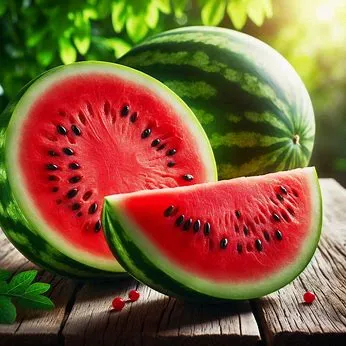
Looking for fun and refreshing Watermelon Trivia Questions and Answers? You’re in the right place! Watermelon is one of the most popular summer fruits, but there’s much more to this juicy treat than its sweet taste and vibrant color.
From fascinating facts and history to nutrition, varieties, growing, and surprising watermelon records, there’s plenty to discover.
In this collection of 154+ Watermelon Trivia Questions and Answers (2026), you’ll find entertaining and informative questions suitable for kids, adults, families, classrooms, parties, and trivia fans.
Whether you’re testing your own knowledge or looking for fun questions to challenge friends and family, these watermelon trivia questions are a delicious way to learn something new.
Get ready to put your watermelon knowledge to the test and see how many questions you can answer correctly!
Watermelon Trivia Questions and Answers for Kids
1. Is watermelon a fruit or a vegetable?
Answer: Watermelon is a fruit.
Explanation: Botanically, watermelon develops from the flower of the plant and contains seeds, so it is classified as a fruit.
Key Information: It is commonly eaten as a sweet fruit, especially during warm weather.
2. What is the scientific name of watermelon?
Answer: Citrullus lanatus.
Explanation: Citrullus lanatus is the scientific name used for cultivated watermelon.
Key Information: Watermelon belongs to the cucumber and squash family.
3. Which family does watermelon belong to?
Answer: Cucurbitaceae.
Explanation: Watermelon is part of the gourd family, which includes several familiar vine-growing crops.
Key Information: Cucumber, pumpkin, squash, and melons are also members of this family.
4. Where did watermelon originate?
Answer: Africa.
Explanation: Evidence from wild relatives and historical research indicates that watermelon has deep African origins.
Key Information: Humans have cultivated watermelon for thousands of years.
5. Why is watermelon considered a hydrating fruit?
Answer: Because it contains a very high amount of water.
Explanation: Most of watermelon’s edible flesh consists of water, making it naturally juicy and refreshing.
Key Information: Eating watermelon can contribute to overall daily fluid intake.
6. What gives red watermelon its color?
Answer: Lycopene.
Explanation: Lycopene is a natural carotenoid pigment responsible for much of the red color in ripe red-fleshed watermelon.
Key Information: Red watermelon is a useful dietary source of lycopene.
7. Can watermelon have yellow flesh?
Answer: Yes.
Explanation: Some watermelon varieties naturally produce yellow flesh instead of the familiar red flesh.
Key Information: Yellow-fleshed varieties can be just as sweet and juicy as red varieties.
8. What is the green outer layer of watermelon called?
Answer: The rind.
Explanation: The rind forms a protective outer covering around the fruit.
Key Information: Watermelon rind is edible and can be cooked or pickled.
9. Are watermelon seeds edible?
Answer: Yes.
Explanation: Mature watermelon seeds can be dried, roasted, seasoned, and eaten.
Key Information: Roasted watermelon seeds are used as snacks in some cultures.
10. What makes seedless watermelon different from regular watermelon?
Answer: It produces little to no mature hard seeds.
Explanation: Seedless watermelons are generally produced from plants with altered chromosome numbers.
Key Information: Tiny soft seed structures may still be visible inside seedless fruit.
11. What is citrulline in watermelon?
Answer: Citrulline is a naturally occurring amino acid.
Explanation: Watermelon contains citrulline, with notable amounts found in the flesh and rind.
Key Information: Citrulline is one of the compounds that makes watermelon nutritionally interesting.
12. Does watermelon contain vitamin C?
Answer: Yes.
Explanation: Watermelon provides vitamin C along with other nutrients.
Key Information: Vitamin C supports normal immune function and collagen formation.
13. Does watermelon contain potassium?
Answer: Yes.
Explanation: Potassium is a mineral naturally present in watermelon.
Key Information: Potassium is important for normal muscle, nerve, and fluid functions.
14. Why do watermelons grow on vines?
Answer: Watermelon plants naturally have a sprawling vine growth habit.
Explanation: The stems spread along the ground while producing leaves, flowers, and fruit.
Key Information: Some watermelon vines can extend several meters.
15. Which insects commonly pollinate watermelon flowers?
Answer: Bees.
Explanation: Bees transfer pollen from male flowers to female flowers while visiting the plant.
Key Information: Good pollination is important for proper fruit development.
16. What is the yellow patch on the bottom of some watermelons?
Answer: The field spot.
Explanation: It is the part of the watermelon that rested against the ground while growing.
Key Information: A creamy-yellow field spot can be one useful clue when selecting a mature watermelon.
17. Why is watermelon popular during summer?
Answer: Because it is juicy, refreshing, and easy to serve.
Explanation: Its high water content makes it particularly appealing in hot weather.
Key Information: Watermelon is commonly served at picnics, barbecues, and summer gatherings.
18. Can watermelon rind be eaten?
Answer: Yes.
Explanation: The white inner portion of the rind can be prepared in different ways.
Key Information: Pickled watermelon rind is a traditional preparation in several cuisines.
19. Can watermelon be frozen?
Answer: Yes.
Explanation: Cut watermelon can be frozen, although its texture usually becomes softer after thawing.
Key Information: Frozen watermelon works especially well in smoothies and frozen desserts.
20. Is watermelon juice nutritionally identical to whole watermelon?
Answer: Not necessarily.
Explanation: Processing watermelon into juice can change its texture and reduce or alter some of the fiber compared with eating the whole fruit.
Key Information: Whole watermelon is generally more filling because it retains its natural structure and fiber.
Recommended: 123+ Pool Trivia Questions and Answers
Watermelon Trivia Questions and Answers for Adults
1. How many calories are in watermelon?
Answer: Watermelon is relatively low in calories.
Explanation: Most of its weight comes from water, while its calories mainly come from natural carbohydrates.
Key Information: The exact calorie amount depends on the serving size.
2. What type of fruit is watermelon botanically?
Answer: A pepo.
Explanation: A pepo is a specialized type of berry with a firm outer rind, characteristic of plants in the cucumber family.
Key Information: Cucumber, pumpkin, and squash are also examples of pepos.
3. Why does watermelon have a thick rind?
Answer: The rind protects the fruit.
Explanation: Its tough outer layer helps shield the juicy flesh from physical damage and environmental conditions.
Key Information: The rind also helps watermelon remain relatively durable during transportation.
4. What does a ripe watermelon usually sound like when tapped?
Answer: It may produce a deep, relatively resonant sound.
Explanation: Some people use the sound of tapping as one clue when choosing a watermelon.
Key Information: The tapping test is subjective and should not be considered a guaranteed ripeness test.
5. Why should a watermelon feel heavy for its size?
Answer: A heavier watermelon often contains plenty of water.
Explanation: Since watermelon is mostly water, weight can provide a useful indication of juiciness.
Key Information: Comparing fruits of similar size makes this clue more useful.
6. What does a dull watermelon rind sometimes indicate?
Answer: It can be a sign of maturity.
Explanation: As some watermelons mature, their rind may become less shiny.
Key Information: Rind appearance should be combined with other maturity clues.
7. What happens to a watermelon after it is picked?
Answer: Its sweetness generally does not increase significantly.
Explanation: Watermelon is considered a non-climacteric fruit, so it does not continue major sugar development after harvest.
Key Information: Harvesting at the correct stage is important for good flavor.
8. What is a non-climacteric fruit?
Answer: A fruit that does not undergo major ripening and sugar development after harvest.
Explanation: Watermelon generally behaves this way, unlike fruits such as bananas.
Key Information: This is why watermelon should ideally be harvested when it is already mature.
9. What is the purpose of watermelon tendrils?
Answer: Tendrils help the plant support or anchor its vine.
Explanation: These slender structures can curl around nearby objects or plant material.
Key Information: A dried tendril near a fruit can also be used by growers as one maturity clue.
10. What is the difference between male and female watermelon flowers?
Answer: Male flowers produce pollen, while female flowers contain the developing ovary.
Explanation: After successful pollination, the female flower’s ovary can develop into a watermelon.
Key Information: Both types of flowers are important for fruit production.
11. Why are bees important when growing watermelon?
Answer: They help transfer pollen between flowers.
Explanation: Watermelon relies heavily on insect pollination for successful fruit set.
Key Information: Poor pollination can result in fewer or poorly developed fruits.
12. What is a watermelon field spot?
Answer: The pale or yellow area where the watermelon rested on the ground.
Explanation: That portion receives little direct sunlight while the fruit is developing.
Key Information: A creamy-yellow field spot is often considered a useful maturity indicator.
13. What is a mini watermelon?
Answer: A smaller-sized watermelon variety.
Explanation: Mini watermelons are bred to produce fruits that are easier to handle and consume.
Key Information: Their smaller size does not necessarily mean lower sweetness.
14. What is an heirloom watermelon?
Answer: A traditional variety maintained for its distinctive or historical characteristics.
Explanation: Heirloom watermelons can have unusual colors, shapes, flavors, or rind patterns.
Key Information: They are often popular with home gardeners and specialty growers.
15. What is a watermelon hybrid?
Answer: A variety created by crossing different parent lines.
Explanation: Breeders make controlled crosses to combine desirable traits.
Key Information: Hybrid varieties may be selected for yield, disease resistance, size, or fruit quality.
16. Why are some watermelons striped?
Answer: Their genetics produce different patterns of light and dark green on the rind.
Explanation: Rind markings are characteristic features of particular varieties.
Key Information: Some varieties have stripes, while others have solid dark-green rinds.
17. What is a “Moon and Stars” watermelon?
Answer: A traditional watermelon with yellow spots on its dark-green rind.
Explanation: The large yellow spot is often called the “moon,” while smaller spots resemble stars.
Key Information: It is an unusual heirloom variety known for its distinctive appearance.
18. Why can watermelon develop cracks?
Answer: Rapid fruit expansion can cause the rind to split.
Explanation: Sudden changes in water availability, heavy rainfall, or certain growing conditions can contribute to cracking.
Key Information: Consistent moisture management can help reduce some cracking problems.
19. What is hollow heart in watermelon?
Answer: A condition in which an internal cavity develops inside the fruit.
Explanation: Uneven or rapid growth can sometimes cause internal tissues to separate.
Key Information: Hollow heart is usually a quality issue rather than an indication that the fruit is automatically unsafe.
20. Why is watermelon considered a versatile fruit?
Answer: It can be eaten fresh, blended, frozen, grilled, pickled, or added to savory dishes.
Explanation: Its sweet flavor and high water content work well in many different preparations.
Key Information: Watermelon can be used in salads, drinks, desserts, salsas, and even cooked dishes.
Related: 154+ Lilo & Stitch Trivia Questions and Answers
Watermelon Trivia Questions and Answers Multiple Choice
1. What is the edible red or pink part of a watermelon called?
Answer: The flesh.
Explanation: The flesh is the juicy interior that is commonly eaten fresh.
Key Information: Depending on the variety, watermelon flesh can also be yellow, orange, pink, or white.
2. Why is watermelon naturally sweet?
Answer: Because it contains natural sugars.
Explanation: As the fruit develops, sugars accumulate in the flesh and create its characteristic sweet flavor.
Key Information: Variety, growing conditions, and maturity all influence sweetness.
3. What type of climate is best for growing watermelon?
Answer: A warm climate.
Explanation: Watermelon is a warm-season crop that grows best with plenty of warmth and sunlight.
Key Information: Cold temperatures can slow growth and damage young watermelon plants.
4. Why does watermelon need sunlight?
Answer: To carry out photosynthesis.
Explanation: The leaves use sunlight to produce sugars that support plant growth and fruit development.
Key Information: Healthy leaves are essential for producing high-quality fruit.
5. What is photosynthesis in a watermelon plant?
Answer: It is the process by which the plant uses sunlight, water, and carbon dioxide to produce sugars.
Explanation: This process provides energy and materials needed for growth.
Key Information: Oxygen is released as a by-product of photosynthesis.
6. Why does watermelon need well-drained soil?
Answer: To keep the roots healthy.
Explanation: Waterlogged soil can reduce oxygen around the roots and encourage root problems.
Key Information: Watermelon needs adequate moisture but does not perform well in constantly saturated soil.
7. What happens when watermelon seeds germinate?
Answer: They begin developing into new plants.
Explanation: The seed absorbs water and produces a young root and shoot.
Key Information: Warm temperatures, moisture, and oxygen support good germination.
8. What is the main root of a watermelon plant called?
Answer: The taproot.
Explanation: The taproot grows downward and helps anchor the plant and access water and nutrients.
Key Information: Watermelon also develops lateral roots that spread through the soil.
9. What are watermelon vines?
Answer: Long, spreading stems of the watermelon plant.
Explanation: The vines grow across the ground and carry leaves, flowers, and developing fruits.
Key Information: Some varieties can produce vines several meters long.
10. What is fruit set in watermelon?
Answer: The beginning of successful fruit development after pollination.
Explanation: When a female flower is properly pollinated, its ovary can develop into a watermelon.
Key Information: Good pollination is essential for reliable fruit set.
11. What happens if a watermelon flower is poorly pollinated?
Answer: The fruit may fail to develop properly.
Explanation: Insufficient pollen transfer can cause fruit abortion or irregular development.
Key Information: Strong bee activity can improve pollination in watermelon fields.
12. Why do farmers use mulch around watermelon plants?
Answer: To conserve moisture and control weeds.
Explanation: Mulch can also help moderate soil temperature and reduce direct soil contact with fruit.
Key Information: Both organic and plastic mulches may be used in watermelon production.
13. What is a watermelon pollinizer?
Answer: A watermelon plant grown to provide pollen to another variety.
Explanation: Pollinizer plants are especially important when growing seedless watermelon.
Key Information: Bees transfer pollen from the pollinizer to flowers of the seedless variety.
14. Why do seedless watermelons still need pollination?
Answer: Pollination helps stimulate fruit development.
Explanation: Although the seeds do not mature normally, the flowers still need compatible pollen for fruit production.
Key Information: Seedless watermelon fields often include pollinizer plants.
15. What is a yellow-fleshed watermelon?
Answer: A watermelon variety with naturally yellow flesh.
Explanation: Its color comes from different pigments than those dominating the red flesh of conventional varieties.
Key Information: Yellow-fleshed watermelons can have a sweet, honey-like flavor.
16. What is an orange-fleshed watermelon?
Answer: A variety that develops orange-colored flesh.
Explanation: Its orange color is produced by carotenoid pigments.
Key Information: Orange varieties demonstrate the wide genetic diversity found in watermelon.
17. Why can watermelon rind vary in color?
Answer: Different varieties have different genetic traits controlling rind pigmentation and patterns.
Explanation: Some watermelons have dark green rinds, while others have light stripes or spotted patterns.
Key Information: Rind appearance can help distinguish one cultivar from another.
18. Can watermelon be used in savory foods?
Answer: Yes.
Explanation: Its sweetness pairs well with salty, sour, spicy, and herbal ingredients.
Key Information: Watermelon is commonly combined with feta, mint, lime, chili, and other savory ingredients.
19. Why is watermelon often paired with feta cheese?
Answer: Their flavors create a strong sweet-and-salty contrast.
Explanation: The sweetness and juiciness of watermelon complement feta’s salty and tangy taste.
Key Information: Watermelon-feta salad is a popular warm-weather dish.
20. Why is mint commonly added to watermelon?
Answer: Mint provides a fresh, cooling flavor.
Explanation: Its aromatic taste complements watermelon without overpowering its natural sweetness.
Key Information: Watermelon, mint, and feta are a well-known combination in summer salads.
Read More : 155+ Ultimate Who Am I Trivia Questions and Answers
Funny Watermelon Trivia Questions and Answers
1. What is a watermelon pepo?
Answer: A pepo is a special type of fleshy fruit with a firm rind.
Explanation: Botanically, watermelon is classified as a pepo, a fruit type common in the gourd family.
Key Information: Cucumbers, pumpkins, and squash are also pepos.
2. What causes watermelon flesh to become crisp?
Answer: Its water-rich plant cells and cellular structure.
Explanation: Fresh watermelon has firm cells filled with water, creating its characteristic crisp texture.
Key Information: Overripe or poorly stored watermelon can lose this crispness.
3. Why can watermelon become soft after being cut?
Answer: Its cells gradually break down after cutting and during storage.
Explanation: Exposure to air, temperature changes, and natural enzymatic activity can affect the fruit’s texture.
Key Information: Refrigeration helps slow quality deterioration.
4. Why should cut watermelon be refrigerated?
Answer: To slow microbial growth and preserve quality.
Explanation: Once the rind is cut open, the edible flesh is exposed to the environment.
Key Information: Proper refrigeration is especially important for cut fruit.
5. Why should watermelon be washed before cutting?
Answer: To reduce the chance of transferring contaminants from the rind to the flesh.
Explanation: A knife can carry microorganisms or dirt from the outer surface into the edible interior.
Key Information: Clean hands, knives, and cutting boards are also important.
6. What can happen if watermelon is stored improperly?
Answer: It can lose freshness, become mushy, or spoil.
Explanation: Temperature, moisture, and storage time all affect fruit quality.
Key Information: Spoiled watermelon may develop an unpleasant odor, sliminess, or mold.
7. What is pickled watermelon rind?
Answer: Watermelon rind preserved in a pickling liquid.
Explanation: The firm white portion of the rind can absorb vinegar, sugar, salt, and spices.
Key Information: Pickled watermelon rind is a traditional preparation in several cuisines.
8. How can watermelon seeds be prepared as food?
Answer: They can be dried and roasted.
Explanation: Mature seeds can be seasoned and heated until crisp.
Key Information: Roasted seeds are enjoyed as snacks in some parts of the world.
9. What is watermelon agua fresca?
Answer: A refreshing drink made primarily from blended watermelon and water.
Explanation: Lime and sweetener are often added to enhance the flavor.
Key Information: Agua fresca is particularly associated with Mexican and Latin American food traditions.
10. Can watermelon be grilled?
Answer: Yes.
Explanation: Grilling changes the fruit’s texture and can intensify its flavor.
Key Information: Grilled watermelon can be served as either a sweet or savory dish.
11. What happens to watermelon when it is frozen?
Answer: It becomes harder while frozen and softer after thawing.
Explanation: Ice crystals can disrupt the fruit’s cellular structure.
Key Information: Frozen watermelon is especially useful for smoothies and frozen desserts.
12. Why is watermelon useful in smoothies?
Answer: Its high water content makes it easy to blend.
Explanation: Fresh or frozen watermelon can provide liquid and natural sweetness to a smoothie.
Key Information: Frozen pieces can make the final drink colder and thicker.
13. What is watermelon salsa?
Answer: A fresh mixture made with diced watermelon and other ingredients.
Explanation: Recipes often include lime juice, chili, onion, herbs, or other vegetables.
Key Information: It combines sweet, acidic, spicy, and savory flavors.
14. Why is watermelon commonly served in cubes?
Answer: Cubes are convenient to portion and eat.
Explanation: Cutting the flesh into cubes makes it easy to serve at parties, picnics, and meals.
Key Information: Cubed watermelon can also be stored conveniently in a covered container.
15. Why is watermelon often served chilled?
Answer: Chilling enhances its refreshing quality.
Explanation: Cold watermelon can feel especially pleasant in warm weather.
Key Information: Refrigeration also helps maintain the quality of cut watermelon.
16. What is a personal-size watermelon?
Answer: A relatively small watermelon intended for easier individual or small-household consumption.
Explanation: These varieties are bred to produce smaller fruits than many traditional large watermelons.
Key Information: Their smaller size makes storage and portioning easier.
17. Why are small watermelons convenient?
Answer: They are easier to carry, cut, refrigerate, and finish.
Explanation: A smaller fruit can be more practical for households that do not need a large watermelon.
Key Information: Convenience is one reason mini varieties are popular in modern markets.
18. What is a watermelon cultivar?
Answer: A cultivated variety of watermelon with specific inherited characteristics.
Explanation: Cultivars may differ in size, color, sweetness, seed production, and maturity time.
Key Information: Farmers select cultivars according to climate, farming conditions, and market demand.
19. Why do watermelon varieties differ in sweetness?
Answer: Genetics and growing conditions both influence sugar accumulation.
Explanation: Different cultivars have different abilities to produce and store sugars in their fruit.
Key Information: Harvest maturity also has a major effect on final sweetness.
20. Why is watermelon considered an important crop?
Answer: It is widely consumed and commercially grown around the world.
Explanation: Watermelon provides a popular fresh fruit for consumers and an important market crop for farmers.
Key Information: Its value comes from its popularity, variety, nutritional qualities, and versatility.
Easy Watermelon Trivia Questions and Answers
1. What is the white part underneath watermelon’s green rind?
Answer: The inner rind or white rind layer.
Explanation: This firm layer lies between the green outer skin and the juicy flesh.
Key Information: It can be cooked, stir-fried, or pickled.
2. Why does watermelon have a hard outer rind?
Answer: To protect the softer fruit inside.
Explanation: The thick rind acts as a natural protective barrier around the flesh and seeds.
Key Information: This protection helps the fruit withstand handling and transportation.
3. What is the main purpose of watermelon seeds?
Answer: Reproduction of the plant.
Explanation: Mature seeds contain an embryo that can grow into a new watermelon plant under suitable conditions.
Key Information: Seedless varieties are produced using specialized breeding methods.
4. Why do some watermelon seeds have black or brown colors?
Answer: They are mature seeds with developed seed coats.
Explanation: As seeds mature, their outer coverings can become dark and hard.
Key Information: Seed color varies among watermelon varieties.
5. Why are some watermelon seeds white and soft?
Answer: They may be immature seed structures.
Explanation: In seedless watermelons, seeds usually do not develop into large, hard mature seeds.
Key Information: These soft structures are generally easy to eat.
6. What is the role of watermelon leaves?
Answer: They capture sunlight and perform photosynthesis.
Explanation: Leaves produce sugars that support plant growth and fruit development.
Key Information: Healthy foliage is important for producing high-quality watermelons.
7. What do watermelon flowers produce?
Answer: Male flowers produce pollen, while female flowers can produce fruit after pollination.
Explanation: Successful pollen transfer allows the female flower’s ovary to begin developing.
Key Information: Bees are important for moving pollen between flowers.
8. How can farmers encourage good watermelon pollination?
Answer: By supporting healthy pollinator activity and providing suitable flowering conditions.
Explanation: Adequate bee visits increase the chance that female flowers receive enough pollen.
Key Information: Poor pollination can reduce fruit set and fruit quality.
9. What does watermelon fruit set mean?
Answer: The successful beginning of fruit growth after pollination.
Explanation: The fertilized ovary starts enlarging and developing into a watermelon.
Key Information: Fruit set is an important stage in watermelon production.
10. Why can a watermelon become misshapen?
Answer: Poor pollination or uneven growing conditions can contribute.
Explanation: If a flower receives insufficient pollen, different parts of the fruit may develop unevenly.
Key Information: Proper pollination generally helps produce more uniform fruit.
11. Why do growers leave enough space between watermelon plants?
Answer: To provide room for vines, leaves, and fruit to develop.
Explanation: Watermelon plants can spread widely across the ground.
Key Information: Adequate spacing also improves airflow and access to sunlight.
12. Why is airflow important around watermelon plants?
Answer: Good airflow helps leaves dry and can reduce conditions favorable to some diseases.
Explanation: Dense, wet foliage can create a humid environment.
Key Information: Proper spacing and field management can improve air circulation.
13. What is drip irrigation in watermelon farming?
Answer: A method that delivers water slowly and directly near the plant roots.
Explanation: Drip systems can provide more controlled moisture than flooding the entire field.
Key Information: Controlled irrigation can help conserve water and maintain consistent soil moisture.
14. Why is consistent watering important when watermelons are developing?
Answer: It supports steady plant and fruit growth.
Explanation: Large changes in water availability can contribute to cracking and other physiological problems.
Key Information: Water requirements can be especially important during fruit enlargement.
15. What is watermelon crop rotation?
Answer: Growing watermelon in a different field or following different crops over successive seasons.
Explanation: Rotation can help reduce the buildup of certain soilborne pests and diseases.
Key Information: Crop rotation is a common agricultural management strategy.
16. Why can weeds be a problem in watermelon fields?
Answer: Weeds compete with watermelon plants for water, nutrients, light, and space.
Explanation: Young watermelon plants can be especially vulnerable to competition.
Key Information: Mulching and careful weed management can help protect the crop.
17. Why is watermelon sometimes grown on raised beds?
Answer: Raised beds can improve drainage and soil management.
Explanation: They can help prevent excessive water around roots and provide favorable growing conditions.
Key Information: Raised beds are especially useful in some soil types and production systems.
18. What is a watermelon transplant?
Answer: A young watermelon plant moved from a nursery or container into the growing field.
Explanation: Transplanting can give growers more control over early plant development.
Key Information: Watermelon roots can be sensitive, so transplanting should be done carefully.
19. Why do some farmers start watermelon plants indoors or in nurseries?
Answer: To give seedlings a protected start before field planting.
Explanation: This can help plants establish during periods when outdoor conditions are not yet ideal.
Key Information: Nursery production can be particularly useful in regions with shorter growing seasons.
20. What makes watermelon different from many other garden crops?
1. What is the typical shape of a watermelon?
Answer: Round, oval, or elongated.
Explanation: Watermelon shapes vary considerably depending on the variety.
Key Information: Some specialty watermelons are even grown in unusual shapes using molds.
2. Why are some watermelons round while others are elongated?
Answer: Different varieties have different genetic characteristics.
Explanation: Fruit shape is largely determined by the watermelon cultivar and its growing conditions.
Key Information: Shape does not necessarily determine sweetness or quality.
3. What determines the size of a watermelon?
Answer: Genetics, growing conditions, and available resources.
Explanation: Variety, sunlight, water, nutrients, and growing time can all influence final fruit size.
Key Information: Commercial varieties range from small personal-size fruits to very large melons.
4. Why do watermelon growers remove some fruits from a plant?
Answer: To allow the plant to direct more resources toward selected fruits.
Explanation: Reducing fruit numbers can sometimes help remaining fruits develop more uniformly or reach larger sizes.
Key Information: This practice is more common in specialized or competitive growing.
5. What is a giant watermelon?
Answer: A watermelon grown specifically to reach an exceptionally large size.
Explanation: Specialized growers select suitable genetics and carefully manage water, nutrients, and plant growth.
Key Information: Giant watermelon competitions feature fruits far larger than ordinary commercial melons.
6. How are square watermelons produced?
Answer: They are grown inside specially shaped molds.
Explanation: As the fruit expands, it fills the shape of the container surrounding it.
Key Information: Square watermelons are mainly known as a novelty and specialty product.
7. Are square watermelons genetically square?
Answer: No.
Explanation: The unusual shape is created by controlling how the fruit grows inside a mold.
Key Information: The plant itself is generally an ordinary watermelon plant.
8. Why are some specialty watermelons expensive?
Answer: They may require extra labor, special cultivation techniques, and limited production.
Explanation: Novel shapes, unusual varieties, and careful handling can increase production costs.
Key Information: A higher price does not necessarily mean better taste.
9. What is a watermelon cultivar selected for?
Answer: Traits such as sweetness, size, color, seed type, disease resistance, and maturity.
Explanation: Plant breeders select characteristics that benefit farmers or consumers.
Key Information: Different cultivars are suited to different climates and markets.
10. What does watermelon disease resistance mean?
Answer: The ability of a variety to better withstand or tolerate certain diseases.
Explanation: Breeders can select plants with traits that reduce the impact of specific pathogens.
Key Information: Disease resistance can improve crop reliability and reduce losses.
11. Why is disease resistance important in watermelon farming?
Answer: It can help protect plants and improve crop productivity.
Explanation: Diseases can damage leaves, roots, vines, or fruit.
Key Information: Resistant varieties are an important part of integrated crop management.
12. What is powdery mildew on watermelon plants?
Answer: A fungal disease that can produce a white, powdery appearance on leaves.
Explanation: The disease can reduce healthy leaf area and interfere with photosynthesis.
Key Information: Good crop management and resistant varieties can help reduce its impact.
13. What is downy mildew?
Answer: A disease that can cause leaf damage in suitable environmental conditions.
Explanation: It can reduce the plant’s ability to maintain healthy foliage.
Key Information: Disease management is important because healthy leaves support fruit development.
14. Why are healthy leaves important after watermelon fruit appears?
Answer: They continue producing sugars through photosynthesis.
Explanation: Developing fruit depends on the plant’s leaves to manufacture and supply carbohydrates.
Key Information: Protecting foliage during fruit development can improve fruit quality.
15. What happens if watermelon plants lose too many leaves?
Answer: Their ability to photosynthesize and support fruit development can decline.
Explanation: Fewer healthy leaves mean less surface area available to capture sunlight.
Key Information: Severe leaf loss can reduce yield or fruit quality.
16. Why do watermelon plants need nutrients?
Answer: Nutrients support root growth, leaves, flowers, vines, and fruit development.
Explanation: Plants require essential elements for many biological processes.
Key Information: Balanced fertilization is more useful than simply applying large amounts of fertilizer.
17. What is nitrogen important for in watermelon plants?
Answer: Nitrogen supports vegetative growth and the formation of proteins and chlorophyll.
Explanation: It is an essential plant nutrient needed for healthy leaves and stems.
Key Information: Excessive nitrogen can encourage too much vine growth at the expense of balanced fruit production.
18. What is potassium important for in watermelon?
Answer: Potassium supports several plant processes, including water regulation and overall growth.
Explanation: Adequate potassium is important during fruit development.
Key Information: Balanced potassium nutrition can contribute to good fruit quality.
19. Why is soil testing useful before growing watermelon?
Answer: It helps determine soil nutrient levels and other important properties.
Explanation: Farmers can use test results to make more informed decisions about fertilization and soil management.
Key Information: Soil testing can help avoid both nutrient deficiencies and unnecessary fertilizer use.
20. Why is watermelon considered a valuable crop for farmers?
Answer: It has strong consumer demand and can produce a marketable fruit crop under suitable conditions.
Explanation: Watermelon is grown commercially in many regions and sold fresh in local and international markets.
Key Information: Its economic value depends on yield, fruit quality, production costs, and market prices.
Hard Watermelon Trivia Questions and Answers
1. What is the botanical origin of watermelon?
Answer: Watermelon has its origins in Africa.
Explanation: Wild and early cultivated relatives of watermelon are associated with African regions.
Key Information: The crop later spread to other parts of the world through cultivation and trade.
2. How long have humans been growing watermelons?
Answer: For several thousand years.
Explanation: Historical and archaeological evidence shows that watermelon and related melons were cultivated in ancient societies.
Key Information: Modern watermelon is the result of many generations of cultivation and selection.
3. Why were early watermelons valuable in dry regions?
Answer: They could provide a useful source of water and food.
Explanation: A water-rich fruit could be especially valuable in hot environments where fresh water was limited.
Key Information: Early varieties were not necessarily as sweet as modern commercial watermelons.
4. What evidence connects watermelon with ancient Egypt?
Answer: Seeds and artistic representations of melons have been found in ancient Egyptian contexts.
Explanation: These discoveries indicate that melons were known and valued in ancient Egyptian society.
Key Information: The exact identity of every ancient melon depiction is not always certain.
5. How did humans make watermelon sweeter over time?
Answer: Through selective breeding.
Explanation: People repeatedly saved and planted seeds from fruits with desirable sweetness and other traits.
Key Information: This process gradually changed cultivated watermelon characteristics.
6. What is selective breeding?
Answer: Choosing plants with desirable traits and using them to produce future generations.
Explanation: Breeders can select characteristics such as sweetness, size, color, or disease resistance.
Key Information: Selective breeding has played a major role in watermelon improvement.
7. Why do modern watermelons differ from wild relatives?
Answer: Centuries of domestication and breeding changed their traits.
Explanation: Humans selected plants that produced fruit with preferred characteristics.
Key Information: Modern cultivars are generally more suitable for human consumption than many wild forms.
8. What is domestication in crop plants?
Answer: The long-term process of adapting plants to human cultivation and preferences.
Explanation: Humans influence which plants reproduce by selecting desirable characteristics.
Key Information: Domestication can cause major changes in fruit size, flavor, seed characteristics, and growth.
9. Why are wild watermelon relatives important?
Answer: They provide genetic diversity that can be useful for research and breeding.
Explanation: Wild relatives may contain traits such as disease or environmental tolerance.
Key Information: Conserving wild relatives helps protect valuable genetic resources.
10. What is genetic diversity in watermelon?
Answer: The natural variation in genes and traits among watermelon plants.
Explanation: Different genetic combinations can produce differences in color, size, shape, sweetness, and resistance.
Key Information: Genetic diversity gives breeders more options for developing new varieties.
11. Why do breeders preserve old watermelon varieties?
Answer: They may contain useful traits that are not common in modern varieties.
Explanation: Traditional varieties can provide genetic resources for future breeding.
Key Information: Preserving old varieties also helps maintain agricultural biodiversity.
12. What is a watermelon landrace?
Answer: A traditional, locally adapted population maintained by farmers over generations.
Explanation: Landraces develop through both natural adaptation and farmer selection.
Key Information: They can contain valuable genetic variation.
13. What is a watermelon seed bank?
Answer: A collection or facility where seeds are stored for conservation.
Explanation: Seeds can be preserved under controlled conditions for future research and breeding.
Key Information: Seed banks help protect plant genetic resources from loss.
14. Why is watermelon genetic diversity useful to farmers?
Answer: It can provide varieties suited to different environments and farming challenges.
Explanation: Different cultivars may perform better under particular temperature, soil, disease, or water conditions.
Key Information: Variety selection is an important part of successful crop production.
15. How does climate affect watermelon production?
Answer: Temperature, rainfall, sunlight, and growing-season length can all affect production.
Explanation: Watermelon needs suitable warmth and adequate moisture to develop properly.
Key Information: Extreme heat, cold, drought, or excessive rainfall can reduce crop performance.
16. Why can extreme heat affect watermelon plants?
Answer: Excessive heat can stress plants and interfere with normal growth and reproduction.
Explanation: Very high temperatures can increase water demand and affect flowers and fruit development.
Key Information: Adequate irrigation and appropriate variety selection can help manage heat stress.
17. Why can cold weather be harmful to watermelon?
Answer: Watermelon is a warm-season crop that grows poorly under cold conditions.
Explanation: Low temperatures can slow germination, root activity, and overall plant growth.
Key Information: Young watermelon plants are particularly sensitive to cold.
18. How does rainfall affect watermelon farming?
Answer: Rainfall supplies water but excessive rain can create problems.
Explanation: Too little water can stress plants, while too much can cause waterlogging, disease, or fruit cracking.
Key Information: Good drainage and appropriate irrigation help maintain balanced soil moisture.
19. Why is sunlight important for watermelon sweetness?
Answer: Sunlight powers photosynthesis, which produces sugars used by the plant.
Explanation: Healthy leaves convert light energy into carbohydrates that support fruit development.
Key Information: Adequate sunlight is important for producing high-quality, flavorful fruit.
20. What makes watermelon an important agricultural crop worldwide?
Answer: Its popularity, adaptability, variety, and strong demand make it an important crop.
Explanation: Watermelon is grown by farmers in many regions and is consumed fresh by millions of people.
Key Information: It is important both as a commercial crop and as a popular home-garden fruit.
FAQS
1. What color is watermelon inside?
Watermelon is usually red or pink inside.
Some varieties can also have yellow, orange, or white flesh.
2. How much water does a watermelon contain?
Watermelon contains about 92% water.
This makes it a refreshing fruit, especially during summer.
4. What is the scientific name of watermelon?
The scientific name of watermelon is Citrullus lanatus.
It belongs to the Cucurbitaceae family.
7. Which country produces the most watermelons?
China is the world’s largest watermelon producer.
It produces a very large amount of watermelon every year.
Final Thoughts
We hope you enjoyed these Watermelon Trivia Questions and Answers and discovered some juicy new facts along the way!
From watermelon history and varieties to interesting facts, nutrition, and fun records, this collection offers something for every trivia lover.
Whether you’re preparing a quiz, planning a summer party, entertaining kids, or simply curious about this refreshing fruit, these 1watermelon trivia questions are a fun way to learn and challenge yourself.
So, how many did you get right? Share these questions with your friends and family and see who can become the ultimate watermelon trivia champion!
Recommend:
159+ NASCAR Trivia Questions and Answers
144+ Spring Season Trivia Questions and Answers